

Valbyparken Travel Guide
Free Guide: Copenhagen’s largest park, where circular theme gardens, rose-filled circles and a breezy shoreline meet playgrounds, sports fields and wide-open skies.


A brief summary of Valbyparken
Copenhagen’s largest park, where circular theme gardens, rose-filled circles and a breezy shoreline meet playgrounds, sports fields and wide-open skies.
Valbyparken is Copenhagen’s largest park, a sweeping 60‑plus hectare green expanse on the city’s southwest edge where wild meadows, themed gardens and a shoreline along Kalvebod Beach meet. Once a landfill, it is now a protected urban oasis with circular rose gardens, family‑friendly playgrounds, disc-golf courses, sports fields, picnic lawns and pockets of semi‑wild nature rich in birdlife. It’s a versatile escape for quiet walks, outdoor games, cultural events and long, breezy strolls by the water.
On-site amenities
 Restrooms
 Seating areas
 Picnic areas
 Trash bins
 Information boards
Opening hours
- Every dayOpen 24 hours
Opening hours as listed on the venue’s Google Business Profile. Hours can change for services and special events, so check with the venue before you go.
- Address
- Hammelstrupvej 100, 2450 København
- Phone
- Website
Getting there
S-train and bus from central Copenhagen
Cycling from inner city districts
Taxi or rideshare within Copenhagen
Discover more about Valbyparken
From City Landfill to Protected Green Refuge
Valbyparken stretches between the districts of Valby and Vesterbro/Kongens Enghave and is today recognized as Copenhagen’s largest park, covering more than 60 hectares of reclaimed land near the harbour. The area was once Valby Common and served as a municipal landfill in the early 20th century before being transformed into a public park and opened in 1939. Its flat expanses, long sightlines and wide paths still hint at that engineered past, but decades of planting and careful planning have softened the lines into a generous landscape of lawns, groves and garden rooms.The park gained official protected status in the 1960s, securing its role as a permanent green lung for the growing city. That protection helped preserve old oak trees, open grazing areas and the shoreline, and it allowed the city to add new layers—gardens, play spaces, sports zones—without losing the essential feeling of openness. Today Valbyparken functions both as everyday backyard for nearby neighbourhoods and as a destination in its own right for anyone seeking big skies and breathing space.
Themed Gardens and a Sea of Roses
One of Valbyparken’s most distinctive features is its collection of circular theme gardens, laid out like a necklace across the central part of the park. Each garden follows its own concept, from a fruit orchard and herb plot to a kitchen garden, water garden and even a space designed with accessibility for visitors with disabilities in mind. Together they create a kind of outdoor botanic gallery, easy to wander between and inviting at different times of year as various plants come into leaf or bloom.The rose garden is the park’s showpiece: a perfect circle ringed by clipped hedges and planted with thousands of rose bushes in neatly arranged beds. In high summer the air here can be heady with fragrance, and the geometry of the space adds a quiet formality that contrasts with the rougher lawns and meadows nearby. Elsewhere, more whimsical spaces—such as gardens inspired by storytelling and ornamental plant collections—reward slow exploration and make the park as much about horticulture as about open grass.
Shoreline, Meadows and Urban Wildlife
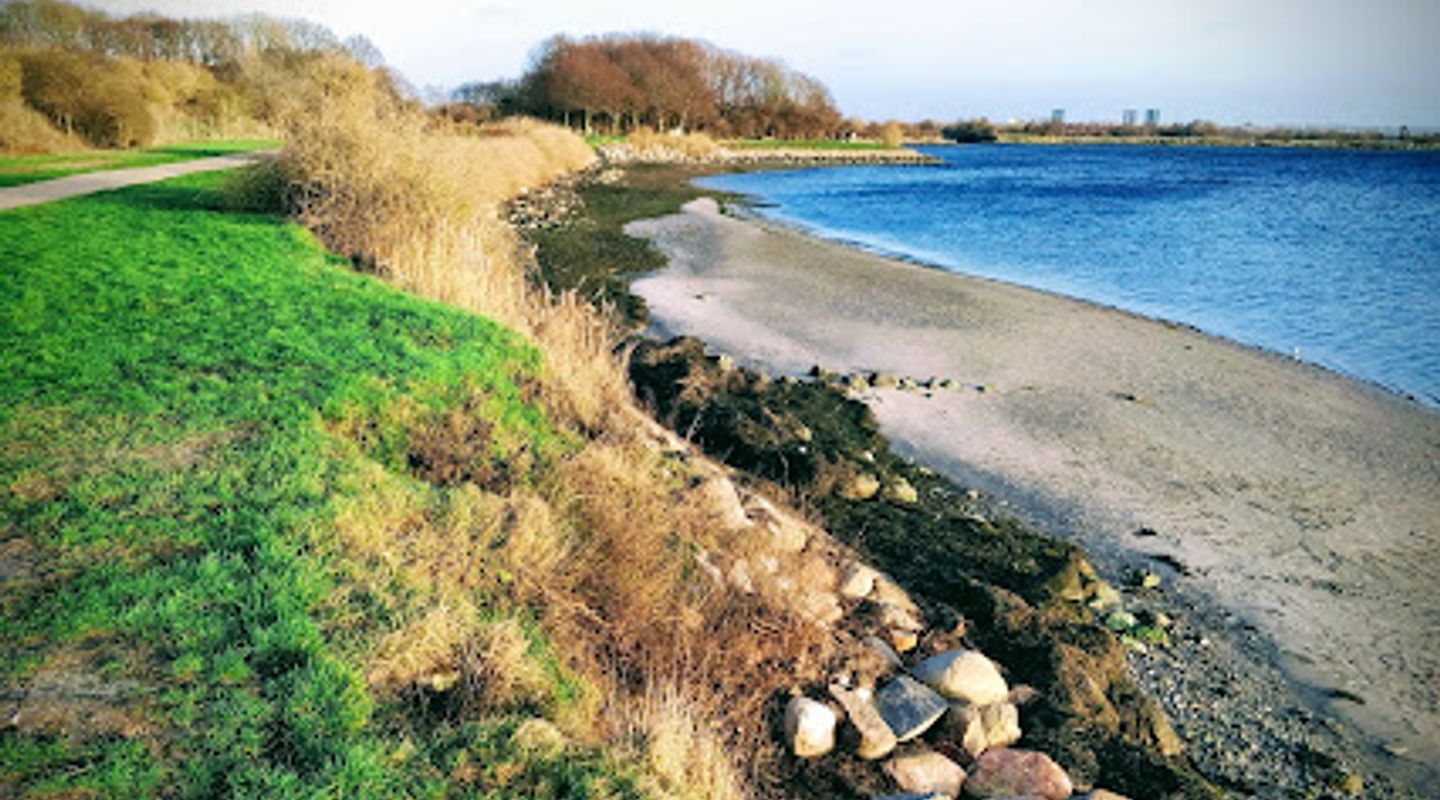
Along the park’s southern edge, paths lead toward the water and a small beach-like stretch facing the broad canal that connects to Øresund. Here you can feel the wind coming in over the harbour, watch small boats pass and look across to low, marshy islands that hint at the wider coastal landscape. A low cliffed edge in places gives slightly elevated views over the sea channel, making this a surprisingly maritime corner of the city.Behind the shoreline, Valbyparken shifts between mown lawns and wilder pockets of vegetation. Grazing areas and rough grass support insects and birds, while scattered older trees create perches for common garden species and waterfowl that move between the canals and the park interior. This mix of cultivated and semi‑wild character makes the area appealing for casual birdwatching as well as for those simply interested in seeing how nature is woven into an urban setting.
Playgrounds, Sports and Everyday Life Outdoors
Valbyparken is also a large outdoor playground in the broadest sense. There are traditional playgrounds, including a popular nature‑themed play area built from timber and natural materials, where children can climb, balance and dig. Nearby, broad lawns and simple amphitheatre‑like slopes lend themselves to informal games, kite flying and lounging on blankets in the sun.Further across the park, you will find football pitches, marked paths for runners and plenty of space for frisbees and casual games. A disc golf course winds between trees and open ground, adding a playful, low‑key sporting element that attracts both locals and visitors. The park’s wide, mostly level network of paths works well for walkers, runners, cyclists and prams, and the sheer size of the place means you can often find a quieter corner even on busy days.
Festivals, Gatherings and Seasonal Atmosphere
Beyond daily recreation, Valbyparken doubles as a major outdoor event space. Large one‑day festivals and concerts periodically transform sections of the park into stages and audience lawns, taking advantage of the open terrain and relative distance from densely built streets. On those days, the atmosphere shifts to something closer to a temporary village, with music carrying across the grass and clusters of people gathering beneath flags and light rigs.The mood changes with the seasons as well. In spring, the theme gardens and young leaves draw people into the park’s more intimate spaces. Summer is about picnics, festivals and late‑evening walks along the water. Autumn brings colour to the older trees and quieter paths for reflective strolls. Even in winter, when the wind is sharp off the canal, the openness of Valbyparken offers stark, wide horizons and a reminder that Copenhagen is a coastal city, shaped by water and weather as much as by bricks and stone.
Evendo Review Centre
 Google
Guest reviews
Best time to go
Quietest: Jan, Feb & Mar · before 7am
Busy times are Evendo estimates for a typical year, to help you plan. Actual crowds vary with events, school holidays and the weather.
Explore Valbyparken on the map
A handpicked selection of must-see spots near Valbyparken, mapped for you.
Get your free copy of our complete guide to Valbyparken, delivered straight to you.
Everything on this page, from opening hours and how to get there to Eve’s tips and the best time to go, in one PDF you can read offline, print or share.
Already have an account? Sign in
Your Valbyparken guide is ready.
We'll send it to · Not you? Sign out

Getting your guide ready…
We are putting together a fresh copy of the Valbyparken guide. This can take up to a minute.
This can take a few moments. If your browser asks, choose Allow so the download can start. You'll find the guide in your Downloads folder.
Nothing happened? Download it again
Sorry, the guide is taking longer than usual. Please try again in a minute, or get it by email instead.
Unlock the best of Valbyparken
Skip-the-line tickets, guided tours with entry, and walking tours of the area, booked in a few clicks.

Other nearby places you may find interesting
The closest places of the same kind, if this one is not quite what you had in mind.
-
Rømø A wind-swept Wadden Sea island of endless sand, tidal flats and maritime heritage, where drivable beaches, kites and wild dunes meet North Sea light and migrating birds.
-
The North Sea Oceanarium Northern Europe’s largest North Sea–focused aquarium, blending giant tanks, playful seals, outdoor adventure zones, and hands‑on marine science in coastal Hirtshals.
-
Saltholm A low, wind-swept Øresund island of meadows, marsh and birdlife, Saltholm offers a rare taste of near-urban wilderness just off Copenhagen’s coastline.
-
Wadden Sea National Park Walk on the seabed, witness starling murmurations, and explore Europe's most dynamic tidal wilderness.
-
The Little Mermaid Copenhagen’s most famous mermaid sits quietly on a harbor rock, a small bronze figure whose fairy-tale melancholy and seaside setting have become a symbol of the city.
Swipe for more places
More to explore near Valbyparken

 Best experiences near Valbyparken
 Best hotels near Valbyparken
 Best landmarks near Valbyparken
 Best attractions near Valbyparken
 Best shops near Valbyparken
 Best restaurants near Valbyparken
 Best bars near Valbyparken
Do you manage this location?
Take control to get all the benefits, like improved information, better appearance, and stronger visibility across AI-powered discovery.
Explore more

Explore more of The North Sea Islands
Discover the North Sea Islands of Denmark: idyllic sandy beaches, vibrant local culture, and unique natural landscapes await you on Fanø, Rømø, and Mandø.
Explore The North Sea Islands
Explore more of Denmark
Discover Denmark: A perfect blend of history, modern design, and the cozy concept of hygge. Explore vibrant cities, serene landscapes, and world-class cuisine.
Explore Denmark
