Rømødæmningen Travel Guide
Free Guide: A 9.2 km ribbon of road across the Wadden Sea, Rømødæmningen links Jutland and Rømø with sweeping horizons, rich birdlife and a powerful sense of open sky.


A brief summary of Rømødæmningen
A 9.2 km ribbon of road across the Wadden Sea, Rømødæmningen links Jutland and Rømø with sweeping horizons, rich birdlife and a powerful sense of open sky.
Rømødæmningen is Denmark’s longest road causeway, a striking 9.2 km ribbon of asphalt crossing the Wadden Sea between the mainland near Skærbæk and the island of Rømø. Built from 1939 to 1948 as both an engineering project and employment scheme, it now offers sweeping views of tidal flats, grazing sheep and ever‑changing skies. With small lay‑bys for safe stops, it is a powerful introduction to the unique marshland landscapes of the Wadden Sea National Park and a favoured spot for birdwatching in all seasons.
On-site amenities
 Seating areas
 Trash bins
 Information boards
Opening hours
- Every dayOpen 24 hours
Opening hours as listed on the venue’s Google Business Profile. Hours can change for services and special events, so check with the venue before you go.
- Address
- Rømøvej, 6792 Rømø
- Website
Getting there
Car from Skærbæk
Regional bus from South Jutland towns
Cycling from Skærbæk area
Discover more about Rømødæmningen
A sea road into the Wadden landscape
Rømødæmningen is far more than a stretch of tarmac; it is a 9.2 km man‑made spine reaching across the Wadden Sea, linking the barrier island of Rømø with the Jutland mainland. As you travel along it, the horizon widens and lowers at the same time, with only low dykes, drainage channels and the flat shimmer of tidal mudflats between you and the sky. The sense of entering a different kind of landscape is immediate: marsh grasses, distant farmhouses on artificial mounds and flocks of sheep grazing where sea once rolled.The causeway was laid directly on the seabed and built up into a broad embankment, around 60 m wide at the base and over 13 m at the top. The roadway running along its crest carries a constant flow of holiday traffic in summer, but between the passing cars it still feels exposed and elemental, especially when the wind whips in from the North Sea and the air smells of salt and seaweed.
From bold vision to postwar reality
Ideas for a fixed link to Rømø surfaced as early as the 19th century, but only became reality when a law authorising the dam was passed in 1939. Construction began soon after as a major employment initiative in a region hit hard by interwar poverty. Over two million cubic metres of earth were dug largely by hand from borrow pits on both Rømø and the mainland and tipped into narrow‑gauge wagons that trundled out over temporary tracks into the tidal shallows.Work was expected to take four years, but the Second World War delayed progress, and the causeway was only completed and ceremonially opened in December 1948. Initially just wide enough for a modest two‑lane road, it was later broadened in the 1960s to cope with growing car traffic heading for Rømø’s vast beaches and holiday houses. The project stands as a testament to mid‑20th‑century Danish engineering and to the determination to bind the offshore islands more closely to the mainland.
Living with storms and changing tides
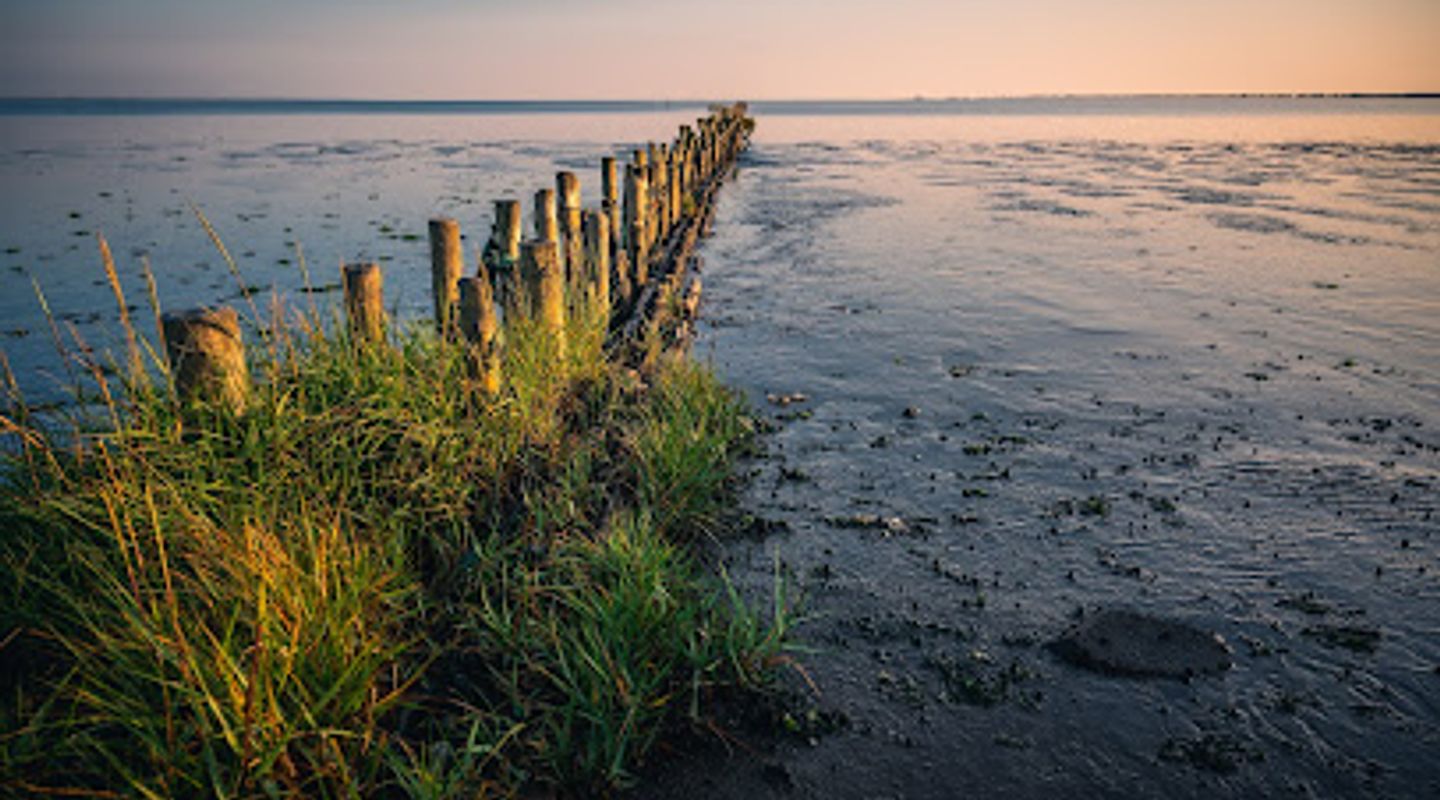
Standing on one of the rest areas, it is easy to forget that this solid‑looking structure is constantly tested by the sea. Major storm surges in 1976, 1981 and 1999 drove waves across the roadway, stripping away asphalt and scouring at the grass‑covered slopes. Ongoing inspection and repair work keeps the embankment resilient, with concrete armour and carefully maintained turf protecting the clay core against erosion.The dam also reshaped currents and sediment flows across the Wadden Sea. On the landward side you can still glimpse rows of old wooden piles stretching out into the flats, remains of structures once used to trap fine silt and build up protective foreland. These quiet details tell a story of centuries of struggle to hold a shifting coastline steady against the push and pull of tide and storm.
Birdlife and vast Wadden horizons
For many visitors, Rømødæmningen is their first close encounter with the Wadden Sea National Park, one of Europe’s great wetland ecosystems. On rising or falling tide the mudflats come alive with movement: long lines of geese, swirling flocks of dunlin and knots, and waders probing for shellfish in the soft ground. In migration seasons, hundreds of thousands of birds pause here to rest and feed, and even a casual glance from the car window can reveal impressive numbers.The small parking areas on the causeway’s north side are ideal for unhurried viewing. From here you can listen to the layered soundscape of wind, distant surf and bird calls, and watch how quickly the scene transforms as the tide creeps in to cover the flats. The low light of early morning or late evening often turns the water into sheets of silver and copper, giving photographers and nature lovers a dramatic natural backdrop.
Experiencing the crossing as a journey
Driving Rømødæmningen can feel like a transitional ritual, a slow shift from inland fields to wide‑open island. Many travellers choose to stop at least once, stepping out to breathe the salty air and take in the 360‑degree panorama. On calm summer days the sea lies glassy and distant, while in winter the wind can be so strong that simply walking along the verge feels like a small adventure.There are no buildings or visitor centres on the dam itself, only basic facilities such as parking bays and simple seating at some viewpoints. This relative emptiness is part of its character: the causeway invites you to focus on sky, water and horizon. Respect for nature is important here; the tidal flats alongside the dam are protected, and access is restricted to safeguard both the fragile ground and the rich birdlife that depends on it.
Evendo Review Centre
 Google
Guest reviews
Best time to go
Quietest: Jan, Feb & Mar · before 3am
Busy times are Evendo estimates for a typical year, to help you plan. Actual crowds vary with events, school holidays and the weather.
Explore Rømødæmningen on the map
A handpicked selection of must-see spots near Rømødæmningen, mapped for you.
Get your free copy of our complete guide to Rømødæmningen, delivered straight to you.
Everything on this page, from opening hours and how to get there to Eve’s tips and the best time to go, in one PDF you can read offline, print or share.
Already have an account? Sign in
Your Rømødæmningen guide is ready.
We'll send it to · Not you? Sign out

Getting your guide ready…
We are putting together a fresh copy of the Rømødæmningen guide. This can take up to a minute.
This can take a few moments. If your browser asks, choose Allow so the download can start. You'll find the guide in your Downloads folder.
Nothing happened? Download it again
Sorry, the guide is taking longer than usual. Please try again in a minute, or get it by email instead.
Other nearby places you may find interesting
The closest places of the same kind, if this one is not quite what you had in mind.
-
-
-
-
-


Swipe for more places
More to explore near Rømødæmningen

 Best experiences near Rømødæmningen
 Best hotels near Rømødæmningen
 Best landmarks near Rømødæmningen
 Best attractions near Rømødæmningen
 Best shops near Rømødæmningen
 Best restaurants near Rømødæmningen
 Best bars near Rømødæmningen
Do you manage this location?
Take control to get all the benefits, like improved information, better appearance, and stronger visibility across AI-powered discovery.
Explore more

Explore more of Wadden Sea National Park
Discover the Wadden Sea National Park in Denmark: a UNESCO World Heritage site teeming with wildlife, stunning landscapes, and unique tidal flats. A nature lover's paradise.
Explore Wadden Sea National Park
Explore more of Denmark
Discover Denmark: A perfect blend of history, modern design, and the cozy concept of hygge. Explore vibrant cities, serene landscapes, and world-class cuisine.
Explore Denmark