

Udsigtspunkt, Romo Travel Guide
A simple marshland viewpoint beside Marsk Tower, opening up enormous skies, Wadden Sea horizons and the quiet drama of the flat Sønderjylland landscape.
Perched on the flat marshland outside Skærbæk, this simple "Udsigtspunkt" is effectively the vantage area at Marsk Tower, a sculptural 25 m lookout designed by Bjarke Ingels Group. From the raised platform and surrounding paths you stare out across the vast Wadden Sea National Park, a UNESCO World Heritage landscape of sky, sea and marsh. Even if you do not climb the tower, this viewpoint offers big skies, birdsong and an immediate sense of the open Sønderjylland marshes.
A brief summary to Udsigtspunkt
- Unnamed Road, Skærbæk, 6780, DK
- Duration: 0.5 to 1.5 hours
- Budget
-
 Outdoor
- Mobile reception: 4 out of 5

Know before you go
Hi, I'm Eve. Here are a few practical things to know before exploring Udsigtspunkt.
- Bring a windproof layer year-round; the exposed marshland means it often feels cooler and windier than in town.
- Visit near sunrise or just before sunset for the most atmospheric light and long shadows across the flat landscape.
- Pack binoculars or a zoom lens if you are interested in birdlife or want to pick out distant features like Rømø and Ribe.
- If you plan to climb Marsk Tower as well, check opening times and buy tickets in advance, especially in peak season.
Do you manage this location?
Take control to get all the benefits, like improved information, better appearance, and stronger visibility across AI-powered discovery. Learn more about listing your business on Evendo
Activate your presenceOther nearby places you may find interesting
The closest places of the same kind, if this one is not quite what you had in mind.

Explore Udsigtspunkt on the Map
A handpicked selection of must-see spots near Udsigtspunkt, mapped for you.
Getting There
-
Car from central Skærbæk
From central Skærbæk, driving to the Udsigtspunkt by Marsk Tower typically takes around 10–15 minutes, depending on traffic through town. The route follows local roads across the flat marsh, with clear signage to Marsk Camp and the tower in the final stretch. Standard passenger cars are sufficient and the roads are paved throughout. On arrival, you find a dedicated parking area serving Marsk Camp and Marsk Tower; parking is usually free or low-cost, but time limits can apply in busy periods. This option is convenient year-round, though strong winds and winter storms may require slower driving speeds.
-
Train and short taxi from nearby station
Regional trains connect Skærbæk with larger towns such as Ribe and Tønder in roughly 25–45 minutes, with fares typically in the range of 40–80 DKK one way in standard class. From Skærbæk Station, reaching the Udsigtspunkt by taxi usually takes 10–15 minutes across local roads. A taxi ride in the area often costs around 120–200 DKK each way, depending on time of day and waiting time. Train services run throughout the year, though evening and weekend frequencies can be reduced, so it is worth checking timetables and pre-booking a taxi if you plan to return after dark.
-
Bicycle from Skærbæk area
Cycling from the Skærbæk area to the Udsigtspunkt is a pleasant option in mild weather, typically taking 25–40 minutes each way at a relaxed pace. The terrain is completely flat and local roads are generally quiet, though you should expect strong crosswinds on exposed stretches of marshland. There is no charge for bringing your own bike, but if you need to rent one locally, simple city bikes usually cost in the region of 80–150 DKK per day from regional providers. This option is best in spring, summer and early autumn, and less comfortable in heavy rain or winter storms.
For the on-the-go comforts that matter to you
-
 Restrooms
-
 Drink Options
-
 Drinking Water
-
 Food Options
-
 Seating Areas
-
 Sheltered Areas
-
 Trash Bins
-
 Information Boards
-
 Visitor Center
Discover more about Udsigtspunkt
Marshland horizons on the edge of Skærbæk
Set out on the open marsk just outside Skærbæk, this modest "Udsigtspunkt" sits by the striking spiral form of Marsk Tower and shares the same grand panorama over the flat landscape. From here the eye runs unbroken across meadows, dikes and drainage channels towards the Wadden Sea, with the silhouettes of Rømø, Ribe or even Esbjerg appearing as fine lines on the horizon on a clear day. The ground is almost ruler-flat, so even a gentle rise or viewing platform feels surprisingly elevated.The air has a salty tang carried in from the North Sea, and the wind rarely stands still. Cloud shadows sweep quickly over the fields, changing the colours of the marsh from pale green to deep bronze within minutes. It is an austere but compelling scene, one that rewards slowing down to trace the contours of dikes and farmsteads scattered in the distance.Part of the Marsk Tower landscape
The viewpoint forms part of the wider Marsk Camp area, arranged around Marsk Tower, a 25 m corten-steel lookout whose double-helix stair recalls a DNA strand. Even from the foot of the tower you sense the sculptural quality of the structure, rising rust-red from the grass and echoing the curves of the dikes and tidal flats. The viewing paths and open gravel areas around it function as an informal outdoor room, a place to pause before or after climbing the tower.Because the tower stands 36 m above sea level on completely flat terrain, it becomes a landmark visible for kilometres around. Approaching the Udsigtspunkt, you watch the form slowly grow on the skyline until it dominates the view. Up close, the coarse texture of the weathered steel contrasts with the softness of grasses and reeds around the site.Gateway to Wadden Sea National Park
This viewpoint also serves as an introduction to the Danish section of the Wadden Sea National Park, a vast tidal ecosystem recognised by UNESCO for its birdlife and shifting sands. Looking out, you can imagine the twice-daily rhythm of the tide further west, even if the water itself is not always in sight. In spring and autumn, huge flocks of migratory birds pass overhead or settle on the fields, turning the sky into a living, moving layer above the land.Interpretive boards and the sheer scale of the panorama help you read the landscape: the straight lines of drainage canals, the long embankments protecting the low-lying ground, and the lighter strips where grazing animals keep the vegetation cropped. Standing still for a while, you notice how quiet it can be between gusts of wind – only the calls of waders and distant tractors break the silence.Atmosphere from dawn to dusk
The character of the Udsigtspunkt shifts subtly through the day. Early morning often brings a low mist clinging to the marsh, so the tower and distant farm roofs appear to float above a pale sea. Around midday the light can be almost harsh, flattening shadows but sharpening the sense of distance. Towards evening, the western sky becomes the main show, with long, glowing bands of colour reflected in water channels cutting across the fields.Because of the wide horizon, even modest sunsets feel expansive here, and the constant breeze keeps the air feeling fresh even in warmer months. On blustery days, the wind whistling around the tower and across the open platforms adds a raw edge to the experience, underlining how exposed this landscape really is.A calm pause in an activity-focused camp
While Marsk Camp offers restaurants, glamping tents, a playground and minigolf, the Udsigtspunkt itself remains simple: open ground, sky and view. It provides a quiet counterpoint to the busier facilities, a place to step aside for a few minutes of contemplation or to frame a few photographs without distraction. Whether you choose to climb the tower or simply stay at ground level, the essential experience is the same: feeling very small under a very large sky.Many visitors combine the viewpoint with longer walks along dikes or across nearby paths through the marsh. The scene changes with weather and seasons, rewarding repeat visits – from winter storms blowing in over the flats to high, clear summer skies that seem to stretch endlessly over southern Jutland.












Your all‑in‑one travel companion app
Explore expert travel guides, compare and book tours, experiences, hotels, and more—all from the palm of your hand. Download now for seamless trip planning wherever your wanderlust takes you.


Explore More of Romo
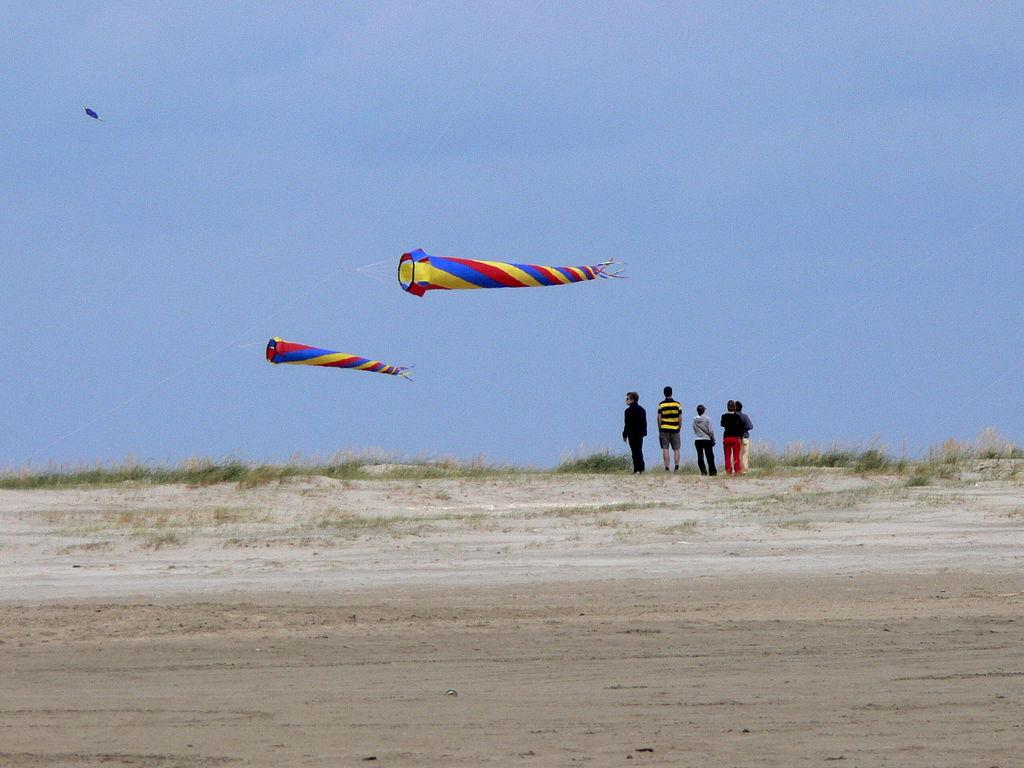
Looking beyond Udsigtspunkt? Discover Romo for broader travel guides, local hot-spots, and regional highlights.
Explore Romo
A modest Rømø farmhouse fence built from towering whale jawbones, preserving the island’s dramatic whaling past in a single, striking roadside stop.
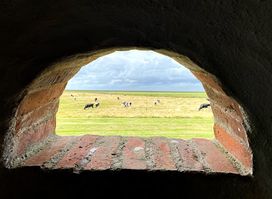
Historic marsh mounds in the Wadden Sea landscape, where abandoned Frisian dwelling platforms and wide horizons tell a quiet story of living with the sea.
