Sneglemøllerne Ballum Enge Travel Guide
Free Guide: Historic drainage mills in the open marshes of Ballum Enge, where quiet dikes, wide skies and bird-filled meadows reveal Denmark’s long battle with the sea.


A brief summary of Sneglemøllerne Ballum Enge
Historic drainage mills in the open marshes of Ballum Enge, where quiet dikes, wide skies and bird-filled meadows reveal Denmark’s long battle with the sea.
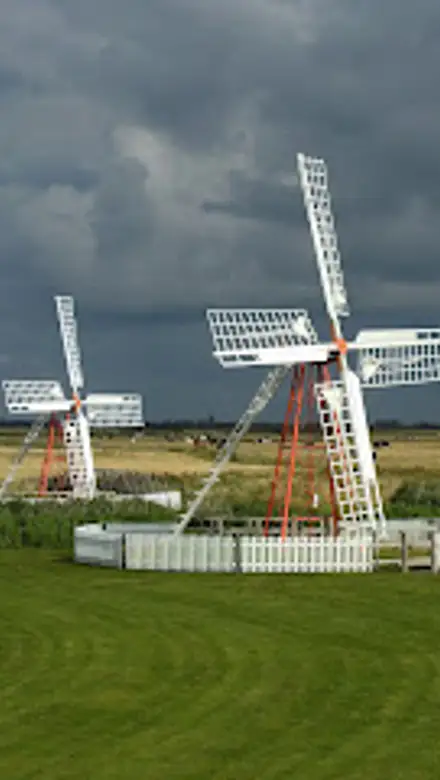
Set in the wide marshlands of Ballum Enge near Tønder, Sneglemøllerne (the Snail Mills) are a small cluster of historic drainage mills that tell the story of how people tamed the tidal wetlands along Denmark’s Wadden Sea coast. Standing on a low embankment near Ballum Sluse, the mills form an open‑air technical museum, quietly overlooking meadows, dikes and grazing livestock. Birdsong, wind in the reeds and the distant calls of waders complete the atmosphere of this understated but evocative cultural landscape.
On-site amenities
 Information boards
 Trash bins
Opening hours
- Every dayOpen 24 hours
Opening hours as listed on the venue’s Google Business Profile. Hours can change for services and special events, so check with the venue before you go.
- Address
- 6261 Tønder
Getting there
Car from Tønder
Bicycle from Bredebro area
Public transport plus walk
Discover more about Sneglemøllerne Ballum Enge
Marshland mills on the edge of the Wadden Sea
Sneglemøllerne sit in the heart of Ballum Enge, the flat, open marshlands that stretch towards the Wadden Sea west of Tønder. Here the horizon feels unusually wide, broken only by dikes, farms raised on artificial mounds and the low silhouettes of the old drainage mills. The name “Snail Mills” refers to the distinctive screw mechanism used to lift water from the low-lying meadows up into the drainage channels, protecting the land from flooding.The mills are located close to the Ballum dike and sluice, part of a wider system that holds back storm surges from the North Sea. From the embankment you can see the grid of ditches and canals that once depended on these modest wooden machines. Today they no longer work every day, but their presence makes it much easier to imagine the centuries-long struggle to keep the sea at bay.
A living museum of water management
Although small in scale, Sneglemøllerne function as an open-air museum showing the traditional drainage system of Ballum Enge. Several reconstructed mill houses stand along the mill channel north of Ballum Slusekro, each fitted with a screw that could be turned by the wind or by manual power to move water. Information boards in the area explain how the system operated as a coordinated whole, with different mills serving separate sections of meadow.The site is closely linked to the cooperative ownership of the marshes. Local landowners formed associations to maintain dikes, sluices and pumps, deciding together when to drain or flood certain areas. Walking among the mills you get a sense of this shared effort: the structures are practical rather than grand, but carefully maintained as part of the region’s agricultural heritage.
Wide skies, birds and changing light
The atmosphere around Sneglemøllerne is shaped as much by nature as by engineering. The meadows are grazing land for cattle and sheep, but they are also important feeding grounds for migratory birds travelling along the Wadden Sea flyway. Depending on the season you may see flocks of geese, ducks and waders rising over the fields, or hear the calls of curlews and lapwings drifting across the ditches.Because the landscape is almost perfectly flat, the sky dominates. Cloud shadows travel quickly over the grass, and the light shifts from soft grey to bright, sharp colours in a matter of minutes. Early morning mists and late-afternoon golden light can be particularly striking, turning the humble mills into strong silhouettes against the horizon and making this a rewarding place for photographers.
Reading the traces of land reclamation
Spend a little time looking closely and you begin to read the landscape as a record of human intervention. The dike line marks the boundary between sea and reclaimed land, while the slightly raised farm mounds show where people once sought safety during floods. The drainage ditches run in straight lines, but small kinks and bends hint at older course changes or adjustments to the system over time.The mills themselves illustrate changes in technology: from simple wind-driven screws to more modern pumps housed in brick structures along the dikes. By comparing these elements, you can trace the history of how Ballum Enge gradually transformed from tidal marsh into productive pasture, without losing its character as a wetland.
A quiet pause on a Wadden Sea itinerary
For many visitors, Sneglemøllerne form a short but memorable stop in a wider exploration of the Wadden Sea coast, including Ballum Sluse, nearby churches and the road to the island of Rømø. Paths and grass tracks around the mills invite unhurried wandering rather than strenuous hiking, and there is usually plenty of space to sit on the dike, watch the weather change and listen to the wind in the reeds.There are no large facilities on site, which helps preserve the sense of openness and quiet. Simple wayfinding and the visible line of the dike make it an easy area to explore, even for those unfamiliar with marsh landscapes. Allowing a little extra time here turns a brief look at some historic machinery into a deeper appreciation of how closely life in this part of Denmark has always been tied to water.
Evendo Review Centre
 Google
Guest reviews
Best time to go
Quietest: Jan, Feb & Dec · before 8am
Busy times are Evendo estimates for a typical year, to help you plan. Actual crowds vary with events, school holidays and the weather.
Explore Sneglemøllerne Ballum Enge on the map
A handpicked selection of must-see spots near Sneglemøllerne Ballum Enge, mapped for you.
Get your free copy of our complete guide to Sneglemøllerne Ballum Enge, delivered straight to you.
Everything on this page, from opening hours and how to get there to Eve’s tips and the best time to go, in one PDF you can read offline, print or share.
Already have an account? Sign in
Your Sneglemøllerne Ballum Enge guide is ready.
We'll send it to · Not you? Sign out

Getting your guide ready…
We are putting together a fresh copy of the Sneglemøllerne Ballum Enge guide. This can take up to a minute.
This can take a few moments. If your browser asks, choose Allow so the download can start. You'll find the guide in your Downloads folder.
Nothing happened? Download it again
Sorry, the guide is taking longer than usual. Please try again in a minute, or get it by email instead.
Other nearby places you may find interesting
The closest places of the same kind, if this one is not quite what you had in mind.
-
-
-
-
-


Swipe for more places
More to explore near Sneglemøllerne Ballum Enge
-
 Best experiences near Sneglemøllerne Ballum Enge
-
 Best hotels near Sneglemøllerne Ballum Enge
-
 Best landmarks near Sneglemøllerne Ballum Enge
-
 Best attractions near Sneglemøllerne Ballum Enge
-
 Best shops near Sneglemøllerne Ballum Enge
-
 Best restaurants near Sneglemøllerne Ballum Enge
-
 Best bars near Sneglemøllerne Ballum Enge


Do you manage this location?
Take control to get all the benefits, like improved information, better appearance, and stronger visibility across AI-powered discovery.
Explore more

Explore more of Rømø
Discover Rømø: Denmark's serene island with expansive beaches, rich Viking history, and thrilling windsurfing adventures in the heart of the Wadden Sea National Park.
Explore Rømø
Explore more of Denmark
Discover Denmark: A perfect blend of history, modern design, and the cozy concept of hygge. Explore vibrant cities, serene landscapes, and world-class cuisine.
Explore Denmark