Workers Museum, Zealand Travel Guide
Step into 150 years of Danish working-class history inside a 19th-century assembly hall, where cramped flats, activism and classic smørrebrød bring the welfare story to life.
Housed in the historic Workers’ Assembly Hall from 1879, Copenhagen’s Workers Museum brings 150 years of Danish working-class life and labour movements vividly to life. Wander through recreated 1915 tenement flats, a 1950s coffee bar and a bustling children’s museum, then step into the richly ornamented Banquet Hall where unions once met and democracy was debated. Atmospheric Café & Ølhalle ‘1892’ in the listed basement rounds off the visit with classic Danish smørrebrød in period surroundings.
A brief summary to Workers Museum
- Rømersgade 22, Copenhagen, København K, 1362, DK
- Click to display
- Click to display
- Duration: 1.5 to 3 hours
- Mid ranged
-
 Indoor
- Mobile reception: 5 out of 5
- Monday 10 am-5 pm
- Tuesday 10 am-5 pm
- Wednesday 10 am-5 pm
- Thursday 10 am-8 pm
- Friday 10 am-5 pm
- Saturday 10 am-5 pm
- Sunday 10 am-5 pm

Know before you go
Hi, I'm Eve. Here are a few practical things to know before exploring Workers Museum.
- Arrive early or later in the afternoon to enjoy the recreated flats and Banquet Hall before the busiest midday period.
- Plan time for Café & Ølhalle ‘1892’; the traditional smørrebrød and listed basement setting are as memorable as the exhibitions.
- If visiting with children, start in the Children’s Workers Museum so they can explore and play before tackling the denser historical sections.
- Allow extra time on Thursday evenings, when extended hours let you explore the exhibitions and then linger over a relaxed dinner.
Do you manage this location?
Take control to get all the benefits, like improved information, better appearance, and stronger visibility across AI-powered discovery. Learn more about listing your business on Evendo
Activate your presenceOther nearby places you may find interesting
The closest places of the same kind, if this one is not quite what you had in mind.

Explore Workers Museum on the Map
A handpicked selection of must-see spots near Workers Museum, mapped for you.
Getting There
-
Metro from central Copenhagen
From most central locations, take the M1, M2, M3 or M4 metro lines to Nørreport Station; the ride from Kongens Nytorv or København H usually takes 3–6 minutes. Trains run every few minutes throughout the day, and a single-zone ticket costs around 20–25 DKK depending on whether you use a travel card or single ticket. From Nørreport it is a short, level walk on city pavements to the museum, suitable for most visitors and wheelchair users.
-
City bus within the inner districts
Several inner-city bus routes stop near Nørreport Station and along Øster Voldgade and Frederiksborggade, typically 10–20 minutes from other central neighbourhoods such as Vesterbro or Østerbro. Standard city bus tickets are integrated with metro fares, so a single-zone ticket is again about 20–25 DKK. Buses run frequently during the day, but may be less frequent late evenings and on weekends.
-
Bicycle from inner Copenhagen
Copenhagen’s extensive cycle lanes make it straightforward to reach the Workers Museum by bike from most central districts in roughly 5–15 minutes. The terrain is flat and the route uses segregated cycle tracks for much of the way. Visitors without their own bicycle can use city bikes or private rentals; expect typical rental prices around 100–150 DKK for a day. Remember that cycle parking near the museum entrance can be busy at peak times.
-
Taxi within the city centre
A taxi from central areas such as City Hall Square or the main train station usually takes 5–15 minutes, depending on traffic. Daytime fares within the inner city commonly range from 80–150 DKK, increasing in the evening and at weekends. Taxis can drop passengers close to the entrance on standard city streets, which is convenient for those with limited mobility, though short waits are possible at very busy times.
For the on-the-go comforts that matter to you
-
 Restrooms
-
 Drink Options
-
 Drinking Water
-
 Food Options
-
 Seating Areas
-
 Sheltered Areas
-
 Trash Bins
-
 Information Boards
-
 Visitor Center
Discover more about Workers Museum
A historic house of the labour movement
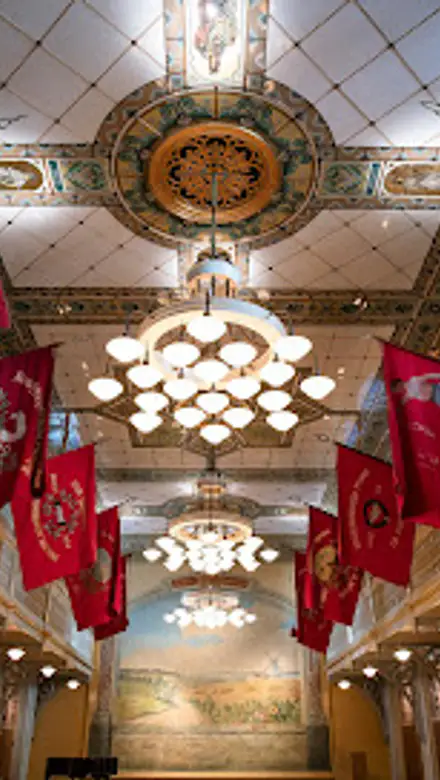
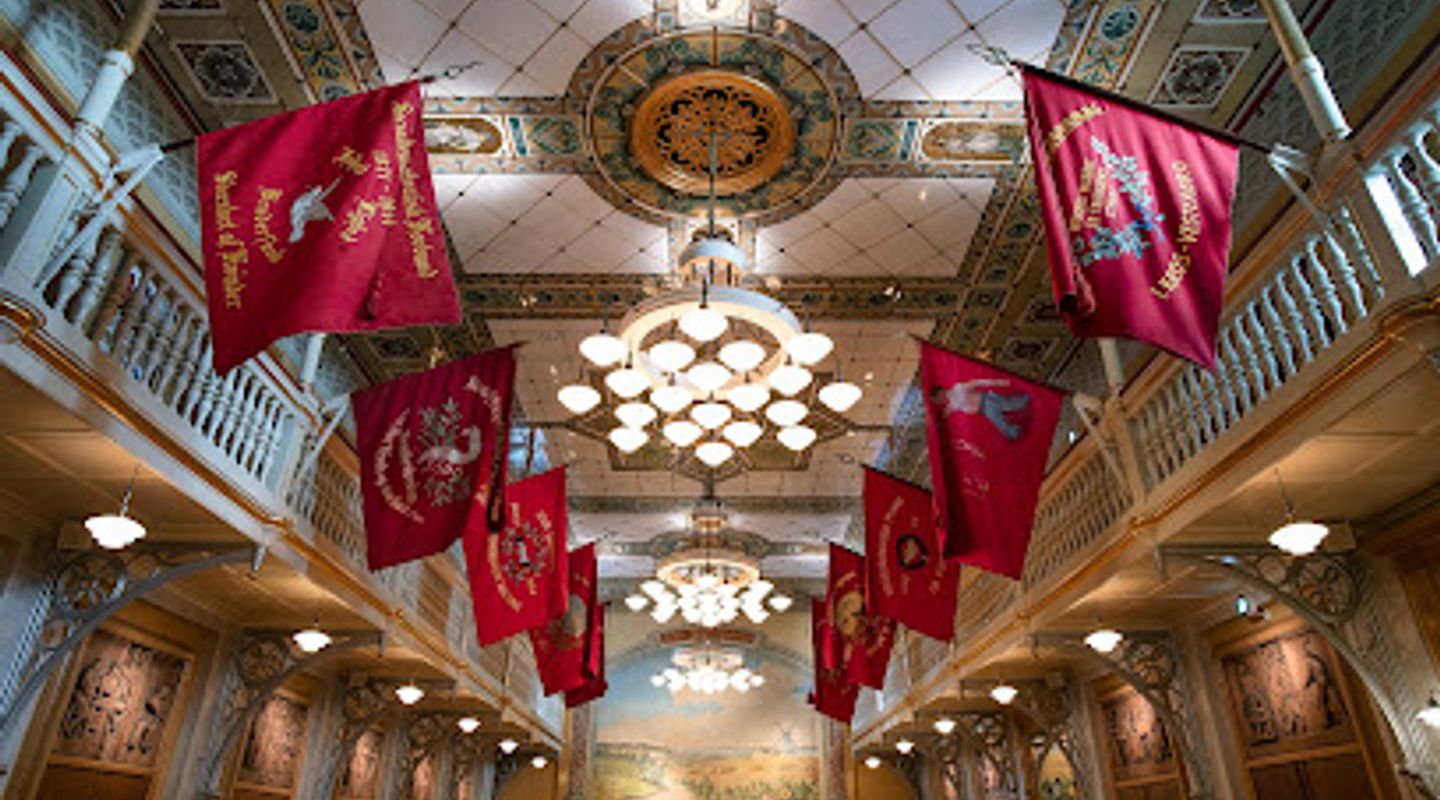
The Workers Museum occupies the former Workers’ Assembly Hall, an imposing red-brick building raised in 1879 as a gathering place for Copenhagen’s labour movement. Behind its solid façade lies a dense web of meeting rooms, corridors and offices that once hosted fiery speeches, trade union congresses and the steady organisation of everyday democracy. Central to the complex is the grand Banquet Hall, its high ceiling, painted decoration and guild banners celebrating the skills and pride of the city’s many crafts. Standing here, you are in the room where thousands of workers learned to participate in civic life and collective decision making.Elsewhere in the building, Thorvald Stauning’s office has been preserved, evoking the era when a boy from a working-class background could rise to become Denmark’s longest-serving prime minister. The museum uses these authentic interiors to anchor big themes – rights, representation and solidarity – in very tangible spaces.Everyday life in backyards and cramped flats
One of the most evocative parts of the museum is its reconstruction of early 20th-century working-class housing. You step into the Sørensen family’s modest two-room flat from 1915, where parents and eight children once shared beds, table and wardrobe. Simple furniture, worn textiles and sparse belongings speak volumes about crowded living conditions, while the steep staircases and outdoor latrines in the backyard show how basic sanitation and domestic work shaped daily routines.Out in the laundry-hung yard, the smell of soap and the imagined clatter of buckets hint at the invisible labour that kept these homes going. Exhibits on industrial work trace the shift from craft traditions to factory production, showing how urbanisation transformed both the city’s skyline and the rhythm of ordinary lives.From rationing to consumer society
Moving forward in time, the 1950s installations illuminate the decade when Denmark emerged from war and austerity into a fledgling consumer society. A period coffee bar serves chicory-based coffee substitutes and classic chocolate biscuit cake, echoing the taste of post-war years when improvisation was still part of the menu. Radios, kitchen gadgets and adverts reveal how new goods changed aspirations, while displays on trade union representatives explore how collective agreements shaped wages, hours and job security.Special exhibitions delve into themes such as activism, environmental campaigns and social movements, connecting the museum’s historic core to debates that continue to shape contemporary Denmark. The result is an impression of the welfare state not as a finished product, but as something constantly negotiated from shop floor to parliament.Children’s playful journey into the 1930s
The Children’s Workers Museum offers a hands-on time travel experience aimed at younger visitors but engaging for adults too. Here children can try working in a grocer’s shop, sorting bottles at a brewery or typing in a union office, discovering that in the 1930s many youngsters contributed to the family income. Dressing up in sailor suits, joining a make-believe dance school or visiting a recreated 1930s flat turns history into a series of small, vivid dramas.Storytelling about a working-class boy called Thorvald, who eventually became prime minister, weaves a narrative of opportunity and persistence. Through play, the space invites reflection on how childhood, education and work have changed across generations.Smørrebrød, beer and thoughtful souvenirs
In the vaulted basement, Café & Ølhalle ‘1892’ is a living exhibit in its own right: the only listed basement restaurant in Copenhagen. Dark wood panelling, simple tables and period fixtures create an atmosphere that feels both convivial and slightly timeworn. The menu focuses on traditional Danish open sandwiches, often prepared with organic and locally sourced ingredients, alongside classic beers that would have been familiar to earlier regulars.Nearby, the museum shop specialises in toys, textiles, books and design pieces that echo working-class culture and Danish social history. Practical information panels and bilingual texts throughout the building make the complex stories accessible, while the intimate scale of rooms and courtyards keeps the experience grounded and human rather than monumental.












Your all‑in‑one travel companion app
Explore expert travel guides, compare and book tours, experiences, hotels, and more—all from the palm of your hand. Download now for seamless trip planning wherever your wanderlust takes you.


Explore More of Zealand
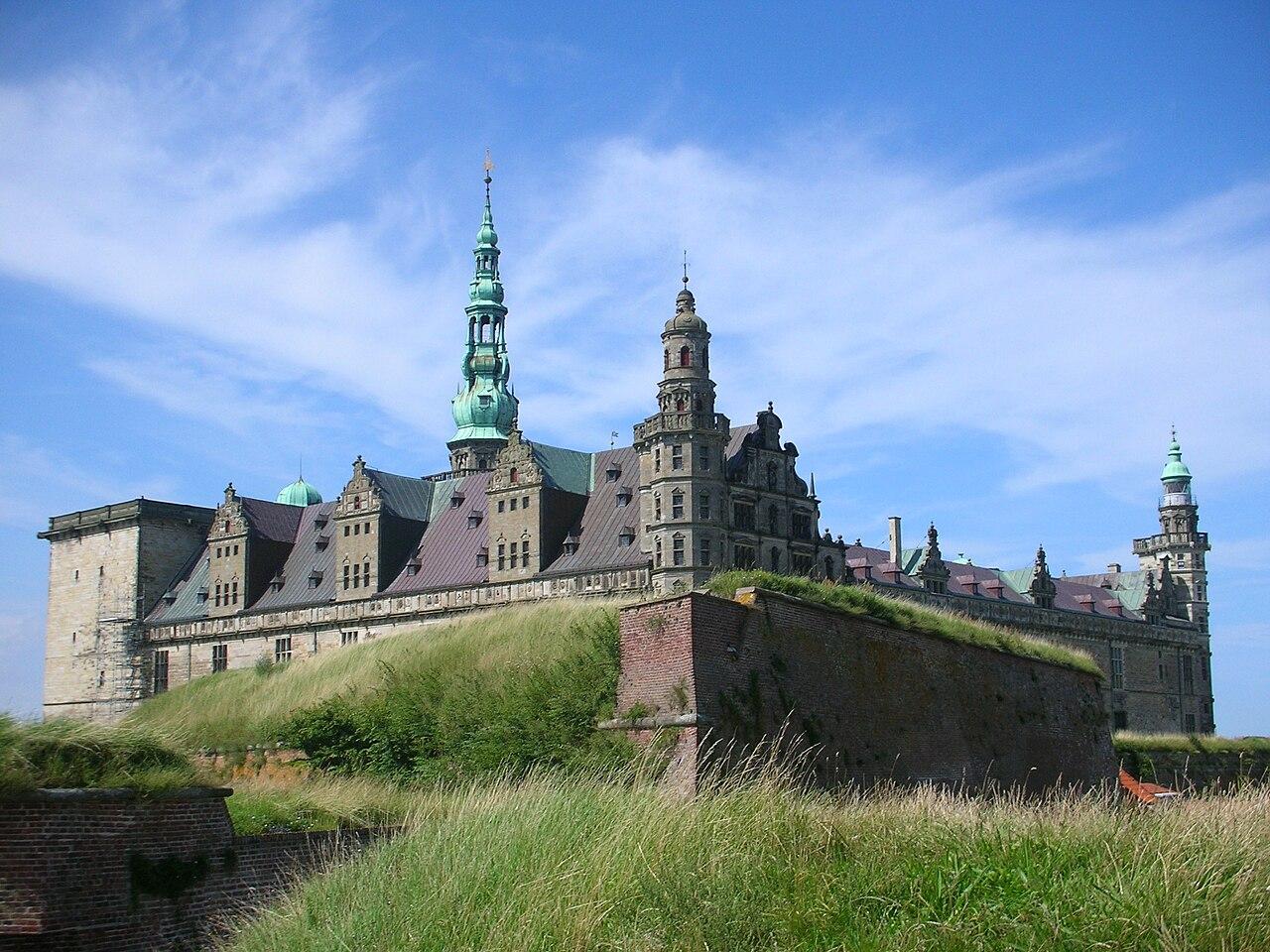
Looking beyond Workers Museum? Discover Zealand for broader travel guides, local hot-spots, and regional highlights.
Explore Zealand