

Free Alföld (Great Hungarian Plain) Travel Guide & Mobile App
Explore Alföld (Great Hungarian Plain) with free travel guides. Discover regional history, expert tips, proposed trips, and audio guides on web or mobile app.


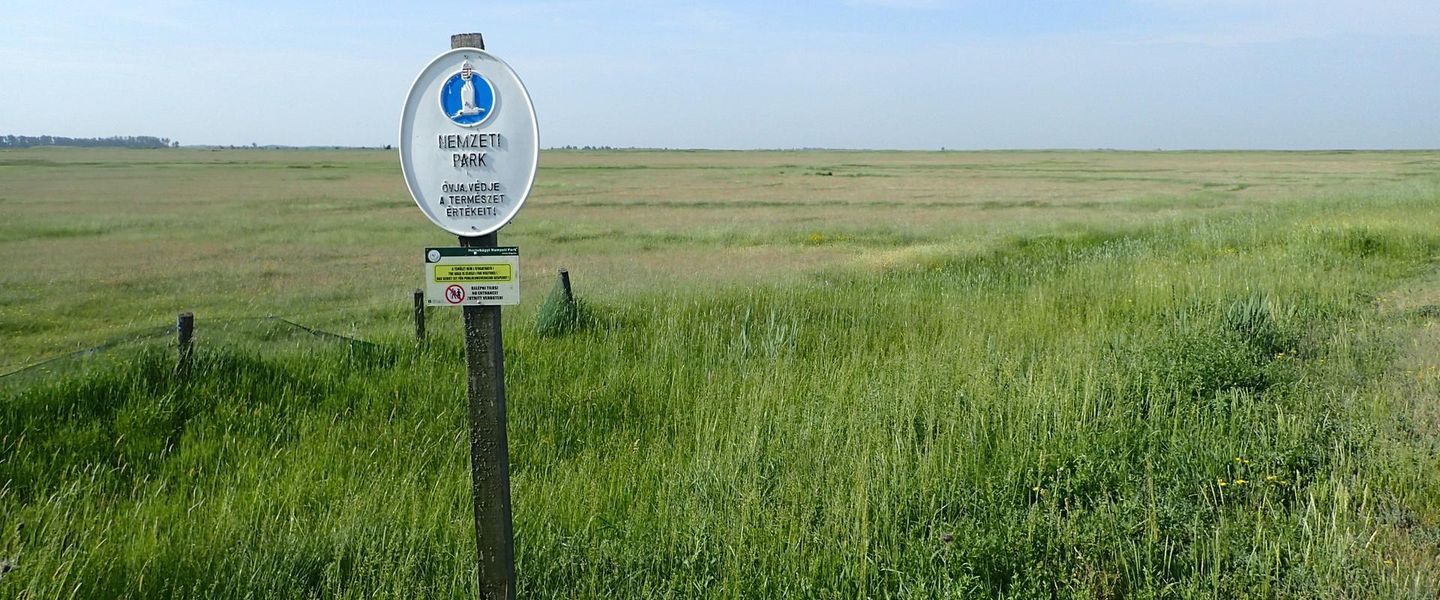


Explore Hungary’s Alföld for open puszta landscapes, river wetlands, thermal towns, historic cities, paprika cuisine and wide-ranging outdoor experiences.
Read more about Alföld (Great Hungarian Plain)
When is the best time to visit Alföld (Great Hungarian Plain)?
Best: June–August · 24–26°C| Month | High (°C) | Rainfall (mm) |
|---|---|---|
| January | 3 | 25 |
| February | 5 | 25 |
| March | 10 | 30 |
| April | 15 | 40 |
| May | 21 | 50 |
| June (best) | 24 | 60 |
| July (best) | 26 | 55 |
| August (best) | 25 | 50 |
| September | 21 | 40 |
| October | 15 | 35 |
| November | 8 | 30 |
| December | 3 | 25 |
Getting to and around Alföld (Great Hungarian Plain)
How to get there
Transportation
Top city travel guides in Alföld (Great Hungarian Plain)
The cities of Alföld (Great Hungarian Plain), and the easiest places to base yourself.
-

-

-

-

-

-


Swipe for more cities
Destinations in Alföld (Great Hungarian Plain)
Resorts, valleys and scenic spots worth a trip of their own.
-

-

-

-

-

-


Swipe for more destinations
Best attractions in Alföld (Great Hungarian Plain)
The Alföld’s attractions are spread across a landscape rather than concentrated in one resort centre. Hortobágy National Park offers open grasslands, seasonal wetlands, traditional stockyards and opportunities for birdwatching, while Kiskunság National Park presents a different environment of sandy plains, alkaline lakes and wooded patches. Around Lake Tisza, shallow channels, reed beds and islands create conditions for boating, cycling and wildlife observation. The Tisza and Körös rivers also support floodplain walks, fishing and water-based recreation where locally permitted. Urban visitors can explore Debrecen’s museums and cultural institutions, Szeged’s riverside city centre, Kecskemét’s architectural heritage and Szolnok’s museums and galleries. Ópusztaszer National Heritage Park, in the southern plain, interprets early Hungarian history, folk architecture and rural traditions through exhibitions and reconstructed buildings. Smaller towns contribute thermal baths, churches, market squares and local museums, while farmsteads and pastoral sites provide insight into the agricultural culture of the lowland. Distances are part of the experience: attractions are often linked by long roads, railway journeys or cycling routes through cultivated fields and open country.
-
Nature preserve
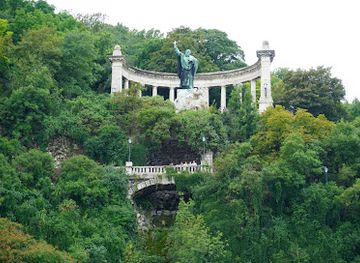
Gellért Hill
Discover the breathtaking views and rich history of Gellért Hill, a natural preserve and iconic landmark in Budapest that enchants every visitor.
-
Ferris wheel
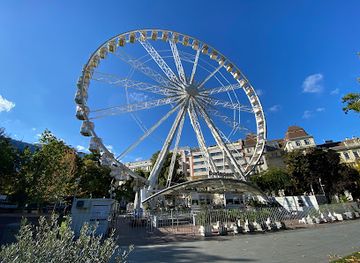
Ferris Wheel of Budapest
Experience breathtaking panoramic views of Budapest from the iconic Ferris Wheel, a perfect blend of adventure and picturesque scenery.
-
Historical place
Vajdahunyad Castle
Explore the enchanting Vajdahunyad Castle in Budapest, where history, architecture, and culture converge in a stunning park setting.
-
National museum
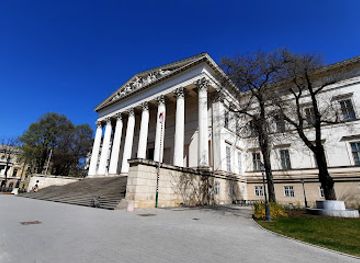
Hungarian National Museum
Explore Hungary's rich heritage at the Hungarian National Museum, showcasing a vast array of historical artifacts and cultural treasures in Budapest.

Best landmarks in Alföld (Great Hungarian Plain)
Hortobágy’s Nine-Arch Bridge is one of the most recognisable structures of the Hungarian plain, spanning the channel near the village of Hortobágy and symbolising the historic movement of herds and travellers across the puszta. The Great Reformed Church in Debrecen dominates the city’s main square and represents the city’s long-standing association with Hungarian Protestantism and civic independence. Szeged’s Votive Church, with its twin towers and monumental setting, was built after the catastrophic 1879 flood and expresses the city’s subsequent rebuilding in historicist form. Kecskemét’s Town Hall and Cifrapalota are notable examples of the colourful Hungarian Art Nouveau that developed in the late nineteenth and early twentieth centuries. In the south, the historic ensemble of Ópusztaszer National Heritage Park presents reconstructed rural buildings and nationally significant historical interpretation. The flatness of the Alföld is itself a geographical landmark: vast horizons, isolated farmsteads, floodplain corridors and alkaline lakes create a visual character found nowhere else in Hungary. Lake Tisza and the Tisza’s changing channels provide natural landmarks whose form reflects both river processes and modern water management.
-
 Terrain
Alföld
Experience the tranquil beauty and cultural heritage of Alföld, Hungary's stunning flat plains, perfect for nature lovers and adventurers alike.
Explore Alföld (Great Hungarian Plain) on the map
Plan your trip on one map. See where the top cities, national parks and sights are, and book hotels and experiences in a few clicks.
Best hotels in Alföld (Great Hungarian Plain)
Best restaurants in Alföld (Great Hungarian Plain)
Food in the Alföld is closely connected with farming, river fisheries, market gardening and pastoral traditions. Paprika, onions, garlic, cabbage, potatoes and seasonal vegetables underpin many substantial dishes, while fish soup is particularly associated with the Tisza and southern Hungarian cooking. Szeged is strongly linked with paprika and fish-based cuisine, although recipes and styles vary between towns. Gulyás, pörkölt, sausages, cured meats, stuffed cabbage and savoury pastries are common across the wider Hungarian culinary tradition, with local variations in seasoning and preparation. Kecskemét and the central plain are known for fruit-growing and products made from apricots and other orchard produce, while rural areas offer honey, cheeses, preserves and baked goods at markets or farm shops. Dining ranges from traditional csárdas and village inns to cafés, modern restaurants and food halls in Debrecen and Szeged. Wine from nearby lowland and surrounding regions, pálinka and locally produced fruit drinks may appear on menus, but visitors should check whether a product is regional rather than assuming every Hungarian speciality originated here.
-
Hungarian
Gundel Cafe Patisserie Restaurant
Experience the elegance of Gundel Cafe Patisserie in Budapest, where authentic Hungarian cuisine meets timeless charm.

Best bars in Alföld (Great Hungarian Plain)
Evening life in the Alföld is concentrated in its larger cities rather than distributed evenly across the countryside. Debrecen and Szeged have the broadest choice of cafés, wine bars, pubs, live-music spaces and student-oriented venues, reflecting their universities and sizeable urban populations. Kecskemét, Szolnok and Nyíregyháza offer more modest but varied selections around central streets and cultural venues. In smaller market towns, the traditional pub, restaurant or seasonal terrace remains more important than a dedicated club scene. Summer festivals, theatre programmes and open-air concerts can add activity in city centres and spa towns, but schedules change from year to year. Around Lake Tisza and the national parks, evenings are generally quiet, with accommodation restaurants, village pubs and waterside venues providing the main options. Visitors should plan their return transport in advance when staying outside a major town, since late services are less reliable in rural districts.
-
Pub
Szimpla Kert
Discover Szimpla Kert, Budapest's famous ruin pub, where vibrant culture, eclectic decor, and lively nightlife come together for an unforgettable experience.
-
Bar
Instant-Fogas Complex
Discover the ultimate nightlife experience at Instant-Fogas Complex in Budapest, where bars meet clubs for endless fun and delicious food.
-
Gastropub
Élesztő
Discover Élesztő, Budapest's premier gastropub offering a vibrant atmosphere, craft beers, and delicious food in a charming beer garden.
-
Bar
360 Bar
Experience Budapest from above at 360 Bar, where exquisite cocktails meet breathtaking panoramic views in a vibrant atmosphere.


Best nightclubs in Alföld (Great Hungarian Plain)
Evening life in the Alföld is concentrated in its larger cities rather than distributed evenly across the countryside. Debrecen and Szeged have the broadest choice of cafés, wine bars, pubs, live-music spaces and student-oriented venues, reflecting their universities and sizeable urban populations. Kecskemét, Szolnok and Nyíregyháza offer more modest but varied selections around central streets and cultural venues. In smaller market towns, the traditional pub, restaurant or seasonal terrace remains more important than a dedicated club scene. Summer festivals, theatre programmes and open-air concerts can add activity in city centres and spa towns, but schedules change from year to year. Around Lake Tisza and the national parks, evenings are generally quiet, with accommodation restaurants, village pubs and waterside venues providing the main options. Visitors should plan their return transport in advance when staying outside a major town, since late services are less reliable in rural districts.
-
Disco club
Boomerang Club
Discover Szolnok's vibrant nightlife at Boomerang Club, where music, dancing, and unforgettable memories await every weekend.
-
Night club
Goose Bar Club
Discover Kecskemét's vibrant nightlife at Goose Bar Club, where music, dancing, and unforgettable experiences await every visitor.
-
Night club
Siesta Club, Szolnok
Discover the heart of Szolnok's nightlife at Siesta Club, where music, dance, and vibrant energy unite for an unforgettable experience.


Best shops in Alföld (Great Hungarian Plain)
Shopping in the Alföld is strongest in its regional cities and market towns, where central streets combine national retailers with independent food shops, cafés, bookshops and craft businesses. Debrecen, Szeged and Kecskemét provide the widest urban choice, while smaller towns are useful for traditional markets and practical local produce rather than extensive retail districts. Look for paprika, dried peppers, honey, fruit preserves, sausages, cheeses, wine and pálinka from reputable producers, checking labelling and carrying restrictions before buying food or drink for travel. Folk-inspired textiles, ceramics, carved objects and embroidered goods appear in heritage centres and craft outlets, though quality and provenance vary. Markets can be particularly rewarding for seasonal vegetables, fruit and baked goods, but their days and opening arrangements differ between settlements. Around the national parks, visitor centres and heritage sites may sell books, maps, nature guides and locally themed crafts. The region is better suited to browsing for food, traditional products and practical souvenirs than to luxury shopping, with the main urban centres offering the most dependable choice when specialist purchases are needed.
-
Shopping mall
Westend
Discover the ultimate shopping experience at Westend Mall in Budapest, featuring hundreds of shops, dining options, and entertainment for all ages.
-
Shopping mall
ÁRKÁD Budapest
Experience the best of Budapest shopping at ÁRKÁD, where style meets flavor in a vibrant mall atmosphere.
-
Shopping mall
Allee Mall
Discover Allee Mall in Budapest: Your ultimate shopping haven with diverse stores, delicious dining, and family-friendly entertainment.
-
Shopping mall
Mammut
Explore Mammut Shopping Mall in Budapest for a unique blend of shopping, dining, and entertainment amid stunning architecture.


Get your free copy of our complete guide to Alföld (Great Hungarian Plain), delivered straight to you.
Everything on this page, from attractions and restaurants to essentials and local phrases, in one PDF you can read offline, print or share.
Already have an account? Sign in
Your Alföld (Great Hungarian Plain) guide is ready.
We'll send it to · Not you? Sign out

Getting your guide ready…
We are putting together a fresh copy of the Alföld (Great Hungarian Plain) guide. This can take up to a minute.
This can take a few moments. If your browser asks, choose Allow so the download can start. You'll find the guide in your Downloads folder.
Nothing happened? Download it again
Sorry, the guide is taking longer than usual. Please try again in a minute, or get it by email instead.
Alföld (Great Hungarian Plain) essentials
Currency and Payment
Safety
Emergency Situations
Do's and Don'ts
Local Tips
From Eve
Local phrases worth knowing
You don't need to get them perfect. A few words go a long way, and locals appreciate the effort.
Basics
| English | Local | Say it |
|---|---|---|
| Hello | Szia | [see-yah] |
| Goodbye | Viszlát | [vees-laht] |
| Yes | Igen | [ee-gen] |
| No | Nem | [nem] |
| Please/You're welcome | Kérem/Nincs mit | [kay-rem/neench meet] |
| Thank you | Köszönöm | [kuh-soh-nuhm] |
| Excuse me/Sorry | Elnézést/Sajnálom | [el-nay-zayst/sahy-nah-lom] |
| How are you? | Hogy vagy? | [hohdj vahd?] |
| Fine. And you? | Jól. És te? | [yohl. es teh?] |
| Do you speak English? | Beszélsz angolul? | [beh-sayls ahn-goh-lul?] |
| I don't understand | Nem értem | [nem air-tem] |
Eating & Drinking
| English | Local | Say it |
|---|---|---|
| I'd like to see the menu, please | Szeretném megnézni az étlapot, kérem | [seh-reht-neem meg-nayz-nee ahz ayt-lah-poh-t, kay-rem] |
| I don't eat meat | Nem eszem húst | [nem eh-sem hoosht] |
| Cheers! | Egészségedre! | [eh-geh-shay-ged-reh] |
| I would like to pay, please | Szeretném kifizetni, kérem | [seh-reht-neem kee-fee-zet-nee, kay-rem] |
Emergencies
| English | Local | Say it |
|---|---|---|
| Help! | Segítség! | [seh-geet-shehg] |
| Go away! | Menj el! | [men-y el!] |
| Call the Police! | Hívd a rendőrséget! | [heevd ah ren-dor-sheh-get!] |
| Call a doctor! | Hívd az orvost! | [heevd ahz or-vosh-t!] |
| I'm lost | Elvesztem | [el-ves-tem] |
| I'm ill | Beteg vagyok | [beh-tehg vah-djok] |
Shopping
| English | Local | Say it |
|---|---|---|
| I'd like to buy... | Szeretnék venni... | [seh-reht-nek ven-nee...] |
| I'm just looking | Csak nézelődöm | [chahk nay-zay-loh-dohm] |
| How much is it? | Mennyibe kerül? | [men-nee-beh keh-rool?] |
| That's too expensive | Az túl drága | [ahz tool drah-gah] |
| Can you lower the price? | Le tudnád vinni az árat? | [leh tood-nahd vin-nee ahz ah-raht?] |
Time & Numbers
| English | Local | Say it |
|---|---|---|
| What time is it? | Hány óra van? | [hahn-ee oh-rah vahn?] |
| It's one o'clock | Egy óra van | [ehdgy oh-rah vahn] |
| Half past (10) | Fél (10) | [fehl (10)] |
| Morning | Reggel | [rehg-gel] |
| Afternoon | Délután | [day-loo-tahn] |
| Evening | Este | [esh-teh] |
| Yesterday | Tegnap | [teh-nahp] |
| Today | Ma | [mah] |
| Tomorrow | Holnap | [hol-nahp] |
| 1 | 1 | [egy] |
| 2 | 2 | [kettő] |
| 3 | 3 | [három] |
| 4 | 4 | [négy] |
| 5 | 5 | [öt] |
| 6 | 6 | [hat] |
| 7 | 7 | [hét] |
| 8 | 8 | [nyolc] |
| 9 | 9 | [kilenc] |
| 10 | 10 | [tíz] |
Transport & Directions
| English | Local | Say it |
|---|---|---|
| Where's a/the...? | Hol van a...? | [hol vahn ah...?] |
| What's the address? | Mi a cím? | [mee ah teem?] |
| Can you show me (on the map)? | Meg tudnád mutatni (a térképen)? | [meg tood-nahd moo-taht-nee (ah tayr-kay-pen)?] |
| When's the next (bus)? | Mikor jön a következő (busz)? | [mee-kor yohn ah keh-vet-keh-zo (booz)?] |
| A ticket (to ....) | Egy jegyet (....) | [ehdgy yeh-get (....)] |
History of Alföld (Great Hungarian Plain)
Prehistoric Settlements and the River Plain
The Alföld has supported human settlement since prehistoric times, when communities exploited the rivers, wetlands, grasslands and fertile soils of the lowland basin. Archaeological sites across eastern and southern Hungary reveal changing patterns of farming, livestock keeping, craft production and trade. The landscape was never uniformly dry: watercourses, marshes and periodically flooded areas were central to life, while higher ridges provided safer ground for settlement. Later earthworks and burial sites testify to the movement and interaction of peoples across the plain, making the region an important archaeological record of the Carpathian Basin.
Roman Frontier and Sarmatian Landscapes
The Roman Empire did not incorporate the whole Alföld, but its frontier province of Pannonia lay to the west and south-west, and Roman influence reached the plain through trade, diplomacy and military contact. The area east of the Danube was also associated with Sarmatian communities, whose settlements and burial grounds are represented in the archaeological record. Roman goods, roads and frontier activity connected the lowland to wider commercial networks. This period established the Alföld as a zone of interaction between imperial power and peoples living beyond the formal frontier.
The Magyar Conquest and Medieval Kingdom
The Magyar conquest of the Carpathian Basin in the late ninth century reshaped the political and cultural history of the plain. During the medieval Kingdom of Hungary, the Alföld developed a network of villages, market centres, churches and estates, supported by agriculture and livestock. The plain’s rivers and routes connected settlements to Buda and to markets beyond Hungary. Some medieval centres declined or disappeared during later wars, but surviving churches, earthworks, settlement patterns and town layouts preserve traces of this period. The region’s long association with horse breeding and cattle raising also has medieval roots.
Ottoman Rule and the Depopulated Plain
From the sixteenth century, much of the central and southern Alföld became a contested frontier between the Ottoman Empire and Habsburg-ruled Hungary. Warfare, taxation, migration and insecurity caused many villages to be abandoned or reduced, while some larger market towns survived by negotiating their position between rival authorities. Pastoralism became especially important in areas where settled agriculture was disrupted, and cattle were driven over long distances towards western markets. The period left a lasting imprint on the region’s settlement geography, fortifications and cultural memory.
Resettlement, Market Towns and Agricultural Expansion
After the Ottoman withdrawal, Habsburg authorities, landowners and settlers rebuilt or reorganised much of the Alföld. Market towns expanded, villages were repopulated and agricultural production became increasingly commercial. Debrecen, Kecskemét, Szeged and other centres developed strong trading roles, while livestock, grain, fruit, wine and garden produce linked the plain to domestic and international markets. In some places, distinctive planned streets and farm outbuildings emerged as settlement extended beyond compact town centres. This reconstruction created much of the economic and urban framework still visible today.
River Regulation and the Nineteenth-Century Transformation
Nineteenth-century river regulation profoundly altered the Alföld. Embankments, drainage works and channel modifications reduced the frequency of catastrophic flooding and opened land for more intensive cultivation, although they also changed wetlands and floodplain ecosystems. The Tisza was central to this transformation, and the work associated with its regulation helped integrate the plain more closely into the national economy. Railways then connected market towns to Budapest and one another, accelerating the movement of grain, livestock, industrial goods and people. The modern agricultural landscape was built through these changes.
War, Reconstruction and Socialist Agriculture
The twentieth century brought both severe disruption and extensive economic change. The two world wars, the dissolution of historic markets and the political transformations after 1945 affected towns, estates and rural communities across the plain. Under state socialism, agricultural cooperatives and large-scale farming replaced much of the earlier landholding structure, while industrial plants expanded in major towns such as Szeged, Debrecen and Kecskemét. After 1989, land ownership, production and employment patterns changed again. Today, modern agriculture, food processing, conservation and tourism coexist across a landscape shaped by these successive reforms.
National Parks and the Protection of the Puszta
The later twentieth century saw growing recognition that the Alföld’s grasslands, wetlands and traditional pastoral systems were environmentally and culturally significant. Hortobágy became Hungary’s first national park in 1973 and was later recognised internationally for its cultural landscape. Kiskunság National Park followed in 1975, protecting a more varied mosaic of sandy terrain, alkaline lakes and meadows. Conservation in the plain is not limited to scenery: it also concerns grazing practices, migratory birds, water management and the survival of buildings and customs associated with pastoral life.
Alföld (Great Hungarian Plain) in Photos
Browse through our photo collection highlighting the charm and character of the destination.
Neighbouring regions of Alföld (Great Hungarian Plain)
The closest regions to Alföld (Great Hungarian Plain), if you have time for more than one.
-

-

-

-

-


Swipe for more regions
Explore more

Explore more of Hungary
Discover Hungary: A land of historic cities, scenic landscapes, thermal baths, and rich culinary traditions in the heart of Europe.
Explore Hungary