

Free Central Transdanubia Travel Guide & Mobile App
Explore Central Transdanubia with free travel guides. Discover regional history, expert tips, proposed trips, and audio guides on web or mobile app.


Explore Central Transdanubia for royal towns, Lake Balaton's northern shore, forested hills, vineyards and Hungary's layered cultural heritage.
Read more about Central Transdanubia
When is the best time to visit Central Transdanubia?
Best: June–August · 24–26°C| Month | High (°C) | Rainfall (mm) |
|---|---|---|
| January | 2 | 33 |
| February | 4 | 30 |
| March | 10 | 40 |
| April | 15 | 50 |
| May | 20 | 60 |
| June (best) | 24 | 65 |
| July (best) | 26 | 65 |
| August (best) | 25 | 60 |
| September | 21 | 55 |
| October | 15 | 50 |
| November | 9 | 40 |
| December | 4 | 35 |
Getting to and around Central Transdanubia
How to get there
Transportation
Top city travel guides in Central Transdanubia
The cities of Central Transdanubia, and the easiest places to base yourself.
-

-

-

-

-

-


Swipe for more cities
Destinations in Central Transdanubia
Resorts, valleys and scenic spots worth a trip of their own.
-

-

-

-
-

-


Swipe for more destinations
Best attractions in Central Transdanubia
Central Transdanubia offers a broad mixture of historic towns, lake recreation, rural landscapes and specialist cultural sites. Székesfehérvár's museums and medieval remains explain its former royal importance, while Esztergom combines a major ecclesiastical centre with Danube scenery and the historic Water Town below the basilica. Tata brings together a castle, the Old Lake and pleasant walking routes, and Veszprém provides an elevated historic centre with museums, churches and views over the Séd valley. Around Lake Balaton, visitors can swim, sail, cycle and walk, but the northern shore also rewards excursions to Tihany, Balatonfüred and the villages of the Balaton Uplands. The Balaton Uplands National Park protects diverse volcanic, limestone and wetland environments, including habitats around Lake Kis-Balaton on its western edge. Inland, the Bakony, Vértes and Gerecse hills provide forests, caves, viewpoints and marked trails suited to walking and cycling. Herend offers insight into porcelain manufacture, while vineyards and cellar doors around Somló and the northern Balaton districts add a food-and-landscape dimension. The attraction landscape is therefore less about one concentrated resort than about moving between royal heritage, living towns, protected countryside and lake communities.
-
Tourist attraction
Tata Castle
Explore Tata Castle: A stunning fortress in Hungary, rich in history and surrounded by breathtaking natural beauty, perfect for a memorable visit.
-
Tourist attraction
Turul Monument
Discover the Turul Monument in Tatabánya, a majestic symbol of Hungarian heritage offering stunning views and a deep connection to history.
-
Tourist attraction
Fényes Nature Trail
Explore the stunning Fényes Nature Trail in Tata, Hungary, where nature’s beauty and tranquility await outdoor enthusiasts and hikers.
-
Castle
Csókakő Castle
Explore the enchanting Csókakő Castle, a historic fortress showcasing medieval architecture and stunning views in the heart of Hungary's countryside.


Best landmarks in Central Transdanubia
The Basilica of Esztergom is Central Transdanubia's most commanding architectural landmark, standing above the Danube and marking the importance of Esztergom in Hungarian Christianity and state history. In Székesfehérvár, the medieval ruins of the former royal basilica and the historic centre recall the city's role in coronations and royal burials. Veszprém's Castle District occupies a prominent ridge above the Séd valley, with ecclesiastical buildings and civic architecture reflecting centuries of rebuilding. Tata Castle, standing beside the Old Lake, is a memorable example of a fortified residence shaped by both medieval and later architectural history. On Lake Balaton, Tihany Abbey crowns the peninsula and has become one of the region's most recognisable silhouettes, while the peninsula's volcanic hills and lake views form a natural landmark in their own right. The Somló hill, an isolated volcanic butte rising above the surrounding countryside, is both a geographical marker and a historic wine landscape. Further inland, the forested limestone ridges of the Bakony, Vértes and Gerecse define the region's horizons and provide a more expansive natural counterpart to its churches, castles and urban monuments.
-
Fortress
Fisherman's Bastion
Experience the stunning views and rich history at Fisherman's Bastion, Budapest's fairy-tale fortress overlooking the Danube.
-
Bridge
Széchenyi Chain Bridge
Discover the stunning Széchenyi Chain Bridge, an architectural marvel and a symbol of Budapest, offering breathtaking views and rich history across the Danube.
-
Castle
Buda Castle
Explore Buda Castle, a historical marvel in Budapest offering stunning views, rich culture, and artistic treasures in the heart of Hungary.
-
Government office
Hungarian Parliament Building
Discover the breathtaking Hungarian Parliament Building, a masterpiece of Gothic Revival architecture and a must-visit historical site in Budapest.


Explore Central Transdanubia on the map
Plan your trip on one map. See where the top cities, national parks and sights are, and book hotels and experiences in a few clicks.
Best hotels in Central Transdanubia
Best restaurants in Central Transdanubia
Dining in Central Transdanubia combines Hungary's broad culinary traditions with ingredients and settings associated with lake country, vineyards and market towns. Menus commonly include goulash-style soups, stews, paprika-seasoned dishes, freshwater fish and substantial regional pastries, while the northern Balaton area has developed a strong culture of seasonal produce, contemporary bistros and informal vineyard dining. Around Lake Balaton, fish restaurants and waterfront cafés are common, although menus and quality vary by season and location. Rural inns and village restaurants provide a more traditional setting, while Székesfehérvár, Veszprém and the larger resort towns offer the widest choice of modern Hungarian and international food. Look for local cheeses, orchard fruit, honey, baked goods and wines from Somló or the northern Balaton districts at markets and specialist shops. In wine villages, tastings may be arranged through individual cellars rather than walk-in venues, so advance contact is sensible. Coffeehouses and pastry shops remain useful stops in the historic towns, particularly when travelling outside the summer season.
-
Buffet
Trófea Grill Restaurant Óbuda
Experience unlimited Hungarian flavors at Trófea Grill Restaurant Óbuda - a buffet paradise for food lovers in Budapest.
-
Hungarian
Kéhli Vendéglő
Experience authentic Hungarian cuisine at Kéhli Vendéglő in Budapest's charming District III – where tradition meets flavor.
-
German
Salvator Bajor Étterem
Experience authentic German cuisine at Salvator Bajor Étterem in Székesfehérvár – where hearty flavors meet warm hospitality.
-
Restaurant
Don Pepe XI. Menyecske utca 15.
Discover authentic Hungarian flavors at Don Pepe in Budapest's District XI – a must-visit restaurant offering diverse dishes in a warm atmosphere.


Best bars in Central Transdanubia
Evening life varies sharply across Central Transdanubia. Székesfehérvár and Veszprém have the broadest urban choice, including traditional pubs, cafés, wine bars, live music and late-opening venues, while Esztergom and Tata offer a smaller scene centred on restaurants, pubs and waterside or historic settings. On Lake Balaton, Balatonfüred and other larger northern-shore resorts become busier in summer, with terraces, wine bars, seasonal entertainment and places open later than in inland villages. Outside the resort season, evening activity is quieter and often focuses on dinner, local wine or a pub rather than nightclubs. Small breweries, cellar tastings and cultural performances can be more representative of the region than a large club scene, but arrangements and opening patterns change, particularly in rural areas. Visitors should check current details locally and avoid treating seasonal nightlife as a year-round feature.
-
Pub
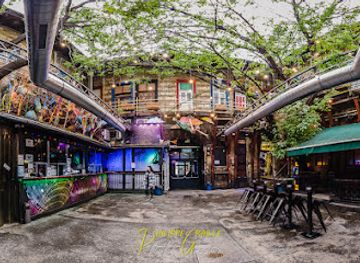
Szimpla Kert
Discover Szimpla Kert, Budapest's iconic ruin pub, where culture, nightlife, and local flavors come together in a vibrant, artistic atmosphere.
-
Bar
360 Bar
Experience breathtaking views and exquisite cocktails at Budapest's premier rooftop bar, 360 Bar, a must-visit for every traveler.
-
Cocktail bar
Rumpus Tiki Bar
Experience the vibrant atmosphere and exotic cocktails at Rumpus Tiki Bar, a tropical oasis in the heart of Budapest.
-
Bar
High Note SkyBar
Experience breathtaking views and exquisite cocktails at High Note SkyBar, Budapest's premier rooftop destination.


Best nightclubs in Central Transdanubia
Evening life varies sharply across Central Transdanubia. Székesfehérvár and Veszprém have the broadest urban choice, including traditional pubs, cafés, wine bars, live music and late-opening venues, while Esztergom and Tata offer a smaller scene centred on restaurants, pubs and waterside or historic settings. On Lake Balaton, Balatonfüred and other larger northern-shore resorts become busier in summer, with terraces, wine bars, seasonal entertainment and places open later than in inland villages. Outside the resort season, evening activity is quieter and often focuses on dinner, local wine or a pub rather than nightclubs. Small breweries, cellar tastings and cultural performances can be more representative of the region than a large club scene, but arrangements and opening patterns change, particularly in rural areas. Visitors should check current details locally and avoid treating seasonal nightlife as a year-round feature.
-
Night club
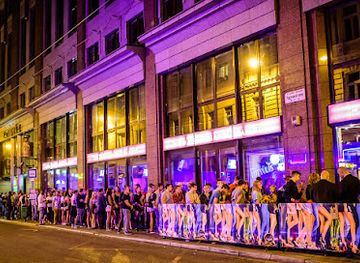
Instant-Fogas Complex
Discover the heart of Budapest's nightlife at Instant-Fogas Complex, where bars, grills, and dance floors come alive in a vibrant atmosphere.
-
Night club
Club Heaven Budapest
Discover the ultimate nightlife experience at Club Heaven Budapest, where electrifying music and vibrant energy come together for an unforgettable night.
-
Night club
Peaches And Cream Club
Experience the vibrant nightlife of Budapest at Peaches And Cream Club, where music, dance, and fun come together for an unforgettable night.
-
Night club
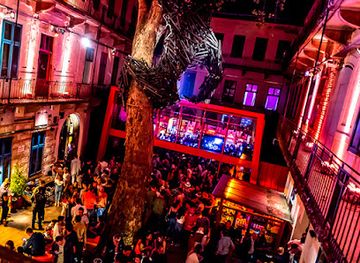
Doboz
Discover the electrifying nightlife of Budapest at Doboz, a renowned night club featuring an open-air courtyard and diverse music.

Best shops in Central Transdanubia
Shopping in Central Transdanubia is strongest in the historic centres and market towns rather than in large luxury districts. Székesfehérvár and Veszprém have pedestrianised streets, independent retailers, food shops, cafés and galleries, while Tata and Esztergom are useful for locally produced foods, books, crafts and practical supplies. Lake Balaton resorts offer seasonal markets and shops selling wine, preserves, honey, ceramics, textiles and other regional products, though the range is more limited outside summer. Herend porcelain is the region's best-known specialist purchase, with the manufactory and associated visitor facilities presenting a long-standing decorative tradition; authentic pieces are a considered purchase rather than a casual souvenir. Wine from Somló and the northern Balaton districts, along with paprika products, fruit preserves and confectionery, travels well when properly packaged. Farmers' markets and village producers are particularly rewarding for cheese, honey and baked goods, but opening days and payment options vary, so carry cash and check arrangements before making a special journey.
-
Outlet mall
Premier Outlet
Explore Premier Outlet in Biatorbágy for unbeatable deals on top brands, delightful dining, and a perfect day of shopping near Budapest.
-
Shopping mall
Vertes Center Shopping Mall
Discover the vibrant shopping scene at Vertes Center Shopping Mall in Tatabánya, featuring diverse stores, delightful dining, and family-friendly entertainment.
-
Sporting goods store
Decathlon Tatabánya
Explore Decathlon Tatabánya for an unparalleled selection of sporting goods and gear, perfect for athletes and adventurers alike.
-
Discount supermarket
Lidl
Discover Lidl in Mór: Your ultimate discount supermarket for fresh groceries and local flavors, perfect for travelers seeking quality and value.


Get your free copy of our complete guide to Central Transdanubia, delivered straight to you.
Everything on this page, from attractions and restaurants to essentials and local phrases, in one PDF you can read offline, print or share.
Already have an account? Sign in
Your Central Transdanubia guide is ready.
We'll send it to · Not you? Sign out

Getting your guide ready…
We are putting together a fresh copy of the Central Transdanubia guide. This can take up to a minute.
This can take a few moments. If your browser asks, choose Allow so the download can start. You'll find the guide in your Downloads folder.
Nothing happened? Download it again
Sorry, the guide is taking longer than usual. Please try again in a minute, or get it by email instead.
Central Transdanubia essentials
Currency and Payment
Safety
Emergency Situations
Do's and Don'ts
Local Tips
From Eve
Local phrases worth knowing
You don't need to get them perfect. A few words go a long way, and locals appreciate the effort.
Basics
| English | Local | Say it |
|---|---|---|
| Hello | Szia | [SEE-yah] |
| Goodbye | Viszlát | [VEES-laht] |
| Yes | Igen | [EE-gen] |
| No | Nem | [NEM] |
| Please/You're welcome | Kérem/Nincs mit | [KAY-rem/NINCH meet] |
| Thank you | Köszönöm | [KUR-suh-nuhm] |
| Excuse me/Sorry | Elnézést/Sajnálom | [EL-nay-zesht/SHY-nah-lohm] |
| How are you? | Hogy vagy? | [HOHDJ vahd?] |
| Fine. And you? | Jól. És te? | [YOHL. AYSH tay?] |
| Do you speak English? | Beszélsz angolul? | [BESAYLSZ AHN-goh-lool?] |
| I don't understand | Nem értem | [NEM AIR-tem] |
Eating & Drinking
| English | Local | Say it |
|---|---|---|
| I'd like to see the menu, please | Szeretném megnézni az étlapot, kérem | [SEH-reh-tnaym MEHG-nay-zee az AYT-lah-poht, KAY-rem] |
| I don't eat meat | Nem eszem húst | [NEM EH-sem HOOSHT] |
| Cheers! | Egészségedre! | [EH-gay-shay-ged-reh!] |
| I would like to pay, please | Szeretnék fizetni, kérem | [SEH-reh-tnayk FEE-zayt-nee, KAY-rem] |
Emergencies
| English | Local | Say it |
|---|---|---|
| Help! | Segíts! | [SHAY-geet!] |
| Go away! | Menj el! | [MEN-yel!] |
| Call the Police! | Hívd a rendőrséget! | [HEEVD ah REN-dor-say-geh-t!] |
| Call a doctor! | Hívd az orvost! | [HEEVD ahz OR-vohst!] |
| I'm lost | Elvesztem | [EL-vesz-tem] |
| I'm ill | Beteg vagyok | [BEH-teg VAH-dyok] |
Shopping
| English | Local | Say it |
|---|---|---|
| I'd like to buy... | Szeretnék venni... | [SEH-reh-tnayk VEH-nee...] |
| I'm just looking | Csak nézelődöm | [CHAHK NAY-zay-loh-dohm] |
| How much is it? | Mennyibe kerül? | [MEN-nee-beh KEH-rool?] |
| That's too expensive | Ez túl drága | [EZ TOOL DRAH-gah] |
| Can you lower the price? | Le tudnád csökkenteni az árat? | [LEH TOOD-nahd CHOEK-ken-teh-nee az AHR-aht?] |
Time & Numbers
| English | Local | Say it |
|---|---|---|
| What time is it? | Hány óra van? | [HAHN-ee OH-rah vahn?] |
| It's one o'clock | Egy óra van | [EDJ OH-rah vahn] |
| Half past (10) | Fél (10) | [FEEL (10)] |
| Morning | Reggel | [REG-gel] |
| Afternoon | Délután | [DAY-loo-tahn] |
| Evening | Este | [ESH-teh] |
| Yesterday | Tegnap | [TEH-nahp] |
| Today | Ma | [MAH] |
| Tomorrow | Holnap | [HOL-nahp] |
| 1 | 1 | [EGY] |
| 2 | 2 | [KETTŐ] |
| 3 | 3 | [Három] |
| 4 | 4 | [Négy] |
| 5 | 5 | [Öt] |
| 6 | 6 | [Hat] |
| 7 | 7 | [Hét] |
| 8 | 8 | [Nyolc] |
| 9 | 9 | [Kilenc] |
| 10 | 10 | [Tíz] |
Transport & Directions
| English | Local | Say it |
|---|---|---|
| Where's a/the...? | Hol van egy...? | [HOL vahn EGY...?] |
| What's the address? | Mi a cím? | [MEE ah TSEEM?] |
| Can you show me (on the map)? | Meg tudnád mutatni (a térképen)? | [MEHG TOOD-nahd MOO-tat-nee (ah TAYR-kay-pen)?] |
| When's the next (bus)? | Mikor jön a következő (busz)? | [MEE-kor YUN ah KÖV-et-keh-zo (booz)?] |
| A ticket (to ....) | Egy jegy (.....) | [EGY YEDJ (.....)] |
History of Central Transdanubia
Roman Pannonia and the Danube Frontier
Central Transdanubia formed part of the Roman province of Pannonia, whose settlements and roads connected the Danube frontier with the interior. Roman remains are especially important around places such as Székesfehérvár and along the wider Danube corridor, although the visible evidence varies from excavated structures to archaeological finds incorporated into later urban landscapes. Fortifications, roads and trading settlements reflected the strategic importance of the region between the river frontier and Lake Balaton. This Roman legacy established routes and settlement patterns that continued to influence the region long after imperial administration ended.
The Medieval Royal Centre at Székesfehérvár
Székesfehérvár became one of medieval Hungary's central political and religious sites after the establishment of the Hungarian kingdom. Its basilica was used for coronations and became a royal burial place, giving the city exceptional importance in the country's medieval history. Kings held assemblies there and the settlement developed as a centre of administration, trade and ecclesiastical life. The medieval church was later destroyed, but archaeological remains and the layout of the historic centre preserve the memory of the royal city. This history explains why Székesfehérvár remains central to Hungarian national identity.
Castles, Monasteries and the Ottoman Frontier
From the sixteenth century, Central Transdanubia became a contested frontier between the Habsburg Kingdom of Hungary and the Ottoman Empire. Fortified places including Esztergom, Veszprém, Székesfehérvár and Tata changed hands or were drawn into military campaigns, while towns and rural communities suffered disruption. Ottoman rule and subsequent Habsburg reconquest altered settlement patterns, administration and religious life. The region's castles, reconstructed fortifications and baroque townscapes therefore reflect several layers of conflict and rebuilding rather than a single uninterrupted medieval past.
The Habsburg Era and the Renewal of Historic Towns
During the eighteenth century, much of Central Transdanubia was rebuilt after the Ottoman wars. Catholic institutions, noble estates and civic authorities sponsored churches, monasteries, public buildings and planned streets in the baroque style. Veszprém, Székesfehérvár and Esztergom acquired much of the architectural character still visible in their historic centres during this period and the following nineteenth century. Agricultural production also expanded, while market towns connected villages and estates with larger regional economies. The era created the urban and ecclesiastical setting that visitors encounter today.
Balaton Tourism and the Rise of Spa Culture
In the nineteenth century, improvements in roads and railway connections helped Lake Balaton develop from a local fishing and agricultural landscape into a major leisure destination. Balatonfüred became associated with mineral springs, promenades, villas and medical tourism, while other northern-shore settlements grew as bathing and holiday centres. The expansion of railways made the lake more accessible from Budapest and other Hungarian cities. This transformation established the northern shore's enduring combination of resort architecture, waterside recreation, vineyards and seasonal tourism.
Industry, Mining and Transport in the Hills
The hills and basins of Central Transdanubia supported mining, quarrying, manufacturing and transport as Hungary industrialised. Coal extraction around the Vértes and Bakony, bauxite mining in the Bakony and industrial development near Tatabánya and other towns reshaped local economies and landscapes. The region also became associated with specialised production, including the Herend porcelain manufactory, founded in the nineteenth century. Although many traditional extractive industries later declined or closed, former industrial sites, mining landscapes and museums preserve evidence of the labour and infrastructure that transformed the region.
The Region after 1945
After the Second World War, Central Transdanubia experienced socialist industrialisation, state economic planning and substantial urban growth. Mining, engineering, energy and manufacturing expanded in several towns, while Lake Balaton became one of Hungary's most important domestic and international holiday areas. The political transition after 1989 brought private enterprise, new investment and changes in agriculture and tourism. Today the region combines historic conservation with modern industry, wine production, recreation and environmental management, while debates over lake development and rural change continue to influence its future.
Central Transdanubia in Photos
Browse through our photo collection highlighting the charm and character of the destination.
Neighbouring regions of Central Transdanubia
The closest regions to Central Transdanubia, if you have time for more than one.
-

-

-

-

-


Swipe for more regions
Explore more

Explore more of Hungary
Discover Hungary: A land of historic cities, scenic landscapes, thermal baths, and rich culinary traditions in the heart of Europe.
Explore Hungary