

Copper Harbor Travel Guide - Free Web & App
Your ultimate guide to Copper Harbor. Discover top landmarks, proposed trips, and local tips. Free on the web or via the Evendo companion app.


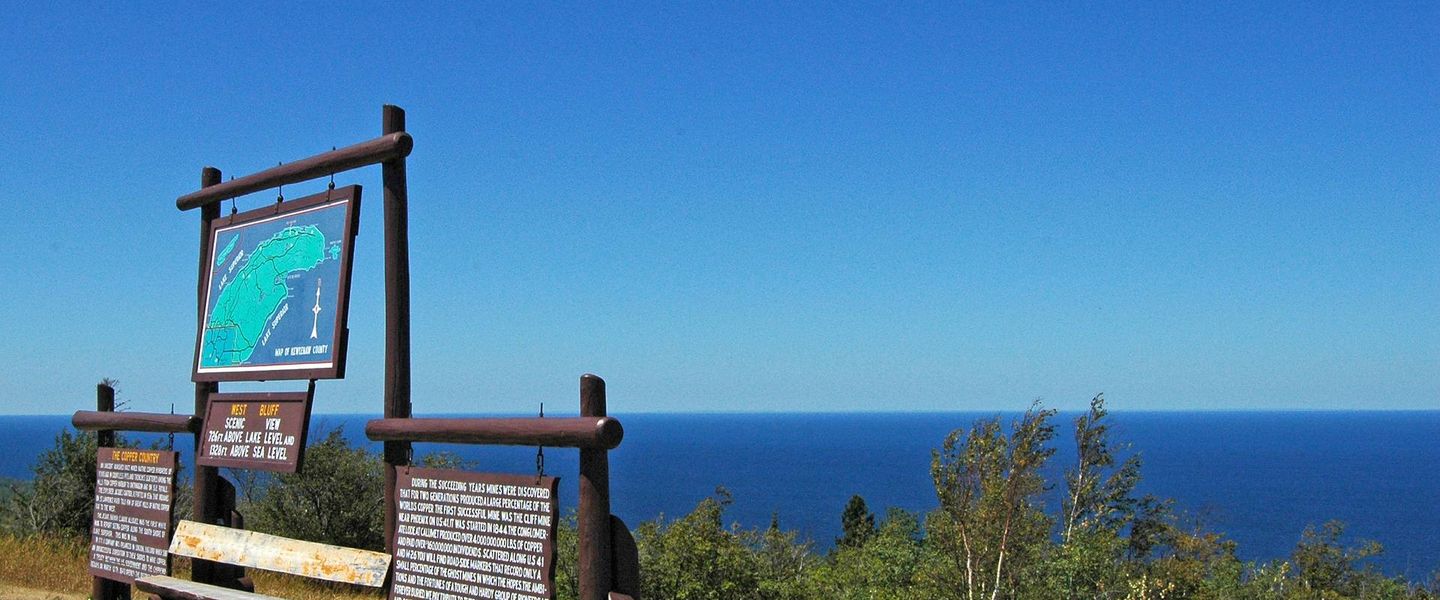


Copper Harbor, Michigan, offers Lake Superior shores, historic Fort Wilkins, forest trails, cycling, dark skies and Keweenaw copper heritage near Brockway Mountain.
Landscape and Location
Copper Harbor is a small lakeside community at the northern tip of Michigan’s Keweenaw Peninsula, where the peninsula’s forested spine meets the open waters of Lake Superior. Its compact harbour, rocky shoreline and surrounding hills create a distinctly remote atmosphere, although the village is a working visitor base rather than an isolated wilderness. Roads, trails and a seasonal ferry connect Copper Harbor with the wider Keweenaw, while nearby Brockway Mountain provides one of the area’s broadest elevated views across the peninsula and Lake Superior.Read more about Copper Harbor
Mining Heritage and Local Character
Outdoor Experiences
When is the best time to visit Copper Harbor?
Best: June–August · 20–22°C| Month | High (°C) | Rainfall (mm) |
|---|---|---|
| January | -4 | 41 |
| February | -3 | 32 |
| March | 2 | 36 |
| April | 8 | 41 |
| May | 14 | 46 |
| June (best) | 20 | 55 |
| July (best) | 22 | 60 |
| August (best) | 22 | 56 |
| September | 18 | 51 |
| October | 13 | 56 |
| November | 6 | 51 |
| December | -1 | 46 |
Getting to and around Copper Harbor
How to get there
Transportation
Best attractions in Copper Harbor
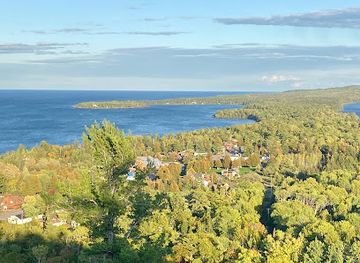
Copper Harbor’s principal attractions combine a small Lake Superior harbour with a broad outdoor landscape. Fort Wilkins Historic State Park, just outside the village, preserves reconstructed buildings and interpreted grounds from the 1844 military post, while nearby historic sites and old mining features reveal the working history of the Keweenaw. Brockway Mountain, reached by road west of Copper Harbor, is a prominent viewpoint over the peninsula’s forests, inland waters and Lake Superior, particularly during autumn colour and seasonal bird migration. The Copper Harbor mountain-bike trail system draws experienced riders to rocky, technically varied routes through the surrounding forest, and hikers can explore public-land paths and shoreline scenery at a slower pace. The village also serves as a gateway for seasonal boat travel to Isle Royale National Park, although the island is a separate destination requiring its own planning. Around the harbour, boating, fishing, paddling and dark-sky observation depend on weather, local arrangements and suitable equipment.
-
Tourist attraction
Brockway Mountain Lookout
Experience the unparalleled beauty of Brockway Mountain Lookout, offering stunning views of Lake Superior and vibrant autumn landscapes in Michigan's Keweenaw Peninsula.
-
Park
Fort Wilkins Historic State Park - Michigan Department of Natural Resources
Explore the captivating history and breathtaking landscapes of Fort Wilkins Historic State Park in Copper Harbor, Michigan, an unmissable destination for nature lovers and history buffs.
-
Tourist attraction
Hunter's Point Park
Experience the breathtaking beauty and tranquility of Hunter's Point Park in Copper Harbor, Michigan, a perfect escape for nature lovers and outdoor enthusiasts.
-
State park
Fort Wilkins Historic State Park
Explore Fort Wilkins Historic State Park, where history meets stunning natural beauty in Copper Harbor, Michigan, perfect for outdoor adventures and cultural exploration.
Best landmarks in Copper Harbor
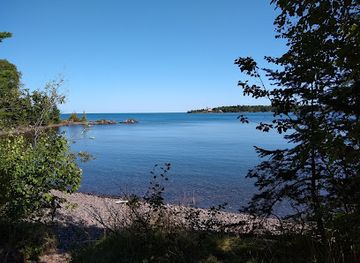
Copper Harbor’s defining natural landmark is its position on Lake Superior, where the sheltered harbour and rugged shoreline mark the northern end of the Keweenaw Peninsula. Brockway Mountain is the area’s best-known elevated viewpoint, looking across forested ridges and water towards the peninsula’s interior and the wider lake. Fort Wilkins Historic State Park is the principal built landmark, with reconstructed military buildings representing the short-lived 1844 post and the federal presence that accompanied the copper frontier. The surrounding Keweenaw is also marked by exposed bedrock, historic mining traces and forest roads shaped by the peninsula’s industrial past. These features are significant together rather than as a dense collection of monuments: Copper Harbor’s character comes from the meeting of Great Lakes geography, copper geology, nineteenth-century settlement and a landscape now experienced largely through public recreation.
-
Park
Fort Wilkins Historic State Park - Michigan Department of Natural Resources
Discover the enchanting Fort Wilkins Historic State Park, where history meets nature in the heart of Michigan's Upper Peninsula.
-
Park
Hunter's Point Park
Explore the breathtaking views and natural beauty of Hunter's Point Park in Copper Harbor, a perfect destination for nature lovers and outdoor enthusiasts.
-
State park
Fort Wilkins Historic State Park
Discover the rich history and stunning landscapes at Fort Wilkins Historic State Park, a treasured gem in Michigan's Upper Peninsula.
-
 Resort hotel
Keweenaw Mountain Lodge
Discover the serene beauty and adventure at Keweenaw Mountain Lodge, your ultimate retreat in Copper Harbor, Michigan.
Explore Copper Harbor on the map
Plan your trip on one map. See where the top attractions, landmarks, restaurants and hotels are, and book hotels and experiences in a few clicks.
Best hotels in Copper Harbor
Best restaurants in Copper Harbor
Dining in Copper Harbor is concentrated in a small number of seasonal restaurants, cafés, lodges and taverns rather than a large restaurant district. Menus typically reflect the needs of outdoor visitors and the region’s Upper Peninsula character, with familiar American meals, sandwiches, soups, baked goods and hearty fare more prominent than an elaborate local cuisine. Lake Superior’s fishing heritage and the wider Keweenaw’s mining and timber history shape the area’s food culture, while regional specialities such as pasties can often be found elsewhere on the peninsula, particularly in larger communities such as Houghton, Hancock and Calumet. Because options at the northern tip are limited and operating patterns can change with the season, visitors staying in self-catering accommodation often buy provisions before arriving. Farm shops and fuller grocery choices are more likely in the larger gateway towns than in Copper Harbor itself.
-
Restaurant
Harbor Haus Restaurant
Experience exceptional dining at Harbor Haus Restaurant in Copper Harbor—where local flavors meet breathtaking waterfront views.
-
Lodge
The Mariner North Resort
Experience unparalleled natural beauty and rustic charm at The Mariner North Resort in Copper Harbor - your gateway to adventure!
-
Resort hotel
Keweenaw Mountain Lodge
Discover adventure and tranquility at Keweenaw Mountain Lodge in Copper Harbor - your gateway to outdoor fun and relaxation.
-
American
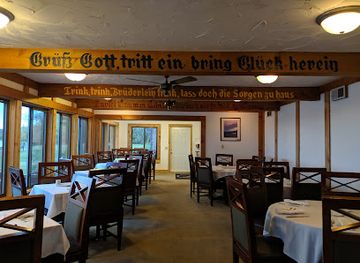
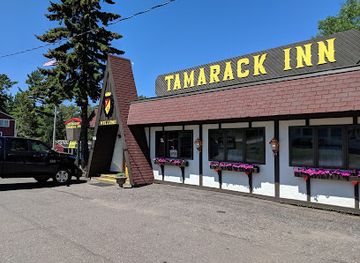
Tamarack Inn Restaurant
Experience authentic American cuisine amidst the scenic beauty of Copper Harbor at Tamarack Inn Restaurant.
Best bars in Copper Harbor
Copper Harbor has no substantial nightclub scene; evenings are generally quiet and centred on the village’s taverns, lodge bars and seasonal dining venues. The atmosphere is informal and outdoors-oriented, with cyclists, hikers, boat travellers and local residents sharing limited hospitality spaces rather than moving between entertainment districts. Live music or community events may occur at particular times, but visitors should not assume a regular programme or late-night service. For a broader choice of bars, breweries and evening venues, Houghton and Hancock are the main regional towns, several hours away by road and outside Copper Harbor itself. In the village, evening appeal lies more in conversation, a meal, a walk near the harbour or dark-sky viewing than in organised nightlife, with weather and the seasonal calendar strongly influencing what is available.
-
Restaurant
Harbor Haus Restaurant
Savor exquisite seafood and local flavors while enjoying breathtaking views at Harbor Haus Restaurant in Copper Harbor, Michigan.
-
Lodge
The Mariner North Resort
Discover the serene beauty of Copper Harbor at The Mariner North Resort, your perfect lodge escape for outdoor adventures and relaxation.
-
Bar
Keweenaw Mountain Lodge
Experience the breathtaking beauty of nature and outdoor adventures at Keweenaw Mountain Lodge in Copper Harbor, Michigan.
-
American
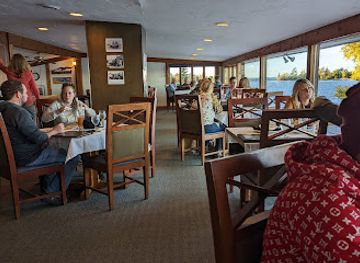
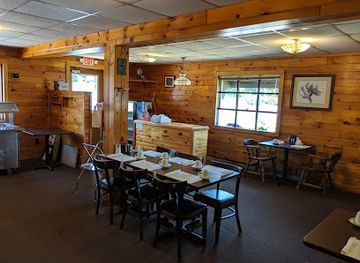
Tamarack Inn Restaurant
Experience the heart of American cuisine at Tamarack Inn Restaurant, Copper Harbor's favorite dining destination, with fresh ingredients and a welcoming atmosphere.
Best nightclubs in Copper Harbor
Copper Harbor has no substantial nightclub scene; evenings are generally quiet and centred on the village’s taverns, lodge bars and seasonal dining venues. The atmosphere is informal and outdoors-oriented, with cyclists, hikers, boat travellers and local residents sharing limited hospitality spaces rather than moving between entertainment districts. Live music or community events may occur at particular times, but visitors should not assume a regular programme or late-night service. For a broader choice of bars, breweries and evening venues, Houghton and Hancock are the main regional towns, several hours away by road and outside Copper Harbor itself. In the village, evening appeal lies more in conversation, a meal, a walk near the harbour or dark-sky viewing than in organised nightlife, with weather and the seasonal calendar strongly influencing what is available.
-
Resort hotel
Keweenaw Mountain Lodge
Discover Keweenaw Mountain Lodge, where adventure meets tranquility in the heart of Michigan's Copper Harbor, perfect for nature lovers and outdoor enthusiasts.
-
Restaurant
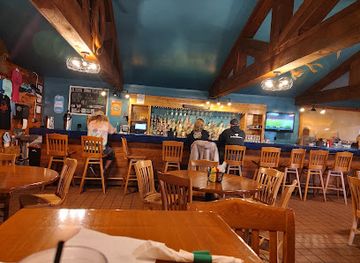
Lake Effect Bar and Grill
Experience the best of Copper Harbor dining at Lake Effect Bar and Grill, where delicious food meets stunning lake views for an unforgettable meal.
Best shops in Copper Harbor
Shopping in Copper Harbor is limited and practical, with small seasonal businesses, visitor-oriented shops and local hospitality venues providing souvenirs, outdoor essentials, books, clothing and regional gifts when open. The strongest links with local identity are found in products associated with Keweenaw copper history, Upper Peninsula imagery, Indigenous and regional cultural interpretation, outdoor recreation and locally made food, although availability varies by business and season. Visitors seeking a wider selection of groceries, outdoor equipment, galleries and independent shops should plan to stop in Houghton, Hancock, Calumet or other Keweenaw communities before travelling north. Copper Harbor is not a conventional retail destination, and facilities can be sparse outside the main visitor period. The area’s most meaningful purchases are often practical supplies for the landscape or small locally produced items connected with the peninsula’s mining and woodland heritage.
-
 Lodge
LodgeThe Mariner North Resort
Discover the natural beauty and rustic charm of The Mariner North Resort, a premier lodge in Copper Harbor, MI, perfect for your next adventure.
-
Park
Fort Wilkins Historic State Park - Michigan Department of Natural Resources
Discover the captivating history and stunning landscapes at Fort Wilkins Historic State Park, where nature and heritage come alive.
-
Resort hotel
Keweenaw Mountain Lodge
Experience the natural beauty and rustic charm of Keweenaw Mountain Lodge, a premier resort hotel in Copper Harbor, Michigan, perfect for outdoor enthusiasts.
-
Resort hotel
Lake Fanny Hooe Resort and Campground
Experience the perfect blend of comfort and nature at Lake Fanny Hooe Resort and Campground, nestled in Copper Harbor’s stunning landscapes.
Get your free copy of our complete guide to Copper Harbor, delivered straight to you.
Everything on this page, from attractions and restaurants to essentials and local phrases, in one PDF you can read offline, print or share.
Already have an account? Sign in
Your Copper Harbor guide is ready.
We'll send it to · Not you? Sign out

Getting your guide ready…
We are putting together a fresh copy of the Copper Harbor guide. This can take up to a minute.
This can take a few moments. If your browser asks, choose Allow so the download can start. You'll find the guide in your Downloads folder.
Nothing happened? Download it again
Sorry, the guide is taking longer than usual. Please try again in a minute, or get it by email instead.
Copper Harbor essentials
Currency and Payment
Safety
Emergency Situations
Do's and Don'ts
Local Tips
From Eve
Local phrases worth knowing
You don't need to get them perfect. A few words go a long way, and locals appreciate the effort.
Basics
| English | Local | Say it |
|---|---|---|
| Hello | Howdy | [hau-dee] |
| Goodbye | See ya | [see yah] |
| Yes | Yup | [yuhp] |
| No | Nah | [nah] |
| Please/You're welcome | Please and thank ya | [pleez and thangk yah] |
| Thank you | Much obliged | [much uh-blahy-jed] |
| Excuse me/Sorry | Pardon me | [pahr-dn mee] |
| How are you? | How's it goin'? | [hows it goin] |
| Fine. And you? | Doin' good. How 'bout you? | [doin good. how bout yah] |
| Do you speak English? | Ya speak English? | [yah speak ing-glish] |
| I don't understand | I ain't catchin' on | [I aint ketch-in on] |
Eating & Drinking
| English | Local | Say it |
|---|---|---|
| I'd like to see the menu, please | Mind showin' me the menu? | [meynd show-in me the mey-noo] |
| I don't eat meat | I ain't into meat | [I aint in-too meet] |
| Cheers! | Here's to ya! | [heers to yah] |
| I would like to pay, please | I'll settle up now, if ya don't mind | [Ill set-ul up now, if yah dont mind] |
Emergencies
| English | Local | Say it |
|---|---|---|
| Help! | I need a hand! | [I need a hand] |
| Go away! | Get lost! | [get lost] |
| Call the Police! | Get the law on the line! | [get the law on the line] |
| Call a doctor! | Fetch a doc! | [fetch a doc] |
| I'm lost | I'm turned around | [Im turned around] |
| I'm ill | I'm feelin' under the weather | [Im feelin under the weh-thur] |
Shopping
| English | Local | Say it |
|---|---|---|
| I'd like to buy... | I reckon I'll take... | [I reck-in ill take] |
| I'm just looking | I'm just browsin' | [Im just browz-in] |
| How much is it? | What's the damage? | [whats the dam-ij] |
| That's too expensive | That's a bit steep | [thats a bit steep] |
| Can you lower the price? | Can ya do any better on the price? | [can yah do any bet-er on the pr-ice] |
Time & Numbers
| English | Local | Say it |
|---|---|---|
| What time is it? | What's the time of day? | [whats the time of day] |
| It's one o'clock | It's one in the afternoon | [its one in the after-noon] |
| Half past (10) | Ten-thirty | [ten-thur-tee] |
| Morning | Mornin' | [mornin] |
| Afternoon | Afternoon | [After-noon] |
| Evening | Evenin' | [evenin] |
| Yesterday | Yest'day | [yest-day] |
| Today | Today | [Today] |
| Tomorrow | Tomorra | [tom-orr-ah] |
| 1 | One | [wuhn] |
| 2 | Two | [too] |
| 3 | Three | [three] |
| 4 | Four | [four] |
| 5 | Five | [five] |
| 6 | Six | [six] |
| 7 | Seven | [seven] |
| 8 | Eight | [eight] |
| 9 | Nine | [nine] |
| 10 | Ten | [ten] |
Transport & Directions
| English | Local | Say it |
|---|---|---|
| Where's a/the...? | Where's the... | [wheres the] |
| What's the address? | What's the street? | [whats the street] |
| Can you show me (on the map)? | Can ya point it out (on the map)? | [can yah point it out on the map] |
| When's the next (bus)? | When's the next (bus) comin'? | [whens the next bus comin] |
| A ticket (to ....) | A pass (to ....) | [a pass to] |
History of Copper Harbor
Ojibwe Country and the Copper Peninsula
The Keweenaw Peninsula has long been part of the homeland and travelling landscape of the Ojibwe people, whose relationship with Lake Superior, its islands, forests and copper-bearing rocks predates non-Indigenous settlement. Native copper was known and worked in the region before the nineteenth-century mining boom. The name Copper Harbor reflects the geological resource that later drew American companies and workers northwards, but the area’s history cannot be separated from Indigenous presence, knowledge and continuing community connections across the Great Lakes.
The Port and the Mining Frontier
Copper Harbor developed in the 1840s as a port and supply point during the opening of the Keweenaw copper district. Its protected harbour helped connect mines and settlements with transport on Lake Superior, although rough weather and the peninsula’s distance from established population centres made the region demanding to develop. The arrival of miners, merchants, engineers and government officials transformed a sparsely settled landscape into an industrial frontier. Copper production, timber cutting and lake transport shaped the roads, shoreline and communities that visitors encounter today.
Fort Wilkins and Federal Presence
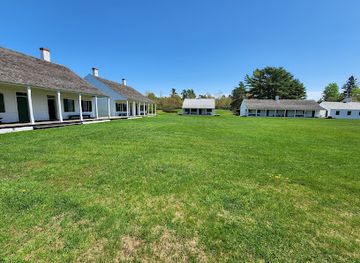
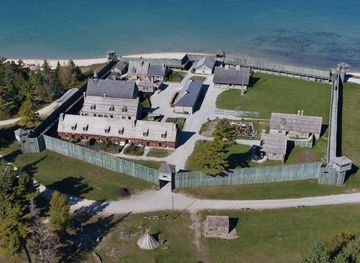
Fort Wilkins was established by the United States Army in 1844 near the eastern side of present-day Copper Harbor. Its original purpose was to maintain order during labour disputes associated with the copper mines and to protect regional interests, although the post was occupied only briefly before being abandoned. The fort was later used for a short period during the Civil War era. Reconstructed buildings and preserved grounds at Fort Wilkins Historic State Park now provide a tangible account of military life and the early settlement period.
From Industrial Port to Outdoor Destination
As copper mining declined and larger transport patterns changed, Copper Harbor became less an industrial port and more a small recreational community. Historic buildings, old mine landscapes and transport routes remained part of the local setting, while state-park management and tourism gave new importance to the area’s heritage and scenery. In the modern era, hiking, cycling, fishing, paddling, scenic driving and dark-sky observation have joined the mining story as principal reasons to visit. Conservation and public-land management continue to shape access to the forests, shoreline and historic sites.
Copper Harbor in Photos
Browse through our photo collection highlighting the charm and character of the destination.
Neighbouring destination travel guides
The closest destinations to Copper Harbor, if you have time for more than one.
-

-

-

-

-


Swipe for more destinations
Explore more
Explore more of Upper Peninsula
Explore Michigan's Upper Peninsula for Lake Superior cliffs, forest trails, historic mining towns, pasties, lighthouses and wide-open Great Lakes landscapes.
Explore Upper Peninsula
Explore more of Michigan
Explore Michigan's stunning Great Lakes, vibrant cities, and untouched natural beauty. Discover the state's rich cultural heritage and endless outdoor adventures.
Explore Michigan