

Mackinac Island, Michigan Travel Guide
Discover Mackinac Island, Michigan, where history meets natural beauty, and motor vehicles are replaced by horse-drawn carriages and bicycles for a tranquil escape.
Mackinac Island is a small island nestled in Lake Huron, Michigan. This charming destination is renowned for its pristine natural beauty and well-preserved historical sites. A unique feature of the island is its ban on motor vehicles, which means that transport is primarily by horse-drawn carriages, bicycles, or on foot. This creates a serene and peaceful atmosphere, perfect for unwinding from the hustle and bustle of city life. Visitors to Mackinac Island can explore Fort Mackinac, a historic military outpost with breathtaking views of the island and the surrounding waters. The fort provides a glimpse into the island's military history and offers various interactive exhibits. Another must-see is the Grand Hotel, an iconic establishment known for its stunning architecture and world-famous front porch. Staying here or simply visiting for afternoon tea is like stepping back in time to a more elegant era. Nature enthusiasts will enjoy the island's numerous trails and scenic spots, such as Arch Rock, a natural limestone formation offering panoramic views of Lake Huron. The island's state park covers over 80% of its area, providing ample opportunities for hiking, picnicking, and bird-watching. The local shops and restaurants in the quaint downtown area offer a variety of unique souvenirs and delicious treats, including the island's famous fudge.

Know before you go
Hi, I'm Eve. Here are a few practical things to know before exploring Mackinac Island.
- Visit during the shoulder seasons of spring and fall to avoid crowds and enjoy milder weather.
- Rent a bike to tour the island at your own pace. It's the best way to see all the sights.
- Don't miss tasting the island's famous fudge. Many shops offer free samples.
- Bring comfortable walking shoes, as you'll be doing a lot of exploring on foot.
- Plan your visit to Fort Mackinac to coincide with one of their daily reenactments for an immersive historical experience.
- Book your accommodations well in advance, especially if you're planning to stay at the Grand Hotel.
Explore Mackinac Island: Things to Do, Places to Eat, Hotels & More
Handpicked recommendations for top attractions, local dining, accommodations, and more

Best attractions in Mackinac Island
Top-rated picks
Best Attractions

Mackinac Island State Park
Explore Mackinac Island State Park - a breathtaking blend of natural beauty, rich history, and outdoor recreation in Michigan's enchanting landscapes.

Mackinac Island State Park
Explore the stunning landscapes and rich history of Mackinac Island State Park, a must-visit natural wonder in Michigan.

Colonial Michilimackinac
Explore the past at Colonial Michilimackinac, where history comes alive through immersive experiences and captivating storytelling in Michigan's scenic beauty.

Colonial Michilimackinac
Explore the rich history of Colonial Michilimackinac, where the past comes alive in a stunning lakeside setting.

Best landmarks in Mackinac Island
Top-rated picks
Best Landmarks

Mackinac Island State Park
Discover the serene beauty and rich history of Mackinac Island State Park, where outdoor adventures and cultural experiences await.

Colonial Michilimackinac
Explore the rich history of Colonial Michilimackinac in Mackinaw City, where the past comes alive through immersive exhibits and interactive experiences.

Grand Hotel
Discover the elegance and charm of the Grand Hotel on Mackinac Island, where luxury meets history in a breathtaking setting.

Fort Mackinac
Discover the rich history and stunning views at Fort Mackinac, a captivating landmark on Mackinac Island, Michigan, known for its military significance and engaging exhibits.

Best restaurants in Mackinac Island
Top-rated picks
Best Restaurants

Darrow's Family Restaurant
Discover Darrow's Family Restaurant in Mackinaw City - where delicious food meets family-friendly charm!

Audie's Restaurant
Discover family-friendly dining at Audie's Restaurant in Mackinaw City, where American cuisine meets warm hospitality.

Pink Pony
Discover Pink Pony: A charming grill on Mackinac Island offering delectable dishes and stunning waterfront views in a lively atmosphere.

Mackinac Grille & Patio Bar
Experience the taste of Michigan at Mackinac Grille & Patio Bar - where fresh ingredients meet exceptional grilling.

Best bars in Mackinac Island
Top-rated picks
Best Bars
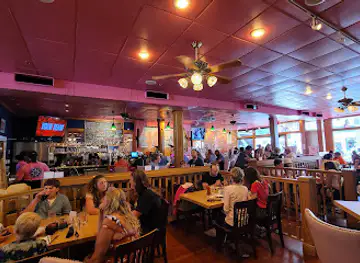
Pink Pony
Experience the vibrant atmosphere of Pink Pony, a must-visit grill and bar on Mackinac Island, offering delicious food and stunning lake views.

Mackinac Grille & Patio Bar
Discover the best of local cuisine at Mackinac Grille & Patio Bar, where delicious flavors meet a charming atmosphere in St. Ignace.

Horn's Gaslight Bar & Restaurant
Discover Horn's Gaslight Bar & Restaurant on Mackinac Island for a delightful blend of American and Southwestern cuisine in a lively atmosphere.

Mustang Lounge
Discover the lively Mustang Lounge on Mackinac Island, where delicious cuisine meets a vibrant atmosphere for an unforgettable dining experience.

Best nightclubs in Mackinac Island
Top-rated picks
Best Nightclubs

Pink Pony
Experience the vibrant atmosphere and delicious grill cuisine at Pink Pony, a Mackinac Island favorite for tourists seeking fun and flavor.

Horn's Gaslight Bar & Restaurant
Experience the essence of American cuisine at Horn's Gaslight Bar & Restaurant on Mackinac Island, where every meal is a celebration of flavor and fun.

Mustang Lounge
Discover the lively Mustang Lounge in Mackinac Island, where great food, drinks, and entertainment come together in a vibrant atmosphere.

Mary's Bistro Draught House
Discover the flavors of Mackinac Island at Mary's Bistro Draught House, where delicious cuisine and local charm meet in a cozy atmosphere.

Best shops in Mackinac Island
Top-rated picks
Best Shops

Joann's Fudge
Discover the sweet charm of Joann's Fudge on Mackinac Island, where handmade fudge and delightful confections await every visitor.

Ryba's Fudge Shop - Cornerstore
Discover the sweet taste of tradition at Ryba's Fudge Shop on Mackinac Island, offering homemade fudge, ice cream, and delightful confections.

Original Murdick's Fudge
Discover the sweet taste of tradition at Original Murdick's Fudge, Mackinac Island's iconic candy store specializing in handcrafted fudge and confections.

Threads of Mackinac
Explore Threads of Mackinac for unique apparel and gifts that embody the charm and culture of Mackinac Island.

Explore Mackinac Island on the Map
A handpicked selection of must-see spots in Mackinac Island, mapped for you.
Mackinac Island Essentials
-
Mackinac Island is located in Lake Huron, between Michigan's Upper and Lower Peninsulas. The nearest major airports are Pellston Regional Airport (PLN) and Chippewa County International Airport (CIU). From these airports, shuttle services are available to the ferry docks in Mackinaw City and St. Ignace. Ferry services, such as Shepler's Ferry and Star Line Mackinac Island Ferry, operate regularly from these docks and take about 15-20 minutes to reach the island. Note that no cars are allowed on Mackinac Island, so parking is available at the ferry docks.
-
Transportation on Mackinac Island is unique as motor vehicles are prohibited. The primary modes of transport are bicycles, horse-drawn carriages, and walking. Bike rentals are available from various vendors, and carriage tours can be booked to explore the island. For longer stays, consider renting a horse and buggy. The island is small, so walking is a feasible and enjoyable way to get around.
-
The official currency is the United States Dollar (USD). Credit cards are widely accepted on Mackinac Island, including in most hotels, restaurants, and shops. However, it is advisable to carry some cash for smaller vendors and tips. ATMs are available on the island, but it’s wise to have enough cash before arriving, especially during peak tourist seasons.
-
Mackinac Island is generally very safe for tourists. There are no high-crime areas targeting tourists. However, as with any travel destination, it is wise to take standard precautions: keep an eye on your belongings, especially in crowded areas, and avoid walking alone late at night. The island is well-patrolled, and the local police are approachable and helpful.
-
In case of emergency, dial 911 for immediate assistance. There is a local medical center, Mackinac Island Medical Center, which can handle minor medical issues and emergencies. It is recommended to have travel insurance that covers medical emergencies. For minor health issues, there are pharmacies on the island where you can purchase over-the-counter medications.
-
Fashion: Do dress comfortably and appropriately for outdoor activities. Casual attire is acceptable almost everywhere. Religion: Do respect local customs when visiting churches or religious sites; dress modestly and avoid loud behavior. Public Transport: Do use bicycles and horse-drawn carriages respectfully. Don't litter or damage rental equipment. Greetings: Do greet locals and other tourists with a friendly 'hello' or a wave. Eating & Drinking: Do try local delicacies such as fudge and whitefish. Don't refuse hospitality if offered, as it may be considered impolite.
-
To experience Mackinac Island like a local, consider visiting during the shoulder seasons (spring and fall) when the island is less crowded. Participate in local events such as the Lilac Festival in June or the Fudge Festival in August. Explore less-visited trails like those in Mackinac Island State Park for a quieter experience. Engage with locals; they are often willing to share tips and stories about the island's history and culture.
When is the best time to visit Mackinac Island?
Useful Local Phrases for Mackinac Island
You don't need to speak the language perfectly. Even learning a few simple words can make conversations warmer—and locals usually appreciate the effort.
— Eve

Here are the phrases I use most often in Mackinac Island. Try a few—you'll be surprised how far they go! 😊
❤️
-
- HelloYa'at'eeh
[yah-ah-tay] - GoodbyeHágoónee'
[hah-goo-nay] - YesAhe'
[ah-hay] - NoDibé
[dee-bay] - Please/You're welcomeYá'át'ééh
[yah-ah-tay] - Thank youAhéhee'
[ah-hay-hay] - Excuse me/SorryShí éí
[shee-ay] - How are you?Ahe'hee'
[ah-hay-hay] - Fine. And you?Bééhózin
[bay-ho-zin] - Do you speak English?Bizaad yéé níníshní
[bee-zaad yay nee-neesh-nee] - I don't understandNí ádóó
[nee ah-doh]
- HelloYa'at'eeh
-
- I'd like to see the menu, pleaseNáánásh' doo shił
[nah-nahsh doh sheel] - I don't eat meatT'ááshi' doo ne'í
[taah-shee doh nay-ee] - Cheers!T'áá hwó' ají
[taah hwoh ah-hee] - I would like to pay, pleaseBíí nanit'á
[bee nee-neet-ah]
- I'd like to see the menu, pleaseNáánásh' doo shił
-
- Help!Awe
[ah-way] - Go away!Bilas dóó
[bee-las doh] - Call the Police!Háál'íí dóó yázhí
[hah-ah-lee doh yah-zhee] - Call a doctor!Bilas dáí
[bee-las dah-ee] - I'm lostNí ádaaznii
[nee ah-dahz-nee] - I'm illNílchíí'
[neel-chee]
- Help!Awe
-
- I'd like to buy...Náásht'ééhí
[nah-ahsh-tay-hee] - I'm just lookingNízíí' nihaa
[nee-zee nee-hah] - How much is it?Nííníshní
[nee-neesh-nee] - That's too expensiveDíí bí'ínííł
[dee bee-ee-nee-eeel] - Can you lower the price?Ní ádóó yikááí
[nee ah-doh yee-kaa-ee]
- I'd like to buy...Náásht'ééhí
-
- What time is it?T'áá shi éí nízí
[taah shee ay nee-zee] - It's one o'clockT'áá shi éí nízí
[taah shee ay nee-zee] - Half past (10)T'áá shi'éé' da'áaní
[taah shee-ay dah-ah-nee] - MorningT'áá shi éí
[taah shee ay] - AfternoonT'áá shi éí
[taah shee ay] - EveningT'áá shi éí
[taah shee ay] - YesterdayT'áá shi éí
[taah shee ay] - TodayT'áá shi éí
[taah shee ay] - TomorrowT'áá shi éí
[taah shee ay] - 1Béésh
[bay-sh] - 2Naaki
[nah-kee] - 3Táá
[taah] - 4Dį́į́
[dee-ee] - 5Ashdla'
[ash-dlah] - 6Hastiin
[hass-teen] - 7Tseebíí
[tsay-bee] - 8Tááłá’í
[taah-lah-ee] - 9T’ááłá’í
[taah-lah-ee] - 10Náhást’éí
[nah-haas-tay]
- What time is it?T'áá shi éí nízí
-
- Where's a/the...?Hágiik'í
[hah-gee-keeh] - What's the address?Kéyah
[kay-yah] - Can you show me (on the map)?Háwííh
[hah-wee] - When's the next (bus)?Háágish
[hah-gee-sh] - A ticket (to ....)Bilas dóó
[bee-las doh]
- Where's a/the...?Hágiik'í
History of Mackinac Island
-
Before European settlers arrived, Mackinac Island was inhabited by Native American tribes, primarily the Anishinaabe, which includes the Ottawa and Chippewa tribes. The island was considered a sacred place and was referred to as 'Michilimackinac,' which means 'Great Turtle' due to its shape.
-
In the 17th century, French explorers, including Father Jacques Marquette, arrived on Mackinac Island. The island became a strategic location for the fur trade. Fort Michilimackinac, originally built by the French in 1715 on the mainland, was later moved to Mackinac Island by the British in 1780 to better control the Straits of Mackinac.
-
Mackinac Island played a significant role during the American Revolution and The War of 1812. The British took control of the island during the Revolution and constructed Fort Mackinac. During the War of 1812, the British captured the island without firing a shot. In 1814, the Americans made an unsuccessful attempt to recapture it, which ended in the Battle of Mackinac Island.
-
After the War of 1812, Mackinac Island returned to American control in 1815 following the Treaty of Ghent. The island's economy flourished with the fur trade, fishing, and later, tourism. In the mid-19th century, Mackinac Island became a popular summer destination due to its natural beauty and cooler climate.
-
In 1875, Mackinac Island was designated as the second national park in the United States, after Yellowstone. The park included Fort Mackinac and much of the island's natural landscape. In 1895, the national park was transferred to the state of Michigan and became Michigan's first state park.
-
The Victorian era marked a period of significant development on Mackinac Island. In 1887, the Grand Hotel was opened, quickly becoming a symbol of luxury and elegance. The hotel boasted the world's longest porch and has hosted numerous notable guests over the years.
-
Today, Mackinac Island is renowned for its commitment to preserving its historical and natural heritage. The island has strict regulations, including a ban on motor vehicles, which helps maintain its 19th-century charm. The island attracts thousands of visitors annually, who come to experience its historic sites, scenic beauty, and unique culture.
Cities near Mackinac Island
The closest cities to Mackinac Island, if you have time for more than one stop.


Your all‑in‑one travel companion app
Explore expert travel guides, compare and book tours, experiences, hotels, and more—all from the palm of your hand. Download now for seamless trip planning wherever your wanderlust takes you.


Mackinac Island in Photos
Browse through our photo collection highlighting the charm and character of the destination.


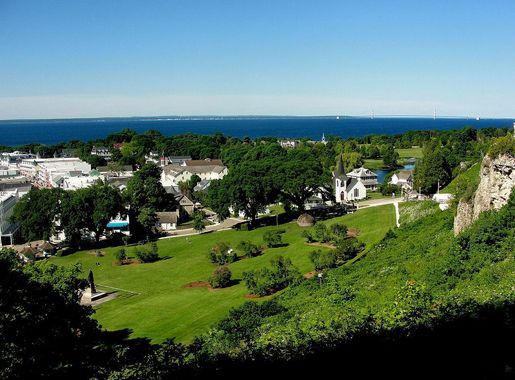


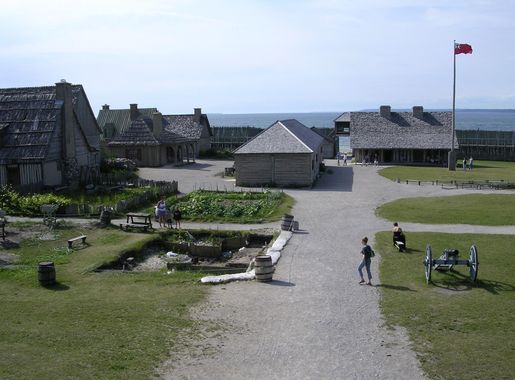


Mackinac Island: A Timeless Escape in the Great Lakes
Mackinac Island is a small island nestled in Lake Huron, Michigan. This charming destination is renowned for its pristine natural beauty and well-preserved historical sites. A unique feature of the island is its ban on motor vehicles, which means that transport is primarily by horse-drawn carriages, bicycles, or on foot. This creates a serene and peaceful atmosphere, perfect for unwinding from the hustle and bustle of city life. Visitors to Mackinac Island can explore Fort Mackinac, a historic military outpost with breathtaking views of the island and the surrounding waters. The fort provides a glimpse into the island's military history and offers various interactive exhibits. Another must-see is the Grand Hotel, an iconic establishment known for its stunning architecture and world-famous front porch. Staying here or simply visiting for afternoon tea is like stepping back in time to a more elegant era. Nature enthusiasts will enjoy the island's numerous trails and scenic spots, such as Arch Rock, a natural limestone formation offering panoramic views of Lake Huron. The island's state park covers over 80% of its area, providing ample opportunities for hiking, picnicking, and bird-watching. The local shops and restaurants in the quaint downtown area offer a variety of unique souvenirs and delicious treats, including the island's famous fudge.
Explore More of Northern Michigan

Looking beyond Mackinac Island? Discover Northern Michigan for broader travel guides, local hot-spots, and regional highlights.
Explore Northern MichiganExplore More of Michigan

Looking beyond Mackinac Island? Discover Michigan for broader travel guides, local hot-spots, and regional highlights.
Explore Michigan