

Free Sturgeon Bay Travel Guide & Mobile App
Plan your Sturgeon Bay trip with Evendo. Get free guides to top attractions, restaurants, hotels, and bars. Web access or download the mobile app.


Sturgeon Bay, Wisconsin, pairs maritime history, shipbuilding heritage, Door County scenery, waterfront attractions, local food and small-city charm.
A Maritime City on Green Bay
Sturgeon Bay lies on the western side of Door County, Wisconsin, where the Sturgeon Bay Ship Canal links the waters of Green Bay with Lake Michigan. The canal gives the city its defining geography: working docks, marinas, bridges and waterfront parks sit alongside a compact centre of nineteenth- and early twentieth-century buildings. Commercial vessels, pleasure craft and historic ships have long shaped the local economy and character, while the surrounding shoreline provides an accessible introduction to Door County’s wooded peninsulas and bays.Read more about Sturgeon Bay
Heritage, Museums and the Waterfront
Door County Beyond the City
When is the best time to visit Sturgeon Bay?
Best: June–August · 23–26°C| Month | High (°C) | Rainfall (mm) |
|---|---|---|
| January | -3 | 37 |
| February | -1 | 27 |
| March | 5 | 36 |
| April | 11 | 50 |
| May | 19 | 74 |
| June (best) | 23 | 88 |
| July (best) | 26 | 79 |
| August (best) | 25 | 86 |
| September | 21 | 72 |
| October | 15 | 58 |
| November | 6 | 45 |
| December | 1 | 38 |
Getting to and around Sturgeon Bay
How to get there
Transportation
Best attractions in Sturgeon Bay
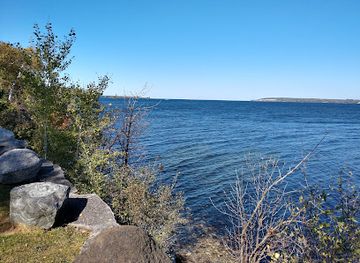
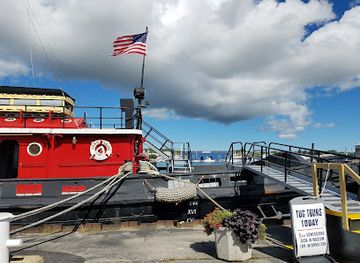
Sturgeon Bay’s attractions centre on the water, the historic townscape and Door County’s natural setting. The Door County Maritime Museum traces lighthouse keeping, commercial fishing and Great Lakes shipbuilding, with exhibits that make the harbour’s working history tangible. Along the canal, visitors can walk towards the Sturgeon Bay Ship Canal North Pierhead Light and watch vessels moving between Green Bay and Lake Michigan. The Sturgeon Bay Heritage Trail links local history with streets, parks and waterfront views, while Crossroads at Big Creek combines natural science, historic buildings and educational displays. Potawatomi State Park, just south-west of the city, adds forest trails, shoreline scenery and elevated views across the bay. Downtown Third Avenue brings together historic façades, galleries, independent shops and cafés, offering a slower-paced counterpart to the industrial waterfront. Marinas, boat launches and seasonal events further reveal the city’s continuing relationship with the Great Lakes.
-
Tourist attraction
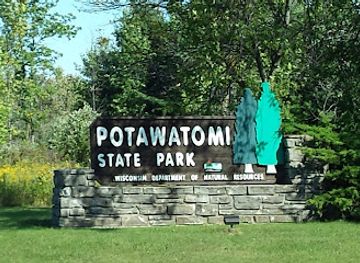
Potawatomi State Park
Explore Potawatomi State Park, a natural paradise in Wisconsin with scenic trails, wildlife viewing, and breathtaking views of Sturgeon Bay.
13 min drive · 4.3 km from city centre
-
Museum
Door County Maritime Museum
Explore the maritime history of Door County at the captivating Door County Maritime Museum, showcasing artifacts and stories of the Great Lakes.
8 min walk · 0.6 km from city centre
-
Museum
Door County Maritime Museum
Discover the maritime heritage of Wisconsin at the Door County Maritime Museum, featuring historic vessels and interactive exhibits that captivate all ages.
8 min walk · 0.6 km from city centre
-
Tourist attraction
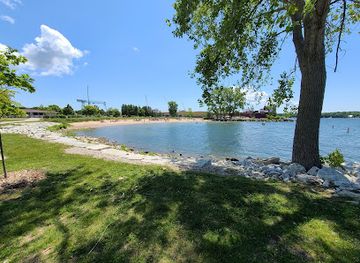
Sunset Park
Discover the natural beauty of Sunset Park in Sturgeon Bay, Wisconsin, where stunning sunsets and serene landscapes await your visit.
5 min drive · 1.6 km from city centre

Best landmarks in Sturgeon Bay
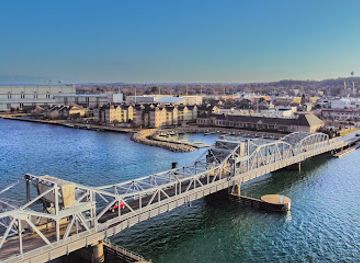
The Sturgeon Bay Ship Canal is the city’s defining landmark, an engineered waterway opened in 1881 to connect Green Bay more directly with Lake Michigan and shorten regional shipping routes. Its navigational system includes the Sturgeon Bay Ship Canal North Pierhead Light and related structures that mark the entrance from the lake. The Door County Maritime Museum is a modern cultural landmark rooted in the working history of the harbour, while nearby shipyards represent the industrial tradition that shaped local employment and identity. In the centre, the historic buildings along Third Avenue and surrounding streets preserve the scale of Sturgeon Bay’s commercial past. Sturgeon Bay’s bridges, waterfront parks, marinas and canal views complete a landscape in which civic development, Great Lakes navigation and shipbuilding remain visibly connected.
-
Irish pub
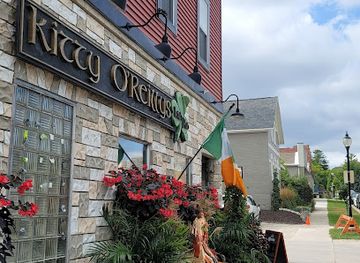
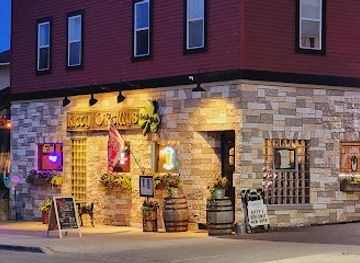
Kitty O'Reillys Irish Pub
Discover the heart of Sturgeon Bay at Kitty O'Reilly's Irish Pub, where traditional Irish fare meets a lively pub atmosphere.
11 min walk · 0.9 km from city centre
-
State park
Potawatomi State Park
Discover the scenic trails, serene waters, and rich wildlife of Potawatomi State Park, a premier outdoor destination in Wisconsin.
13 min drive · 4.3 km from city centre
-
Resort hotel
Stone Harbor
Discover the perfect blend of relaxation and adventure at Stone Harbor Resort, where stunning views and luxurious amenities await in Sturgeon Bay, Wisconsin.
3 min walk · 0.2 km from city centre
-
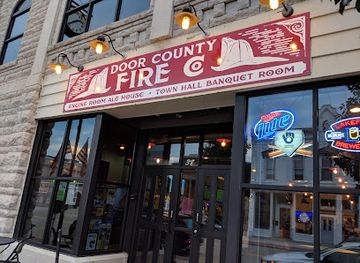
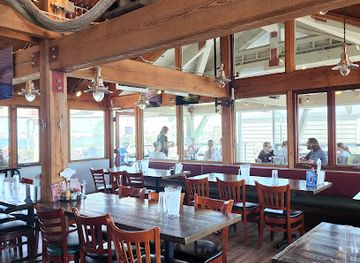
Grill
Door County Fire Company
Discover the flavors of Sturgeon Bay at Door County Fire Company, where hearty meals and local brews come together in a charming grill setting.
1 min walk · 0.1 km from city centre
Explore Sturgeon Bay on the map
Plan your Sturgeon Bay trip on one map. See where the top attractions, landmarks, restaurants, bars and hotels are, find what's near where you're staying, and book hotels and experiences in a few clicks.
Best hotels in Sturgeon Bay
Best restaurants in Sturgeon Bay
Sturgeon Bay’s dining scene reflects Door County’s position between farmland, forest and the Great Lakes. Fish boils, in which fish and vegetables are cooked outdoors in a large pot, are a longstanding Door County tradition, while freshwater fish, cherry products and locally inspired comfort food appear across seasonal menus. Downtown Third Avenue and the waterfront provide the city’s main concentration of restaurants, cafés, bakeries and casual eateries, with settings ranging from historic commercial buildings to views over the harbour. Supper-club traditions, burgers, sandwiches and locally sourced dishes sit alongside contemporary cooking, while farm stands and markets supply cherries, preserves, vegetables and other regional produce in season. The area’s culinary character is shaped as much by community rituals and agricultural abundance as by formal dining, making local specialities and regional ingredients central to the Sturgeon Bay experience.
-
Italian
Sonny's Italian Kitchen & Pizzeria
Experience the heart of Italy at Sonny's Italian Kitchen & Pizzeria in Sturgeon Bay – where every meal is a celebration of flavor.
8 min walk · 0.6 km from city centre
-
Irish pub
Kitty O'Reillys Irish Pub
Discover Kitty O'Reilly's Irish Pub: A Taste of Ireland in Sturgeon Bay with Traditional Dishes, Local Brews & Live Music.
11 min walk · 0.9 km from city centre
-
Mexican
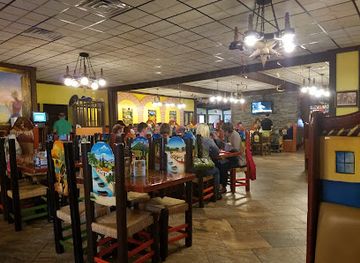
Old Mexico Cantina and Grill
Experience authentic Mexican flavors at Old Mexico Cantina and Grill in Sturgeon Bay – where every meal is a fiesta!
15 min walk · 1.2 km from city centre
-
American
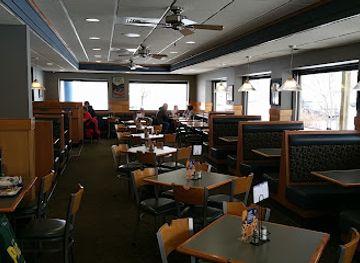
Culver’s
Experience the flavors of classic American cuisine at Culver's in Sturgeon Bay - where delicious burgers meet delightful desserts.
12 min drive · 3.9 km from city centre
Best bars in Sturgeon Bay
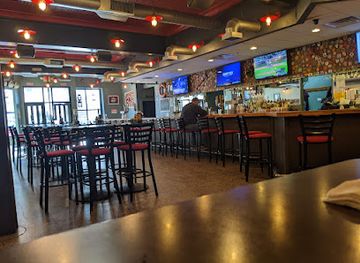
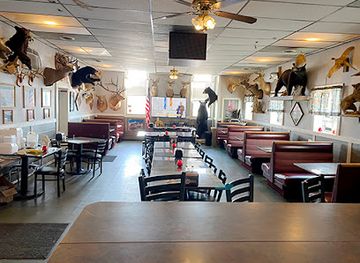
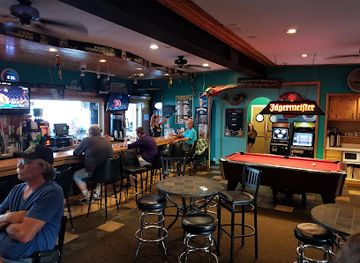
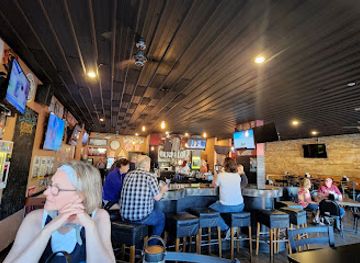
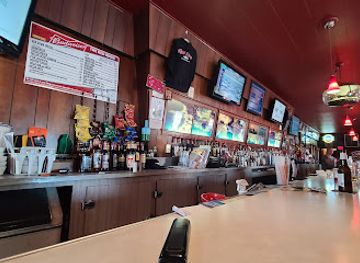
Sturgeon Bay’s evening scene is relaxed and local rather than centred on large nightclubs. Downtown bars, pubs and taverns provide places for Wisconsin beer, cocktails, conversation and occasional live music, with Third Avenue and nearby central streets forming the main area for after-dark social life. Waterfront venues offer a more seasonal atmosphere, particularly during the warmer months, while supper clubs and restaurants often extend the evening without functioning as dedicated nightlife venues. Cultural entertainment is another option: Third Avenue PlayWorks presents professional theatre in the city, and community events may bring music or performances to public spaces during the tourist season. Visitors should expect a quieter rhythm outside summer and should arrange transport in advance if staying beyond the walkable centre, since late-night public transport is limited.
-
Irish pub
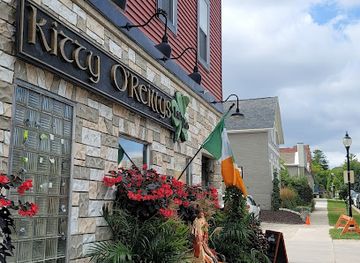
Kitty O'Reillys Irish Pub
Experience authentic Irish culture at Kitty O'Reillys Irish Pub, where hearty meals and drinks create unforgettable moments in Sturgeon Bay.
11 min walk · 0.9 km from city centre
-
Grill
Door County Fire Company
Savor the local flavors at Door County Fire Company, a beloved grill in Sturgeon Bay known for its delicious menu and inviting atmosphere.
1 min walk · 0.1 km from city centre
-
Bar
Greystone Castle
Discover the charm of Greystone Castle in Sturgeon Bay, where exceptional food meets a vibrant atmosphere for an unforgettable dining experience.
10 min walk · 0.8 km from city centre
-
Grill
Waterfront Mary's
Discover Waterfront Mary's, a delightful grill experience in Sturgeon Bay, Wisconsin, featuring delicious dishes and stunning waterfront views.
8 min drive · 2.5 km from city centre
Best nightclubs in Sturgeon Bay
Sturgeon Bay’s evening scene is relaxed and local rather than centred on large nightclubs. Downtown bars, pubs and taverns provide places for Wisconsin beer, cocktails, conversation and occasional live music, with Third Avenue and nearby central streets forming the main area for after-dark social life. Waterfront venues offer a more seasonal atmosphere, particularly during the warmer months, while supper clubs and restaurants often extend the evening without functioning as dedicated nightlife venues. Cultural entertainment is another option: Third Avenue PlayWorks presents professional theatre in the city, and community events may bring music or performances to public spaces during the tourist season. Visitors should expect a quieter rhythm outside summer and should arrange transport in advance if staying beyond the walkable centre, since late-night public transport is limited.
-
Irish pub
Kitty O'Reillys Irish Pub
Discover the vibrant atmosphere of Kitty O'Reilly's Irish Pub, where traditional Irish cuisine meets lively entertainment in Sturgeon Bay, Wisconsin.
11 min walk · 0.9 km from city centre
-
Grill
Waterfront Mary's
Discover Waterfront Mary's: A charming grill in Sturgeon Bay offering delicious food, stunning waterfront views, and a vibrant bar atmosphere.
8 min drive · 2.5 km from city centre
-
Grill
Brick Lot Pub & Grill
Experience the best of Wisconsin dining at Brick Lot Pub & Grill, offering delicious comfort food and a vibrant atmosphere for all.
3 min walk · 0.3 km from city centre
-
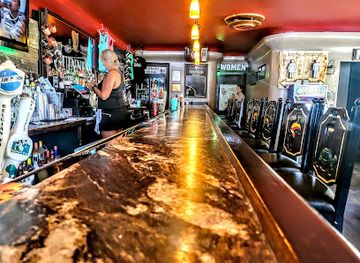
Bar
Red Room
Discover the lively Red Room in Sturgeon Bay, a local bar offering a welcoming atmosphere, great drinks, and live entertainment for an unforgettable night out.
2 min walk · 0.1 km from city centre

Best shops in Sturgeon Bay
Shopping in Sturgeon Bay is concentrated around downtown Third Avenue, where independent retailers, galleries, gift shops and cafés occupy historic commercial buildings. Visitors can find Door County products such as dried cherries, preserves, baked goods and other fruit-based specialities, alongside locally made art, ceramics, textiles, jewellery and nautical-themed goods. Seasonal farmers’ markets and farm stands broaden the choice with regional produce and handmade items, while galleries reflect the peninsula’s strong tradition of landscape and maritime art. The city also has practical shops serving local residents, so its retail character is less about large-scale shopping than about browsing small businesses connected to Door County’s food, craft and waterfront culture. Opening patterns can change outside the main season, particularly for smaller independent retailers.
-
Gift shop
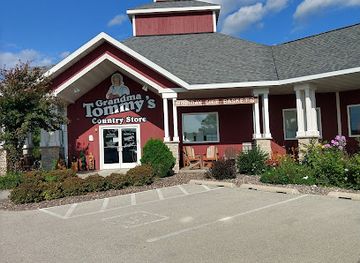
Grandma Tommy's
Discover Grandma Tommy's in Sturgeon Bay, where local gifts meet homemade delights in a charming atmosphere that celebrates the best of Wisconsin.
14 min drive · 4.6 km from city centre
-
Candy store
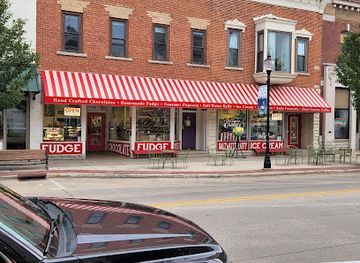
Door County Candy LLC
Experience the sweetest side of Sturgeon Bay at Door County Candy LLC, your go-to destination for chocolates, candies, and ice cream.
1 min walk · 0.1 km from city centre
-
Shopping mall
Cherry Point Mall
Explore Cherry Point Mall in Sturgeon Bay, WI: a vibrant shopping hub with diverse stores, delightful dining, and community events for every visitor.
6 min drive · 2.0 km from city centre
-
Department store
Target
Discover a diverse range of products at Target Sturgeon Bay, your ultimate shopping destination for clothing, electronics, and home goods.
7 min drive · 2.4 km from city centre
Get your free copy of our complete guide to Sturgeon Bay, delivered straight to you.
Everything on this page, from attractions and restaurants to essentials and local phrases, in one PDF you can read offline, print or share.
Already have an account? Sign in
Your Sturgeon Bay guide is ready.
We'll send it to · Not you? Sign out

Getting your guide ready…
We are putting together a fresh copy of the Sturgeon Bay guide. This can take up to a minute.
This can take a few moments. If your browser asks, choose Allow so the download can start. You'll find the guide in your Downloads folder.
Nothing happened? Download it again
Sorry, the guide is taking longer than usual. Please try again in a minute, or get it by email instead.
Sturgeon Bay essentials
Currency and Payment
Safety
Emergency Situations
Do's and Don'ts
Local Tips
From Eve
Local phrases worth knowing
You don't need to get them perfect. A few words go a long way, and locals appreciate the effort.
Basics
| English | Local | Say it |
|---|---|---|
| Hello | Howdy | [haw-dee] |
| Goodbye | See ya later | [see yah lay-ter] |
| Yes | Yeah | [yeh] |
| No | Nope | [nohp] |
| Please/You're welcome | Sure thing | [shur thang] |
| Thank you | Thanks a bunch | [thanks uh bunch] |
| Excuse me/Sorry | Pardon me | [par-dun me] |
| How are you? | How's it goin'? | [hows it go-in] |
| Fine. And you? | Doin' fine. You? | [doin fine. yoo] |
| Do you speak English? | Ya speak English? | [yah speak ing-glish] |
| I don't understand | I ain't catchin' on | [i aint catch-in on] |
Eating & Drinking
| English | Local | Say it |
|---|---|---|
| I'd like to see the menu, please | Mind showin' me the menu? | [mind show-in me the menu] |
| I don't eat meat | I'm a vegetarian | [im a veg-eh-tair-ee-an] |
| Cheers! | Bottoms up! | [bot-ums up] |
| I would like to pay, please | I'll settle up | [ill set-ul up] |
Emergencies
| English | Local | Say it |
|---|---|---|
| Help! | SOS! | [ess-oh-ess] |
| Go away! | Beat it! | [beet it] |
| Call the Police! | Ring the fuzz! | [ring the fuzz] |
| Call a doctor! | Get a doc! | [get a doc] |
| I'm lost | I'm all turned around | [im all turned around] |
| I'm ill | I'm under the weather | [im under the weath-er] |
Shopping
| English | Local | Say it |
|---|---|---|
| I'd like to buy... | I'm lookin' to purchase... | [im look-in to pur-chase] |
| I'm just looking | Just browsin' | [just browz-in] |
| How much is it? | What's the damage? | [whats the dam-ij] |
| That's too expensive | That's a bit steep | [thats a bit steep] |
| Can you lower the price? | Can ya knock a few bucks off? | [can yuh knock a few bucks off] |
Time & Numbers
| English | Local | Say it |
|---|---|---|
| What time is it? | What's the time? | [whats the time] |
| It's one o'clock | It's one | [its one] |
| Half past (10) | Ten-thirty | [ten-thur-tee] |
| Morning | Mornin' | [morn-in] |
| Afternoon | Afternoon | [afer-noon] |
| Evening | Evenin' | [even-in] |
| Yesterday | Yest'day | [yes-t-day] |
| Today | Today | [to-day] |
| Tomorrow | Tomorrer | [tom-or-er] |
| 1 | One | [wun] |
| 2 | Two | [too] |
| 3 | Three | [three] |
| 4 | Four | [four] |
| 5 | Five | [five] |
| 6 | Six | [siks] |
| 7 | Seven | [sev-un] |
| 8 | Eight | [ate] |
| 9 | Nine | [nain] |
| 10 | Ten | [ten] |
Transport & Directions
| English | Local | Say it |
|---|---|---|
| Where's a/the...? | Where's the...? | [wheres the] |
| What's the address? | What's the street? | [whats the street] |
| Can you show me (on the map)? | Can ya point it out? | [can yuh point it out] |
| When's the next (bus)? | When's the next bus? | [whens the next bus] |
| A ticket (to ....) | A ticket (to ....) | [a ticket (to)] |
History of Sturgeon Bay
Indigenous Homelands and Early Settlement
The Sturgeon Bay area lies within the traditional region of Indigenous peoples of the western Great Lakes, including the Menominee and Potawatomi. The bay, forests and waterways supported travel, fishing and seasonal activity long before Euro-American settlement. During the nineteenth century, land cessions, migration and changing federal policies transformed Indigenous access to the region. Surveyors, traders and settlers were drawn to the harbour’s sheltered waters and to the timber resources of the Door Peninsula. The settlement that developed around the bay was first known as Sawyer, a name connected with early settler Increase Claflin Sawyer, before becoming Sturgeon Bay. Its position between Green Bay and Lake Michigan gave it a commercial importance that far exceeded the size of its early population.
Timber, Trade and the Growing Harbour
During the mid-nineteenth century, lumbering became central to Sturgeon Bay’s economy. Forest products were moved through the harbour, while merchants supplied farms, fishing settlements and communities around the peninsula. The bay also became a base for commercial fishing and boat traffic on Green Bay and Lake Michigan. Streets, warehouses, churches and homes expanded as the settlement acquired the institutions of a county centre. The community’s growth reflected wider changes in Wisconsin, where water transport and timber encouraged new towns before railways and improved roads altered regional connections. By the late nineteenth century, Sturgeon Bay had developed a distinct commercial identity founded on the relationship between its harbour, surrounding forests and the agricultural communities of Door County.
The Sturgeon Bay Ship Canal
The opening of the Sturgeon Bay Ship Canal in 1881 transformed the city’s place on the Great Lakes. The canal created a shorter route between Green Bay and Lake Michigan, allowing vessels to avoid the longer passage around the northern tip of the Door Peninsula. Its construction required major engineering works and brought a new concentration of docks, navigation facilities and maritime employment. The canal also encouraged the development of lighthouses and a service economy connected with shipping. Sturgeon Bay’s waterfront thereafter served not only local fishing and trade but also vessels moving through one of the region’s important inland-waterway links. The canal remains the physical feature that most clearly explains the city’s geography and industrial history.
Shipbuilding and Industrial Expansion
The harbour’s strategic location supported the rise of shipbuilding in the late nineteenth and twentieth centuries. Local yards constructed and repaired vessels for Great Lakes commerce, fishing, ferry services and government work, creating skilled employment and strengthening Sturgeon Bay’s maritime culture. Shipbuilding became closely associated with the city’s identity even as timber declined in importance. The surrounding economy diversified into manufacturing, services, agriculture and tourism, while the waterfront continued to accommodate working yards beside recreational boating. Historic vessels, maritime collections and surviving industrial landscapes now preserve aspects of this development. The Door County Maritime Museum presents the broader story of this working waterway, including the specialised knowledge required to live and work on the Great Lakes.
A Modern Door County Centre
In the twentieth and twenty-first centuries, Sturgeon Bay developed as Door County’s governmental, commercial and cultural centre. Improved roads made the peninsula more accessible, and tourism gradually joined shipping, fishing and agriculture as a major influence on the local economy. The historic centre retained its role as a place for commerce while waterfront parks, marinas, galleries and museums broadened the visitor experience. Community institutions such as Crossroads at Big Creek connect natural science, local history and environmental education with the city’s changing identity. Contemporary Sturgeon Bay still reflects its working past through shipyards, harbour activity and maritime collections, while its shops, restaurants and seasonal events reveal the influence of Door County’s wider cultural and tourism economy.
Sturgeon Bay in Photos
Browse through our photo collection highlighting the charm and character of the destination.
Cities near Sturgeon Bay
The closest cities to Sturgeon Bay, if you have time for more than one stop.
-

-

-

-

-



Swipe for more cities
Explore more

Explore more of Wisconsin
Discover Wisconsin: A Midwestern gem offering stunning natural landscapes, rich cultural experiences, and a taste of America's finest dairy products.
Explore Wisconsin