

Free Eastern Montana Travel Guide & Mobile App
Explore Eastern Montana with free travel guides. Discover regional history, expert tips, proposed trips, and audio guides on web or mobile app.


Eastern Montana combines badlands, prairie, dinosaur country, Indigenous history, river valleys and wide-open roads across the northern Great Plains.
Read more about Eastern Montana
When is the best time to visit Eastern Montana?
Best: June, August–September · 22–27°C| Month | High (°C) | Rainfall (mm) |
|---|---|---|
| January | -2 | 15 |
| February | 1 | 15 |
| March | 5 | 20 |
| April | 11 | 25 |
| May | 18 | 35 |
| June (best) | 23 | 45 |
| July | 28 | 35 |
| August (best) | 27 | 30 |
| September (best) | 22 | 25 |
| October | 15 | 20 |
| November | 4 | 15 |
| December | -1 | 15 |
Getting to and around Eastern Montana
How to get there
Transportation
Top city travel guides in Eastern Montana
The cities of Eastern Montana, and the easiest places to base yourself.
-

-

-

-

-

-


Swipe for more cities
Destinations in Eastern Montana
Resorts, valleys and scenic spots worth a trip of their own.
-

-

-

-

-

-


Swipe for more destinations
Best attractions in Eastern Montana
Eastern Montana's attractions are spread across a large, lightly settled landscape rather than concentrated in one urban centre. Makoshika State Park outside Glendive is the region's signature badlands destination, with eroded formations, hiking routes and strong links to dinosaur research. Around Fort Peck, the dam, expansive reservoir, interpretive facilities and surrounding recreation provide opportunities for fishing, boating, wildlife watching and scenic drives. The Charles M. Russell National Wildlife Refuge and the Missouri Breaks offer a more remote experience of river country, although access and services require careful planning. Historic places include Fort Union near the Montana–North Dakota border, the reconstructed trading post of Fort Peck, and sites associated with military and railway expansion. Museums in towns such as Miles City, Glendive, Sidney, Glasgow and Wolf Point explore local geology, Indigenous history, agriculture and community life. Little Bighorn Battlefield lies in southeastern Montana and is especially significant for its military and Indigenous interpretations, while Pompeys Pillar, near the western approach to Eastern Montana, preserves a famous Yellowstone River landmark and an expedition-era inscription.
-
National park
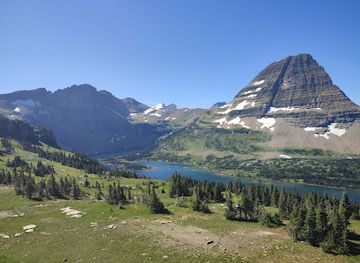
Glacier National Park
Discover Glacier National Park in Montana, a breathtaking destination with stunning landscapes, diverse wildlife, and endless outdoor adventures.
-
Tourist attraction
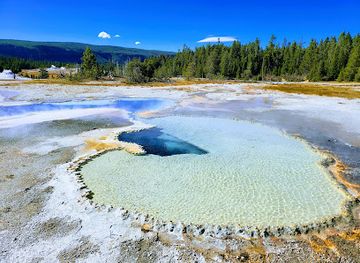
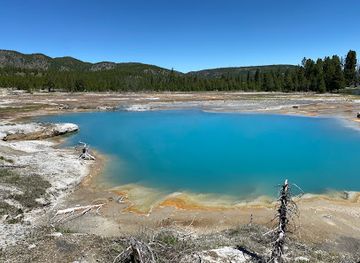
Grand Prismatic Spring
Experience the breathtaking colors and geothermal wonders of Grand Prismatic Spring, a must-visit natural attraction in Yellowstone National Park.
-
State park
Giant Springs State Park
Experience the breathtaking beauty of Giant Springs State Park, a natural oasis in Great Falls, Montana, perfect for outdoor adventures and relaxation.
-
Zoo
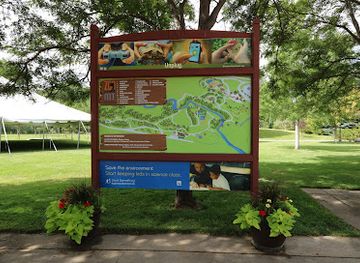
ZooMontana
Explore ZooMontana, a unique zoo in Billings, where native and exotic animals come to life in a beautiful, educational setting.


Best landmarks in Eastern Montana
-
Tourist attraction
Old Faithful
Experience the breathtaking eruptions of Old Faithful, a must-see geothermal wonder in Yellowstone National Park, showcasing nature's raw power and beauty.
-
Tourist attraction
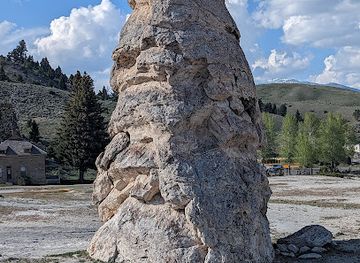
Mammoth Hot Springs
Explore the stunning geothermal features and breathtaking landscapes of Mammoth Hot Springs in Yellowstone National Park, a true natural wonder.
-
Ski resort
Big Sky Resort
Experience the thrill of skiing and year-round adventures at Big Sky Resort, Montana's premier destination for outdoor fun and breathtaking scenery.
-
Restaurant
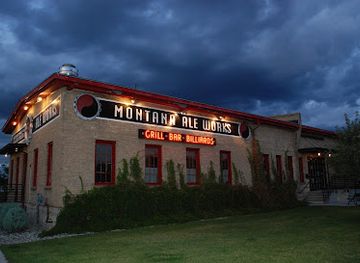
Montana Ale Works
Experience the best of American cuisine and craft beer at Montana Ale Works, a unique brewpub in Bozeman, Montana, perfect for families and food lovers.

Explore Eastern Montana on the map
Plan your trip on one map. See where the top cities, national parks and sights are, and book hotels and experiences in a few clicks.
Best hotels in Eastern Montana
Best restaurants in Eastern Montana
Dining in Eastern Montana reflects the practical food culture of ranching, farming and long-distance travel. In the larger towns, restaurants and cafés commonly offer steaks, burgers, sandwiches, soups, baked goods and broadly American regional cooking, while local bars and family-run establishments often serve as important social spaces. Beef and wheat are central products of the surrounding economy, and seasonal produce, freshwater fish and game may appear in local cooking without being available everywhere. Farmers' markets and community events can provide a better opportunity to find regional produce than a formal culinary scene. Around Glendive, Miles City, Sidney, Glasgow and Wolf Point, visitors will find the widest choice of cafés, diners and casual restaurants; rural communities generally have fewer options and earlier closing patterns. Stock up for remote journeys, and treat Montana-made beer, spirits and other agricultural products as part of the wider regional food economy rather than assuming every small town has a specialist tasting scene.
-
Restaurant
Montana Ale Works
Experience the best of American cuisine and craft beer at Montana Ale Works – where flavor meets local charm in Bozeman.
-
American
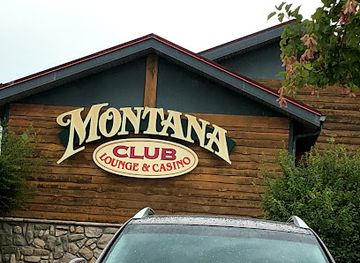
The Montana Club Restaurant
Discover exceptional American cuisine at The Montana Club Restaurant in Great Falls - where seafood meets steakhouse classics.
-
Steak
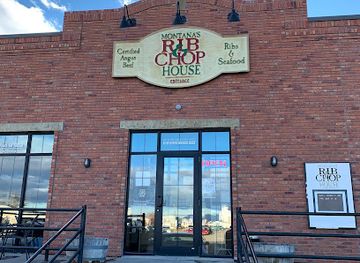
Montana's Rib & Chop House - Livingston
Discover Montana's Rib & Chop House: A Culinary Haven for Steak Lovers in Beautiful Livingston.
-
American
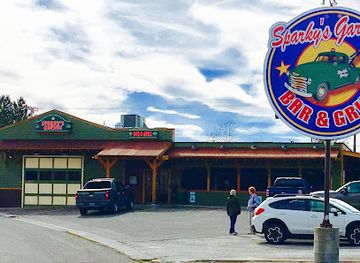
Sparky's Garage Dillon
Discover the heart of American cuisine at Sparky's Garage Dillon – where great food meets a fun atmosphere in beautiful Montana.
Best bars in Eastern Montana
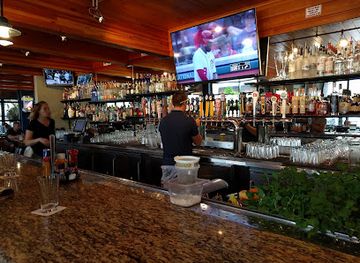
Evening life in Eastern Montana is centred on traditional bars, restaurants, community events and occasional live music rather than a large nightclub circuit. Miles City, Glendive, Sidney, Glasgow and Wolf Point have the region's broadest choice of places to eat and drink, with local bars often combining food, conversation, televised sport and informal entertainment. Rodeos, county fairs, concerts and seasonal gatherings can create busier nights, but their timing varies and should be checked locally. Breweries, cocktail-focused venues and late-night options are more limited than in Montana's larger western cities. In smaller settlements, evening activity may be quiet once restaurants close, making an early start for the next day's drive or trail the normal pattern. Drink responsibly, arrange transport in advance and never drive long rural roads after drinking.
-
Restaurant
Montana Ale Works
Discover the flavors of Montana at Montana Ale Works, a lively brewpub offering delicious American cuisine and a variety of craft beers in Bozeman.
-
Grill
Copper | Whiskey Bar and Grill Bozeman
Experience the heart of Bozeman at Copper | Whiskey Bar and Grill, where great food meets a lively atmosphere in a rustic setting.
-
Grill
Windbag Saloon & Grill
Experience the vibrant atmosphere and delicious flavors at Windbag Saloon & Grill in Helena, Montana, your go-to spot for food and fun.
-
Bar
Iron Horse Bar & Grill
Experience the lively atmosphere and local flavors at Iron Horse Bar & Grill, a must-visit dining spot in the heart of Missoula, Montana.


Best nightclubs in Eastern Montana
Evening life in Eastern Montana is centred on traditional bars, restaurants, community events and occasional live music rather than a large nightclub circuit. Miles City, Glendive, Sidney, Glasgow and Wolf Point have the region's broadest choice of places to eat and drink, with local bars often combining food, conversation, televised sport and informal entertainment. Rodeos, county fairs, concerts and seasonal gatherings can create busier nights, but their timing varies and should be checked locally. Breweries, cocktail-focused venues and late-night options are more limited than in Montana's larger western cities. In smaller settlements, evening activity may be quiet once restaurants close, making an early start for the next day's drive or trail the normal pattern. Drink responsibly, arrange transport in advance and never drive long rural roads after drinking.
-
Restaurant
Union Club Bar
Experience the vibrant nightlife of Missoula at Union Club Bar, where delicious food meets live music and unforgettable moments.
-
Lounge
Stonefly Lounge
Discover the vibrant atmosphere of Stonefly Lounge in Coram, Montana, offering delicious food, drinks, and live music in a cozy setting.
-
Lounge
Flamingo Lounge
Discover the vibrant nightlife at Flamingo Lounge in Great Falls, Montana; a perfect blend of lounge relaxation and energetic nightclub atmosphere.
-
Bar
Club 90
Discover the nightlife and local charm at Club 90, the go-to bar in Billings, Montana for great drinks and a vibrant atmosphere.



Best shops in Eastern Montana
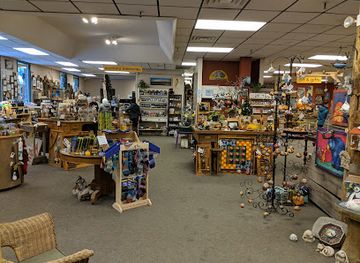
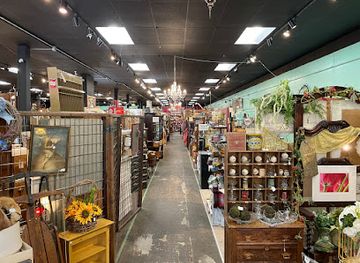
Shopping in Eastern Montana is concentrated in the main towns' historic centres, high streets and small retail areas rather than major metropolitan shopping districts. Glendive, Miles City, Sidney, Glasgow and Wolf Point offer practical supplies, clothing, books, gifts and locally oriented businesses, while some smaller communities depend on a limited number of general stores and service premises. Western wear, leather goods, handmade craftwork, regional artwork and books on Indigenous, military, railway and natural history themes can make thoughtful purchases when sourced respectfully. Farmers' markets and community events may offer Montana-grown produce, baked goods and preserves during the appropriate season, though schedules vary. Visitors should distinguish authentic local work from generic frontier-themed merchandise and should buy Indigenous art directly from recognised artists or reputable sellers. In remote areas, fill gaps in food, fuel and outdoor equipment before leaving the larger towns.
-
Gift shop
Heyday
Explore Heyday in Bozeman for unique gifts and local crafts that celebrate Montana's artistry and culture.
-
Antique store
Montana Antique Mall
Explore a treasure trove of antiques and collectibles at Montana Antique Mall in Missoula, a must-visit destination for vintage lovers.
-
Gift shop
Birds & Beasleys
Explore Birds & Beasleys in Helena, MT – a unique gift shop offering art, souvenirs, and bird-related treasures that capture the essence of Montana.
-
Gift shop
Vintage and Rustics in Montana
Discover the unique charm of Vintage and Rustics in Montana, where eclectic gifts meet delicious treats in a historic shopping experience.


Get your free copy of our complete guide to Eastern Montana, delivered straight to you.
Everything on this page, from attractions and restaurants to essentials and local phrases, in one PDF you can read offline, print or share.
Already have an account? Sign in
Your Eastern Montana guide is ready.
We'll send it to · Not you? Sign out

Getting your guide ready…
We are putting together a fresh copy of the Eastern Montana guide. This can take up to a minute.
This can take a few moments. If your browser asks, choose Allow so the download can start. You'll find the guide in your Downloads folder.
Nothing happened? Download it again
Sorry, the guide is taking longer than usual. Please try again in a minute, or get it by email instead.
Eastern Montana essentials
Currency and Payment
Safety
Emergency Situations
Do's and Don'ts
Local Tips
From Eve
Local phrases worth knowing
You don't need to get them perfect. A few words go a long way, and locals appreciate the effort.
Basics
| English | Local | Say it |
|---|---|---|
| Hello | Howdy | [How-dee] |
| Goodbye | See ya | [See ya] |
| Yes | Yup | [Yup] |
| No | Nope | [Nope] |
| Please/You're welcome | Please / No problem | [Please / No prob-lum] |
| Thank you | Thanks a bunch | [Thanks a bunch] |
| Excuse me/Sorry | Pardon me / My bad | [Pardon me / My bad] |
| How are you? | How ya doin'? | [How ya doin'?] |
| Fine. And you? | Good. And you? | [Good. An' you?] |
| Do you speak English? | Can ya talk English? | [Can ya talk English?] |
| I don't understand | I ain't followin' | [I ain't followin'] |
Eating & Drinking
| English | Local | Say it |
|---|---|---|
| I'd like to see the menu, please | Can I see the menu, please? | [Can I see the menu, please?] |
| I don't eat meat | I don't do meat | [I don't do meat] |
| Cheers! | Cheers! | [Cheers!] |
| I would like to pay, please | Can I get the check, please? | [Can I get the check, please?] |
Emergencies
| English | Local | Say it |
|---|---|---|
| Help! | Help! | [Help!] |
| Go away! | Get lost! | [Get lost!] |
| Call the Police! | Call the cops! | [Call the cops!] |
| Call a doctor! | Get a doc! | [Get a doc!] |
| I'm lost | I'm turned around | [I'm turned around] |
| I'm ill | I'm feelin' rough | [I'm feelin' rough] |
Shopping
| English | Local | Say it |
|---|---|---|
| I'd like to buy... | I wanna buy... | [I wanna buy...] |
| I'm just looking | Just lookin' | [Just lookin'] |
| How much is it? | How much's this? | [How much's this?] |
| That's too expensive | That's way too high | [That's way too high] |
| Can you lower the price? | Can ya drop the price? | [Can ya drop the price?] |
Time & Numbers
| English | Local | Say it |
|---|---|---|
| What time is it? | What time ya got? | [What time ya got?] |
| It's one o'clock | It's one o'clock | [It's one o'clock] |
| Half past (10) | Half past ten | [Half past ten] |
| Morning | Mornin' | [Mornin'] |
| Afternoon | Afternoon | [Afternoon] |
| Evening | Evenin' | [Evenin'] |
| Yesterday | Yesterday | [Yesterday] |
| Today | Today | [Today] |
| Tomorrow | Tomorrow | [Tomorrow] |
| 1 | One | [One] |
| 2 | Two | [Two] |
| 3 | Three | [Three] |
| 4 | Four | [Four] |
| 5 | Five | [Five] |
| 6 | Six | [Six] |
| 7 | Seven | [Seven] |
| 8 | Eight | [Eight] |
| 9 | Nine | [Nine] |
| 10 | Ten | [Ten] |
Transport & Directions
| English | Local | Say it |
|---|---|---|
| Where's a/the...? | Where's the ...? | [Where's the ...?] |
| What's the address? | What's the address? | [What's the address?] |
| Can you show me (on the map)? | Can ya point it out? | [Can ya point it out?] |
| When's the next (bus)? | When's the next bus? | [When's the next bus?] |
| A ticket (to ....) | A ticket to ... | [A ticket to ...] |
History of Eastern Montana
Indigenous Nations and the Great Plains
Eastern Montana has long been home to Indigenous peoples whose histories predate written records and the United States by many centuries. Apsaalooke, Northern Cheyenne, Assiniboine and Sioux communities, among others, have maintained political, cultural and family connections across the plains, river valleys and badlands. Hunting, seasonal movement, trade and later resistance to federal expansion shaped the nineteenth-century history of the region. Today, reservations, cultural institutions, historic places and living communities remain important parts of Eastern Montana's identity, and visitors should understand that these are contemporary nations rather than simply subjects of the past.
Fort Union and the Fur Trade, 1828–1867
Fort Union, built near the confluence of the Yellowstone and Missouri rivers, became one of the most important trading posts on the northern Plains. The American Fur Company used it as a commercial centre where bison robes and other goods were exchanged with Indigenous traders, while supplies and information moved along the river network. The fort's influence extended across a large region and brought together Indigenous, Métis, European and American participants. Its reconstructed remains near the Montana–North Dakota border convey the commercial importance of the rivers before railways transformed transport.
Expeditions, Forts and the Opening of the Territory
Exploration and military activity increased during the nineteenth century as the United States sought routes, information and control across the northern Plains. The Lewis and Clark Expedition travelled along the Missouri and Yellowstone corridors, followed later by military expeditions, surveyors and traders. Forts such as Fort Keogh, established near present-day Miles City after the 1876 conflict, supported federal campaigns and settlement. These developments altered Indigenous economies and mobility while creating the governmental and transport framework that later supported ranching and town building.
The Battle of the Little Bighorn, 1876
The Battle of the Little Bighorn took place in present-day southeastern Montana during the U.S. Army's campaign against Northern Cheyenne, Lakota and Arapaho forces. Lieutenant Colonel George A. Custer and the Seventh Cavalry suffered a major defeat on 25–26 June 1876. The site, now preserved as Little Bighorn Battlefield National Monument, is interpreted through both military and Indigenous perspectives. Its significance lies not only in the battle itself but also in the broader struggle over treaty rights, land, sovereignty and the future of the northern Plains.
Railways, Homesteads and Cattle Country
Railway construction in the late nineteenth and early twentieth centuries connected Eastern Montana to national markets and encouraged the growth of towns including Miles City, Glendive, Sidney, Glasgow and Wolf Point. Cattle ranching expanded alongside the railway, while homesteaders arrived under federal land policies that promised farms on the dry plains. The results were mixed: some settlements endured, but drought, harsh winters, limited rainfall and economic downturns forced many families to leave. Grain elevators, stockyards, historic main streets and isolated farm buildings preserve elements of this transformation.
Fort Peck Dam and the New Deal Era
Construction of Fort Peck Dam on the Missouri River began in the 1930s as one of the major public-works projects of the New Deal. The enormous earth-filled dam created Fort Peck Lake and provided flood control, employment and a long-term foundation for recreation and water management. The project also displaced communities and altered the river landscape. Today, Fort Peck's dam, powerhouse, visitor facilities and surrounding recreational areas illustrate how federal engineering reshaped northern Montana during the Great Depression and continued to influence regional life.
Energy, Agriculture and Contemporary Change
Eastern Montana's modern economy has continued to depend heavily on agriculture, cattle, rail transport and energy production. Oil development around the Williston Basin brought periods of rapid growth to communities such as Sidney, while coal and power generation have also influenced parts of the region. These industries operate alongside tourism, healthcare, education, wildlife management and small-town commerce. Contemporary Eastern Montana therefore combines long-established ranching and farming traditions with changing debates about land use, water, energy, conservation and the future of remote communities.
Eastern Montana in Photos
Browse through our photo collection highlighting the charm and character of the destination.
Neighbouring regions of Eastern Montana
The closest regions to Eastern Montana, if you have time for more than one.
-

-

-

-

-


Swipe for more regions
Explore more
Explore more of Montana
Discover Montana: A Treasure State of majestic landscapes, outdoor adventures, and rich cultural heritage. Explore Glacier and Yellowstone, charming towns, and historic sites.
Explore Montana