

Mount Monadnock Travel Guide - Free Web & App
Your ultimate guide to Mount Monadnock. Discover top landmarks, proposed trips, and local tips. Free on the web or via the Evendo companion app.


Mount Monadnock, New Hampshire, combines rocky summit views, forest trails, Appalachian history and four-season hiking near Jaffrey and Keene.
A Solitary Mountain in Southern New Hampshire
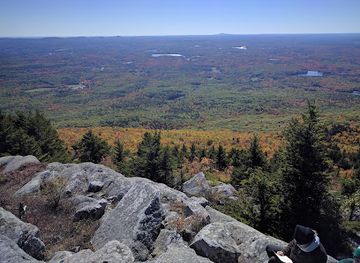
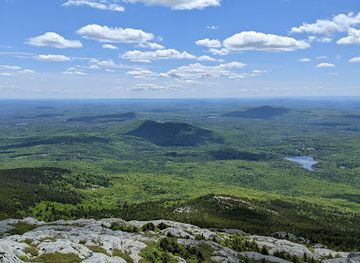
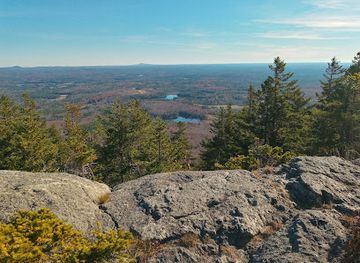
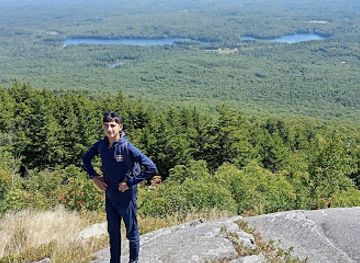
Mount Monadnock rises above the wooded landscapes of south-western New Hampshire, a distinctive peak near the town of Jaffrey and one of the most recognisable mountains in the state. Reaching 3,165 feet, it is not part of a continuous high mountain range but an isolated, weathered mass whose exposed upper slopes command broad views across New Hampshire, Vermont and Massachusetts on clear days. The mountain lies within Monadnock State Park, where forested lower slopes give way to rocky ledges, open summit terrain and a network of footpaths.Read more about Mount Monadnock
Trails, Views and Seasonal Character
History and Local Setting
When is the best time to visit Mount Monadnock?
Best: June–August · 24–27°C| Month | High (°C) | Rainfall (mm) |
|---|---|---|
| January | 0 | 75 |
| February | 1 | 65 |
| March | 6 | 85 |
| April | 12 | 95 |
| May | 19 | 105 |
| June (best) | 24 | 115 |
| July (best) | 27 | 125 |
| August (best) | 26 | 115 |
| September | 22 | 105 |
| October | 16 | 95 |
| November | 8 | 85 |
| December | 2 | 75 |
Getting to and around Mount Monadnock
How to get there
Transportation
Best attractions in Mount Monadnock
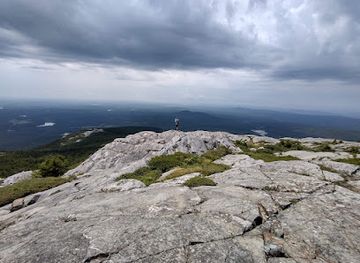
The principal attraction is the mountain itself, with trails rising through mixed woodland to broad areas of exposed summit rock and long views over the Monadnock Region. The White Dot and White Cross routes provide well-known approaches from the main state-park area, while the Dublin Trail offers a northern approach and the Appalachian Trail crosses the mountain. Lower slopes include forest walking and seasonal scenery, whereas the upper terrain feels more open, wind-exposed and rugged. The surrounding park landscape provides a quieter experience away from the summit routes, subject to current trail conditions and access arrangements. Nearby Jaffrey adds the cultural and practical setting of a small New Hampshire community, while Peterborough and Keene serve as useful regional bases with galleries, shops, restaurants and local history. Visitors interested in the wider landscape can explore the Monadnock Region's rural roads, farms, ponds and wooded hills, but these surrounding attractions should be treated as separate excursions rather than as facilities within the state park.
-
State park
Monadnock State Park
Discover the breathtaking beauty of Monadnock State Park in New Hampshire, a paradise for hikers and nature lovers with stunning views and diverse wildlife.
-
Park
Monadnock State Park Headquarters and Trailhead
Explore the breathtaking beauty and diverse trails of Monadnock State Park, a must-visit destination for nature lovers in New Hampshire.
-
Park
Mt. Monadnock Site
Explore the breathtaking views and diverse trails of Mt. Monadnock, a premier hiking destination in New Hampshire, perfect for every outdoor enthusiast.
-
Hiking area
Mount Monadnock Via Halfway House Rd.
Experience the breathtaking beauty of Mount Monadnock, a premier hiking destination in New Hampshire, perfect for adventurers and nature lovers alike.
Best landmarks in Mount Monadnock
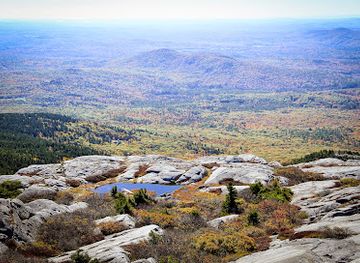
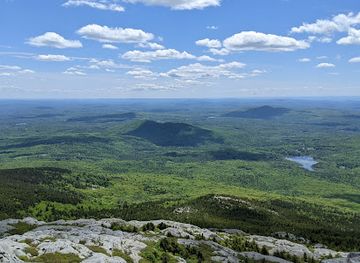
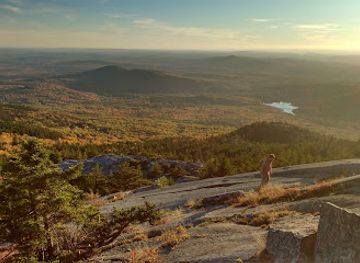
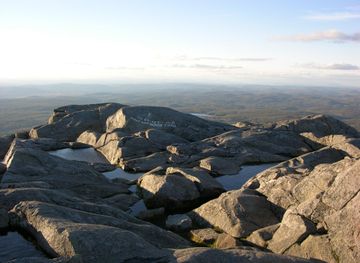
The dominant landmark is Mount Monadnock's open, rocky summit, a prominent isolated peak whose profile has shaped the identity of south-western New Hampshire. Its upper ledges provide the mountain's defining physical character and, in clear conditions, expansive views across the surrounding forests and hills. The White Dot and White Cross trails are important access features rather than landmarks in their own right, while the Appalachian Trail gives the summit a recognised place within a much longer walking route. Monadnock State Park is the principal protected landscape associated with the mountain, encompassing the wooded lower slopes and heavily used hiking approaches. The nearby town of Jaffrey forms the historic community setting for visits, with the wider Monadnock Region contributing rural roads, farms, ponds and wooded ridges that help explain the mountain's visual prominence. There are no large architectural monuments on the summit; its significance is primarily geological, scenic, recreational and cultural.
-
State park
Monadnock State Park
Explore Monadnock State Park in New Hampshire - A perfect destination for hiking, wildlife watching, and experiencing breathtaking natural beauty.
-
Park
Monadnock State Park Headquarters and Trailhead
Experience the breathtaking beauty and outdoor adventures of Monadnock State Park, a top destination for nature lovers in New Hampshire.
-
Park
Mt. Monadnock Site
Discover stunning views and invigorating hikes at Mt. Monadnock, an iconic New Hampshire park perfect for nature lovers and outdoor adventurers.
-
Hiking area
Mount Monadnock Via Halfway House Rd.
Discover breathtaking panoramic views, challenging trails, and a unique outdoor experience at Mount Monadnock, New Hampshire's iconic hiking destination.
Explore Mount Monadnock on the map
Plan your trip on one map. See where the top attractions, landmarks, restaurants and hotels are, and book hotels and experiences in a few clicks.
Best hotels in Mount Monadnock
Best restaurants in Mount Monadnock
Mount Monadnock itself has limited dining infrastructure, so most meals are taken in Jaffrey or in nearby Peterborough and Keene rather than at the trailhead. The surrounding Monadnock Region's food culture reflects southern New Hampshire's rural setting, with farm produce, maple products, baked goods, locally made preserves and seasonal menus appearing in independent restaurants, cafés, farm shops and village businesses. Hikers commonly arrange food and water before reaching the mountain, as the trails should not be approached on the assumption that refreshments will be available on the slopes. Jaffrey provides the closest settlement for basic post-hike dining, while Peterborough and Keene offer a wider variety of restaurants and cafés. Local New England staples, hearty breakfasts, soups, sandwiches and informal pub-style meals are generally more characteristic of the area than a concentrated destination dining scene, with availability varying by season and individual business.
-
Restaurant
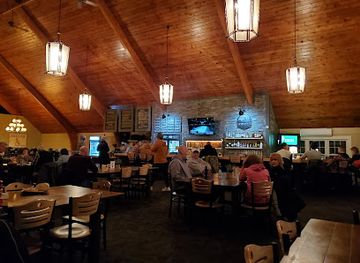
Dublin Road Taproom and Eatery
Experience local flavors at Dublin Road Taproom & Eatery in Jaffrey, NH - where every meal tells a story of New England's culinary heritage.
-
Indian
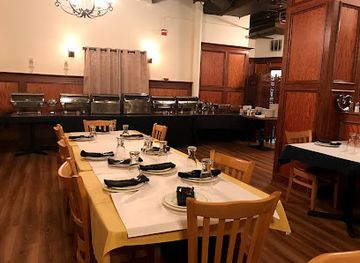
Royal Spice
Experience authentic Indian cuisine at Royal Spice in Troy; where every dish tells a story full of flavor and tradition.
-
Restaurant
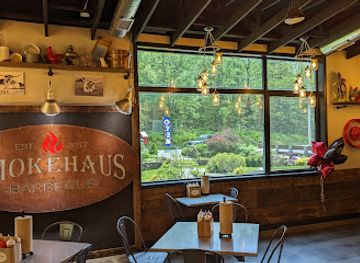
Smokehaus BBQ Dublin
Experience mouthwatering smoked meats at Smokehaus BBQ in Dublin - a culinary gem for barbecue lovers in New Hampshire.
Best bars in Mount Monadnock
Evening entertainment around Mount Monadnock is quiet and community-based rather than centred on nightclubs or a dedicated nightlife district. Jaffrey and nearby villages have the kind of restaurants, taverns and traditional meeting places associated with a rural New Hampshire region, while Peterborough offers a broader selection of evening dining and cultural activity. Keene, outside the immediate mountain setting, provides the largest nearby concentration of bars, pubs, restaurants and occasional live entertainment. After a day on the trails, evenings are more likely to involve an early meal, a drink in a local establishment or a relaxed stay at a nearby inn than late-night activity. Visitors should check directly with individual venues for current opening arrangements, as rural businesses may operate seasonally or on limited schedules.
-
Restaurant
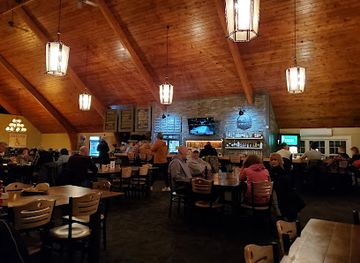
Dublin Road Taproom and Eatery
Experience the flavors of Jaffrey at Dublin Road Taproom and Eatery, where local ingredients meet a cozy ambiance for unforgettable dining.
-
Hotel
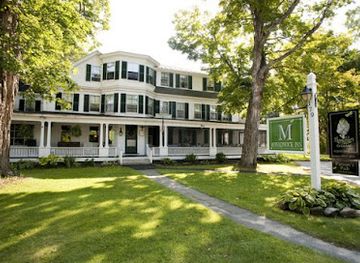
Monadnock Inn
Discover the charm of Monadnock Inn in Jaffrey, NH, your gateway to outdoor adventures and cozy comfort.
Best shops in Mount Monadnock
Shopping directly at Mount Monadnock is limited, with the mountain functioning chiefly as a hiking destination rather than a retail centre. Jaffrey is the nearest place to obtain basic supplies, while Peterborough and Keene provide more extensive shops, galleries, bookshops, outdoor equipment retailers and independent businesses. Regional products associated with the wider Monadnock area include New Hampshire maple syrup, farm goods, preserves, baked items, locally made crafts and artworks inspired by the landscape. Farm shops and seasonal producers may be dispersed along rural roads rather than concentrated in a single market district, and their opening patterns can vary. Visitors should buy specialist hiking supplies, food and water before starting an ascent rather than expecting a broad selection at the state-park entrance. The area is better suited to practical provisions and small regional purchases than to major commercial shopping.
-
State park
Monadnock State Park
Explore Monadnock State Park: A breathtaking retreat in New Hampshire with stunning vistas, diverse trails, and natural beauty.
-
Gift shop
The Cozy Cottage
Explore The Cozy Cottage in Troy, NH - a delightful gift shop offering unique antiques and contemporary treasures that capture the spirit of local craftsmanship.
-
Gift shop
Monadnock Sugar House
Discover local maple syrup and unique gifts at Monadnock Sugar House in Jaffrey, NH – a must-visit for sweet enthusiasts and souvenir seekers.

Get your free copy of our complete guide to Mount Monadnock, delivered straight to you.
Everything on this page, from attractions and restaurants to essentials and local phrases, in one PDF you can read offline, print or share.
Already have an account? Sign in
Your Mount Monadnock guide is ready.
We'll send it to · Not you? Sign out

Getting your guide ready…
We are putting together a fresh copy of the Mount Monadnock guide. This can take up to a minute.
This can take a few moments. If your browser asks, choose Allow so the download can start. You'll find the guide in your Downloads folder.
Nothing happened? Download it again
Sorry, the guide is taking longer than usual. Please try again in a minute, or get it by email instead.
Mount Monadnock essentials
Currency and Payment
Safety
Emergency Situations
Do's and Don'ts
Local Tips
From Eve
Local phrases worth knowing
You don't need to get them perfect. A few words go a long way, and locals appreciate the effort.
Basics
| English | Local | Say it |
|---|---|---|
| Hello | Howdy | [haw-dee] |
| Goodbye | See ya later | [see yuh lay-tuh] |
| Yes | Yup | [yuhp] |
| No | Nah | [nuh] |
| Please/You're welcome | Please/No problem | [pleez/no prob-lem] |
| Thank you | Thanks a bunch | [thanks uh bunch] |
| Excuse me/Sorry | Pardon me/My bad | [par-dun me/my bad] |
| How are you? | How you doin'? | [how yuh doin] |
| Fine. And you? | Good. How 'bout you? | [good. how bout yuh] |
| Do you speak English? | Ya speak English? | [ya speak english] |
| I don't understand | I have no clue | [I have no clue] |
Eating & Drinking
| English | Local | Say it |
|---|---|---|
| I'd like to see the menu, please | Can I check out the menu? | [can I check out the menu] |
| I don't eat meat | I'm a vegetarian | [I'm a vegetarian] |
| Cheers! | Cheers! | [cheers] |
| I would like to pay, please | I'll settle the bill, please | [I'll settle the bill, please] |
Emergencies
| English | Local | Say it |
|---|---|---|
| Help! | Assist! | [uh-sist] |
| Go away! | Get lost! | [get lost] |
| Call the Police! | Ring the cops! | [ring the cops] |
| Call a doctor! | Get a medic! | [get uh medic] |
| I'm lost | I'm turned around | [I'm turned around] |
| I'm ill | I'm under the weather | [I'm under the weather] |
Shopping
| English | Local | Say it |
|---|---|---|
| I'd like to buy... | I'm interested in... | [I'm interested in] |
| I'm just looking | Just browsing | [just browsing] |
| How much is it? | What's the price? | [what's the price] |
| That's too expensive | That's a bit steep | [that's uh bit steep] |
| Can you lower the price? | Can you knock a bit off? | [can you knock uh bit off] |
Time & Numbers
| English | Local | Say it |
|---|---|---|
| What time is it? | What's the time? | [what's the time] |
| It's one o'clock | It's one | [it's one] |
| Half past (10) | Ten-thirty | [ten-thur-tee] |
| Morning | Mornin' | [mornin] |
| Afternoon | Afternoon | [afternoon] |
| Evening | Evenin' | [evenin] |
| Yesterday | Yest'day | [yest'day] |
| Today | Today | [today] |
| Tomorrow | Tomorrah | [tomorrah] |
| 1 | One | [wun] |
| 2 | Two | [too] |
| 3 | Three | [three] |
| 4 | Four | [four] |
| 5 | Five | [five] |
| 6 | Six | [six] |
| 7 | Seven | [seven] |
| 8 | Eight | [eight] |
| 9 | Nine | [nine] |
| 10 | Ten | [ten] |
Transport & Directions
| English | Local | Say it |
|---|---|---|
| Where's a/the...? | Where's the...? | [where's the] |
| What's the address? | What's the address? | [what's the address] |
| Can you show me (on the map)? | Can you point it out (on the map)? | [can you point it out on the map] |
| When's the next (bus)? | When's the next (bus)? | [when's the next bus] |
| A ticket (to ....) | A ticket (to ....) | [uh ticket] |
History of Mount Monadnock
A Resistant Geological Mass
Mount Monadnock is an isolated remnant of resistant rock shaped by long geological erosion and the movement of Ice Age glaciers across southern New Hampshire. Its summit and upper ridges expose hard rock above softer surrounding terrain, producing the pronounced mountain form that defines the region. Glacial action helped smooth and contour parts of the mountain while leaving ledges, boulders and thin soils at higher elevations. The geological character of the peak is closely connected with its present landscape: dense woodland covers much of the lower mountain, while the summit becomes more open and rocky.
Indigenous Landscapes and Early Settlement
The wider Monadnock Region lies within the traditional homeland of Abenaki peoples, whose communities used the forests, wetlands and waterways of southern New England long before European settlement. The word monadnock entered wider geographical usage through English-language mapping and is commonly understood to describe an isolated mountain or rock mass, with linguistic roots associated with the region's Indigenous heritage. European settlement expanded around the mountain during the eighteenth century, creating farms, roads and small communities in the valleys and lower country surrounding the peak.
Farms, Forests and the Monadnock Region
For much of the nineteenth century, the landscape around Mount Monadnock combined agriculture, timber production and small-scale rural industry. Field clearance and later abandonment altered the balance between farmland and woodland, while the mountain's prominent profile increasingly attracted visitors from nearby towns and cities. Jaffrey and surrounding communities became the practical bases for excursions, providing routes towards the mountain and services for travellers. The area's broad views and changing woodland scenery also drew artists and writers, helping establish Mount Monadnock as a cultural as well as physical landmark.
Walking Tradition and Conservation
Organised recreational walking on Mount Monadnock developed strongly during the nineteenth and early twentieth centuries, as improved roads and rail connections made the mountain more accessible to visitors. Repeated foot traffic has caused erosion on exposed approaches, making trail management an important part of the mountain's modern history. Today, Monadnock State Park protects the principal recreational landscape and manages access, paths and visitor use. The Appalachian Trail's route across the mountain adds a long-distance walking dimension, while continuing conservation work seeks to balance public enjoyment with the protection of thin soils, woodland and summit vegetation.
Mount Monadnock in Photos
Browse through our photo collection highlighting the charm and character of the destination.
Neighbouring destination travel guides
The closest destinations to Mount Monadnock, if you have time for more than one.
-

-

-

-

-


Swipe for more destinations
Explore more
Explore more of Monadnock Region
Explore New Hampshire’s Monadnock Region for Mount Monadnock hikes, historic villages, autumn woodland, local food and a strong arts tradition.
Explore Monadnock Region
Explore more of New Hampshire
Discover New Hampshire: Explore the majestic White Mountains, serene lakes, and historic towns in the heart of New England's enchanting landscapes.
Explore New Hampshire