

Punakaiki Travel Guide - Free Web & App
Your ultimate guide to Punakaiki. Discover top landmarks, proposed trips, and local tips. Free on the web or via the Evendo companion app.


Punakaiki, New Zealand, pairs Paparoa National Park, Pancake Rocks and coastal rainforest with West Coast walks, caves, Māori heritage and nature.
A Dramatic West Coast Landscape
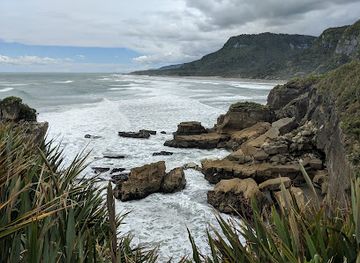
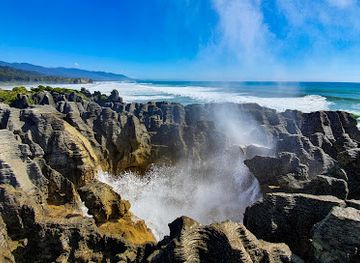
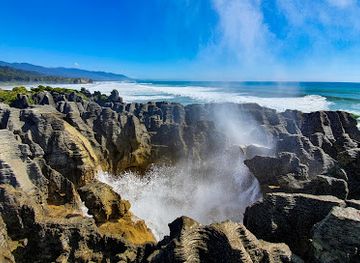
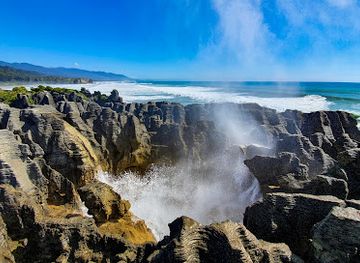
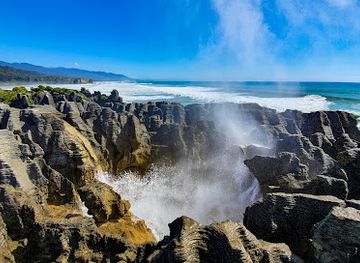
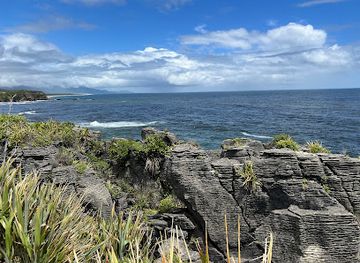
Punakaiki is a small coastal settlement on New Zealand’s South Island, positioned between the Tasman Sea and the forested ranges of Paparoa National Park. Its name is closely associated with the Pancake Rocks, a weathered limestone formation where layered rock platforms, caverns and blowholes meet the open coast. At high tide, seawater surges through the channels and erupts from the blowholes, although the display depends on swell, tide and weather rather than operating to a fixed schedule. Inland, the Paparoa Range rises sharply from the coast, its slopes covered in temperate rainforest and cut by the Punakaiki and Pororari rivers.Read more about Punakaiki
Rainforest, Rivers and Coastal Walking
A Small Settlement with Deep Regional Connections
When is the best time to visit Punakaiki?
Best: February–March, May · 14–18°C| Month | High (°C) | Rainfall (mm) |
|---|---|---|
| January | 18 | 200 |
| February (best) | 18 | 160 |
| March (best) | 18 | 170 |
| April | 16 | 160 |
| May (best) | 14 | 140 |
| June | 12 | 120 |
| July | 11 | 120 |
| August | 12 | 120 |
| September | 12 | 140 |
| October | 14 | 150 |
| November | 16 | 170 |
| December | 17 | 180 |
Getting to and around Punakaiki
How to get there
Transportation
Best attractions in Punakaiki
The Pancake Rocks and blowholes are Punakaiki’s defining attraction, with layered limestone, sea arches and channels viewed from a formed coastal walkway; the force and visibility of the blowholes vary with tide and swell. The Pororari River Track follows a broad limestone gorge through nikau palms and dense West Coast rainforest, while the shorter Truman Track leads through forest to a secluded coastal margin north of the settlement. The Paparoa Track extends inland through Paparoa National Park towards the Blackball area, offering a multi-day experience of river valleys, mountain forest and elevated landscapes rather than a simple day excursion. Around the settlement, the Punakaiki River and coastal margins reveal the close relationship between limestone geology, freshwater and the Tasman Sea. Visitors should distinguish these park experiences from attractions around Greymouth and Westport, which are useful gateways but lie outside Punakaiki itself.
-
Tourist attraction
Paparoa National Park
Explore the breathtaking landscapes of Paparoa National Park, where rugged coastlines meet lush rainforests and unique limestone formations.
-
Tourist attraction
Pancake Rocks Lookout
Explore the breathtaking Pancake Rocks Lookout, a stunning New Zealand natural attraction with unique limestone formations and spectacular blowholes.
-
Tourist attraction
Paparoa Track Services
Discover the breathtaking landscapes and unique wildlife of Paparoa Track Services, a must-visit destination for nature lovers in New Zealand.
-
Tourist attraction
Irimahuwhero Lookout
Discover the breathtaking beauty of Irimahuwhero Lookout on New Zealand's West Coast, a scenic spot for panoramic views and unforgettable moments.
Best landmarks in Punakaiki
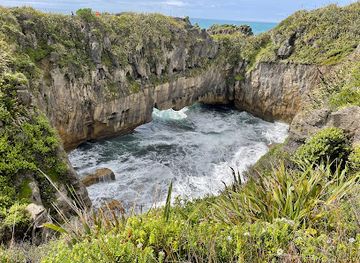
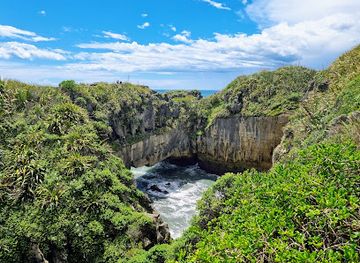
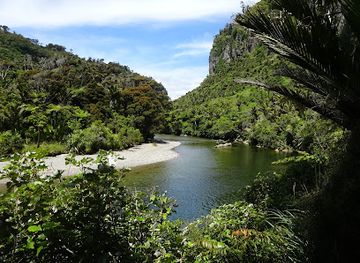
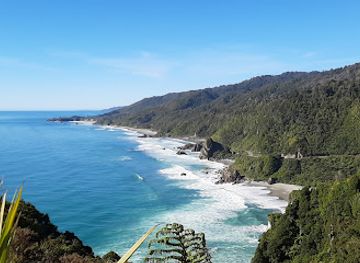
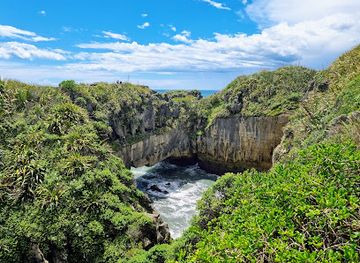
The Pancake Rocks are Punakaiki’s principal natural landmark: bands of limestone have been weathered into stacked platforms, caves and coastal passages, while blowholes connect the formation with the sea. Nearby Paparoa National Park provides a wider landmark setting of forested Paparoa Range slopes, limestone gorges and river valleys. The Pororari River gorge is especially distinctive, with pale rock walls contrasting with dense native vegetation and a winding watercourse. The Tasman Sea coast itself is an essential part of Punakaiki’s identity, exposing the geological structure and demonstrating the power of waves, tides and weather. Man-made landmarks are comparatively limited, and the settlement’s significance lies principally in its relationship with the protected landscape, the coastal road and the long-established Māori and later West Coast travel routes.
-
Cafe
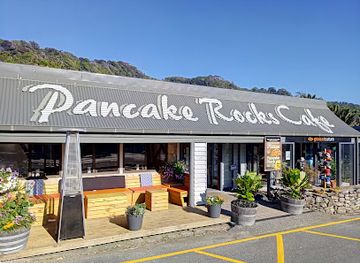
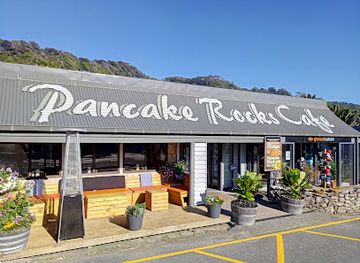
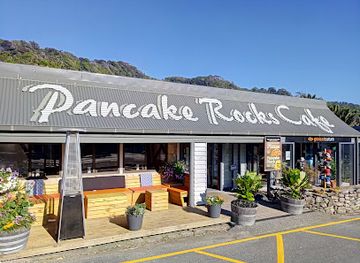
Pancake Rocks Cafe
Savor delicious local cuisine while basking in stunning views of the famous Pancake Rocks at Pancake Rocks Cafe in Punakaiki.
-
Hiking area
Pancake Rocks and Blowholes Track
Explore the mesmerizing Pancake Rocks and Blowholes, a stunning coastal attraction showcasing unique limestone formations and breathtaking natural beauty.
-
Park
Pancake Rocks Lookout
Experience the breathtaking natural beauty of Pancake Rocks Lookout, a geological marvel in Paparoa National Park, New Zealand's West Coast.
-
 Camping Ground
Punakaiki Beach Camp
Experience the breathtaking landscapes and outdoor adventures at Punakaiki Beach Camp on New Zealand's stunning West Coast.
Explore Punakaiki on the map
Plan your trip on one map. See where the top attractions, landmarks, restaurants and hotels are, and book hotels and experiences in a few clicks.
Best hotels in Punakaiki
Best restaurants in Punakaiki
Punakaiki’s dining scene is small and closely tied to its accommodation businesses, roadside visitor facilities and seasonal tourism rather than to a town centre filled with competing restaurants. Visitors can generally expect café-style food, casual meals, packed-lunch supplies and restaurant dining associated with local accommodation, but opening patterns and availability can vary. The West Coast’s food identity draws on local produce, dairy farming, baking, game and seafood, although not every speciality is available at every venue. Greymouth and Westport provide a broader choice of supermarkets, cafés, takeaways and restaurants, making them useful places to stock up before travelling along the coast. In Punakaiki, booking ahead for an evening meal is sensible, particularly during busy periods, and self-catering visitors should bring essential provisions rather than relying on a large local grocery shop.
-
Cafe
Pancake Rocks Cafe
Experience culinary delight at Pancake Rocks Cafe in Punakaiki – where local flavors meet breathtaking coastal views.
-
Hiking area
Pancake Rocks and Blowholes Track
Discover Pancake Rocks: A Natural Marvel with Stunning Coastal Views and Dramatic Blowholes in New Zealand's Paparoa National Park.
-
Bistro
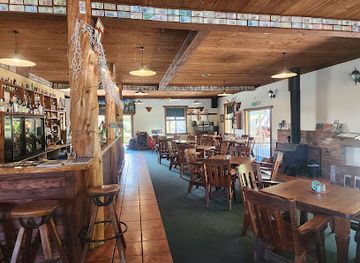
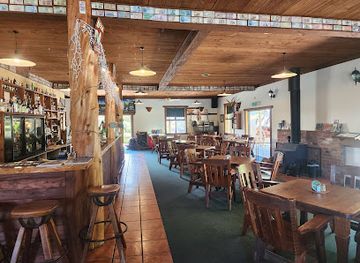
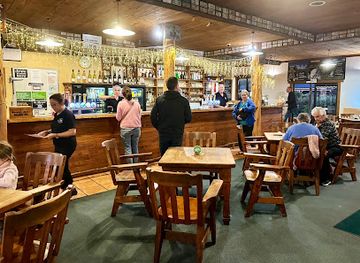
Punakaiki Rocks Hotel & Garden Bar
Experience authentic bistro dining and cozy accommodation at Punakaiki Rocks Hotel & Garden Bar amidst breathtaking West Coast landscapes.
-
Hotel
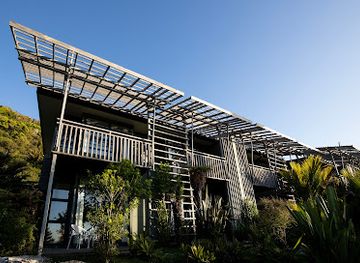
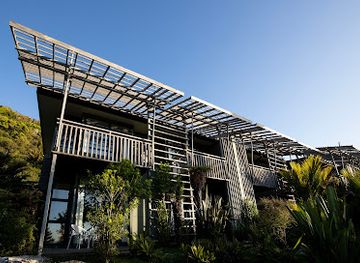
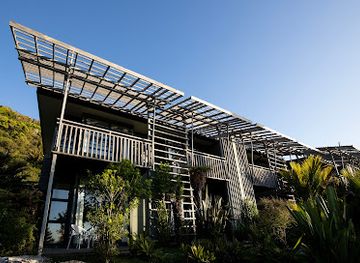
Scenic Hotel Punakaiki
Discover unparalleled comfort at Scenic Hotel Punakaiki, your gateway to New Zealand's stunning West Coast landscapes.
Best bars in Punakaiki
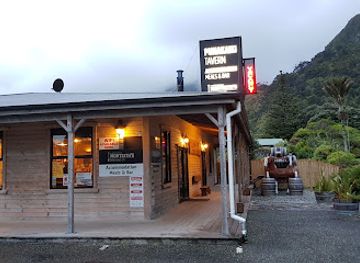
Punakaiki has no substantial nightclub district or late-night entertainment scene. Evenings are generally quiet, centred on the bar or dining area of accommodation venues, informal conversation, and the dark coastal and rainforest setting. A local pub-style atmosphere may be available when hospitality businesses are operating, but venue choice, meals and licensed service can change seasonally. Visitors seeking a wider selection of bars, live entertainment or late-opening venues will find more options in Greymouth or Westport, both outside Punakaiki and requiring a planned drive. Because the coastal highway is winding and wildlife and weather can affect night travel, an evening in Punakaiki is best approached as a low-key part of a nature-based stay rather than as a nightlife destination.
-
Cafe
Pancake Rocks Cafe
Experience delicious pancakes and stunning coastal views at Pancake Rocks Cafe, a must-visit dining spot in Punakaiki, New Zealand.
-
Hiking area
Pancake Rocks and Blowholes Track
Discover the stunning Pancake Rocks and Blowholes, a unique natural attraction in New Zealand's Paparoa National Park, perfect for hiking and breathtaking views.
-
Bistro
Punakaiki Rocks Hotel & Garden Bar
Experience the perfect blend of delicious dining and cozy accommodation at Punakaiki Rocks Hotel & Garden Bar, surrounded by stunning natural beauty.
-
Hotel
Scenic Hotel Punakaiki
Experience the beauty of New Zealand's West Coast at Scenic Hotel Punakaiki, where comfort meets nature and exceptional dining awaits.

Best nightclubs in Punakaiki
Punakaiki has no substantial nightclub district or late-night entertainment scene. Evenings are generally quiet, centred on the bar or dining area of accommodation venues, informal conversation, and the dark coastal and rainforest setting. A local pub-style atmosphere may be available when hospitality businesses are operating, but venue choice, meals and licensed service can change seasonally. Visitors seeking a wider selection of bars, live entertainment or late-opening venues will find more options in Greymouth or Westport, both outside Punakaiki and requiring a planned drive. Because the coastal highway is winding and wildlife and weather can affect night travel, an evening in Punakaiki is best approached as a low-key part of a nature-based stay rather than as a nightlife destination.
-
Cafe
Pancake Rocks Cafe
Experience the perfect blend of culinary delights and breathtaking coastal views at Pancake Rocks Cafe in Punakaiki, New Zealand.
-
Hiking area
Pancake Rocks and Blowholes Track
Experience the breathtaking beauty of Pancake Rocks and Blowholes Track, where nature's artistry meets the power of the ocean.
-
Bistro
Punakaiki Rocks Hotel & Garden Bar
Experience the perfect mix of comfort and local cuisine at Punakaiki Rocks Hotel & Garden Bar, your gateway to New Zealand's natural wonders.
-
Hotel
Scenic Hotel Punakaiki
Discover the serene beauty of Punakaiki at Scenic Hotel, your perfect retreat amidst breathtaking landscapes and local adventures.
Best shops in Punakaiki
Shopping in Punakaiki is limited and focused on practical supplies, visitor information, books, souvenirs and locally themed goods rather than a concentrated retail district. Small accommodation businesses and visitor-oriented outlets may offer food, gifts or West Coast products, but availability varies and should not be assumed. The region is associated with pounamu, or New Zealand jade, a culturally important South Island stone, although visitors should buy from reputable sellers and understand that genuine pounamu has cultural and provenance considerations. Greymouth and Westport provide a wider range of supermarkets, outdoor equipment, galleries and independent shops, while Hokitika is particularly known in the wider West Coast region for pounamu carving and craft businesses. Stock up on food, fuel and specialist walking supplies before heading into the more remote stretches around Punakaiki.
-
Cafe
Pancake Rocks Cafe
Experience the best pancakes in Punakaiki while enjoying breathtaking views of the stunning coastal landscapes at Pancake Rocks Cafe.
-
Hiking area
Pancake Rocks and Blowholes Track
Explore the mesmerizing Pancake Rocks and Blowholes Track, a stunning coastal hiking area showcasing unique geological formations and breathtaking views.
-
Park
Pancake Rocks Lookout
Experience the breathtaking beauty of Pancake Rocks Lookout, where nature's artistry and ocean power collide on New Zealand's stunning West Coast.
-
Bistro
Punakaiki Rocks Hotel & Garden Bar
Experience the essence of Punakaiki at the charming Punakaiki Rocks Hotel & Garden Bar, where nature meets delectable dining.
Get your free copy of our complete guide to Punakaiki, delivered straight to you.
Everything on this page, from attractions and restaurants to essentials and local phrases, in one PDF you can read offline, print or share.
Already have an account? Sign in
Your Punakaiki guide is ready.
We'll send it to · Not you? Sign out

Getting your guide ready…
We are putting together a fresh copy of the Punakaiki guide. This can take up to a minute.
This can take a few moments. If your browser asks, choose Allow so the download can start. You'll find the guide in your Downloads folder.
Nothing happened? Download it again
Sorry, the guide is taking longer than usual. Please try again in a minute, or get it by email instead.
Punakaiki essentials
Currency and Payment
Safety
Emergency Situations
Do's and Don'ts
Local Tips
From Eve
Local phrases worth knowing
You don't need to get them perfect. A few words go a long way, and locals appreciate the effort.
Basics
| English | Local | Say it |
|---|---|---|
| Hello | Kia ora | [Key-ah or-ah] |
| Goodbye | Haere rā | [High-ree rah] |
| Yes | Āe | [Eye] |
| No | Kāo | [Car-oh] |
| Please/You're welcome | Tēnā koe | [Tay-nah koi] |
| Thank you | Kia ora | [Key-ah or-ah] |
| Excuse me/Sorry | Whakama | [Fah-kah-mah] |
| How are you? | Kei te pēhea koe? | [Kay teh pay-hay-ah koi] |
| Fine. And you? | Kei te pai. Ā koe? | [Kay teh pie. Eye koi] |
| Do you speak English? | Kōrero koe i te reo Pākehā? | [Kor-air-oh koi ee teh reh-oh pah-keh-ha] |
| I don't understand | Kāore au e mōhio | [Car-or-eh oh-eh moh-hee-oh] |
Eating & Drinking
| English | Local | Say it |
|---|---|---|
| I'd like to see the menu, please | Me āwhina ki te titiro i te pānui, tēnā | [Meh aah-fee-nah kee teh tee-tee-raw ee teh pah-noo-ee, tay-nah] |
| I don't eat meat | Kāore au e kaikau | [Car-or-eh oh-eh ky-kow] |
| Cheers! | Ūpoko pakaru! | [Oo-paw-kaw pah-kah-roo] |
| I would like to pay, please | Ka hiahia ahau ki te utu, tēnā | [Kah hee-ah-hee-ah ah-how kee teh oo-too, tay-nah] |
Emergencies
| English | Local | Say it |
|---|---|---|
| Help! | Āwhina! | [Ah-fee-nah] |
| Go away! | Haere atu! | [High-ree ah-too] |
| Call the Police! | Karanga ki te Pirihimana! | [Car-ung-ah kee teh Pee-ree-hee-mah-nah] |
| Call a doctor! | Karanga ki te Rata! | [Car-ung-ah kee teh Rah-tah] |
| I'm lost | I wareware ahau | [Ee wah-reh-wah-reh ah-how] |
| I'm ill | Kua mate ahau | [Koo-ah mah-teh ah-how] |
Shopping
| English | Local | Say it |
|---|---|---|
| I'd like to buy... | E hiahia ana au ki te hoko... | [Eh hee-ah-hee-ah ah-nah oh kee teh hoe-kaw] |
| I'm just looking | Kei te titiro ahau | [Kay teh tee-tee-raw ah-how] |
| How much is it? | He aha te utu? | [Heh ah-ha teh oo-too] |
| That's too expensive | He nui rawa atu te utu | [Heh noo-ee rah-wah ah-too teh oo-too] |
| Can you lower the price? | Ka taea e koe te whakaiti i te utu? | [Kah tie-ah eh koi teh fah-kai-tee ee teh oo-too] |
Time & Numbers
| English | Local | Say it |
|---|---|---|
| What time is it? | He aha te wā? | [Heh ah-ha teh wah] |
| It's one o'clock | Kotahi karaka | [Kaw-tah-hee kar-ah-kah] |
| Half past (10) | I te hāora tekau | [Ee teh hah-or-ah teh-kow] |
| Morning | Ahiahi | [Ah-hee-ah-hee] |
| Afternoon | Ahiahi | [Ah-hee-ah-hee] |
| Evening | Pō | [Paw] |
| Yesterday | Ināianei | [Ee-nah-ee-ah-nay] |
| Today | Tēnei rā | [Tay-nay rah] |
| Tomorrow | Āpōpō | [Ah-paw-paw] |
| 1 | Tahi | [Tah-hee] |
| 2 | Rua | [Roo-ah] |
| 3 | Toru | [Toe-roo] |
| 4 | Whā | [Fah] |
| 5 | Rima | [Ree-mah] |
| 6 | Ono | [Oh-no] |
| 7 | Whitu | [Fee-too] |
| 8 | Waru | [Wah-roo] |
| 9 | Iwa | [Ee-wah] |
| 10 | Tekau | [Teh-kow] |
Transport & Directions
| English | Local | Say it |
|---|---|---|
| Where's a/the...? | Kei hea te...? | [Kay hay-ah teh] |
| What's the address? | Ko wai te wāhitau? | [Kaw why teh wah-hee-tow] |
| Can you show me (on the map)? | Ka taea e koe te whakaatu i ahau (i runga i te mahere)? | [Kah tie-ah eh koi teh fah-kah-ah-too ee ah-how ee roon-gah ee teh mah-heh-reh] |
| When's the next (bus)? | Āhea te panuku? | [Ah-heh-ah teh pah-noo-koo] |
| A ticket (to ....) | He tiki (ki ...) | [Heh tee-kee kee] |
History of Punakaiki
Limestone Foundations
Punakaiki’s distinctive geology developed over immense geological timescales rather than through human history. Limestone was formed from accumulated marine sediments and later uplifted and eroded, producing the layers, caves, channels and coastal platforms now associated with the Pancake Rocks and the Paparoa landscape. Rainwater moving through the limestone has helped create karst features, while the Tasman Sea continues to shape the exposed coastline. The result is a landscape in which geological processes remain unusually visible to visitors, from the stratified rock of the coast to the gorge walls beside the Pororari River.
Māori Connections with the Coast
The West Coast has long been connected with Māori travel, settlement and resource gathering. Punakaiki lies within a region associated with Ngāi Tahu, whose South Island history includes movement through river valleys and coastal routes and the working of pounamu found elsewhere on the West Coast. The coastline and waterways provided routes through a challenging landscape, while forests, rivers and the sea supplied food and materials. Local place names preserve the Māori presence in the region, and the cultural meaning of the landscape extends beyond the formations most familiar to modern visitors.
European Exploration and Settlement
European interest in the West Coast expanded during the nineteenth century as explorers, surveyors and miners entered a region whose mountains, rivers and dense forests made travel difficult. The wider coast developed around gold mining, coal, timber and transport, while small settlements and road connections gradually linked otherwise isolated communities. Punakaiki remained a modest settlement rather than becoming a major industrial town, but its position on the coastal route gave it a continuing role as a stopping place between larger West Coast centres. The road and later tourism brought wider access to the landscape.
From Resource Frontier to Protected Landscape
The forests and limestone country around Punakaiki were increasingly valued for their ecological and scenic qualities as well as for their resources. Paparoa National Park was established in 1987 to protect a varied landscape extending from the coast into the Paparoa Range, including rainforest, limestone formations and river valleys. Protection changed the emphasis from large-scale resource use towards conservation, recreation and interpretation. The Pancake Rocks became the area’s best-known natural attraction, while walking routes encouraged visitors to experience the wider park rather than treating the coast as a brief roadside stop.
The Paparoa Track Era
The opening of the Paparoa Track in 2019 added a nationally significant multi-day walking route to the region’s established short walks. Developed as one of New Zealand’s Great Walks, it crosses the Paparoa Range between the Blackball area and Punakaiki, linking inland forest and mountain country with the coast. The track reflects a modern approach to regional tourism in which carefully managed walking infrastructure supports local economies while requiring attention to weather, maintenance and environmental protection. Punakaiki now serves both as a destination in its own right and as the coastal end of a major wilderness journey.
Punakaiki in Photos
Browse through our photo collection highlighting the charm and character of the destination.
Cities in Punakaiki
The towns and cities of Punakaiki, and the easiest places to base yourself.
-

-

-

-

-

-


Swipe for more cities
Neighbouring destination travel guides
The closest destinations to Punakaiki, if you have time for more than one.
-

-

-

-

-


Swipe for more destinations
Explore more

Explore more of West Coast
Explore New Zealand's West Coast: A land of glaciers, rainforests, and coastal wonders, offering adventure, history, and natural beauty in every corner.
Explore West Coast
Explore more of New Zealand
New Zealand: Discover awe-inspiring landscapes, vibrant Maori culture, and thrilling adventures in a land of breathtaking natural beauty and welcoming locals.
Explore New Zealand