

Chiado (Lisbon) Travel Guide - Free
Explore Chiado in Lisbon with Evendo's free guide. Find the best shops, historic streets, restaurants, and gems on web or mobile.


Chiado in Lisbon blends elegant streets, literary cafés, theatres, museums and independent shops with historic views across the Portuguese capital.
Streets of Culture and Commerce
Chiado occupies the elegant slope between Baixa and Bairro Alto, its principal streets rising from the spacious Praça Luís de Camões towards the soft bustle of Largo do Chiado. Rua Garrett forms the neighbourhood’s commercial spine, lined with bookshops, cafés, theatres, fashion houses and historic façades. Beneath the polished surface is a district shaped by writers, printers, actors, booksellers and urban reinvention. The atmosphere changes within a few steps: grand squares give way to steep lanes, tiled walls, small stairways and viewpoints looking across Lisbon’s tiled roofs towards the Tagus.Read more about Chiado
Literary Memory and Urban Renewal
Everyday Chiado
Best attractions in Chiado
Chiado’s attractions are concentrated within a walkable network of streets, squares and cultural institutions. Rua Garrett provides the central promenade, with historic cafés, bookshops and shopfronts leading towards Largo do Chiado and the statue of poet António Ribeiro. The Museu Nacional de Arte Contemporânea – Museu do Chiado offers a focused introduction to Portuguese art from the nineteenth century onwards, while the Teatro Nacional de São Carlos and Teatro São Luiz bring opera, theatre and performance into the neighbourhood’s cultural life. At the upper edge, Largo do Carmo and the roofless arches of the Convento do Carmo create one of Lisbon’s most memorable historic spaces. The Elevador de Santa Justa stands nearby at the transition to Baixa, and the viewpoint around the lift rewards visitors with changing perspectives over the lower city and its hills.
-
Tourist attraction
Praça do Comércio
Discover Praça do Comércio, a historic and vibrant square in Lisbon, where stunning architecture meets picturesque riverside views.
9 min walk · 0.7 km from neighbourhood centre
-
Tourist attraction
Arco da Rua Augusta
Explore the stunning Arco da Rua Augusta, a historical landmark in Lisbon offering breathtaking views and rich cultural heritage.
8 min walk · 0.6 km from neighbourhood centre
-
Tourist attraction
Lisbon History Centre
Discover Lisbon's fascinating past at the Lisbon History Centre, where culture and history intertwine in an engaging and immersive experience.
10 min walk · 0.8 km from neighbourhood centre
-
Tourist attraction
Statue of António Ribeiro
Discover the Statue of António Ribeiro in Lisbon, a cultural landmark honoring the city's rich literary heritage and vibrant artistic spirit.
2 min walk · 0.2 km from neighbourhood centre


Best landmarks in Chiado
Chiado’s landmarks express its role as a cultural quarter and a link between Lisbon’s lower city and its western hills. The Teatro Nacional de São Carlos, opened in 1793, is Portugal’s principal historic opera house and gives Largo de São Carlos its formal theatrical identity. The Museu do Chiado occupies the former Convent of São Francisco, connecting the neighbourhood’s religious past with its modern artistic role. Nearby, the Convento do Carmo ruins preserve the dramatic remains of a medieval Carmelite convent damaged in the 1755 earthquake; their position at the edge of Chiado makes them an important point of reference even where local boundaries overlap. A bronze Fernando Pessoa sits outside A Brasileira on Rua Garrett, turning a café frontage into a literary memorial. The restored streets around Rua do Carmo and Rua Garrett also stand as a landmark of post-1988 urban reconstruction.
-
Stone carving
Praça Luís de Camões
Experience the vibrant atmosphere of Praça Luís de Camões, a historical landmark in Lisbon, surrounded by culture, cafes, and iconic architecture.
1 min walk · 0.1 km from neighbourhood centre
-
Archaeological museum
Carmo Convent
Discover the haunting beauty of Carmo Convent, a historical gem in Lisbon blending archaeology and art amidst stunning Gothic ruins.
5 min walk · 0.4 km from neighbourhood centre
-
Sculpture
Fernando Pessoa
Explore the serene Fernando Pessoa sculpture in Lisbon, a cultural gem that celebrates Portugal's literary heritage amidst vibrant local life.
2 min walk · 0.2 km from neighbourhood centre
-
Cultural landmark
Chafariz do Carmo
Explore the enchanting Chafariz do Carmo, a stunning cultural landmark in Lisbon, rich in history and architectural beauty, perfect for relaxation and photography.
4 min walk · 0.3 km from neighbourhood centre


Explore Chiado on the map
A handpicked selection of must-see spots in Chiado, mapped for you.
Best hotels in Chiado
Best restaurants in Chiado
Chiado’s dining scene follows the district’s mixture of tradition, commerce and cultural venues. Historic cafés around Rua Garrett remain important for coffee, pastries and people-watching, while restaurants on the main streets and quieter lanes offer Portuguese cooking alongside international menus aimed at a broad city-centre clientele. The area is well placed for a light meal before a performance at the Teatro Nacional de São Carlos or Teatro São Luiz, and bakeries provide simple stops during a day of walking. Traditional dishes may include grilled fish, salt cod, soups and petiscos, although the neighbourhood also has contemporary dining and modern café formats. Prices and atmosphere vary considerably between the grander central addresses and smaller side-street establishments, so visitors should check menus before sitting down. Chiado is more restaurant-and-café quarter than food market district, with its culinary identity tied to urban hospitality rather than one defining speciality.
-
Restaurant
Palácio Chiado
Discover culinary excellence at Palácio Chiado, where historic charm meets modern gastronomy in Lisbon's enchanting heart.
1 min walk · 0.1 km from neighbourhood centre
-
Restaurant
Sacramento do Chiado
Discover Sacramento do Chiado: A romantic restaurant offering traditional Portuguese cuisine in the heart of Lisbon's historic district.
4 min walk · 0.4 km from neighbourhood centre
-
Restaurant
Cantinho do Avillez - Chiado
Experience modern Portuguese cuisine at Cantinho do Avillez in Chiado - where tradition meets innovation in every delicious dish.
3 min walk · 0.2 km from neighbourhood centre
-
Austrian
Kaffeehaus
Discover the flavors of Austria in Lisbon at Kaffeehaus – a cozy retreat serving authentic dishes and delightful pastries.
3 min walk · 0.2 km from neighbourhood centre


Best bars in Chiado
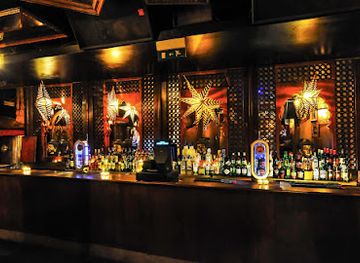
Chiado’s evening character is cultural and sociable rather than dominated by large nightclubs. The theatres around Largo de São Carlos and Rua António Maria Cardoso bring audiences into the streets after performances, while cafés and bars around Rua Garrett, Largo do Chiado and the approaches to Praça Luís de Camões provide places for drinks and conversation. The boundary with Bairro Alto is close, and many visitors continue uphill into that better-known nightlife area, but it should not be confused with Chiado itself. Within the neighbourhood, the atmosphere tends to centre on dining, theatre-going, wine and cocktails rather than late-night dancing. Some streets become quieter once shops close, while the main squares and entertainment venues remain active. Evening visitors should take care on steep paving and around tram and traffic routes, particularly when moving between Chiado and the neighbouring nightlife districts.
-
Bar
Topo Chiado
Discover Topo Chiado in Lisbon: Where Stunning Views Meet Delicious Food and Drinks in a Lively Setting.
6 min walk · 0.5 km from neighbourhood centre
-
Wine bar
Wine not?
Discover the charm of Lisbon at Wine Not?, a cozy wine bar offering an exquisite selection of local and international wines for every palate.
4 min walk · 0.3 km from neighbourhood centre
-
Bar
Entretanto Rooftop Bar @ Hotel Chiado
Experience breathtaking views and exquisite cocktails at Entretanto Rooftop Bar, the perfect spot for a memorable evening in Lisbon.
5 min walk · 0.4 km from neighbourhood centre
-
Cocktail bar
Groove Bar
Discover Groove Bar, a vibrant cocktail bar in Lisbon, offering crafted drinks and a lively atmosphere perfect for any night out.
5 min walk · 0.4 km from neighbourhood centre


Best nightclubs in Chiado
Chiado’s evening character is cultural and sociable rather than dominated by large nightclubs. The theatres around Largo de São Carlos and Rua António Maria Cardoso bring audiences into the streets after performances, while cafés and bars around Rua Garrett, Largo do Chiado and the approaches to Praça Luís de Camões provide places for drinks and conversation. The boundary with Bairro Alto is close, and many visitors continue uphill into that better-known nightlife area, but it should not be confused with Chiado itself. Within the neighbourhood, the atmosphere tends to centre on dining, theatre-going, wine and cocktails rather than late-night dancing. Some streets become quieter once shops close, while the main squares and entertainment venues remain active. Evening visitors should take care on steep paving and around tram and traffic routes, particularly when moving between Chiado and the neighbouring nightlife districts.
-
Disco club
K Urban Beach Club
Discover the vibrant nightlife at K Urban Beach Club, where electrifying music, delicious cuisine, and stunning river views create unforgettable experiences in Lisbon.
15 min walk · 1.2 km from neighbourhood centre
-
Disco club
Plateau
Discover the vibrant nightlife at Plateau, Lisbon’s premier disco club, renowned for its energetic atmosphere and diverse crowd.
16 min walk · 1.2 km from neighbourhood centre
-
Japanese
Silk Club
Discover the exquisite blend of Japanese cuisine and vibrant nightlife at Silk Club, Lisbon's premier sushi restaurant and bar.
2 min walk · 0.2 km from neighbourhood centre
-
Bar
Rive Rouge
Experience the electrifying nightlife at Rive Rouge, Lisbon's premier bar and disco club, where cocktails and music unite for an unforgettable evening.
4 min walk · 0.3 km from neighbourhood centre



Best shops in Chiado
Shopping is one of Chiado’s defining daytime activities, centred on Rua Garrett, Rua do Carmo and the adjoining pedestrian streets. The district combines international fashion and beauty retailers with Portuguese brands, independent bookshops, stationery shops, jewellers and long-established cafés. Bertrand, founded in Lisbon in the eighteenth century and located on Rua Garrett, is especially associated with the neighbourhood’s literary identity, while A Vida Portuguesa offers Portuguese-made products in a setting attuned to local design and material culture. The selection is more polished and town-centre oriented than bazaar-like, with small specialist businesses tucked between larger commercial premises. Visitors interested in ceramics, textiles, food gifts or contemporary Portuguese design will find possibilities, although stock changes and individual shops vary. For a different retail atmosphere, the lanes towards Bairro Alto and the lower streets of Baixa begin close by but belong to neighbouring districts rather than Chiado proper.
-
Gift shop
Flying Tiger Copenhagen
Explore a vibrant treasure trove of quirky gifts, home accessories, and playful items at Flying Tiger Copenhagen in Lisbon.
5 min walk · 0.4 km from neighbourhood centre
-
Home goods store
A Vida Portuguesa
Explore A Vida Portuguesa in Lisbon for authentic Portuguese crafts and home goods, showcasing the beauty of local heritage and artistry.
3 min walk · 0.2 km from neighbourhood centre
-
Leather goods store
Hermès
Explore the exquisite world of Hermès in Lisbon, where luxury leather goods embody timeless craftsmanship and elegance.
2 min walk · 0.1 km from neighbourhood centre
-
Chinaware store
Vista Alegre - Chiado
Explore the artful elegance of Vista Alegre - Chiado, Lisbon's premier destination for exquisite chinaware and unique artistic treasures.
2 min walk · 0.2 km from neighbourhood centre


Chiado essentials
Getting There
Getting Around
Safety
Emergency Situations
Do's and Don'ts
Local Tips

From Eve
Local phrases worth knowing
You don't need to get them perfect. A few words go a long way, and locals appreciate the effort.
Basics
| English | Local | Say it |
|---|---|---|
| Hello | Olá | [oh-lah] |
| Goodbye | Adeus | [ah-deh-oosh] |
| Yes | Sim | [seem] |
| No | Não | [now] |
| Please/You're welcome | Por favor/De nada | [por fah-vohr/deh nah-dah] |
| Thank you | Obrigado/a | [oh-bree-gah-doo/ah] |
| Excuse me/Sorry | Com licença/Desculpe | [kohm lee-sehn-sah/dehs-kool-peh] |
| How are you? | Como está? | [koh-moh ehs-tah] |
| Fine. And you? | Estou bem. E você? | [eh-stohoo beng. eh voh-seh] |
| Do you speak English? | Fala inglês? | [fah-lah een-glehs] |
| I don't understand | Não entendo | [now ehn-tehn-doo] |
Eating & Drinking
| English | Local | Say it |
|---|---|---|
| I'd like to see the menu, please | Gostaria de ver o menu, por favor | [goh-stah-ree-ah deh vehr ooh meh-noo, poor fah-vohr] |
| I don't eat meat | Não como carne | [now koh-moh kahr-neh] |
| Cheers! | Saúde! | [sow-deh] |
| I would like to pay, please | Gostaria de pagar, por favor | [goh-stah-ree-ah deh pah-gahr, poor fah-vohr] |
Emergencies
| English | Local | Say it |
|---|---|---|
| Help! | Socorro! | [soh-koh-roo] |
| Go away! | Vá embora! | [vah ehm-boh-rah] |
| Call the Police! | Chame a Polícia! | [shah-meh ah poh-lee-see-ah] |
| Call a doctor! | Chame um médico! | [shah-meh oong meh-dee-koo] |
| I'm lost | Estou perdido/a | [eh-stohoo pehr-dee-doo/ah] |
| I'm ill | Estou doente | [eh-stohoo doo-ehn-teh] |
Shopping
| English | Local | Say it |
|---|---|---|
| I'd like to buy... | Gostaria de comprar... | [goh-stah-ree-ah deh kohm-prahr] |
| I'm just looking | Estou só a ver | [eh-stohoo soh ah vehr] |
| How much is it? | Quanto custa? | [kwahn-too koosh-tah] |
| That's too expensive | Isso é muito caro | [ee-soh eh moo-ee-tooh kah-roo] |
| Can you lower the price? | Pode baixar o preço? | [poh-deh bahy-shahr ooh preh-soo] |
Time & Numbers
| English | Local | Say it |
|---|---|---|
| What time is it? | Que horas são? | [kay oh-rahz sah-ooh] |
| It's one o'clock | É uma hora | [eh oo-mah oh-rah] |
| Half past (10) | Meia hora (10) | [may-ah oh-rah (dohzeh)] |
| Morning | Manhã | [mah-nyah] |
| Afternoon | Tarde | [tahr-deh] |
| Evening | Noite | [noy-teh] |
| Yesterday | Ontem | [ohn-tehm] |
| Today | Hoje | [oh-zheh] |
| Tomorrow | Amanhã | [ah-mah-nyah] |
| 1 | Um | [oom] |
| 2 | Dois | [doh-eez] |
| 3 | Três | [trehs] |
| 4 | Quatro | [kwah-troo] |
| 5 | Cinco | [seen-koo] |
| 6 | Seis | [saysh] |
| 7 | Sete | [seh-teh] |
| 8 | Oito | [oy-toh] |
| 9 | Nove | [noh-veh] |
| 10 | Dez | [deh-z] |
Transport & Directions
| English | Local | Say it |
|---|---|---|
| Where's a/the...? | Onde fica o/a...? | [ohn-deh fee-kah ooh/ah] |
| What's the address? | Qual é o endereço? | [kwahl eh ooh ehn-day-reh-soo] |
| Can you show me (on the map)? | Pode mostrar-me (no mapa)? | [poh-deh moh-shtr meh (noo mah-pah)] |
| When's the next (bus)? | Quando é o próximo (autocarro)? | [kwahn-doo eh ooh proh-kssee-moo (ow-toh-kah-roo)] |
| A ticket (to ....) | Um bilhete (para ...) | [oom bee-lyeh-teh (pah-rah)] |
History of Chiado
From Hillside to Urban Quarter
Chiado developed on the western side of Lisbon’s historic centre, on ground that rose between the lower Baixa and the higher Bairro Alto. Its name is commonly linked to António Ribeiro, a sixteenth-century poet known by the nickname Chiado, although the exact origins of the place-name remain part of Lisbon’s layered local history. The area’s position beside convents, churches and routes crossing the central hills encouraged urban growth, and by the early modern period it had become part of the city’s expanding central fabric. Its streets connected religious institutions and residential buildings with the commercial activity of the lower city.
Cafés, Booksellers and Theatres
During the nineteenth century, Chiado became one of Lisbon’s principal cultural and commercial quarters. Rua Garrett and its adjoining streets attracted fashionable shops, booksellers, printers, cafés and theatres, while the opening of the Teatro Nacional de São Carlos in 1793 had already established the district’s connection with opera and elite public life. The arrival of the Teatro São Luiz in the nineteenth century strengthened its theatrical character. Writers and intellectuals used its cafés as meeting places, and the neighbourhood’s book trade helped make it a recognisable centre of literary Lisbon.
The Fire of 1988
On 25 August 1988, a major fire began in the area around Rua do Carmo and Rua Garrett, destroying or severely damaging numerous buildings and shops. The disaster struck a neighbourhood already valued for its historic streetscape and commercial identity, and it became one of the most significant urban losses in modern Lisbon. Reconstruction, led by architect Álvaro Siza, sought to repair the damaged fabric while accommodating contemporary construction and infrastructure. The result was not a literal recreation of every lost interior, but a deliberate attempt to preserve Chiado’s scale, façades, alignments and role as a central public quarter.
Restoration and Contemporary Chiado
The post-fire rebuilding gradually returned Chiado to everyday commercial and cultural use, with restored façades alongside new interiors, shops and public routes. The work helped renew the connection between Baixa, Chiado and the upper neighbourhoods, while the Museu do Chiado and established theatres continued to anchor its cultural profile. In the twenty-first century, international retail has joined long-standing cafés, bookshops and Portuguese institutions. This mix reflects both the success of restoration and the pressures affecting central Lisbon, where historic buildings have been adapted for commerce, hospitality, offices and housing.
Chiado in Photos
Browse through our photo collection highlighting the charm and character of the destination.
Neighbourhoods near Chiado
The closest neighbourhoods to Chiado, if you have time for more than one stop.
-

-

-

-


Swipe for more neighbourhoods
Explore more

Explore more of Lisbon
Lisbon blends Atlantic light, tiled streets and grand viewpoints with layered history, soulful fado, inventive food and memorable Portuguese culture by the river.
Explore Lisbon