Best Landmarks Near Vandalorum (Halland)
Planning a trip to Vandalorum? Discover the best landmarks nearby with history, expert tips, and routes. Free on web or the Evendo app.


The best landmarks near Vandalorum
- Top rated
- Closest to Vandalorum
- Price level: low to high
- Time to spend: shortest first
- A–Z
36 landmarks
-
Historical landmark4.3★1,753 reviews
Huseby Bruk
Huseby Bruk is a remarkably preserved 19th-century ironworks estate in Småland, Sweden, featuring a grand manor house, productive kitchen gardens, artisan workshops, and historic buildings that evoke life from the industrial era. Once a hub for iron production spanning over 300 years, it now serves as a living museum with guided manor tours, craft demonstrations, and scenic nature trails around the adjacent Husebymaden nature reserve.
Daily 11:00–17:00Price level $Time to spend 1.5–4 hrs
-
Historical landmark4.5★1,462 reviews
Torpa Stenhus
Torpa Stenhus stands as one of Sweden's best-preserved medieval stone castles, built around 1470 by Privy Councillor Arvid Knutsson as a fortress against Danish threats. Nestled near Lake Åsunden in Västergötland, this privately owned landmark boasts Renaissance interiors, a Baroque chapel, and centuries of noble history tied to the Stenbock family and King Gustav Vasa. Explore its thick stone walls, grisaille paintings, and haunting legends like the Gray Lady and the walled-up girl, all while wandering the serene rural grounds maintained by the descendant family.
Price level $Time to spend 1–2.5 hrs
-
Tourist attraction4.5★734 reviews
Växjö Cathedral
Växjö Cathedral stands as the historic heart of Växjö, a medieval church evolved through centuries of reconstruction into a striking landmark with red-brick facade, twin spires, and modern glass artistry. Nestled near Stortorget and Växjösjön, it serves as the seat of Växjö Diocese, linked to Saint Sigfrid's legacy, offering serene spaces for reflection amid its layered architectural history and vibrant stained glass features.
Daily 9:00–18:00Time to spend 0.5–1.5 hrs
-
Tourist attraction4.1★675 reviews
Näs Castle
Perched on Visingsö's southeastern promontory, Näs Castle Ruins stand as one of Sweden's oldest stone structures, built in the 12th century as a royal residence amid fierce power struggles. These evocative remnants overlook Lake Vättern, whispering tales of kings, assassinations, and destruction in 1318. Explore the round and square towers, vaulted storehouse, and eroded walls that once guarded vital shipping routes. Restored in the early 1900s, the site offers a tangible link to Sweden's medieval past, with information boards illuminating its dramatic history. Ideal for history enthusiasts seeking atmospheric ruins in a scenic island setting.
Open 24 hoursTime to spend 0.5–1.5 hrs
-
Tourist attraction4.5★604 reviews
Tullbron
Tullbron, Falkenberg's iconic 18th-century stone arch bridge, gracefully spans the Ätran River in the heart of this coastal Swedish town. Built between 1756 and 1761, this listed building replaced fragile wooden structures and served as a toll bridge until 1914. Still carrying daily traffic of around 3,800 vehicles, it blends historic charm with modern use, offering scenic views and a tangible link to the region's past near the ruins of Falkenberg Fort.
Open 24 hoursTime to spend 0.5–1.5 hrs
-
Cultural landmark4.3★606 reviews
Linnés Råshults Stiftelse
Linnés Råshult is the birthplace of Carl Linnaeus, father of modern taxonomy, preserved as a 42-hectare cultural reserve in rural Småland. Wander recreated 18th-century farm landscapes, explore the historic Linnéstugan, short walking trails, and enjoy a garden café with vegetarian buffets amid serene meadows and woods bordering Lake Såganässjön.
Tue–Sun 9:00–16:00Time to spend 1–3 hrs
-
Tourist attraction4.1★511 reviews
Halmstads Slott
Halmstad Castle is a striking 17th-century Renaissance structure in central Halmstad, built by Danish King Christian IV as a pleasure palace overlooking the Nissan River. Comprising four wings around a spacious courtyard, it transitioned from Danish to Swedish control in 1645, serving as a royal residence and later the Halland governor's seat. Today, it houses county administrative offices and cultural institutions amid its historic charm.
Time to spend 0.5–1.5 hrs
-
Restaurant4.7★285 reviews
Wallby Säteri
Nestled on the shores of Lake Skirö in Småland's Garden, Wallby Säteri is a historic manor offering serene lakeside escapes, traditional Swedish cuisine, and cozy accommodations amid forests and meadows. Guests enjoy a private beach, wood-fired sauna, canoeing, hiking, and farm-to-table dining in a peaceful rural setting.
Price level $$Time to spend 1.5–4 hrs
-
Lutheran church4.5★244 reviews
Saint Nicholas Church
S:t Nikolai kyrka stands in central Halmstad as a historic Lutheran parish church with a calm nave, prominent tower and an active role in the city’s cultural and religious life. Located on Kyrkogatan near the market quarter, the church hosts services, concerts and seasonal events; inside you’ll find traditional wood and stone furnishings, stained-glass details and a contemplative atmosphere often animated by choir rehearsals and organ music.
Time to spend 0.5–2 hrs
-
Vista point4.5★226 reviews
Tegnér Tower
Tegnér Tower, also known as Skogstornet, rises 27 meters high at 351 meters above sea level in Jönköping, offering sweeping panoramic views across Småland, Västergötland, Östergötland, Närke, and the shimmering expanse of Lake Vättern. Built in 1971 and named after poet Torsten Tegnér, this accessible lookout tower blends natural beauty with cultural tribute amid forested trails. Ideal for sunset gazing, photography, or peaceful hikes, it provides an elevated perspective on Sweden's lush landscapes year-round, with no entry fees required.
Open 24 hoursTime to spend 0.5–1.5 hrs


Granhult Church
Granhult Church stands as Sweden's oldest surviving wooden building, constructed around 1220 from timber felled in 1217. This medieval gem in rural Småland features horizontal log walls clad in wooden shingles, biblical murals from 1753, and medieval fragments on its triumphal arch. Open daily in summer, it offers a serene space for quiet reflection amid Småland's forests.
Time to spend 0.5–1.5 hrs

Bergkvara Castle
Bergkvara Castle is a romantic medieval ruined manor set on a small promontory at the edge of a lake near Växjö in Småland, Sweden. Once a fortified tower house founded in the 15th century, its weathered stone walls, scattered foundations and surrounding parkland evoke aristocratic seascapes of the late medieval period. The site is a peaceful blend of archaeology and woodland, appealing to walkers, history-lovers and photographers.
Time to spend 0.5–2 hrs

Lagaholm castle
Nestled where the old road to Halmstad crosses the Lagan River, Lagaholm Castle Ruins stand as evocative remnants of a 13th-century stronghold. Built in the 1200s and demolished by royal order in the 1600s, these restored stone walls whisper tales of medieval defense between Sweden and Denmark. Surrounded by small lakes, a river, and bridges, the site blends history with serene natural beauty, ideal for quiet exploration and photography amid lush greenery.
Time to spend 0.5–1.5 hrs

Blidingsholmsbron
Blidingsholmsbron is a striking stone arch bridge spanning the Mörrumsån river near Ryd in Småland, Sweden. Dating to the early 1800s, this historic structure replaced medieval wooden bridges and a ford, serving traffic until 1940. Restored in 1988, it stands as a preserved cultural monument amid scenic riverside landscapes, offering a serene spot to admire engineering from a bygone era and the flowing waters below.
Time to spend 0.5–1.5 hrs

Norre Port
Norre Port stands as Halmstad's sole surviving city gate from the early 17th century, a sturdy remnant of Danish fortifications designed to defend against Swedish incursions. Completed in 1601 under King Christian IV, this angled stone archway once guarded the northern approach to the fortress town, leading into the heart of historic Halmstad. Today, it frames a peaceful passage to Norre Katts Park, offering a tangible link to centuries of regional conflict and architectural ingenuity. Free to explore at any time, it invites quick visits or contemplative pauses amid the pedestrian-friendly streets.
Time to spend 0.5–1.5 hrs

Slottskapellet
Slottskapellet, built in 1694, stands as one of Jönköping's oldest wooden structures, designed by Erik Dahlbergh in a Greek cross plan. This intimate chapel, clad in light gray with a spån-covered roof, serves as a sacred space for baptisms, weddings, funerals, and musical services amid a serene cemetery oasis in the city center. Wheelchair ramp, hearing loop, and nearby restrooms enhance accessibility for up to 100 visitors.
Time to spend 0.5–1.5 hrs

Rumlaborg
Rumlaborg is a medieval castle ruin perched on Vista Kulle in Huskvarna, offering a glimpse into Sweden's turbulent history amid an urban setting beside Huskvarnaån. Originally a prehistoric hillfort from around the 5th century, it evolved into a strategic stronghold during the Middle Ages, witnessing sieges, uprisings, and reconstructions until its demolition in the 1850s for a public park. Free to visit anytime, the site features impressive remnants of walls and provides panoramic views over Vättern lake and Jönköping.
Open 24 hoursTime to spend 0.5–1.5 hrs

Övraby
Övraby kyrkoruin i Halmstad är en medeltida stenkyrka från 1100-talet, belägen ovanför forsen vid Slottsmöllan. Ursprungligen en träkyrka från 1000-talet, ersattes den av denna romanska struktur med långhus, kor och absid. Kyrkan förstördes 1563 under Erik XIV:s belägring och markerar platsen för Halmstads tidiga stadskärna, känd som 'den övre byn'. Ruinen erbjuder en stilla glimt av Hallands medeltida historia mitt i naturen.
Open 24 hoursTime to spend 0.5–1.5 hrs

Europe and the Bull
In Halmstad's bustling Stora Torg, Carl Milles' iconic fountain Europe and the Bull captivates with its mythological drama. The bronze sculpture depicts Europa astride a rearing bull, flanked by muscular mermen spouting water from shells. Installed in 1926, this public artwork embodies the city's artistic heritage and Greek legend where Zeus, disguised as a bull, abducts the Phoenician princess. Surrounded by cafes and historic buildings, it serves as a lively focal point for locals and visitors alike. Free to admire anytime, it highlights Halmstad's tradition of monumental public art.
Open 24 hoursTime to spend 0.5–1.5 hrs

Ivars kulle
Ivars Kulle stands as Halland's largest Bronze Age burial mound, rising 4 meters high on a natural glacial hill north of Halmstad. Excavated in 1972, it revealed five ancient graves dating back around 3,000 years, offering sweeping views over surrounding fields and a serene spot for reflection amid Sweden's prehistoric legacy.
Open 24 hoursTime to spend 0.5–1.5 hrs

east chapel
A small, quietly dignified chapel set within Jönköping’s cemetery grounds, Östra kapellet (East Chapel) offers a place for private reflection, funeral services and intimate ceremonies. Modest in scale and traditional in expression, the chapel’s simple interior and surrounding trees create a calm pocket of respite close to the city’s residential edges.
Time to spend 0.2–1 hr

Knystahall
Towering 10 meters high in the heart of Rydöbruk, Knystahall is a massive glacial boulder that served as a border marker between Sweden and Denmark from the 12th century until the Peace of Roskilde in 1658. This ancient landmark, nestled amid the rushing waters of Knystaforsen and Nissan's industrial heritage, symbolizes centuries of territorial history and natural power. Today, it divides Halland from Småland, drawing visitors to ponder its silent witness to shifting borders and local legends in a serene, forested setting.
Open 24 hoursTime to spend 0.5–1.5 hrs

Hönshylte Entrenchment
Hönshylte Entrenchment, or Hönshylte skans, is a historic defensive earthwork in rural Småland, Sweden. This grassy mound beside the road in Norraryd near Ryd reveals Sweden's military past from the 17th century, when fortifications guarded against Danish invasions. Easily accessible and free to visit, it offers a serene spot to ponder centuries-old strategies amid peaceful forests.
Time to spend 0.5–1.5 hrs

Opensten
Opensten is the evocative ruin of a medieval fortress perched on a hill north of Limmared in Tranemo Municipality, Sweden. Built in the 14th century, this historical landmark offers a glimpse into Sweden's turbulent past, with scattered stone remnants evoking the site's role as a strategic stronghold destroyed during Engelbrekt Engelbrektsson's rebellion in the 1430s. Surrounded by serene countryside, it's a peaceful spot for history enthusiasts to explore ancient foundations amid nature's embrace. Free access makes it an accessible highlight near Limmared's glassworks heritage.
Time to spend 0.5–1.5 hrs

Sagobygden Stenudden
Sagobygden Stenudden marks the Bronze Age tip of Bolmsö island in Lake Bolmen, Småland, Sweden. Known as Finnveden's Fairy Tale Island, this rocky promontory blends ancient legends of giants with Christian history, where the first church rose amid ringing bells heard across the waters. Surrounded by serene forests and lake views, it invites exploration of folklore-rich landscapes in a tranquil natural setting.
Time to spend 0.5–1.5 hrs

Tvärreds kyrkoruin
Ruins of a medieval countryside church set in gently rolling farmland south of Ulricehamn, Tvärreds kyrkoruin preserves weathered stone walls and grassy interior spaces that hint at a 12th–13th‑century building abandoned after a new church was built in 1854. The site is quiet and pastoral, with wildflowers in summer and low stone silhouettes against open skies—an evocative stop for history lovers, photographers and anyone who enjoys solitary, contemplative places.
Open 24 hoursTime to spend 0.2–1 hr

Väderkvarnen i Segersnäs
Perched in the quiet countryside of Urshult, Väderkvarnen i Segersnäs stands as the sole surviving windmill on its original site in the area. Built in the late 1880s by local farmer August Marcusson to grind grain for the community, it endured a dramatic fate when a fierce Christmas storm in 1902 tore off its wings. Lovingly restored in 1958 and again in 1987, this stolpkvarn (post mill) now symbolizes Småland's rural heritage, offering a peaceful glimpse into 19th-century agrarian life amid rolling fields and forests.
Open 24 hoursTime to spend 0.5–1.5 hrs

Dunkehallaravinen
Dunkehallaravinen is a scenic ravine in central Jönköping, Sweden, tracing the city's industrial heritage along Dunkehallaån. This 2.7 km trail winds through lush greenery, revealing remnants of water-powered mills from the Middle Ages to the industrial era. Free to explore, it offers a peaceful blend of nature and history amid urban surroundings, ideal for a contemplative walk discovering Jönköping's industrial birthplace.
Open 24 hoursTime to spend 0.5–2 hrs

Hällkistan vid Bostället, Ekomuseum nedre Ätradalne
Perched atop a ancient mound in Getinge, Boställets hällkista is a striking Bronze Age dolmen, a stone cist burial chamber from Sweden's prehistoric past. Measuring 2.8 by 1 meters, it's embedded in a 20-meter diameter hill crowned by seven oaks and a birch, part of the Ekomuseum Nedre Ätradalsne. Open around the clock and free to visit, this archaeological gem offers a tangible link to rituals over 3,000 years old amid serene rural surroundings.
Open 24 hoursTime to spend 0.5–1.5 hrs

Krönikebrunnen
Krönikebrunnen is a striking bronze fountain at the heart of Hovrättstorget in Jönköping, Sweden. Crafted by sculptor John Lundqvist in 1958, it features motifs alluding to the city's founder, King Magnus Ladulås, and stands as a symbol of Jönköping's rich history amid historic buildings like Göta Hovrätt and Gamla Rådhuset. This public artwork invites quiet contemplation in a bustling urban square surrounded by the oldest standing architecture in the city.
Open 24 hoursTime to spend 0.5–1.5 hrs

Old Jönköping kommun
Hovrättstorget, Jönköping's historic heart on the east side of the canal, features the city's oldest standing buildings, including the iconic Göta Hovrätt from the 1630s in French classicism style. Once the bustling marketplace after the 1612 fire, this paved square now hosts the bronze Krönikebrunnen fountain amid preserved 17th-century architecture, blending judicial heritage with urban charm.
Time to spend 0.5–1.5 hrs

Vikingaskeppet
Vikingaskeppet in Jönköping is a striking replica of a Viking longship, capturing the seafaring prowess of Scandinavia's ancient warriors. Moored along the shores of Lake Vättern, this impressive vessel showcases authentic construction techniques using overlapping clinker-built planks, a single square sail, and oar ports ready for action. Though details of its precise origins remain local lore, it stands as a tribute to Viking maritime heritage amid Jönköping's scenic waterfront. Visitors can admire its sleek lines, carved dragon prow, and the craftsmanship that evokes epic voyages across stormy seas. Free to view from the shore, it offers a quick yet evocative glimpse into Sweden's Norse past, perfect for history enthusiasts and families exploring the city.
Open 24 hoursTime to spend 0.5–1.5 hrs
Bona Runsten
The Bona Runsten (Sm 127) stands as a poignant Viking Age memorial in rural Småland, near Aneby. This weathered stone fragment, discovered in the 1950s during renovations at Bona gästgivaregård, bears runes commemorating a man named Håkan. Set amid ancient burial grounds and traces of a Viking longhouse, it whispers tales of Iron Age life in Bredestadsdalen, where elite families marked their legacy with enduring carvings. Free to visit, it's a serene spot for history enthusiasts to ponder Sweden's runic heritage.
Time to spend 0.5–1.5 hrs

Hanna Hallén Ihopa Statue
The Ihopa statue by Hanna Hallén stands as a modern public artwork in Halmstad's Filtparken, near the library bridge. This sculpture, designed for love locks, embodies contemporary Swedish art with its inviting form, blending urban park serenity and cultural expression. Perfect for quick visits amid the city's riverside charm.
Open 24 hoursTime to spend 0.5–1.5 hrs

Kyrkoruin
Kyrkoruin in Knäred stands as the evocative remnant of a 13th-century medieval church, its exposed stone foundations whispering tales of faith and community in rural Halland. Excavated in 1930 near the old rectory, this quiet ruin contrasts with the nearby 19th-century church, offering a serene glimpse into Sweden's ecclesiastical past amid gentle Swedish countryside.
Time to spend 0.5–1.5 hrs

Fängelsehålan
Fängelsehålan is a preserved 19th-century prison cell beneath Kvibille's historic tingshus, site of Sweden's last public execution in the village. Step into the dim, stone-walled chamber where drängen Johan Jacob Olsson Qwick awaited his fate in 1849 after a murder conviction. Part of a local culture trail highlighting Kvibille's ancient roots from the Stone Age through medieval times, it offers a haunting glimpse into rural justice and human drama amid Halland's serene countryside.
Time to spend 0.5–1.5 hrs
Explore Vandalorum on the map
A handpicked selection of must-see spots near Vandalorum, mapped for you.
More about Vandalorum
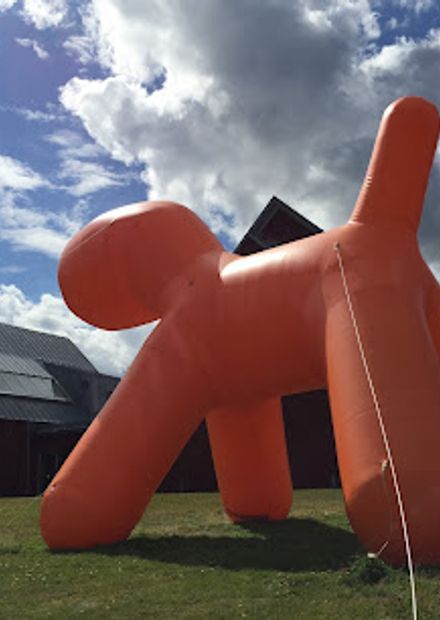
Vandalorum travel guide
Contemporary art and design in Renzo Piano's barn-inspired haven amid Småland fields, with Oudolf gardens, fine dining, and timeless creativity.
Tell me more about VandalorumMore to explore near Vandalorum

 Best experiences near Vandalorum
 Best hotels near Vandalorum
 Best attractions near Vandalorum
 Best shops near Vandalorum
 Best bars near Vandalorum
 Best restaurants near Vandalorum
Explore more

Explore more of Halland
Discover Halland, Sweden's coastal paradise with sandy beaches, historic towns, and lush nature reserves. Perfect for outdoor adventures, cultural experiences, and relaxation.
Explore Halland
Getting your guide ready…
We are putting together a fresh copy of the Vandalorum guide. This can take up to a minute.
This can take a few moments. If your browser asks, choose Allow so the download can start. You'll find the guide in your Downloads folder.
Nothing happened? Download it again
Sorry, the guide is taking longer than usual. Please try again in a minute, or get it by email instead.