Best Landmarks Near Laxtrappan (Västergötland)
Planning a trip to Laxtrappan? Discover the best landmarks nearby with history, expert tips, and routes. Free on web or the Evendo app.


The best landmarks near Laxtrappan
- Top rated
- Closest to Laxtrappan
- Price level: low to high
- Time to spend: shortest first
- A–Z
61 landmarks
-
Tourist attraction4.3★6,752 reviews
Örebro Castle
Perched on an islet in the Svartån River, Örebro Castle is a majestic 13th-century fortress dominating the city skyline. Expanded in the 16th century and rebuilt around 1900, it blends medieval origins with Renaissance grandeur. Visitors explore historic halls, join guided tours revealing royal tales, and enjoy family quests, exhibitions, a cozy café in a former torture chamber, and a castle shop. Open year-round with seasonal hours, entry starts at 165 SEK for adults.
Mon–Thu 11:00–16:00 · Fri–Sun 10:00–17:00Price level $$Time to spend 1–2.5 hrs
-
Tourist attraction4.4★4,773 reviews
Vadstena Castle
Perched on the shores of Lake Vättern, Vadstena Castle stands as Sweden's finest preserved Renaissance fortress, blending defensive might with royal elegance. Built in the 16th century by King Gustav Vasa, this imposing structure transitioned from a stark fortress to a grand palace under his son Johan III. Explore its thick walls, towers, and moat surrounding well-preserved interiors, including period-furnished rooms, a historic kitchen, gun turrets, and exhibits tracing its evolution. Guided tours reveal tales of kings, queens, and dramatic events, while the lakeside setting offers serene views amid Vadstena's medieval charm. Open daily with seasonal hours, entry starts at 125 SEK for adults.
Daily 12:00–16:00Price level $Time to spend 1–2.5 hrs
-
Castle4.5★4,023 reviews
Läckö Castle
Perched on a dramatic promontory in Lake Vänern's Eken archipelago, Läckö Castle stands as one of Sweden's finest Baroque treasures. This 700-year-old fortress boasts opulent interiors, meticulously restored 17th-century salons, and a fairy-tale Baroque garden overlooking shimmering waters. Explore its rich history from medieval bishops to powerful nobles like the De la Gardie family, amid stunning natural surroundings that blend culture and wilderness. Guided tours reveal lavish staterooms, a slotts church, and tales of Sweden's great power era. Nearby Naturum Vänerskärgården offers visitor exhibits on the region's ecology. Seasonal events from operas to Christmas feasts add vibrancy. Free for under-26s, adult entry starts at 110 SEK off-season, 150 SEK high season including tours. Allow 2-3 hours to wander courtyards, gardens, and interiors. Dogs prohibited inside.
Daily 10:00–18:00Price level $Time to spend 1.5–3 hrs
-
Historical landmark4.5★3,837 reviews
Wadköping
Wadköping is an enchanting open-air museum in central Örebro, Sweden, recreating the city's historic wooden architecture from the 15th to 19th centuries. Relocated timber houses, workshops, and courtyards form a living snapshot of old urban life, complete with museums, craft studios, cafés, and seasonal events that immerse visitors in Sweden's cultural past.
Daily 11:00–17:00Time to spend 1–3 hrs
-
National park4.8★2,315 reviews
Tiveden National Park
Tiveden National Park immerses visitors in Sweden's southernmost wilderness, where massive glacier-deposited boulders tower amid ancient forests between lakes Vänern and Vättern. Over 34 km of marked trails wind through dramatic rift valleys, mossy spruce woods, and rocky plateaus, revealing caves, Trollkyrka peaks, and serene swimming spots like Vitsand beach. Established in 1983 and expanded in 2017 to 2,030 hectares, this rugged haven preserves old-growth trees up to 400 years old, evoking Norse myths of trolls lurking in the crevices.
Open 24 hoursTime to spend 1.5–5 hrs
-
Tourist attraction4.2★1,739 reviews
Picasso sculpture
Towering 15 meters over Vålösundet in Kristinehamn's archipelago, this monumental concrete sculpture depicts Pablo Picasso's wife Jacqueline. The world's largest Picasso work fuses cubist vision with Lake Vänern's vast horizon, crafted through a 1960s collaboration blending art, concrete innovation, and Swedish determination. Sandblasted surfaces catch shifting light, while the lakeside setting invites serene contemplation amid beaches and promenades. Free access draws art lovers to this unexpected landmark.
Open 24 hoursTime to spend 0.5–1.5 hrs
-
Historical landmark4.4★1,068 reviews
Rök runestone
The Rök Runestone stands as one of Sweden's most renowned Viking Age monuments, bearing the world's longest known runic inscription from around 800 AD. Carved on five sides with about 760 characters, this early 9th-century masterpiece uses short-twig runes, kennings, and ciphers to weave tales of mythology, battles, and historical figures like Theodoric the Great. Discovered in the 19th century embedded in Rök church wall, it now resides under a protective shelter beside the church in Ödeshög, marking the dawn of written Swedish literature. Its cryptic text hints at lost Norse myths, a father's grief for his son, and possibly climate crises from centuries prior, captivating scholars and visitors alike.
Open 24 hoursTime to spend 0.5–1.5 hrs
-
Tourist attraction4.5★979 reviews
Alvastra Monastery
The evocative ruins of Alvastra Monastery, Sweden's oldest Cistercian abbey founded in 1143, stand amid serene countryside near Omberg. Built by French monks on land donated by King Sverker I, this historic site flourished for nearly 400 years until the Protestant Reformation. Explore weathered limestone walls, the remnants of a grand church inaugurated in 1185, and graves of medieval Swedish royalty including kings Sverker I, Carl I, Sverker II, and John I. Saint Bridget of Sweden experienced visions here, adding spiritual depth. Free to visit, the site offers a tranquil glimpse into Cistercian austerity and medieval piety, surrounded by nature perfect for quiet reflection.
Open 24 hoursTime to spend 0.5–1.5 hrs
-
Tourist attraction4.6★951 reviews
Varnhem Abbey
Varnhem Abbey Church stands as Sweden's richest medieval heritage site, founded by Cistercian monks in 1150 amid serene Västergötland countryside. This Romanesque-Gothic masterpiece, rebuilt after a devastating 1234 fire, served as burial place for kings and Birger Jarl. Explore its vaulted interiors, adjacent ruins, and whispers of monastic life in a living parish church with free entry and guided tours.
Time to spend 0.5–2 hrs
-
Historical landmark4.6★813 reviews
Bergs Slussar (Göta kanal)
Bergs Slussar, the Göta Canal's premier lock staircase, features eleven consecutive locks including the dramatic Carl Johan staircase, lifting boats 19 meters from Lake Roxen. This engineering marvel from the 19th century draws crowds to watch vessels navigate the historic waterway amid scenic Swedish countryside. Year-round appeal with summer boat action, nearby cafés, adventure golf, and proximity to Vreta Kloster ruins. Free entry, ideal for families and canal enthusiasts.
Open 24 hoursTime to spend 0.5–2 hrs


Skara Cathedral
Skara Cathedral, consecrated in stages from the 12th century and remodelled in high Gothic form, stands at the heart of Skara as Sweden’s oldest episcopal seat. Noted for its medieval crypt, twin west towers and a distinctive sequence of stained-glass windows by Bo Beskow, the cathedral blends centuries of salvage and restoration with living parish life, offering quiet devotion, artistic detail and a tangible link to Sweden’s early Christian history.
Daily 9:00–18:00Time to spend 0.5–2 hrs

Hennickehammars Manor
Nestled in the lush forests of Värmland by Lake Hemtjärn, Hennickehammars Herrgård is an 18th-century manor house offering luxurious stays, fine dining, spa facilities, and outdoor adventures. This historic retreat blends timeless elegance with modern comforts, perfect for relaxation amid Sweden's scenic countryside.
Price level $$Time to spend 1.5–4 hrs

Västergötlands museum
Västergötlands Museum in Skara is a cultural gem that showcases the rich history and heritage of the Västra Götaland region. With a variety of exhibitions and friendly staff, it's a must-visit for any tourist.
Tue–Fri 10:00–17:00 · Sat–Sun 11:00–16:00

Vadstena Klosterkyrka
Vadstena Klosterkyrka, invigd 1430 efter heliga Birgittas visioner, är en mäktig medeltida hallkyrka i kalksten med treskeppigt valvsystem. Byggd som hjärtat i Sveriges första birgittinerkonvent, rymmer den reliker från Birgitta och dottern Katarina, hertig Magnus sarkofag samt antika skulpturer. En levande pilgrimsdestination med högtidlig atmosfär och rika historiska inventarier.
Mon–Fri 8:00–19:00 · Sat–Sun 9:00–19:00Time to spend 0.5–1.5 hrs

Gamla Stenbron
Gamla Stenbron, also known as Östra bron, is Sweden's longest stone arch bridge at 168 meters, spanning the Klarälven River in Karlstad. Built from 1761 to 1811 with 12 granite arches, this historic landmark connects Norrstrand and Haga districts and now serves pedestrians, cyclists, and public transport. Designated a protected building in 2019, it offers stunning river views and embodies the city's engineering heritage amid scenic waterfront surroundings.
Open 24 hoursTime to spend 0.5–1.5 hrs

Mariestads Domkyrka
Mariestads Domkyrka is a late‑Gothic, aisleless cathedral built between 1593 and 1619 on a high site in Mariestad’s old town; its 82 m tower and natural‑stone facades were given their present form in the early 20th‑century restoration. The interior blends 17th‑ and 18th‑century altarpieces and pulpit with later benches and windows, creating a calm space for reflection and architectural detail familiar to Sweden’s post‑Reformation churchbuilding tradition.
Daily 8:00–20:00Time to spend 0.5–1.5 hrs

Wermland Opera
Nestled on Karlstad's scenic waterfront at Malmtorgsgatan 2, Wermland Opera stands as one of Sweden's six premier opera institutions. This modern venue hosts world-class operas, musicals like Titanic and Les Misérables, concerts, and theater in an intimate setting with stunning architecture and a talented ensemble drawing artists from across the country.
Price level $$Time to spend 2–4 hrs

Hammarö Sydspets
Hammarö Sydspets is the dramatic southern tip of Hammarö island protruding into Sweden's vast Lake Vänern. This nature reserve features the iconic Skage lighthouse, birdwatching platforms, rocky beaches, forests, and reed bays. Over 260 bird species migrate here annually, funnelled by the headland during autumn. Enjoy hiking trails, panoramic lake views, foraging for berries and mushrooms, picnics, and the surreal inland sea expanse. Wheelchair-friendly paths lead 800m from parking to the tip.
Open 24 hoursTime to spend 0.5–2 hrs

Rusakulan
Rusakulan crowns northern Kilsbergen, offering sweeping vistas across vast forests, the city of Örebro, Lake Hjälmaren, and up to 21 church spires on clear days before leaves bud. This natural viewpoint blends pine-scented trails, blooming heather fields, and dramatic elevation in an otherwise flat region, ideal for picnics and panoramic hikes.
Open 24 hoursTime to spend 0.5–2 hrs

Karlsborgs fästning
Karlsborgs fästning is a vast 19th-century fortress on Vanäs peninsula by Lake Vättern, conceived as Sweden’s inland reserve capital after the 1809 loss of Finland. Its monumental 678‑metre long 'slutvärn' (main defensive wall), Gothic-style garrison church, moats and bastions create a rare, largely intact military townscape where stone, water and regimented streets meet ceremonial architecture and lingering military presence.
Price level $Time to spend 1–3 hrs

Ekornavallen
Ekornavallen is a sprawling prehistoric burial ground near Broddetorp, Sweden, with monuments spanning the Neolithic to the Viking Age. The site’s most striking features include a large Neolithic passage grave known as Girommen, Iron Age stone settings, cairns and standing stones aligned across open grassland. Walk the low ridges and you’ll encounter carved slabs, bowl marks and layered funerary features that reveal more than four millennia of ritual landscape use.
Open 24 hoursTime to spend 0.5–2 hrs

Vreta kloster
Vreta Abbey stands as Sweden's first nunnery, founded around 1100 by King Inge the Elder and Queen Helena. This historic site transitioned from Benedictine to Cistercian order, hosting royal nuns and serving as a burial ground for Swedish kings. Today, its surviving church and ruins offer a serene glimpse into medieval monastic life amid tranquil Swedish countryside.
Mon–Tue 9:30–11:30, 13:00–15:00 · Thu 9:30–11:30, 13:00–15:00Time to spend 0.5–1.5 hrs

Peace monument
The Peace Monument stands as a poignant symbol of harmony in Karlstad's bustling Stora Torget square. This striking sculpture, erected to commemorate global peace efforts, features elegant figures in a gesture of unity against a backdrop of the city's vibrant pedestrian heart. Surrounded by historic buildings and lively cafes, it invites quiet reflection amid urban energy. Free to visit at any time, it's an ideal spot for photos, contemplation, or simply soaking in local life. Discover its story and serene presence on your Karlstad stroll.
Open 24 hoursTime to spend 0.5–1.5 hrs

Stjärnorps slottsruin
Stjärnorps Slottsruin, a majestic 17th-century castle ruin in Östergötland, was built by Field Marshal Robert Douglas between 1655 and 1662. Designed by Nicodemus Tessin the Elder, its main structure was destroyed by fire in 1789, leaving dramatic stone walls now protected by a modern roof. Owned by the Douglas family, recent restorations blend history with contemporary architecture, offering a poignant glimpse into Sweden's baroque past amid serene rural landscapes near Lake Roxen.
Time to spend 0.5–1.5 hrs

Vaholms brohus
Vaholms Brohus is a rare covered wooden bridge spanning the serene Tidan River in rural Västergötland. Built likely between 1830 and 1880, this 34-meter suspension structure with its freestanding timber roof house exemplifies 19th-century engineering. Protected as a historic monument since 2010, it connects the private Vaholm estate across the water, evoking timeless rural charm amid whispers of local legends.
Open 24 hoursTime to spend 0.5–1.5 hrs

Askeberga stone ship
Sweden's second-largest stone ship, the Askeberga Stone Ship stands as a monumental arrangement of 24 massive boulders forming an oval boat shape in the quiet rural landscapes of Västergötland. Dating to the Bronze or Iron Age, this enigmatic site evokes ancient Scandinavian beliefs in voyages to the afterlife, surrounded by well-maintained grass and informative panels detailing archaeological theories. Ideal for quiet reflection, picnics, or photography amid serene fields, it offers a tangible link to prehistoric rituals without entrance fees or barriers.
Open 24 hoursTime to spend 0.5–1.5 hrs

Kvarteret Almen
Kvarteret Almen is a charming historic wooden quarter in central Karlstad, nestled along the Västra Älvgrenen. Once the city's most desirable neighborhood in the 1700s, its preserved timber houses miraculously survived the devastating 1865 fire. Wander narrow cobblestone lanes amid quaint buildings like Doktorsgården and Flachska gården, evoking 18th-century life. In summer, an open-air stage hosts music, theater, and cultural events, blending heritage with lively performances against a riverside backdrop. A serene escape revealing Karlstad's resilient past.
Open 24 hoursTime to spend 0.5–1.5 hrs

Sola i Karlstad
Sola i Karlstad is a beloved bronze statue depicting Eva Lisa Holtz, the 18th-century innkeeper whose sunny disposition earned her the nickname symbolizing Karlstad's cheerful spirit. Erected in 1985 outside the Stadshotellet on Museigatan, this sculpture by Herman Reijers captures her as a youthful, welcoming figure, embodying the city's enduring identity as the 'Sun City.' Free to visit anytime, it stands as a quick, uplifting landmark amid urban bustle.
Open 24 hoursTime to spend 0.5–1.5 hrs

Edsholms castle
Nestled on the shores of Lake Värmeln in Värmland, the atmospheric ruins of Edsholms Castle stand as a testament to Sweden's turbulent medieval past. This 16th-century fortress, once a stronghold of power, now crumbles gracefully amid lush forests and serene waters, offering a peaceful retreat for history enthusiasts and nature lovers. Explore ivy-cloaked walls, peer into forgotten chambers, and imagine the echoes of noble feuds and royal intrigue that shaped its story. Free access makes it an ideal stop for spontaneous discovery in rural Grums.
Open 24 hoursTime to spend 0.5–2 hrs

Birgittas Udde
Birgittas Udde is a serene headland on Lake Boren's south shore in Motala, Sweden, featuring medieval ruins of Ulvåsa Manor where Saint Birgitta lived much of her life. This historical site offers stunning lake views, peaceful trails, and a deep connection to Sweden's spiritual heritage along the Birgittaleden pilgrimage route. Explore stone remnants from the 13th century amid natural beauty, ideal for quiet reflection and scenic walks.
Open 24 hoursTime to spend 0.5–2 hrs

Minnessten Olof Skötkonung
A modest memorial stone near Husaby church commemorating King Olof Skötkonung and the site's reputed role in early Swedish Christianity. Set beside a Romanesque church and the spring traditionally linked to the king's baptism, the stone marks a place where political power and the new faith intersected around the year 1000. The setting is quietly historic: low grass, old stonework and the hush of a rural Västergötland parish.
Open 24 hoursTime to spend 0.2–1 hr

Nasta Runestone
The Nasta Runestone (catalogued Nä 34) is a Viking Age memorial stone near Glanshammar in Örebro County, Sweden. Carved in granite and standing over two metres tall, its worn runic band and animal motifs — an entwined serpent, a beast and a mask-like face — show features of the Urnes style and mark it as a rich example of late Viking-age stone carving and local ceremonial landscape.
Time to spend 0.2–1 hr

Dagsnäs Castle
Nestled by Lake Hornborga, 9 km south of Skara, Dagsnäs Castle is a historic manor with roots tracing to the 15th century. Featuring a rune stone alley collected around 1800, beautiful gardens, and a storied past through noble families, it offers a serene glimpse into Sweden's heritage amid Västergötland's landscapes.
Open 24 hoursTime to spend 0.5–2 hrs

Västergötlands runinskrifter 4
A tall Viking Age runestone standing on the historic Stora Ek estate near Mariestad, Västergötland. The granite monument, catalogued as Vg 4 in regional corpora, bears an Old Norse memorial inscription carved in younger futhark runes and stands in a grassy, park-like setting that links the stone to local manorlandscape and medieval memory. The stone is notable for its size, clear inscription banding and direct connection to local place-names such as Kungsbacken and Stora Ek.
Time to spend 0.2–1 hr

Minnessten över slaget vid Åsle kyrka
A solitary 19th-century diabase memorial marking the 1389 Battle of Åsle near Falköping, raised in 1896 to commemorate a decisive medieval clash between the forces of King Albrekt of Mecklenburg and Queen Margaret's army. The tall, rugged stone rests in open farmland close to Åsle church, framed by low pasture and a sense of wide Westrogothic sky — an austere, evocative place for history-minded walkers and quiet contemplation.
Open 24 hoursTime to spend 0.2–1 hr

Diocese of Karlstad
The Diocese of Karlstad is the administrative centre of the Church of Sweden for Värmland and parts of Dalarna, housed in offices near Karlstad Cathedral on Residenstorget. The site combines 19th–20th century ecclesiastical architecture and sober office interiors, and functions as a living centre for liturgy, diocesan administration and cultural programming tied to the cathedral district.
Mon–Thu 9:00–16:00 · Fri 9:00–14:30Time to spend 0.2–2 hrs

Tomasbodahöjden
Tomasbodahöjden rises to 298 meters above sea level as the highest point in Närke province and Kilsbergen mountain range, located northwest of Örebro near Garphyttan. This modest summit offers a rewarding short hike along a marked trail through forested terrain, ideal for hikers seeking the thrill of provincial highpointing amid serene Swedish countryside. The well-trodden path features a gentle elevation gain of under 27 meters over a 1.6 km round-trip loop, passing remnants of historical settlements like old farmsteads from the 1600s. Part of the Bergslagsleden trail network, it provides a peaceful spot for picnics with subtle views over rolling hills and distant valleys, evoking the rugged charm of central Sweden's inland landscapes.
Time to spend 0.5–2 hrs
Guds Brunn
Guds Brunn stands as a serene historical landmark in the quiet Locketorp area of Skövde, Sweden. This enigmatic site, translating to 'God's Well,' evokes centuries of local lore and spiritual significance amid rural Västergötland landscapes. Visitors discover a simple yet evocative stone structure tied to ancient traditions of healing waters and divine encounters. Surrounded by gentle countryside, it offers a peaceful retreat for reflection on Sweden's folk heritage. Free to access at all times, it's an understated gem for history enthusiasts seeking authentic, off-the-beaten-path experiences in Skövde's outskirts.
Open 24 hoursTime to spend 0.5–1.5 hrs

Ture Lång
Ture Lång is a striking 6-meter-tall statue on Stora Torget in Skänninge, symbolizing the town's medieval justice and autonomy. Modeled after German Roland pillars, this modern recreation from 1990 by local smiths Bo and Stefan Asp depicts a giant figure wielding a club, evoking the era when public punishments were meted out at its base. Rooted in Olaus Magnus's 16th-century accounts, it stands as a unique emblem of Skänninge's Hanseatic ties and historical pride, freely accessible around the clock.
Open 24 hoursTime to spend 0.5–1.5 hrs

Väderkvarn
Nestled in the serene Gruvlyckan area of Karlstad, Väderkvarn stands as a historic windmill evoking Sweden's milling heritage. Part of the cultural landscape near Mariebergsskogen, this landmark offers a glimpse into traditional craftsmanship amid lush greenery and natural beauty. Free to visit year-round, it symbolizes sustainable energy practices from bygone eras, blending history with the tranquility of Värmland's outdoors.
Time to spend 0.5–1.5 hrs

Stone circle
Nestled in the quiet suburb of Skoghall, this enigmatic stone circle stands as a subtle historical landmark amid residential surroundings. Comprising arranged stones evoking ancient rituals, it invites quiet reflection on Sweden's prehistoric past. Free to visit at any time, it's an understated gem for those exploring Värmland's hidden heritage sites, perfect for a serene, off-the-beaten-path stop.
Time to spend 0.5–1.5 hrs

Överkyrke kyrkoruin
Överkyrke kyrkoruin is a evocative remnant of a Romanesque stone church from the late 1100s, nestled in the serene countryside of Gökhem socken near Falköping. Excavated and preserved in 1955, this small ruin with its straight-ended chancel stands just 150 meters east of Gökhem Church, hinting at medieval dual worship sites possibly linked to missionary influences or a private estate chapel. Coins and grave finds confirm its use until the early 1500s, evoking Västergötland's rich ecclesiastical past amid rolling fields.
Open 24 hoursTime to spend 0.5–1.5 hrs

Kungastenarna
Kungastenarna on Kinnekulle plateau features massive boulders etched with royal inscriptions from the 19th and early 20th centuries, marking visits by Swedish monarchs amid stunning natural vistas. Legends tie the stones to ancient kings, blending folklore with documented history in this serene highland setting near Götene.
Open 24 hoursTime to spend 0.5–1.5 hrs

Engelbrekt Engelbrektsson
In Örebro, this site honors Engelbrekt Engelbrektsson, the 15th-century leader of a pivotal rebellion against Danish rule in the Kalmar Union. Marked by a historic monument amid Lake Hjälmaren's serene waters, it evokes Sweden's fight for autonomy, blending natural beauty with profound national history. Ideal for history enthusiasts seeking reflective moments by the water.
Time to spend 0.5–1.5 hrs

Gamla normer nya former ”Likkistan”
Gamla normer nya former, commonly nicknamed “Likkistan”, is a mid‑20th‑century fountain and public sculpture occupying the centre of Stortorget in Örebro. A civic meeting point and visual anchor, the work combines sculptural form with water features and has been part of Örebro’s public life for over five decades, framing markets, events and everyday pauses in the city square.
Time to spend 0.2–1 hr

Östergötlands runinskrifter 87
Östergötlands runinskrift 87 is a Viking Age runestone discovered in the foundations of Högby Church after its demolition in 1870. Originally a gravestone, this ornamental slab bears intricate Younger Futhark runes commemorating a memorial, standing as a testament to early medieval craftsmanship in rural Östergötland near Mjölby.
Open 24 hoursTime to spend 0.5–1.5 hrs

Frimurarelogen, Karlstad
A discreet but richly detailed Masonic lodge housed at Tingvallagatan 15 in central Karlstad, Frimurarelogen is an elegant historic meeting house whose interior decorative schemes and ceremonial rooms reflect the traditions of Swedish freemasonry. Set within a calm urban street, the lodge offers an architectural and cultural glimpse into a private civic institution with ornate interiors, symbolic ornament and a quietly formal presence in the city fabric.
Time to spend 30 min

Futurohus - Flygande tefat
The Futurohus, locally known as the 'Flygande Tefat' or Flying Saucer, is a rare futuristic pod house designed by Finnish architect Matti Suuronen in the late 1960s. Perched on Örebro's Aspholmen island along Skvadronvägen, this prefabricated fiberglass structure resembles a UFO and serves as an office for a design firm. One of only four in Sweden and about 60 worldwide, it embodies bold 1960s space-age optimism with its spherical form, porthole windows, and modular interior originally meant for ski chalets. Visitors can admire its quirky exterior and iconic silhouette against the industrial backdrop.
Open 24 hoursTime to spend 0.5–1.5 hrs

Närkes runinskrifter 29
Apelbodastenen (Närkes runinskrifter 29) is a dark‑grey granite Viking Age runestone standing on an arable islet near Apelboda in Glanshammar, Närke. Carved in the Younger Futhark and dated to the 11th century, its runic band and preserved ornamentation commemorate a man named Björn and was raised by his brother Bofriðr; the stone is notable for rare name-forms and the unique compound fulldrængila.
Time to spend 0.2–1 hr
Ferlin steppar
Ferlin steppar is a corten-steel sculpture of poet Nils Ferlin, created by Thomas Qvarsebo and installed near Stora torget in central Karlstad. The figure — caught mid-step on a table — commemorates Ferlin’s centenary and sits on the pedestrian street where public life, other memorials and the market square intersect. Its weathered steel surface and angular silhouette offer a modern, local homage to one of Värmland’s best-known poets.
Time to spend 15–45 min
Olof Palmes torg
Olof Palmes Torg is a central town square in Örebro's Nikolai district, created in 1965 alongside Medborgarhuset for the city's 700th anniversary. Adjacent to Örebro Cathedral, it serves as a vibrant public space with a rich history, hosting events, exhibitions, and community gatherings amid mid-20th-century architecture and ongoing urban renewal efforts.
Time to spend 0.5–1.5 hrs

Våghustorget
Våghustorget is a charming town square in southern Örebro's center, home to the city's only preserved pumphouse from 1872. Built over a natural spring in English neo-Gothic style by architect Adolf Kjellström, it supplied water to local households until 1888. Once a parking lot and known as Pumpkälltorget, the square blends history with modern urban renewal, featuring granite and limestone architecture amid pedestrian-friendly surroundings.
Time to spend 0.5–1.5 hrs
Stortorget
Stortorget, Örebro's central town square, pulses with historic charm amid cobblestone expanses and vibrant gatherings. Flanked by the majestic Sankta Nikolai kyrka and crowned by the iconic Engelbrekt statue, it has evolved from medieval roots to a lively hub for markets, events, and daily life. The fountain Likkistan adds a quirky touch, while surrounding architecture whispers tales of apothecaries, fires, and royal riksdagar nearby. Free to wander, it's the perfect spot to soak in Örebro's communal spirit.
Time to spend 0.5–1.5 hrs
Fiskartorget
Fiskartorget is Örebro's historic town square, once a bustling fish market dating back to medieval times. Nestled in the city center near Stortorget, it blends rich archaeological heritage with modern revitalization efforts, offering a charming spot for locals and visitors to gather amid cobblestone paths and contemporary green spaces. Today, it serves as an inviting meeting place with cultural events and public art, reflecting centuries of trade and community life in this Swedish riverside city.
Time to spend 0.5–1.5 hrs
Järntorget
Järntorget is a historic town square in central Örebro dominated by the statue of Karl XIV Johan and a 15-metre-long bronze timeline embedded in the paving. The square traces layers of the city's trade and civic life—from 18th‑century market activity and iron tolls to 19th‑century industrial growth—and now links streets, parks and the Svartån waterfront in a calm, open city space.
Time to spend 0.2–1 hr

Borgarhuset
Borgarhuset, also known as Cajsa Wargs hus, stands as one of Örebro's oldest surviving structures, a rare 17th-century borgarhus relocated to the evocative open-air museum of Wadköping. This timber-framed gem offers a window into the lives of affluent burghers, with its gästabudsstuga design once hosting lavish feasts on the upper floor while serving as guest quarters and storage below. Nestled among other preserved historic buildings, it exemplifies efforts to save Örebro's vanishing wooden architecture from mid-20th-century demolitions. Visitors wander its compact interiors, absorbing the patina of centuries amid the quaint lanes of this recreated 18th- and 19th-century neighborhood. Free to explore, it's an essential stop for history enthusiasts seeking authentic Swedish urban heritage in a serene setting.
Time to spend 0.5–1.5 hrs
Närkes runinskrifter 14
Nä 14, commonly called the Rönnebergastenen, is a Viking Age runestone standing at Bärsta in Stora Mellösa, Örebro municipality. The granite stone bears a finely carved ring cross together with runic text commemorating an individual; its style links it to Christian-era memorial practice in central Sweden and places it among the distinctive runic monuments of Närke.
Time to spend 0.2–1 hr

Östergötlands runinskrifter 165
Runestone Ög 165 is a Viking-Age runic inscription originally found built into the threshold of Vårfrukyrkan in Skänninge. Carved in local limestone, the stone bears a short runic text and shows the recycling of ancient monuments into medieval church fabric — a common thread in Sweden's layered landscape. The stone's worn surface, modest scale and placement on Stora Torget make it a subtle but resonant trace of regional early medieval life and commemoration.
Open 24 hoursTime to spend 0.2–1 hr

Tre Resta Stenar
A small cluster of three standing stones set within a grassy Östergötland grave landscape near Mjölby, Tre Resta Stenar are relics of the Iron Age burial tradition and boundary marking. Weathered and moss-speckled, the stones sit in an open, slightly raised field among low scrub and meadow grasses, giving a quiet, elemental sense of age and human presence across the centuries.
Open 24 hoursTime to spend 0.2–1 hr

Östergötlands runinskrifter 197
Sörbystenen, or Östergötlands runinskrift 197, is a Viking Age runestone of gray granite standing about 218 cm tall on the atmospheric cemetery of Sörby’s old church ruins in Mjölby. Dated to 980–1015 AD, it bears inscriptions commemorating a man named Ragnvald who died in Enebacken on Kärrlöv’s land in Viby, Vifolka hundred. Found originally near Sörby church, this weathered monument whispers tales of Viking-era memory and loss amid the quiet ruins of a medieval site.
Open 24 hoursTime to spend 0.5–1.5 hrs

Vilske kleva hällkista
Vilske Kleva Hällkista stands as one of Sweden's notable megalithic tombs from the late Stone Age, constructed around 3500–2500 BCE in Västergötland's Falbygden region. This stone cist, formed by massive slabs forming a chamber, served as a collective burial site, reflecting ancient communal rituals and the engineering prowess of Neolithic people. Nestled in a rural landscape near Falköping, it offers a tangible link to prehistoric Scandinavia, where such monuments dotted the countryside amid farming communities.
Time to spend 0.5–1.5 hrs
Explore Laxtrappan on the map
A handpicked selection of must-see spots near Laxtrappan, mapped for you.
More about Laxtrappan
Laxtrappan travel guide
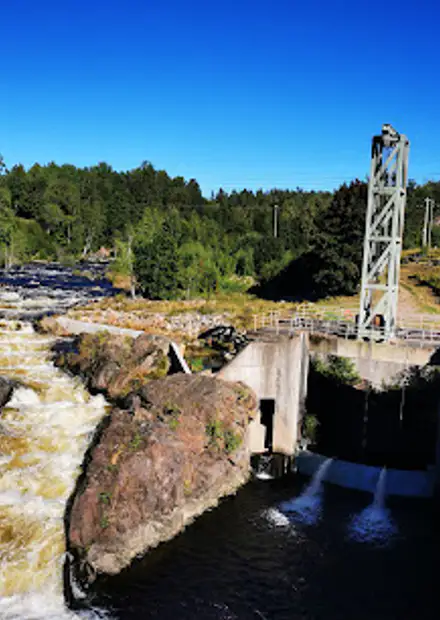
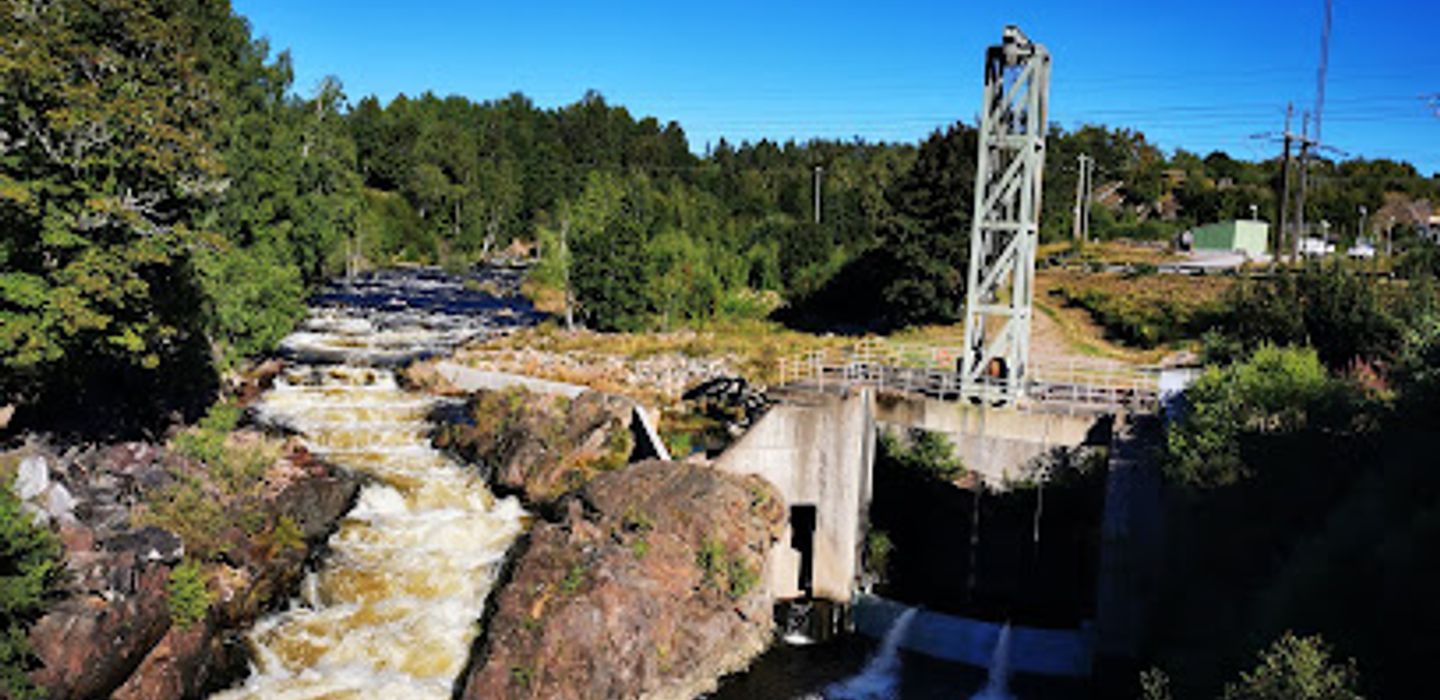
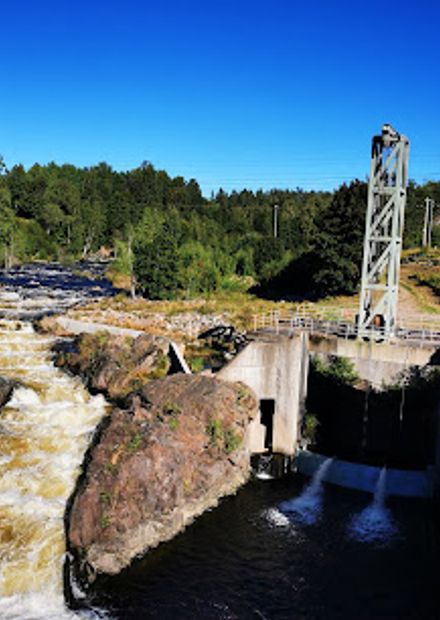
An engineered fishway on Gullspångsälven where rare Gullspång salmon climb stepped pools—most dramatic during the autumn spawning run.
Tell me more about LaxtrappanMore to explore near Laxtrappan

 Best experiences near Laxtrappan

 Best hotels near Laxtrappan

 Best attractions near Laxtrappan

 Best shops near Laxtrappan

 Best bars near Laxtrappan

 Best restaurants near Laxtrappan
Explore more

Explore more of Västergötland
Discover Västergötland: A blend of historical treasures, natural beauty, and cultural richness in the heart of Sweden.
Explore Västergötland
Getting your guide ready…
We are putting together a fresh copy of the Laxtrappan guide. This can take up to a minute.
This can take a few moments. If your browser asks, choose Allow so the download can start. You'll find the guide in your Downloads folder.
Nothing happened? Download it again
Sorry, the guide is taking longer than usual. Please try again in a minute, or get it by email instead.