

Free Podolia Travel Guide & Mobile App
Explore Podolia with free travel guides. Discover regional history, expert tips, proposed trips, and audio guides on web or mobile app.


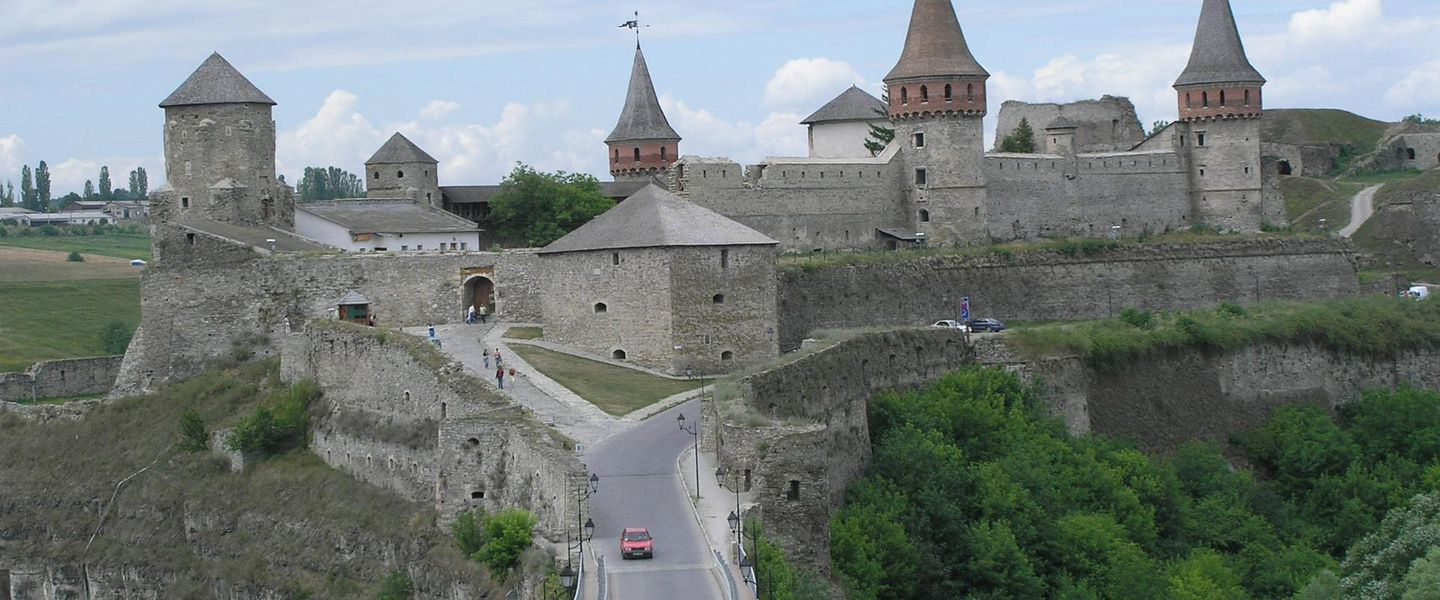


Explore Podolia's Ukrainian fortresses, canyon landscapes, historic towns and multicultural heritage across the Dniester and Southern Buh valleys.
Read more about Podolia
When is the best time to visit Podolia?
Best: June–August · 22–25°C| Month | High (°C) | Rainfall (mm) |
|---|---|---|
| January | 1 | 30 |
| February | 1 | 30 |
| March | 7 | 35 |
| April | 13 | 40 |
| May | 18 | 50 |
| June (best) | 22 | 60 |
| July (best) | 25 | 60 |
| August (best) | 24 | 55 |
| September | 19 | 50 |
| October | 13 | 45 |
| November | 6 | 40 |
| December | 2 | 35 |
Getting to and around Podolia
How to get there
Transportation
Top city travel guides in Podolia
The cities of Podolia, and the easiest places to base yourself.
-

-

-
-

-

-


Swipe for more cities
Destinations in Podolia
Resorts, valleys and scenic spots worth a trip of their own.
-

-

-

-

-

-


Swipe for more destinations
Best attractions in Podolia
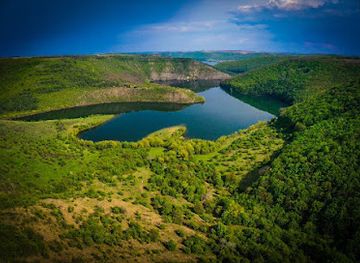
Podolia's attractions combine fortified history with river landscapes and rural travel. Kamianets-Podilskyi's old town, Smotrych canyon and castle form the region's most concentrated heritage experience, while Medzhybizh Castle introduces the military and religious history of the central Podolian plain. Vinnytsia offers museums, riverside parks and urban culture, and smaller historic centres such as Bar reveal the region's former role in trade and frontier administration. The Dniester Canyon is the principal natural draw, with wooded slopes, limestone cliffs, reservoir viewpoints and opportunities for hiking, paddling and wildlife observation. Near Bakota, a cave monastery and flooded valley connect landscape with the memory of settlements transformed by hydroelectric development. Across the region, churches, former synagogues, manor houses, village cemeteries and archaeological sites reward slower exploration, but opening arrangements and access can be variable. Visitors should distinguish the historic Podolian region from neighbouring Bukovina and Galicia, whose nearby attractions belong to different cultural and administrative settings.
-
Fortress
State Historical and Architectural Reserve Khotyn fortress
Discover the majestic Khotyn Fortress in Chernivtsi Oblast, Ukraine - a historical gem with breathtaking views and rich cultural heritage.
-
National park
Podilski Tovtry National Park
Explore the stunning landscapes and rich biodiversity of Podilski Tovtry National Park, a natural gem in Ukraine perfect for outdoor adventures.
-
Scenic spot
Smotrytsky Canyon
Experience the natural beauty of Smotrytsky Canyon, a breathtaking scenic spot perfect for adventure, relaxation, and exploration in Ukraine.
-
Tourist attraction
Medzhybizh Fortress
Discover the historical charm and breathtaking views at Medzhybizh Fortress, a remarkable medieval landmark in Ukraine's Khmelnytskyi Oblast.


Best landmarks in Podolia
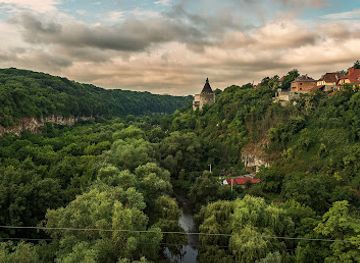
The defining landmark of Podolia is Kamianets-Podilskyi Castle, whose towers and walls occupy a strategic rocky approach above the Smotrych gorge. The old town's Cathedral of Saints Peter and Paul is notable for the surviving Ottoman-era minaret, an unusually visible reminder of the city's time on the imperial frontier. Kamianets-Podilskyi's Castle Bridge and the surrounding canyon create one of Ukraine's most recognisable historic landscapes. Medzhybizh Castle, at the meeting of the Southern Buh and Buzhok rivers, is another major defensive monument, with massive walls reflecting centuries of Polish-Lithuanian, Ottoman and Russian frontier history. The Dniester Canyon supplies Podolia's principal natural landmarks: steep limestone banks, wooded ravines and the broad waters around Bakota. Vinnytsia's Roshen fountain is a prominent modern riverside feature, although its operation is subject to conditions and should not be assumed. Historic churches, synagogue remains and market squares across Bar, Bratslav and other towns add a quieter architectural layer.
-
Monastery
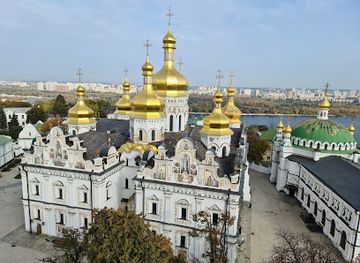
Kiev Pechersk Lavra
Experience the spiritual essence and architectural beauty of Kiev Pechersk Lavra, a UNESCO World Heritage site in Kyiv, a must-visit for every traveler.
-
Fortress
Kamianets-Podilskyi Castle
Discover the enchanting Kamianets-Podilskyi Castle, a historical gem in Ukraine, with breathtaking views and rich medieval history.
-
Historical landmark
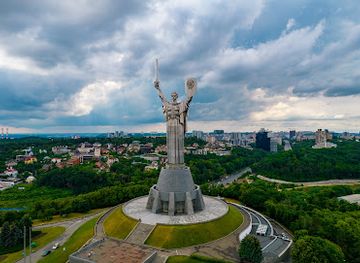
Ukrainian Motherland Monument
Discover the Ukrainian Motherland Monument, a stunning symbol of resilience, history, and breathtaking views in the heart of Kyiv.
-
Scenic spot
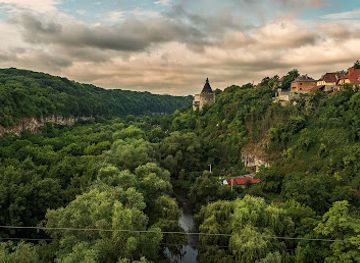
Smotrytsky Canyon
Explore the stunning Smotrytsky Canyon in Kam'yanets'-Podil's'kyi, a scenic marvel featuring dramatic cliffs, lush greenery, and the winding Smotrych River.

Explore Podolia on the map
Plan your trip on one map. See where the top cities, national parks and sights are, and book hotels and experiences in a few clicks.
Best hotels in Podolia
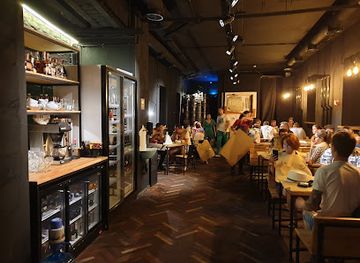
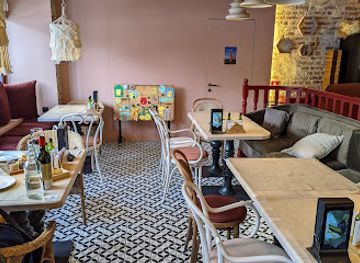
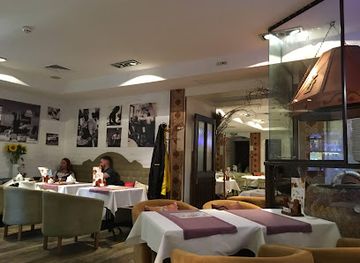
Best restaurants in Podolia
Podolian dining is rooted in the wider Ukrainian kitchen, with borshch, varenyky, holubtsi, deruny, buckwheat, seasonal mushrooms and rye-based breads appearing in homes, cafés and traditional restaurants. Rural tables often reflect the agricultural landscape through preserved vegetables, dairy products, fruit, honey and locally raised meat, while larger towns provide more contemporary interpretations and international options. Vinnytsia and Kamianets-Podilskyi have the broadest choice of cafés and restaurants; smaller fortress towns and Dniester villages tend towards straightforward Ukrainian cooking, bakeries and family-run establishments rather than a formal dining scene. Farmers' markets are useful for fruit, vegetables, cheese and baked goods, although stallholders may prefer cash. The region's history also means that Polish, Jewish, Moldavian and other influences appear in local foodways, but dishes should not automatically be presented as exclusively Podolian inventions.
-
Bistro
Puzata Hata
Discover authentic Ukrainian flavors at Puzata Hata in Kyiv - a charming bistro serving traditional dishes with a modern twist.
-
Meat
Rebernya Na Uzvozi
Discover authentic Ukrainian cuisine at Rebernya Na Uzvozi – where mouthwatering meats meet exquisite local brews in Kyiv.
-
Georgian
Mama Manana
Discover the rich flavors and warm hospitality of Georgia at Mama Manana in Kyiv – a must-visit destination for food lovers.
-
Georgian
Chachapuri Restaurant
Experience authentic Georgian cuisine at Chachapuri Restaurant in Kyiv - home of delicious khachapuri and fine wines.
Best bars in Podolia
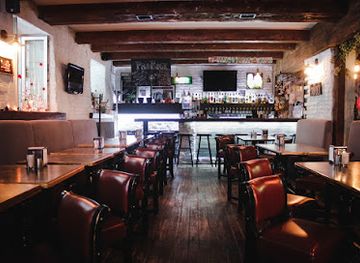
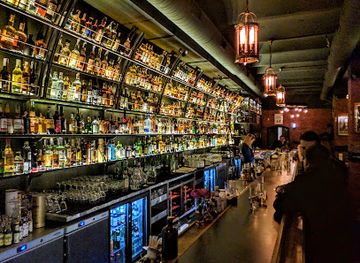
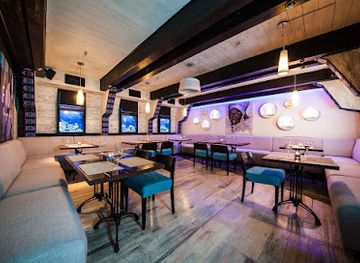
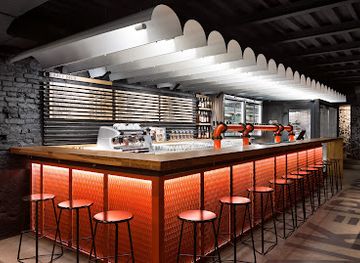
Evening life in Podolia is concentrated in Kamianets-Podilskyi, Vinnytsia and other larger towns, where visitors can find cafés, beer halls, cocktail bars, restaurants and occasional live-music venues. Kamianets-Podilskyi's historic centre provides the most atmospheric setting for an evening meal or drink, while Vinnytsia has the broadest urban selection and a more developed cultural programme. In smaller towns and villages, nightlife generally centres on restaurants, modest bars and social venues rather than dedicated clubs. Student life adds energy to some urban evenings, but opening arrangements and events can change during wartime or under local restrictions. Do not assume that alcohol is required for socialising, and plan transport back to rural accommodation before going out, since late public services may be scarce.
-
Gastropub
ProRock Pub
Discover the vibrant atmosphere of ProRock Pub in Kyiv, where delectable gastropub cuisine meets craft brews and live music for an unforgettable experience.
-
Bar
Barman Dictat
Explore the vibrant atmosphere and expertly crafted cocktails at Barman Dictat, a premier bar in Kyiv's nightlife scene.
-
Karaoke bar
Fiji Lounge Bar
Discover the lively Fiji Lounge Bar in Kyiv, where karaoke, exquisite dining, and vibrant nightlife create the ultimate entertainment destination.
-
Bar
Punkraft
Discover the vibrant atmosphere and exquisite drinks at Punkraft, a top bar in the heart of Kyiv's Podil's'kyi district.
Best nightclubs in Podolia
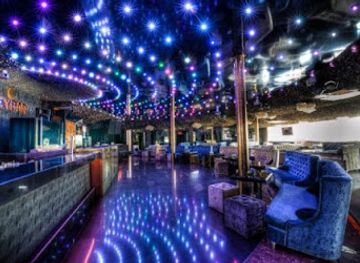
Evening life in Podolia is concentrated in Kamianets-Podilskyi, Vinnytsia and other larger towns, where visitors can find cafés, beer halls, cocktail bars, restaurants and occasional live-music venues. Kamianets-Podilskyi's historic centre provides the most atmospheric setting for an evening meal or drink, while Vinnytsia has the broadest urban selection and a more developed cultural programme. In smaller towns and villages, nightlife generally centres on restaurants, modest bars and social venues rather than dedicated clubs. Student life adds energy to some urban evenings, but opening arrangements and events can change during wartime or under local restrictions. Do not assume that alcohol is required for socialising, and plan transport back to rural accommodation before going out, since late public services may be scarce.
-
Night club
Caribbean Club
Dive into the nightlife at Caribbean Club in Kyiv, where music, dining, and unforgettable experiences await every visitor.
-
Night club
Forsage
Forsage Night Club in Kyiv: Experience the electrifying nightlife with great music, cocktails, and a vibrant atmosphere to dance the night away.
-
Night club
Skybar
Discover the vibrant nightlife of Kyiv at Skybar, where stunning views, electrifying music, and exceptional cocktails create an unforgettable experience.
-
Night club
Rafinad People Night Club & Tusa Bar
Discover the electrifying vibe of Rafinad People Night Club & Tusa Bar, where Lviv's nightlife comes alive with music, dance, and unforgettable moments.



Best shops in Podolia
Shopping in Podolia is practical and local in character, with market halls, open-air produce stalls, bakeries and small high streets providing the most regional experience. Vinnytsia and Kamianets-Podilskyi offer the widest choice of supermarkets, bookshops, cafés, clothing retailers and craft outlets, while smaller towns are better for seasonal fruit, honey, preserves, dairy products and everyday Ukrainian foods. Visitors may find embroidered textiles, ceramics, woodwork, icons and locally made confectionery, but quality varies and religious or antique objects should be purchased only through legitimate sellers. Markets are useful places to observe the agricultural economy of the Dniester and Southern Buh valleys, although cash is advisable outside major shops. Regional food products make more reliable souvenirs than fragile archaeological-looking items, and travellers should never remove finds from historic sites or buy objects whose provenance is unclear.
-
Shopping mall
Ocean Plaza
Ocean Plaza: Kyiv's premier shopping destination blending luxury retail, dining, and entertainment in a vibrant atmosphere.
-
Shopping mall
Lavina Mall
Explore Lavina Mall in Kyiv, a shopping haven featuring over 300 stores, diverse dining options, and family-friendly entertainment for an unforgettable experience.
-
Shopping mall
Forum Lviv
Discover the vibrant shopping scene at Forum Lviv, where culture, cuisine, and entertainment meet for an unforgettable experience.
-
Shopping mall
ТРЦ Gulliver
Discover the ultimate shopping experience at Gulliver Shopping Mall in Kyiv, where diverse brands, dining, and entertainment await.



Get your free copy of our complete guide to Podolia, delivered straight to you.
Everything on this page, from attractions and restaurants to essentials and local phrases, in one PDF you can read offline, print or share.
Already have an account? Sign in
Your Podolia guide is ready.
We'll send it to · Not you? Sign out

Getting your guide ready…
We are putting together a fresh copy of the Podolia guide. This can take up to a minute.
This can take a few moments. If your browser asks, choose Allow so the download can start. You'll find the guide in your Downloads folder.
Nothing happened? Download it again
Sorry, the guide is taking longer than usual. Please try again in a minute, or get it by email instead.
Podolia essentials
Currency and Payment
Safety
Emergency Situations
Do's and Don'ts
Local Tips
From Eve
Local phrases worth knowing
You don't need to get them perfect. A few words go a long way, and locals appreciate the effort.
Basics
| English | Local | Say it |
|---|---|---|
| Hello | Привіт | [Pryvit] |
| Goodbye | До побачення | [Do pobachennya] |
| Yes | Так | [Tak] |
| No | Ні | [Ni] |
| Please/You're welcome | Будь ласка | [Bud' laska] |
| Thank you | Дякую | [Dyakuyu] |
| Excuse me/Sorry | Вибачте | [Vybachte] |
| How are you? | Як справи? | [Yak spravy?] |
| Fine. And you? | Добре. А ти? | [Dobre. A ty?] |
| Do you speak English? | Ви говорите англійською? | [Vy hovoryte anhlis'koyu?] |
| I don't understand | Я не розумію | [Ya ne rozumiyu] |
Eating & Drinking
| English | Local | Say it |
|---|---|---|
| I'd like to see the menu, please | Я б хотів подивитися меню, будь ласка | [Ya b khotiv podyvytisya menyu, bud' laska] |
| I don't eat meat | Я не їм м'ясо | [Ya ne yim myaso] |
| Cheers! | На здоров'я! | [Na zdorov'ya!] |
| I would like to pay, please | Я б хотів заплатити, будь ласка | [Ya b khotiv zaplatyty, bud' laska] |
Emergencies
| English | Local | Say it |
|---|---|---|
| Help! | Допоможіть! | [Dopomozhit'!] |
| Go away! | Ідіть геть! | [Idit' het'!] |
| Call the Police! | Викличте поліцію! | [Vyklychte politsiyu!] |
| Call a doctor! | Викличте лікаря! | [Vyklychte likarya!] |
| I'm lost | Я загубився | [Ya zahubyvsy] |
| I'm ill | Я хворий | [Ya khvoryy] |
Shopping
| English | Local | Say it |
|---|---|---|
| I'd like to buy... | Я б хотів купити... | [Ya b khotiv kupyty...] |
| I'm just looking | Я просто дивлюся | [Ya prosto dyvlyusya] |
| How much is it? | Скільки це коштує? | [Skil'ky tse koshtuye?] |
| That's too expensive | Це занадто дорого | [Tse zanadto doho] |
| Can you lower the price? | Чи можете знизити ціну? | [Chy mozhete znyzyty tsinu?] |
Time & Numbers
| English | Local | Say it |
|---|---|---|
| What time is it? | Котра година? | [Kotra hodyna?] |
| It's one o'clock | Одна година | [Odna hodyna] |
| Half past (10) | Пів на (10) | [Piv na (10)] |
| Morning | Ранок | [Ranok] |
| Afternoon | Після обіду | [Pislya obidu] |
| Evening | Вечір | [Vechir] |
| Yesterday | Вчора | [Vchora] |
| Today | Сьогодні | [S'ohodni] |
| Tomorrow | Завтра | [Zavtra] |
| 1 | Один | [Odin] |
| 2 | Два | [Dva] |
| 3 | Три | [Try] |
| 4 | Чотири | [Chotyry] |
| 5 | П'ять | [P'yat'] |
| 6 | Шість | [Shist'] |
| 7 | Сім | [Sim] |
| 8 | Вісім | [Visim] |
| 9 | Дев'ять | [Dev'yat'] |
| 10 | Десять | [Desyat'] |
Transport & Directions
| English | Local | Say it |
|---|---|---|
| Where's a/the...? | Де знаходиться...? | [De znakhodyt'sya...?] |
| What's the address? | Яка адреса? | [Yaka adresa?] |
| Can you show me (on the map)? | Можете показати мені (на карті)? | [Mozhete pokazaty meni (na karti)?] |
| When's the next (bus)? | Коли наступний (автобус)? | [Koly nastupnyy (avtobus)?] |
| A ticket (to ....) | Квиток (до ...) | [Kvytok (do ...)] |
History of Podolia
Prehistoric farming and Trypillia culture
Podolia formed part of the wider zone inhabited by the Trypillia, or Cucuteni-Trypillia, communities during the Neolithic and Copper Age. These settled farming societies built substantial villages, cultivated cereals and kept livestock across parts of present-day western and central Ukraine. Later peoples left kurgans, fortified settlements and artefacts in the forest-steppe and Dniester country. The region's fertile soils and river corridors explain its long agricultural importance, while archaeological remains provide evidence of repeated settlement long before the medieval towns and fortresses that dominate modern itineraries.
Early medieval frontier societies
Before the consolidation of medieval principalities, Podolia was inhabited and influenced by successive Slavic and steppe peoples, including the Antes, Khazars and later Turkic groups. River valleys connected the Dniester basin with the Black Sea world, while the open steppe to the south made the area a zone of movement and conflict. By the eleventh and twelfth centuries, parts of northern and central Podolia were linked to the political and commercial networks of Kyivan Rus. The mixed archaeological record reflects a frontier where farming settlements, fortified sites and long-distance routes overlapped.
Lithuanian and Polish rule, fourteenth to eighteenth centuries
Following the decline of Mongol power in the region, Podolia became contested by the Grand Duchy of Lithuania, the Kingdom of Poland and local princely forces. From the fourteenth century, Kamianets-Podilskyi developed as a major stronghold and administrative centre, while towns such as Bar, Medzhybizh and Bratslav served trade, military and estate networks. Much of Podolia later lay within the Polish-Lithuanian Commonwealth, whose rule brought Catholic institutions, noble landholding and expanding Jewish and Armenian communities alongside the established Orthodox population.
Kamianets-Podilskyi and Ottoman occupation, 1672–1699
The Ottoman capture of Kamianets-Podilskyi in 1672 was one of the most important episodes in Podolian history. The city and its fortress became the centre of an Ottoman province after the Treaty of Buczacz, during a period when the region was a major military frontier between the Ottoman Empire and the Polish-Lithuanian Commonwealth. Ottoman rule left architectural and urban traces, including the minaret attached to the former cathedral, later converted into a church setting. Polish control was restored after the Treaty of Karlowitz in 1699.
Imperial reorganisation and nineteenth-century change
The partitions of the Polish-Lithuanian Commonwealth and the shifting borders of the late eighteenth century brought most eastern Podolia into the Russian Empire, while western districts followed different administrative paths under the Habsburg monarchy. Russian authorities organised much of the area through Podolia and Bratslav gubernias, and towns expanded as centres of farming, trade and administration. New roads and railways connected Podolian grain-producing districts with larger markets. At the same time, Ukrainian, Polish and Jewish communities retained distinct religious and cultural institutions, although imperial policies often restricted political and communal autonomy.
Revolution, Soviet rule and the Second World War
The upheavals of 1917–1921 brought competing Ukrainian, Bolshevik, Polish and White forces into Podolia before the region was divided between the Ukrainian Soviet republic and interwar Poland. Soviet collectivisation transformed the countryside and contributed to the wider Holodomor-era catastrophe of 1932–33. The Second World War brought German and Romanian occupation, mass murder of Jewish communities, forced labour and severe destruction. Post-war Soviet reconstruction altered towns and industry, while surviving religious and historic buildings were often repurposed or neglected.
Independent Ukraine and the renewal of regional heritage
Since Ukraine regained independence in 1991, Podolian cities and rural communities have worked to restore historic buildings, revive religious institutions and present the region's multicultural past more openly. Kamianets-Podilskyi's fortress and old town became major domestic tourism destinations, while the Dniester Canyon and Southern Buh gained attention for nature-based travel. The full-scale Russian invasion has affected transport, public life and heritage protection across Ukraine, making official security information and local restrictions essential to any contemporary visit.
Podolia in Photos
Browse through our photo collection highlighting the charm and character of the destination.
Neighbouring regions of Podolia
The closest regions to Podolia, if you have time for more than one.
-

-

-

-

-


Swipe for more regions
Explore more

Explore more of Ukraine
Explore Ukraine: From Kyiv's golden domes to the Carpathian Mountains, discover a country rich in history, culture, and natural beauty in the heart of Eastern Europe.
Explore Ukraine