Holyrood Park, Berwickshire Travel Guide
Edinburgh’s wild royal park, where an ancient volcano meets city views, Iron Age forts and serene lochs just steps from the Old Town.
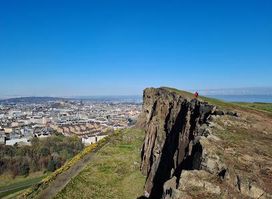
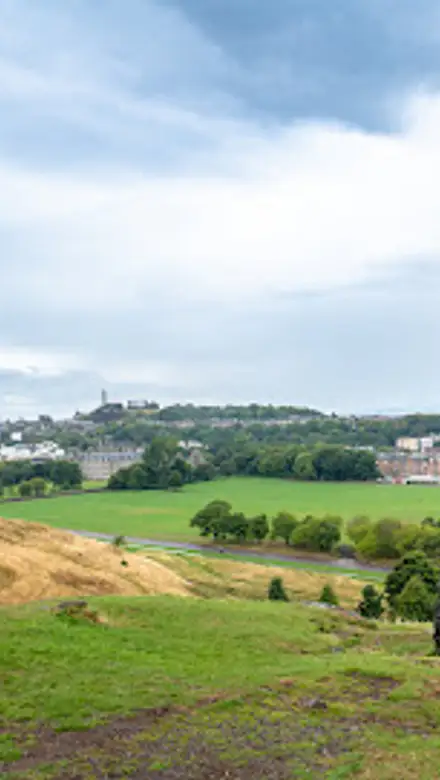
Holyrood Park is Edinburgh’s dramatic royal park, a volcanic landscape of hills, lochs and crags rising just east of the Old Town. At its heart stands Arthur’s Seat, an ancient volcano offering panoramic views over the city, the Firth of Forth and the Pentland Hills. The park is rich in history, from Iron Age forts and medieval chapels to the geology that inspired James Hutton. Paths wind past St Margaret’s Loch, Duddingston Loch and the sheer cliffs of Salisbury Crags, making it a haven for walking, climbing, photography and quiet reflection in the heart of the capital.
A brief summary to Holyrood Park
- Queen's Dr, Edinburgh, EH8 8HG, GB
- Click to display
- Click to display
- Duration: 1 to 4 hours
- Free
-
 Outdoor
- Mobile reception: 5 out of 5

Know before you go
Hi, I'm Eve. Here are a few practical things to know before exploring Holyrood Park.
- Wear sturdy, grippy footwear as paths can be rocky, uneven and slippery, especially after rain.
- Bring water and snacks; there are no cafes in the park, though there are toilets and a visitor centre near the palace.
- Check for any temporary closures or events before visiting, as parts of the park may be restricted during royal garden parties or other occasions.
- For the best light and fewer crowds, visit early in the morning or late afternoon, especially for photography from Arthur’s Seat or Salisbury Crags.
- Combine your visit with the Palace of Holyroodhouse and the Scottish Parliament for a full day exploring Edinburgh’s history and politics.
Do you manage this location?
Take control to get all the benefits, like improved information, better appearance, and stronger visibility across AI-powered discovery. Learn more about listing your business on Evendo
Activate your presenceOther nearby places you may find interesting
The closest places of the same kind, if this one is not quite what you had in mind.

Explore Holyrood Park on the Map
A handpicked selection of must-see spots near Holyrood Park, mapped for you.
Getting There
-
On foot from Old Town
From the Royal Mile near the Palace of Holyroodhouse, it takes about 10–15 minutes to walk into the main part of the park. The route is mostly flat or gently sloping, with paved and compacted paths leading directly into the park grounds.
-
Public transport
Buses serve Holyrood Road and the Scottish Parliament, with stops within a 5–10 minute walk of the park entrance. Journey times from the city centre are typically 10–20 minutes, depending on the route and traffic. Services run frequently during the day.
-
By car
Parking is available at Broad Pavement (near the palace), St Margaret’s Loch and Duddingston Loch. Broad Pavement charges £1 per hour between 08:30 and 17:30 on weekdays, with free parking on weekends and some holidays. Spaces can fill quickly on busy days, especially during events or good weather.
-
Cycling
Cyclists can use the marked cycle paths and roads around the park, but off-road cycling is not permitted on the hills and trails. The approach from the city centre is relatively flat, with a 15–25 minute ride depending on starting point and route.
For the on-the-go comforts that matter to you
-
 Restrooms
-
 Drinking Water
-
 Seating Areas
-
 Sheltered Areas
-
 Trash Bins
-
 Information Boards
-
 Visitor Center
Discover more about Holyrood Park
A Volcanic Heart in the City
Holyrood Park is a wild, open landscape carved by fire and ice, sitting right at the edge of Edinburgh’s historic core. At 251 metres, Arthur’s Seat is the park’s highest point and the remains of an extinct volcano that formed around 350 million years ago, when Scotland lay near the equator. The surrounding hills and crags are part of the same volcanic complex, shaped later by glaciers that gouged out valleys and left behind dramatic cliffs and lochs. Salisbury Crags, with its near-vertical basalt columns, is a classic site in the history of geology, where James Hutton developed his revolutionary ideas about the Earth’s deep time and rock formation.Layers of Human History
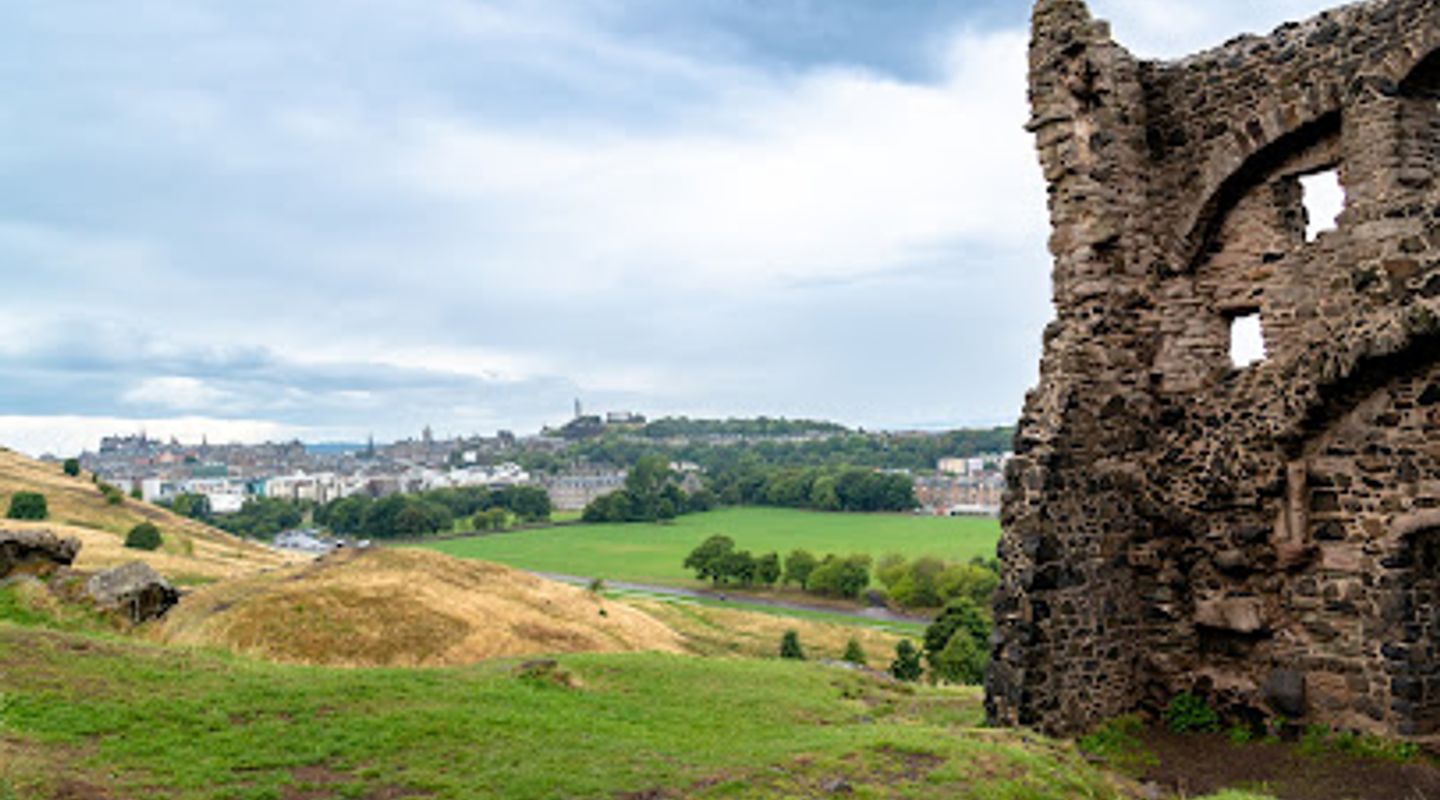
The park’s landscape has been shaped by people for thousands of years. Stone and flint tools found here point to human activity as far back as 5000 BC, and the slopes of Arthur’s Seat hold the remains of an Iron Age hill fort, a reminder of how this commanding position was once a stronghold. Later, medieval monks from Holyrood Abbey used the area, and the ruins of St Anthony’s Chapel, tucked into the eastern slopes, hint at centuries of quiet devotion. The park itself was once a royal hunting estate, part of the grounds of the Palace of Holyroodhouse, and today it remains a royal park managed for public enjoyment and natural heritage.Walking Among Crags and Lochs
Paths and tracks criss‑cross the park, offering walks for all levels. A gentle stroll around St Margaret’s Loch or Duddingston Loch is perfect for a peaceful escape, with views of Arthur’s Seat and the city skyline. More adventurous routes lead up the steep slopes of Arthur’s Seat or along the Radical Road at the base of Salisbury Crags, where the views open up across Edinburgh, from the Castle and Calton Hill to the Firth of Forth and the distant Pentland Hills. The terrain is rugged in places, with uneven ground, rocky steps and some exposed edges, so sturdy footwear is essential, but the sense of being in a wild landscape so close to the city is unforgettable.Wildlife and Natural Beauty
Despite its urban setting, Holyrood Park supports a surprising variety of wildlife and habitats. The lochs attract waterfowl such as swans, ducks and geese, while the grasslands, bogs and rocky outcrops are home to wildflowers, insects and small mammals. Rangers and conservation groups work to protect and enhance this natural heritage, including rare plants like spring sandwort and sticky catchfly. The park’s open spaces, with their mix of moorland, woodland and water, make it a green lung for the city and a place where visitors can truly connect with nature, whether on a short walk or a longer hike.Views, Photography and Quiet Moments
The park is one of Edinburgh’s best viewpoints, offering classic panoramas that have inspired artists, writers and photographers for centuries. From the summit of Arthur’s Seat, the city unfolds below, framed by the sea and hills, while the cliffs of Salisbury Crags provide dramatic foregrounds for cityscapes. Sunrise and sunset are particularly beautiful, with the skyline glowing in warm light. Even on busy days, it is easy to find a quiet spot – a bench by a loch, a sheltered hollow or a rocky outcrop – to pause, breathe and take in the scale and beauty of this unique urban wilderness.












Your all‑in‑one travel companion app
Explore expert travel guides, compare and book tours, experiences, hotels, and more—all from the palm of your hand. Download now for seamless trip planning wherever your wanderlust takes you.


Explore More of Berwickshire
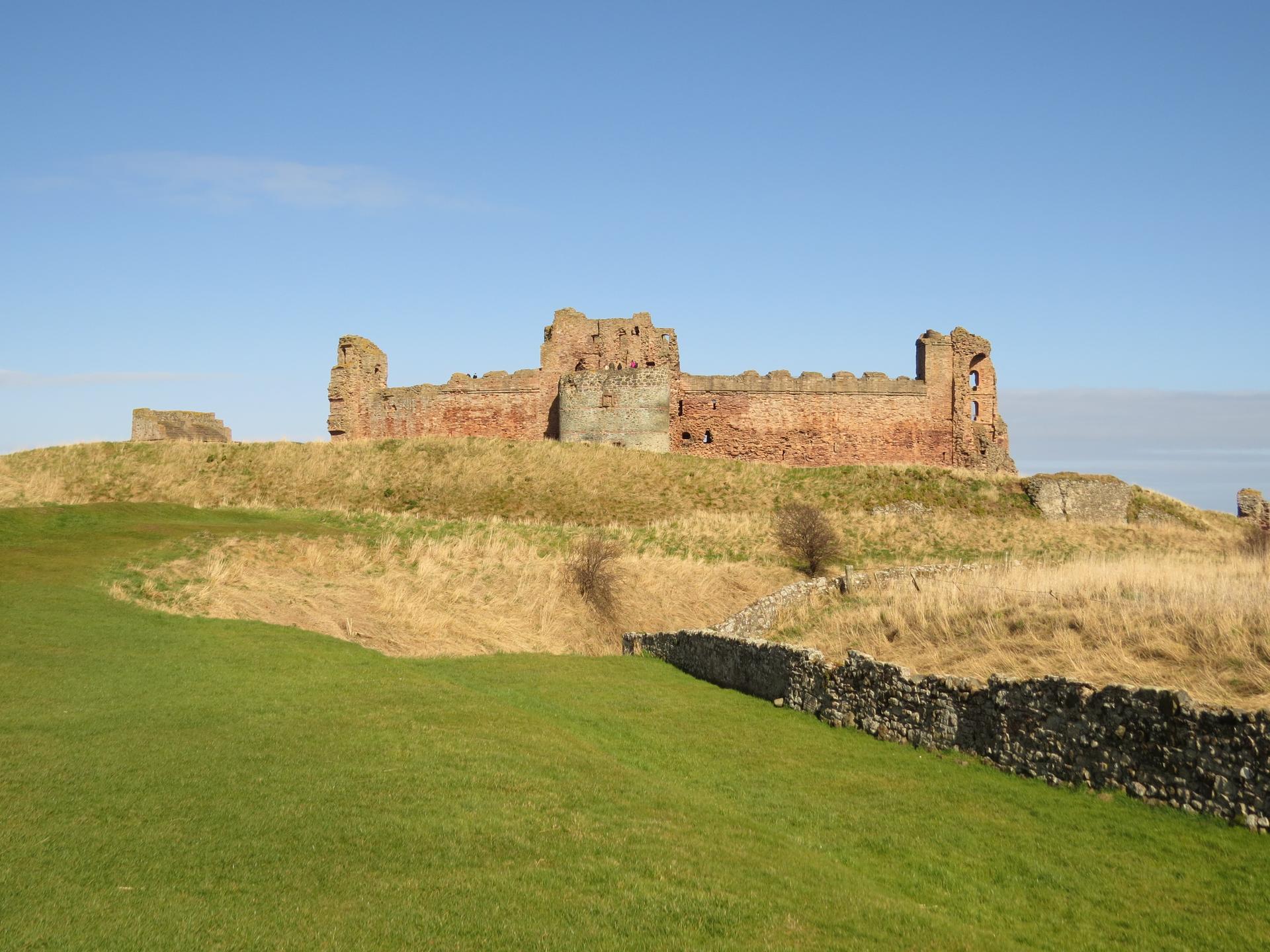
Looking beyond Holyrood Park? Discover Berwickshire for broader travel guides, local hot-spots, and regional highlights.
Explore Berwickshire