St James's Park, London Travel Guide
Free Guide: London’s oldest Royal Park, where lake views, palace sightlines, and broad walking paths offer a quiet break in the middle of Westminster.


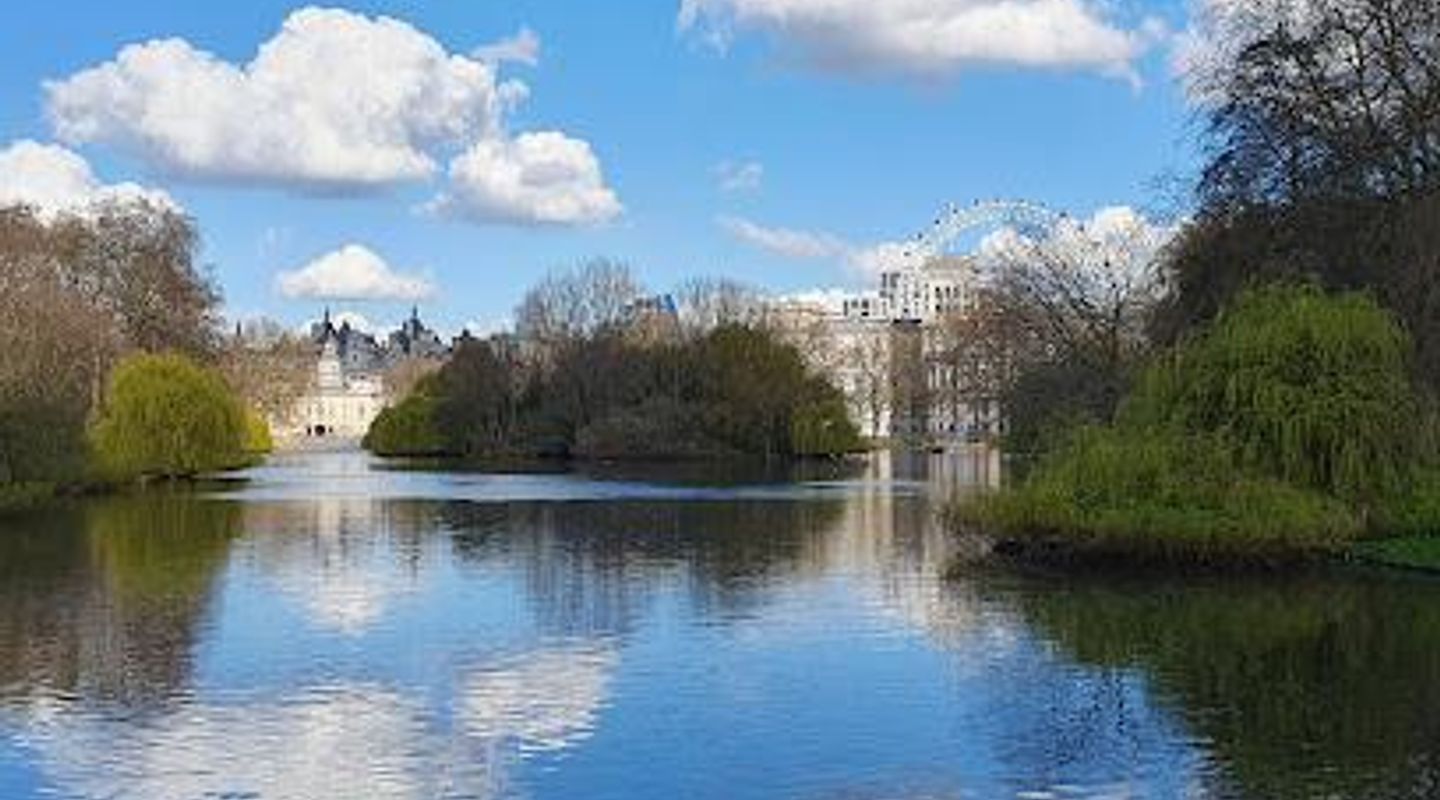
A brief summary of St James's Park
London’s oldest Royal Park, where lake views, palace sightlines, and broad walking paths offer a quiet break in the middle of Westminster.
St James's Park is London’s oldest Royal Park, a calm stretch of lawns, paths, and water set between Buckingham Palace and Westminster. It is less about grand attractions than about the experience of walking through a formal city landscape softened by trees, birds, and long views. Most visitors come for a short, scenic pause between nearby sights, then linger by the lake or on a bench.
On-site amenities
 Restrooms
 Drink options
 Food options
 Seating areas
 Information boards
Opening hours
- Every day5 am–12 am
Opening hours as listed on the venue’s Google Business Profile. Hours can change for services and special events, so check with the venue before you go.
- Address
- London SW1A 2BJ
- Phone
- Website
Getting there
Underground
Walking
Bus
Taxi
Discover more about St James's Park
What it is
St James's Park is a major central London park with the feel of a carefully managed public garden rather than a wild green space. It sits in Westminster beside Buckingham Palace and close to the ceremonial and political core of the city. As London’s oldest Royal Park, it carries a long royal history, but for most visitors the appeal is immediate and practical: a free, walkable break from the hard edges of central London.
How it feels on the ground
The park is compact enough to cross easily, yet varied enough to reward a slow circuit. Broad surfaced paths lead around the lake and through open lawns, with benches placed for pauses rather than long stays. The atmosphere is calm, scenic, and urban. You hear traffic only at the edges; in the middle, the park feels buffered from the city, with water, trees, and birdlife taking over. The lake is the main focal point, drawing photographers, walkers, and people who simply want to sit for a while.
Why people come
Travellers use St James's Park as a scenic connector between Buckingham Palace, Whitehall, Westminster, Green Park, and the Mall. It works well for a short walk, a photo stop, or a lunch break. The views are the main reason to visit: palace-facing sightlines, water reflections, and the contrast between formal government architecture and soft parkland. It is especially suited to casual visitors, couples, solo travellers, older travellers, and families who want an easy central-London green space without committing to a long outing.
Facilities and practical expectations
Expect a straightforward visit rather than a packaged attraction. There are public toilets, cafés, benches, and the usual park infrastructure, but not a dense cluster of activities. Food and drink are available on site, and the park is easy to combine with nearby sightseeing on foot or by Tube. Most visits last from half an hour to a couple of hours. The park is busiest in late morning and midday, especially in good weather and during holiday periods. Rain, wind, and winter shorten stays, but the park remains usable year-round. It is best treated as a central London pause point: quiet, scenic, and well placed, with enough character to justify a visit even when you are already moving between major landmarks.
Evendo Review Centre
 Google
Guest reviews
Best time to go
Quietest: Jan, Feb & Dec · before 6am or from 9pm
Busy times are Evendo estimates for a typical year, to help you plan. Actual crowds vary with events, school holidays and the weather.
Explore St James's Park on the map
A handpicked selection of must-see spots near St James's Park, mapped for you.
Get your free copy of our complete guide to St James's Park, delivered straight to you.
Everything on this page, from opening hours and how to get there to Eve’s tips and the best time to go, in one PDF you can read offline, print or share.
Already have an account? Sign in
Your St James's Park guide is ready.
We'll send it to · Not you? Sign out

Getting your guide ready…
We are putting together a fresh copy of the St James's Park guide. This can take up to a minute.
This can take a few moments. If your browser asks, choose Allow so the download can start. You'll find the guide in your Downloads folder.
Nothing happened? Download it again
Sorry, the guide is taking longer than usual. Please try again in a minute, or get it by email instead.
Unlock the best of St James's Park
Skip-the-line tickets, guided tours with entry, and walking tours of the area, booked in a few clicks.
 Tour with entry
London Mob Revenge in Westminster: Exploration Game and Tour
from $8.61 Tour with entry
London Self Guided Walking Tour with Audio
from $8.82 Tour with entry
London Westminster Self-Guided Walking Tour and Scavenger Hunt
from $9.53 Tour with entry
Westminster, London Walking Tour with Audioguide
from $10.63
 Tour
TourLondon Scavenger Hunt & Highlights Self-Guided Walking Tour
from $3.18 Tour
TourLondon Audio Guided Walking Tour 3h00 and 20 Audio Commentaries
from $6.49 Tour
TourSecret London: An audio tour about the heritage of the city's Russian immigrants
from $9.49 Tour
TourLondon Highlights Self guided scavenger hunt and Walking Tour
from $10.63
Other nearby places you may find interesting
The closest places of the same kind, if this one is not quite what you had in mind.
-
-
-
-
-


Swipe for more places
More to explore near St James's Park

 Best experiences near St James's Park
 Best hotels near St James's Park
 Best landmarks near St James's Park
 Best attractions near St James's Park
 Best shops near St James's Park
 Best restaurants near St James's Park
 Best bars near St James's Park
Do you manage this location?
Take control to get all the benefits, like improved information, better appearance, and stronger visibility across AI-powered discovery.
Explore more

Explore more of London
Explore London: A city of iconic landmarks, rich history, vibrant culture, and endless attractions that cater to every taste, making it a must-visit destination.
Explore London
Explore more of United Kingdom
Discover the United Kingdom: A blend of rich history, stunning landscapes, and vibrant cities, offering a unique travel experience for every visitor.
Explore United Kingdom