Best Landmarks in Scotland
Planning a trip to Scotland? Discover the best landmarks in Scotland with history, expert tips, and routes. Free on web or the Evendo app.


The best landmarks in Scotland
- Top rated
- Closest to the centre
- Price level: low to high
- Time to spend: shortest first
- A–Z
45 landmarks
-
Park and Garden4.4★20,702 reviews
George Square
George Square stands as Glasgow's principal civic space, a grand public square named after King George III and laid out in 1781. Surrounded by architecturally significant buildings including the palatial City Chambers and the historic Merchants' House, the square showcases an impressive collection of statues and monuments dedicated to notable Scottish figures such as Robert Burns, James Watt, Sir Robert Peel, and Sir Walter Scott. Originally developed as an elegant residential square, it has evolved into the cultural and administrative heart of Glasgow, hosting major events throughout the year and serving as a focal point for the city's heritage and contemporary life.
Open 24 hoursTime to spend 1–3 hrs
-
Historical landmark4.7★11,472 reviews
The National Wallace Monument
Perched atop Abbey Craig near Stirling, The National Wallace Monument commemorates Scotland’s national hero, Sir William Wallace. This 220-foot tower, built in the 19th century, offers visitors a journey through Wallace’s life and legacy via exhibition galleries and culminates in panoramic views from its crown. Accessible by a steep walk or shuttle bus, the monument combines rich history with breathtaking vistas over Scotland’s heartland.
Daily 9:30–18:00Price level $$Time to spend 1.5–3 hrs
-
Monument4.6★6,063 reviews
Commando Memorial
The Commando Memorial near Spean Bridge, Scotland, is a powerful bronze monument dedicated to the British Commandos of World War II. Unveiled in 1952, it features three life-sized soldiers overlooking the rugged training grounds and offers panoramic views of Ben Nevis and the surrounding Highlands. Adjacent is a peaceful Garden of Remembrance honoring fallen Commandos, making the site a place of reflection, history, and breathtaking natural beauty.
Open 24 hoursTime to spend 0.5–2 hrs
-
Monument4.7★4,801 reviews
Scott Monument
The Scott Monument is a towering Victorian Gothic spire in Princes Street Gardens, Edinburgh, dedicated to the celebrated Scottish writer Sir Walter Scott. Standing 200 feet tall, it features intricate carvings and 64 statues of characters from Scott’s novels. Visitors can climb 287 steps to multiple viewing platforms offering panoramic views of Edinburgh’s skyline, including Edinburgh Castle and Arthur’s Seat. The monument also houses a museum room with stained-glass windows and exhibits on Scott’s life and works.
Daily 10:00–12:30, 13:45–16:30Price level $$Time to spend 0.5–1.5 hrs
-
Historical landmark4.7★1,188 reviews
Butt of Lewis Lighthouse
Standing at the northernmost tip of the Isle of Lewis, this striking red-brick lighthouse has guided mariners since 1862. Designed by David Stevenson and rising 37 metres above dramatic coastal cliffs, it remains one of Britain's most windswept and remote beacons. Now automated and remotely operated, the lighthouse anchors a spectacular headland where ancient Precambrian rocks meet the Atlantic, offering breathtaking views and excellent birdwatching opportunities.
Open 24 hoursTime to spend 1–3 hrs
-
Historical landmark4.7★866 reviews
Ruthven Barracks
Ruthven Barracks stands as one of Scotland's most evocative historical ruins, perched dramatically on a glacial mound near Kingussie in the Highlands. Built between 1719 and 1721 by the British government to suppress Jacobite uprisings, this 18th-century military fortress witnessed pivotal moments in Scottish history, including a legendary defence by just 12 soldiers against 300 attackers. Today, the remarkably preserved stone ruins—with their distinctive three-storey blocks, corner towers, and parade ground—offer visitors free access year-round to explore the haunting remains and panoramic views across the Spey Valley and Cairngorm Mountains.
Open 24 hoursTime to spend 1–2.5 hrs
-
Abbey4.3★883 reviews
Sweetheart Abbey
A hauntingly beautiful 13th-century Cistercian ruin in Dumfries and Galloway, Scotland, founded by Lady Dervorguilla in memory of her husband John Balliol. The abbey's romantic name—Dulce Cor, meaning 'Sweet Heart'—stems from the poignant legend of Dervorguilla carrying her husband's embalmed heart in an ivory casket after his death. Today, the striking red-sandstone ruins stand gracefully against the Solway Firth landscape, enclosed by one of Scotland's most impressive precinct walls.
Daily 10:00–16:30Time to spend 1–2.5 hrs
-
Historical landmark4.4★496 reviews
Cambuskenneth Abbey
Cambuskenneth Abbey stands as a haunting medieval ruin beside the River Forth near Stirling, Scotland. Founded in 1140 by King David I, this former Arrouaisian monastery rose to prominence through royal patronage and hosted crucial parliaments during Scotland's Wars of Independence. Today, the striking 13th-century bell tower dominates the site, while stone foundations trace the footprint of the once-grand abbey church and cloister. The abbey served as the final resting place of King James III and Queen Margaret of Denmark, their Victorian-era monument marking a poignant chapter in Scottish royal history.
Daily 9:30–17:30Time to spend 1–2.5 hrs
-
Castle4.4★392 reviews
Buchanan Castle
Buchanan Castle stands as a hauntingly beautiful Scottish baronial ruin near Drymen, west of Loch Lomond. Built in 1852–1858 by the 4th Duke of Montrose to replace an ancestral seat destroyed by fire, this grand manor features distinctive turrets, bartizans, and stepped gables. Now roofless and overgrown, the castle remains a striking testament to 19th-century Scottish architecture and a repository of dramatic historical moments, including its role as a World War II hospital where Nazi Deputy Führer Rudolf Hess was briefly held.
Time to spend 1.5–3 hrs
-
Tourist attraction4.6★332 reviews
England / Scotland Border
Stand at the symbolic threshold between two nations at this iconic border crossing near Berwick-upon-Tweed. Located just north of the town on the A1, this landmark offers sweeping coastal views and a tangible sense of crossing from England into Scotland. A simple stile over a fence marks the boundary, making it an accessible and memorable waypoint for travellers journeying along Britain's east coast.
Open 24 hoursTime to spend 0.5–2 hrs


Birnam Oak
Standing on the south bank of the River Tay near Dunkeld, the Birnam Oak is a majestic sessile oak believed to be the last survivor of the legendary Birnam Wood from Shakespeare’s Macbeth. Centuries old, with a hollow trunk and branches propped on wooden crutches, this ancient tree is a living link to Scotland’s natural and literary history. A short, scenic walk from Birnam village leads through riverside woodland to this iconic tree, often accompanied by the equally impressive Birnam Sycamore. It’s a peaceful, atmospheric spot where history, myth and nature converge.
Open 24 hoursTime to spend 0.5–2 hrs

The Cameronians - Scottish Rifles - Exploring The Regimental Collection
Located at 129 Muir Street in Hamilton, The Cameronians Museum preserves the rich history of the Cameronians (Scottish Rifles), a distinguished Scottish infantry regiment that served for nearly 300 years until its disbandment in 1968. Housed within the historic Low Parks Museum complex, the collection showcases regimental artifacts, uniforms, medals, and stories that bring to life the regiment’s legacy from its 17th-century origins through major 20th-century conflicts.
Tue–Sat 10:00–17:00Price level $Time to spend 1–2.5 hrs

Devorgilla Bridge
Devorgilla Bridge is one of Scotland’s oldest surviving stone bridges, spanning the River Nith in Dumfries. Dating back to the early 15th century, this nine-arch sandstone bridge replaced earlier wooden structures commissioned by Lady Devorgilla of Galloway in the 1260s. Known for its massive triangular cutwaters and historic Old Bridge House museum built into its structure, the bridge offers scenic views and a tangible link to Dumfries’ medieval past.
Open 24 hoursTime to spend 0.5–2 hrs

Glasgow Science Centre Tower
Rising 127 metres above the Clyde, Glasgow Tower is Scotland's tallest free-standing structure and a marvel of rotating engineering. This iconic landmark at Glasgow Science Centre offers a 2.5-minute journey to a cabin with panoramic views across Glasgow, the river, and surrounding landscapes. The tower's revolutionary design allows it to rotate with the wind, creating a unique experience. Access includes an interactive ground-level exhibition featuring Glasgow's history, archive imagery, and a five-metre touchscreen map of the Clyde.
Daily 10:00–17:00Price level $$Time to spend 1–2.5 hrs

The Witches Well
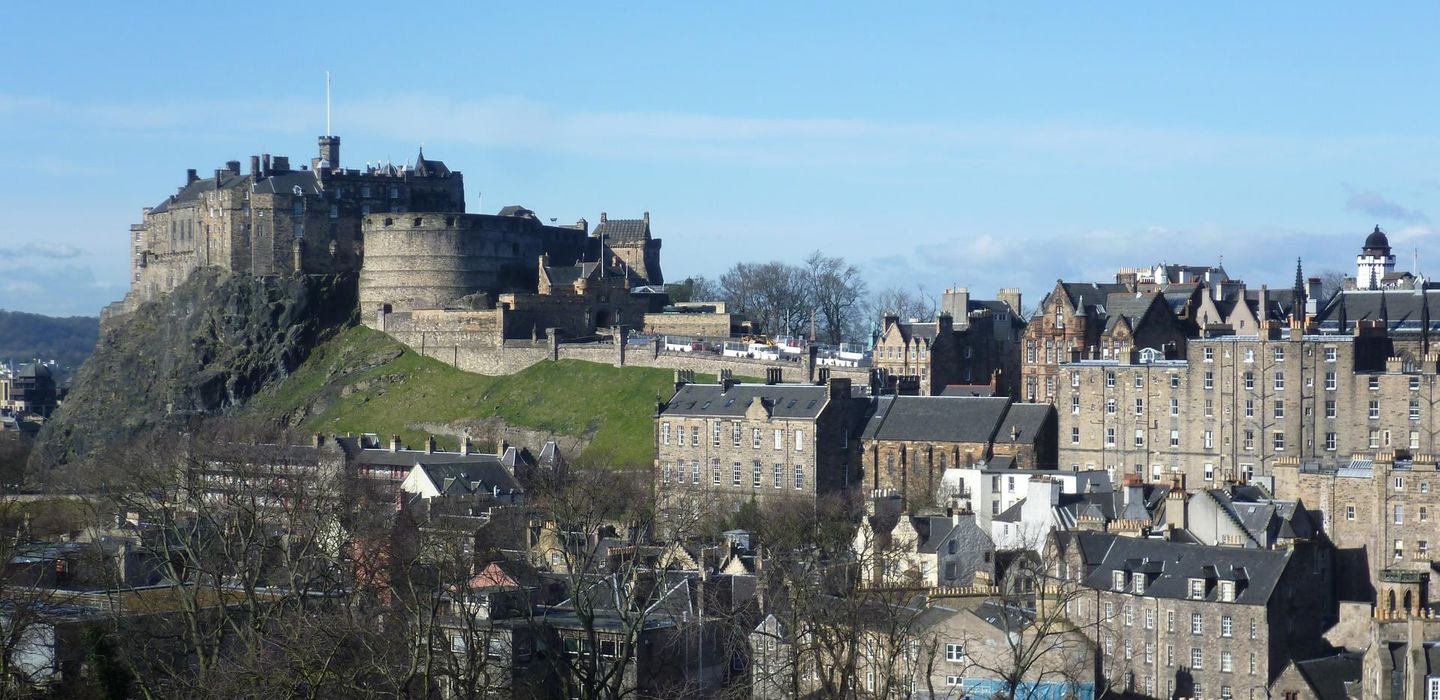
The Witches' Well is a cast iron memorial drinking fountain located at the foot of Edinburgh Castle, commemorating the thousands of accused witches, mostly women, who were persecuted and executed in Scotland between the 15th and 18th centuries. Designed in 1894 by artist John Duncan and commissioned by Sir Patrick Geddes, the monument features symbolic carvings reflecting the dual nature of knowledge and witchcraft. It stands as a poignant reminder of a dark chapter in Scottish history.
Daily 10:00–18:00Time to spend 0.2–1 hr

Centre of Scotland Stone
The Centre of Scotland Stone is a notable landmark located on a quiet patch of grass beside the Glentruim Road near Newtonmore in the Scottish Highlands. Marking what locals consider the geographical heart of mainland Scotland, this five-tonne gneiss boulder was installed in 2015 by community members to replace a lost Ordnance Survey plaque. Surrounded by scenic Highland landscapes and steeped in local myths and history, it offers a unique glimpse into Scotland’s identity and heritage.
Time to spend 0.5–1.5 hrs

Scottish National War Memorial
Nestled within Edinburgh Castle's historic walls, the Scottish National War Memorial stands as Scotland's solemn shrine of remembrance for all those who have fallen in service from World War I to the present day. This deeply moving space honors the sacrifice of Scottish soldiers, sailors, and airmen through its dignified architecture and the Roll of Honour containing thousands of names. Free entry is available for memorial-only visits, making it an accessible place of reflection for all visitors seeking to pay respects to Scotland's war dead.
Daily 9:30–17:00Time to spend 0.8–1.5 hrs

Mercat Cross
Edinburgh's Mercat Cross, situated on the Royal Mile outside St Giles’ Cathedral, is a historic monument symbolizing the city's medieval market heritage and civic importance. Originally established in 1365 and rebuilt in 1885 using parts of the 1617 cross, it served as a site for royal proclamations, public announcements, and even punishments. The octagonal stone cross, topped by a unicorn holding the Scottish flag, remains a focal point of Edinburgh's Old Town, blending centuries of history with ongoing cultural significance.
Time to spend 0.5–1.5 hrs

Spirit of Scotland Monument
The Spirit of Scotland Monument, unveiled in 2004 near Darvel, East Ayrshire, is a striking steel silhouette of William Wallace. It commemorates two pivotal battles fought at Loudoun Hill during the Wars of Scottish Independence, symbolizing Scotland's enduring spirit and historic resilience.
Open 24 hoursTime to spend 0.5–2 hrs

Tigh-na-sleubhaich
Tigh-na-sleubhaich is a striking ruin of a traditional Scottish crofter’s cottage located near Kinlochleven, Scotland. Nestled in the remote Lairigmor valley, this evocative site is a well-photographed highlight on the West Highland Way hiking trail, offering panoramic views of surrounding mountains and a glimpse into Highland rural history. Its atmospheric remains invite reflection on the rugged life once lived here amid spectacular natural scenery.
Open 24 hoursTime to spend 1–3 hrs

The Star Pyramid
The Star Pyramid, also known as Salem Rock, is a striking sandstone pyramid monument built in 1863 by William Drummond. Located in the Old Town Cemetery near Stirling Castle, it commemorates those who suffered martyrdom for Scottish civil and religious liberty. The pyramid stands on a stepped base surrounded by wrought iron railings, featuring marble Bibles at each face and inscriptions referencing key Presbyterian texts.
Open 24 hoursTime to spend 0.5–1 hr

Newark Castle
Newark Castle, near Selkirk in the Scottish Borders, is a 15th-century ruined tower house steeped in turbulent history. Originally built by the Douglas family and later owned by the Buccleuch family, it witnessed sieges, brutal massacres, and royal connections. Set in peaceful grounds near Bowhill House, the castle’s remains offer a haunting glimpse into Scotland’s medieval past and the violent conflicts that shaped the Borders region.
Open 24 hoursPrice level $Time to spend 1–2.5 hrs

Highlands Scotland
One of Scotland's most iconic and photographed castles, Eilean Donan stands majestically on a small island where three great sea lochs converge in the western Highlands. This 13th-century fortress, dramatically reconstructed in the early 20th century, commands breathtaking views of Loch Duich, Loch Long, and Loch Alsh, surrounded by forested mountains. Accessible via a picturesque stone bridge, the castle offers visitors a chance to explore restored interiors, climb to panoramic viewpoints, and experience one of Scotland's most recognizable landmarks.
Open 24 hoursPrice level $$Time to spend 1–2 hrs

Barsalloch Fort - Historic Scotland
Perched on a dramatic 100-foot cliff edge, Barsalloch Fort is a 2,000-year-old Iron Age promontory fort offering sweeping views across the Solway Firth towards the Isle of Man and Northern Ireland. This ancient settlement of the Novantae tribe features a distinctive D-shaped defensive enclosure with a 33-foot-wide ditch and earthen ramparts. Free to visit year-round, the site combines archaeological intrigue with spectacular coastal scenery, making it an essential stop for history enthusiasts exploring southwest Scotland's rich prehistoric heritage.
Open 24 hoursTime to spend 0.8–1.5 hrs

Repentance Tower
Perched atop Trailtrow Hill near Hoddom in Lockerbie, Repentance Tower is a striking 16th-century watchtower built by John Maxwell, 4th Lord Herries. Originally constructed in 1565 as a defensive lookout for Hoddom Castle, it bears the enigmatic inscription 'Repentance' above its entrance. Surrounded by historic gravestones and offering panoramic views over the Solway Firth and surrounding countryside, this tower embodies centuries of border history and local lore.
Open 24 hoursTime to spend 1–2.5 hrs

Brow Well
Brow Well, near Ruthwell in Dumfries, Scotland, is a historic spring famed for its iron-rich waters believed to have healing properties since the 1700s. The well is notably linked to Robert Burns, who visited in 1796 seeking relief from rheumatic fever. The site offers a glimpse into local heritage with its rustic charm beside the Solway Firth, attracting visitors interested in history, nature, and Burnsian lore.
Time to spend 0.5–1.5 hrs

Monument to the Scottish Parliament
A striking granite monument perched on Regent Road overlooking Edinburgh's Holyrood area, this sculptural tribute commemorates Scotland's devolved parliament. Designed to capture the spirit of democratic renewal, the monument stands as a modern landmark on the slopes of Calton Hill, offering panoramic views across the city and serving as a symbolic gateway to the seat of Scottish governance below.
Open 24 hoursTime to spend 0.5–1.5 hrs

Fort Augustus Lighthouse
The Fort Augustus Lighthouse, also known as the Pepperpot Lighthouse, is one of Britain's smallest lighthouses, built in 1840 at the entrance to the Caledonian Canal from South Loch Ness. This charming, pepper shaker–shaped lighthouse stands on the east bank of the canal, marking a historic maritime gateway and offering picturesque views of Loch Ness and the surrounding Highlands.
Open 24 hoursTime to spend 0.5–1 hr

Historic Environment Scotland
Longmore House on Salisbury Place in Edinburgh's Newington district is the headquarters of Historic Environment Scotland, the lead public body for Scotland's historic environment. Originally built as Longmore Hospital in 1880, this Category B listed building features neoclassical architecture and served as a pioneering institution for patients with chronic conditions until 1991. Today it functions as administrative offices and a cultural heritage hub, welcoming visitors interested in Scotland's designated heritage and collections.
Mon–Fri 9:00–17:00Time to spend 0.5–2 hrs

Stone circle
Nestled near Easdale in the scenic Perthshire countryside, the Croft Moraig Stone Circle is a captivating prehistoric monument dating back to the Neolithic era. This ancient double stone circle, approximately 12 meters in diameter, features a dozen large standing stones and additional outliers, evoking mystery and reverence. Surrounded by tranquil farmland and accessible via a quiet country lane, it offers visitors a glimpse into Scotland’s deep archaeological heritage and the enigmatic rituals of its early inhabitants.
Open 24 hoursTime to spend 0.5–1.5 hrs

Scottish-American Soldiers Monument
The Scottish-American Soldiers Monument in Edinburgh is a unique historical landmark commemorating Scots who served in the American Civil War (1861–65). It stands as the only memorial of its kind outside the United States, featuring statues of Abraham Lincoln and a freed African-American soldier, symbolizing liberty and emancipation. Located in Old Calton Cemetery, this poignant monument honors the bravery and sacrifice of Scottish-American soldiers and reflects deep transatlantic ties.
Open 24 hoursTime to spend 0.5–1.5 hrs

Loupin Stanes
Two remarkable prehistoric stone circles situated along the River Esk near Eskdalemuir in the Scottish Borders. Loupin' Stanes features a compact circle of roughly 10 stones with distinctive entrance markers, while Girdle Stanes—a larger, partially eroded semicircle—lies 650 metres downstream. Both date to the Late Neolithic to Early Bronze Age (approximately 2500–1500 BC). The unusual proximity of these two circles, combined with mysterious recumbent stones between them, continues to intrigue archaeologists. Easily accessible from the main road with parking nearby, these ancient monuments offer a tangible connection to Scotland's prehistoric ritual landscape.
Time to spend 1–3 hrs

Clan MacLeod Memorial Cairn
Perched on a windswept headland on the Isle of Skye, the Clan MacLeod Memorial Cairn is a simple stone monument honoring the history and legacy of Clan MacLeod. Located near the ruins of Trumpan Church, it commemorates the clan’s deep roots in Skye and their enduring presence in Scottish history. The cairn offers sweeping views across the sea to the Outer Hebrides and stands as a quiet, reflective spot for visitors exploring Skye’s rich Gaelic heritage.
Open 24 hoursTime to spend 0.5–1.5 hrs

Northernmost Point Of UK
The northernmost point of the UK is located at Skaw, a tiny settlement on the island of Unst in the Shetland Islands. This remote headland marks the furthest north you can go in the United Kingdom, surrounded by rugged coastline, wild seas, and dramatic natural beauty. The area is steeped in Norse heritage and offers access to iconic landmarks like the Muckle Flugga lighthouse, Britain’s most northerly lighthouse, and the nearby Out Stack, the northernmost rock of the UK.
Open 24 hoursPrice level $Time to spend 1–4 hrs

Greyfriars Burial Ground
A Category A listed cemetery in Perth, Scotland, established in 1580 on the grounds of a former Franciscan monastery. Home to one of Scotland's finest collections of historic gravestones, including the oldest stone dating to 1580, Greyfriars Burial Ground offers visitors a window into centuries of Perth's social and cultural history. The cemetery closed to new burials in 1978 and remains a peaceful testament to medieval and post-Reformation Scotland.
Daily 8:00–16:00Time to spend 0.8–2 hrs

Hirendean Castle
Hirendean Castle is a ruined 16th-century peel tower nestled in the tranquil Scottish countryside near Heriot. Once a stronghold of the Kerr family, this historic site offers evocative stone ruins perched atop a raised mound overlooking the South Esk valley. Surrounded by serene walking paths and expansive gardens, it invites visitors to explore its mysterious past and scenic landscape steeped in local legends and natural beauty.
Time to spend 0.5–2 hrs

Mar's Wark
Mar's Wark is a striking 16th-century Renaissance townhouse ruin in Stirling, Scotland, originally built by John Erskine, Earl of Mar, as a grand family residence. Its impressive façade, adorned with heraldic panels and decorative sculptures, stands beside the Holy Rude Churchyard on Broad Street. Once a symbol of aristocratic power and later used as barracks and a workhouse, Mar's Wark offers a free, evocative glimpse into Scotland's rich history and architectural heritage.
Time to spend 0.5–1.5 hrs

National memorial of Scotland
A solemn and stirring tribute in Inverness dedicated to Scotland’s rich history and cultural heritage, this memorial offers a place for reflection amidst beautiful riverside surroundings. Visitors can explore inscriptions that tell stories of sacrifice and national identity, set within a peaceful garden space near the River Ness. It’s a meaningful stop for those wanting to connect with Scotland’s past in a quiet, contemplative setting.
Open 24 hoursTime to spend 0.5–1.5 hrs

The India Cross
A striking Celtic cross monument stands on Edinburgh Castle's esplanade, commemorating the 78th Highlanders who fell during the Indian Rebellion of 1857–58. Erected in 1862 by public subscription, this eight-foot sandstone memorial honours soldiers whose conduct earned widespread recognition. The site offers visitors a contemplative space to reflect on a pivotal moment in British and Indian history, with interpretive signage providing historical context about the siege of Lucknow and the broader rebellion.
Open 24 hoursTime to spend 0.2–1 hr

Little Dalton Kirk
Little Dalton Kirk is a historic, roofless church ruin near Lockerbie, Scotland, offering a poignant glimpse into early 17th-century ecclesiastical heritage. Abandoned since the 1600s, its secluded rural setting invites reflection on Scotland’s religious and community history amid tranquil countryside surroundings.
Open 24 hoursTime to spend 0.5–1.5 hrs

Strath Wonderwall Mural - Land Ship
The Strath Wonderwall Mural is the UK's largest mural, covering over 1,000 square metres across the Graham Hills Building at the University of Strathclyde. Created in 2014 to celebrate the university's 50th anniversary, this monumental street art features vibrant imagery including the historic Land-Ship navigation bridge, the Dansken equatorial telescope, and tributes to the university's people and achievements. Located on George Street in Glasgow's city centre, this iconic artwork blends artistic brilliance with educational history.
Open 24 hoursTime to spend 0.5–2 hrs

Mungo Park Monument
The Mungo Park Monument in Selkirk commemorates the life and achievements of Mungo Park, the Scottish explorer who charted the Niger River in West Africa in the late 18th century. Erected in 1859 and enhanced with bronze figures and bas-reliefs in the early 20th century, this historic monument stands at 9 Back Row, Selkirk, honoring Park’s daring expeditions and enduring legacy in exploration history.
Time to spend 0.5–1.5 hrs

Seamark
Seamark is a historical landmark located in Kelty, a former coal mining village in Fife, Scotland. Nestled within a region rich in mining heritage, Seamark offers visitors a glimpse into Kelty’s past, surrounded by serene natural beauty. The site reflects the village’s transformation from a thriving mining community to a place of remembrance and quiet reflection.
Time to spend 0.5–1.5 hrs

Original site of Loch Doon Castle
The Original Site of Loch Doon Castle marks the historic location of a unique 13th-century polygonal castle originally built on an island within Loch Doon, Ayrshire, Scotland. Constructed by the Bruce earls of Carrick, possibly Robert the Bruce or his father, the castle played a pivotal role during the Scottish Wars of Independence. In the 1930s, to protect it from rising waters caused by a hydroelectric dam, the castle was dismantled and reconstructed on the nearby shore, preserving its distinctive eleven-sided curtain wall and medieval heritage.
Time to spend 0.5–2 hrs

Lanark Castle Marker
The Lanark Castle Marker commemorates the site of the original Lanark Castle, a 12th-century fortress built during the reign of King David I. Although the castle itself has long been demolished, the marker stands near the historic hilltop overlooking the River Clyde, marking the birthplace of the royal burgh of Lanark in Scotland.
Time to spend 0.5–1.5 hrs
Explore Scotland on the map
A handpicked selection of must-see spots in Scotland, mapped for you.
More about Scotland
Scotland travel guide
Explore Scotland’s historic cities, Highland mountains, island coasts, ancient sites, creative culture and distinctive food across a richly varied country.
Tell me more about ScotlandMore to explore in Scotland

 Best attractions in Scotland

 Best shops in Scotland

 Best bars in Scotland

 Best restaurants in Scotland

 Best nightclubs in Scotland

 Best experiences in Scotland

 Best hotels in Scotland
Explore more

Explore more of United Kingdom
Discover the United Kingdom: A blend of rich history, stunning landscapes, and vibrant cities, offering a unique travel experience for every visitor.
Explore United Kingdom
Getting your guide ready…
We are putting together a fresh copy of the Scotland guide. This can take up to a minute.
This can take a few moments. If your browser asks, choose Allow so the download can start. You'll find the guide in your Downloads folder.
Nothing happened? Download it again
Sorry, the guide is taking longer than usual. Please try again in a minute, or get it by email instead.