

Caldea Travel Guide - Free Web & App
Your ultimate guide to Caldea. Discover top landmarks, proposed trips, and local tips. Free on the web or via the Evendo companion app.


Caldea in Andorra combines thermal waters, striking architecture, spa rituals and mountain-town relaxation at Escaldes-Engordany, near the capital.
Thermal Waters in the Pyrenees
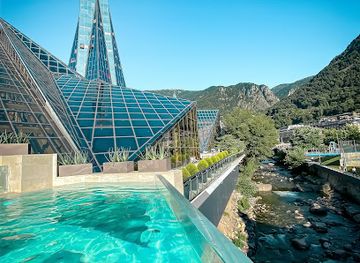
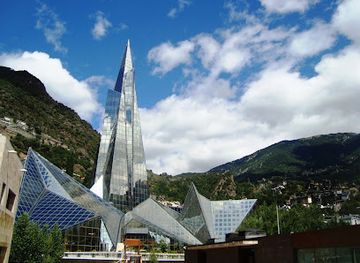
Caldea is Andorra’s best-known thermal bathing complex, rising in the urban valley of Escaldes-Engordany beside the Valira river and close to Andorra la Vella. Rather than being a separate rural landscape, the destination is a compact wellness attraction embedded within the country’s main commercial and cultural centre. Its distinctive silhouette, dominated by a glass-clad tower, marks the entrance to a complex built around Andorra’s naturally warm mineral waters.Read more about Caldea
Architecture and Water Experiences
Exploring Escaldes-Engordany
Getting to and around Caldea
How to get there
Transportation
Best attractions in Caldea
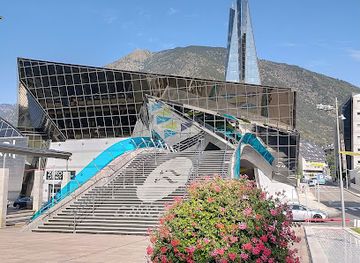
The principal attraction is Caldea itself, whose thermal bathing areas combine indoor pools, outdoor water spaces, hydrotherapy features and relaxation environments beneath a distinctive glass tower. Different sections provide contrasting experiences, from family-oriented bathing to quieter adult wellness and treatment areas, subject to current access rules. The complex’s architecture is an attraction in its own right, standing apart from the older stone-and-slate character associated with Andorra’s mountain villages. Immediately beyond Caldea, Escaldes-Engordany offers urban walks, cafés, shopping and cultural visits, including the Museu Carmen Thyssen Andorra. Andorra la Vella, adjoining the parish, adds historic streets, commercial avenues and national institutions, while the wider country’s valleys, viewpoints and ski areas are accessible as separate excursions rather than attractions within Caldea itself.
-
Park
Plaça de Lalín
Discover Plaça de Lalín in Les Escaldes: a serene park celebrating the sister city connection with Lalín, Spain. A perfect spot for relaxation and local culture.
-
Park
Parc Infantil Kurniachev
A charming family park in Les Escaldes, Andorra, offering play structures, green spaces, and scenic mountain views for a delightful retreat.
-
Park
Pipi-can
Escape to Pipi-can Park in Les Escaldes for a refreshing retreat amidst tranquil greenery and well-maintained paths. A perfect natural getaway.
-
 Park
Parkplaza Gattoni
Find serenity in the heart of Les Escaldes at Plaza Gattoni, a peaceful park perfect for relaxation and enjoying nature's tranquility.
Best landmarks in Caldea
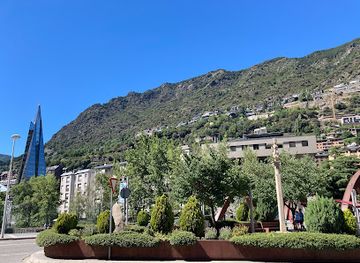
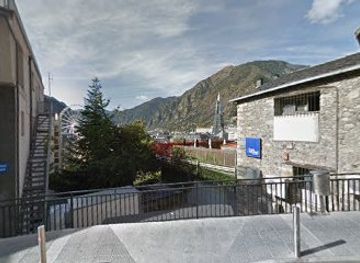
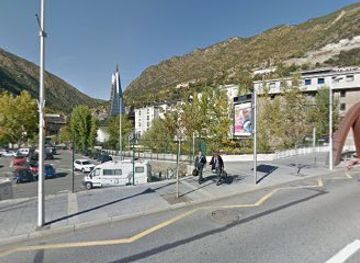
Caldea’s glass tower is the defining landmark of Escaldes-Engordany, a conspicuous contemporary structure that expresses the parish’s long association with thermal water in an entirely modern form. The complex’s angular volumes and illuminated surfaces contrast with the surrounding Pyrenean valley and the stone architecture found in older Andorran settlements. The Valira river and the steep valley sides provide the immediate geographical setting, while the thermal springs represent the natural foundation of the destination’s identity. Nearby, but outside Caldea itself, the Sant Pere Màrtir church and the Museu Carmen Thyssen Andorra add religious and cultural reference points within Escaldes-Engordany. The old quarter of Andorra la Vella, also adjoining rather than part of the spa complex, offers a contrasting historic urban landmark environment.
-
Thermal baths
Caldea Spa
Experience thermal wellness at Caldea, Europe's largest mountain spa, where innovative architecture meets the healing power of Andorra's natural hot springs.
-
Tourist attraction
Andorra Freetours
Explore Andorra's culture and history with guided tours, unveiling hidden gems and vibrant traditions in the heart of the Pyrenees.
-
Park
Parc de la Mola
Escape to Parc de la Mola in Les Escaldes: a peaceful retreat with scenic views, lush greenery, and tranquil walking paths.
Explore Caldea on the map
Plan your trip on one map. See where the top attractions, landmarks, restaurants and hotels are, and book hotels and experiences in a few clicks.
Best hotels in Caldea
Best restaurants in Caldea
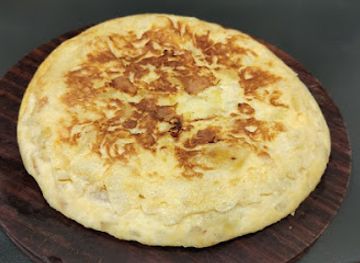
Caldea is surrounded by the broad dining offer of Escaldes-Engordany and neighbouring Andorra la Vella, with cafés, bakeries, hotel restaurants, casual eateries and more formal restaurants concentrated along the central valley’s commercial streets. Visitors can encounter Pyrenean and Catalan influences in dishes using mountain produce, cured meats, cheeses, vegetables and hearty seasonal cooking, alongside international menus shaped by Andorra’s role as a cosmopolitan shopping and tourism centre. The spa complex may provide food and refreshment options, but arrangements can vary by facility and session. Independent dining is more widely available outside the complex, particularly around the main urban avenues, while visitors travelling into smaller parishes should expect fewer choices and plan meals around their route.
-
Fondue
Cheese's Art Andorra
Discover the ultimate fondue experience at Cheese's Art Andorra - where cheese lovers unite in a cozy atmosphere.
-
Restaurant
Don Félix Lounge
Experience delightful cuisine at Don Félix Lounge in Les Escaldes—where every meal is crafted with passion and precision.
-
Restaurant
L'informal
Discover the flavors of Andorra at L'informal, where local cuisine meets international flair in a cozy setting.
-
Seafood
Restaurant Beluga
Experience the best of Mediterranean flavors at Restaurant Beluga in Les Escaldes – fresh seafood, delightful tapas, and warm hospitality await you.


Best bars in Caldea
Caldea is associated with relaxation rather than nightlife, and its evening atmosphere centres on thermal bathing, treatments and quiet time rather than clubs or late entertainment. Escaldes-Engordany and adjoining Andorra la Vella provide the country’s broadest concentration of bars, hotel lounges, cafés and informal evening venues, although the central valley is not generally presented as a major clubbing destination. Traditional restaurants and bars can offer a more local evening experience, while some hotels provide their own lounges or social spaces. Venue opening patterns and entertainment programmes change, so visitors should check locally rather than assume that performances or late-night services operate every day.
-
Restaurant
Restaurant Jaleo
Discover the vibrant flavors of Spanish cuisine at Restaurant Jaleo in Les Escaldes, a must-visit tapas bar and grill in the heart of Andorra.
-
Bar
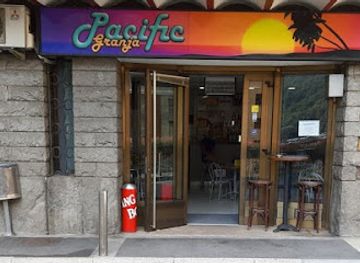
Granja Pacífic
Experience the essence of Andorran cuisine at Granja Pacífic, a cozy bar and restaurant in Les Escaldes offering delicious local dishes and drinks.
-
Wine bar
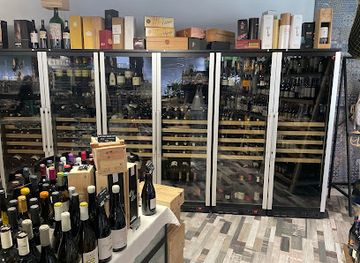
Llepafils wines and food
Experience the rich flavors of Andorra at Llepafils Wines and Food, a cozy wine bar offering exquisite local wines and traditional culinary delights.
-
Bar
BAR AQUÍ T´ESPERO
Experience the heart of Les Escaldes at BAR AQUÍ T´ESPERO, where local drinks and warm hospitality create lasting memories.
Best nightclubs in Caldea
Caldea is associated with relaxation rather than nightlife, and its evening atmosphere centres on thermal bathing, treatments and quiet time rather than clubs or late entertainment. Escaldes-Engordany and adjoining Andorra la Vella provide the country’s broadest concentration of bars, hotel lounges, cafés and informal evening venues, although the central valley is not generally presented as a major clubbing destination. Traditional restaurants and bars can offer a more local evening experience, while some hotels provide their own lounges or social spaces. Venue opening patterns and entertainment programmes change, so visitors should check locally rather than assume that performances or late-night services operate every day.
-
Night club
Club ENERGY - Bar Bowling Billiard Karaoke
Discover the vibrant nightlife at Club ENERGY in Les Escaldes, featuring bowling, billiards, and karaoke for an unforgettable evening.

Best shops in Caldea
Shopping is one of the principal complementary activities around Caldea, with Escaldes-Engordany and neighbouring Andorra la Vella forming Andorra’s main commercial area. The surrounding streets contain department stores, specialist retailers, perfumeries, fashion shops, sports outlets, electronics businesses, food shops and smaller independent premises, rather than a retail scene confined to the spa itself. Visitors interested in regional products can look for Andorran foods, cheeses, cured meats, honey, preserves, wine and craft goods, although selection varies between shops and some products are imported. Traditional craft purchases and local produce are more likely to be found through specialised retailers or markets than through a single permanent artisan quarter. Check current customs allowances before carrying substantial purchases across the border.
-
Gift shop
MINISO Andorra
Explore MINISO Andorra for chic gifts and trendy home decor, perfect for capturing memories of your Andorra adventure.
-
Coffee store
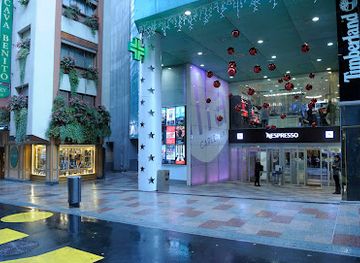
Boutique Nespresso Illa Carlemany
Experience the ultimate coffee indulgence at Boutique Nespresso Illa Carlemany, where quality meets sustainability in the heart of Les Escaldes.
-
Sunglasses store
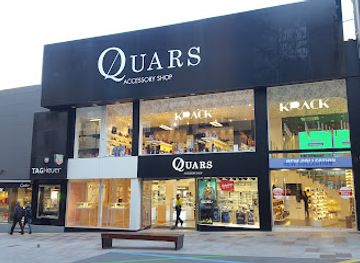
Quars Escaldes II
Discover style and elegance at Quars Escaldes II, where fashion meets function in the heart of Escaldes-Engordany.
-
Convenience store
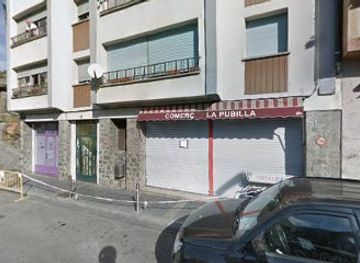
Alimentación la Pubilla
Experience the essence of Andorran culture at Alimentación la Pubilla, your go-to convenience store for local snacks and essentials.

Get your free copy of our complete guide to Caldea, delivered straight to you.
Everything on this page, from attractions and restaurants to essentials and local phrases, in one PDF you can read offline, print or share.
Already have an account? Sign in
Your Caldea guide is ready.
We'll send it to · Not you? Sign out

Getting your guide ready…
We are putting together a fresh copy of the Caldea guide. This can take up to a minute.
This can take a few moments. If your browser asks, choose Allow so the download can start. You'll find the guide in your Downloads folder.
Nothing happened? Download it again
Sorry, the guide is taking longer than usual. Please try again in a minute, or get it by email instead.
Caldea essentials
Currency and Payment
Safety
Emergency Situations
Do's and Don'ts
Local Tips
From Eve
Local phrases worth knowing
You don't need to get them perfect. A few words go a long way, and locals appreciate the effort.
Basics
| English | Local | Say it |
|---|---|---|
| Hello | Hola | [o-la] |
| Goodbye | Adéu | [a-deu] |
| Yes | Sí | [si] |
| No | No | [no] |
| Please/You're welcome | Si us plau/De res | [si us plau/de res] |
| Thank you | Gràcies | [gra-sies] |
| Excuse me/Sorry | Perdoni/Perdó | [per-do-ni/per-do] |
| How are you? | Com estàs? | [com es-tas] |
| Fine. And you? | Bé. I tu? | [be/i tu] |
| Do you speak English? | Parles anglès? | [par-les ang-les] |
| I don't understand | No entenc | [no en-tenk] |
Eating & Drinking
| English | Local | Say it |
|---|---|---|
| I'd like to see the menu, please | M'agradaria veure la carta, si us plau | [ma-gra-dia veu-re la kar-ta/si us plau] |
| I don't eat meat | No menjo carn | [no men-jo karn] |
| Cheers! | Salut! | [sa-lut] |
| I would like to pay, please | Voldria pagar, si us plau | [vol-dria pa-gar/si us plau] |
Emergencies
| English | Local | Say it |
|---|---|---|
| Help! | Ajuda! | [a-zu-da] |
| Go away! | Vés-te'n! | [ves-ten] |
| Call the Police! | Truca a la policia! | [tru-ka a la po-li-sia] |
| Call a doctor! | Truca un metge! | [tru-ka un met-je] |
| I'm lost | Estic perdut | [es-tik per-dut] |
| I'm ill | Estic malalt | [es-tik ma-lat] |
Shopping
| English | Local | Say it |
|---|---|---|
| I'd like to buy... | Voldria comprar... | [vol-dria kom-prar] |
| I'm just looking | Només estic mirant | [no-mes es-tik mi-rant] |
| How much is it? | Quant val? | [kwan val] |
| That's too expensive | Això és massa car | [ai-tso es ma-sa kar] |
| Can you lower the price? | Podria baixar el preu? | [po-dria bai-xar el prew] |
Time & Numbers
| English | Local | Say it |
|---|---|---|
| What time is it? | Quina hora és? | [ki-na o-ra es] |
| It's one o'clock | És la una en punt | [es la u-na en punt] |
| Half past (10) | Dos quarts de dotze | [dos kwarts de dot-ze] |
| Morning | Matí | [ma-ti] |
| Afternoon | Tarda | [tar-da] |
| Evening | Vespre | [ves-pre] |
| Yesterday | Ahir | [a-ir] |
| Today | Avui | [a-vui] |
| Tomorrow | Demà | [de-ma] |
| 1 | Un | [un] |
| 2 | Dos | [dos] |
| 3 | Tres | [tres] |
| 4 | Quatre | [kwa-tre] |
| 5 | Cinc | [sink] |
| 6 | Sis | [sis] |
| 7 | Set | [set] |
| 8 | Vuit | [vuit] |
| 9 | Nou | [nou] |
| 10 | Deu | [deu] |
Transport & Directions
| English | Local | Say it |
|---|---|---|
| Where's a/the...? | On és un/el... | [on es un/el] |
| What's the address? | Quina és l'adreça? | [ki-na es la-dre-sa] |
| Can you show me (on the map)? | Em pots ensenyar (al mapa)? | [em pots en-se-nyar (al ma-pa)] |
| When's the next (bus)? | Quan passa el proper (autobús)? | [kwan pas-sa el pro-per (au-to-bus)] |
| A ticket (to ....) | Un bitllet (a ...) | [un bi-tllet (a ...)] |
History of Caldea
A Valley Shaped by Thermal Waters
Escaldes-Engordany developed around warm mineral springs associated with the fractured geology of the Pyrenees. The name Escaldes is linked to hot water, and these springs helped distinguish the settlement from other communities in Andorra’s steep mountain valleys. Thermal water was used locally before the creation of the modern spa complex, forming part of the area’s identity and giving the urban centre a distinctive relationship with the ground beneath it. This natural resource should be understood within Andorra’s wider mountain setting, where geological structure, river valleys and mineral waters have influenced settlement and economic activity.
From Rural Parish to Urban Centre
For much of its history, the area around Escaldes-Engordany was shaped by the agricultural and pastoral economy of Andorra, with communities occupying narrow valley floors and lower slopes. Roads, trade and the gradual growth of tourism transformed the central valley during the nineteenth and twentieth centuries. Escaldes became increasingly connected with Andorra la Vella, and the two urban areas developed as the country’s principal concentration of commerce, administration and visitor services. The parish’s thermal springs offered an additional focus for visitors as Andorra’s reputation as a mountain destination expanded.
The Creation of Caldea
Caldea opened in 1994, turning Andorra’s thermal-water tradition into a major contemporary visitor attraction. Its architecture, associated with the French designer Jean-Michel Ruols, deliberately departed from the conventional image of a spa: the prominent glass tower and angular forms created a new visual landmark for Escaldes-Engordany. The project reflected Andorra’s ambition to diversify tourism beyond skiing and mountain scenery, offering an all-season experience in the central valley. Caldea’s opening also reinforced the thermal identity already embedded in the parish’s name and local history.
Expansion of the Wellness Destination
Caldea subsequently developed a broader range of experiences, including more specialised wellness and treatment environments and facilities intended for families. These additions allowed the complex to serve different audiences while retaining thermal bathing as its central purpose. The surrounding parish continued to evolve as a commercial and hospitality centre, with accommodation, restaurants, retail and cultural attractions complementing the spa. Today, Caldea represents both a continuation of Escaldes’ longstanding thermal tradition and a modern chapter in Andorra’s tourism history.
Caldea in Photos
Browse through our photo collection highlighting the charm and character of the destination.
Neighbouring destination travel guides
The closest destinations to Caldea, if you have time for more than one.
-

-

-

-

-


Swipe for more destinations
Explore more

Explore more of Valira del Nord Valley
Discover the breathtaking beauty of Valira del Nord Valley in Andorra, where stunning landscapes, outdoor adventures, and rich culture await in a serene alpine setting.
Explore Valira del Nord Valley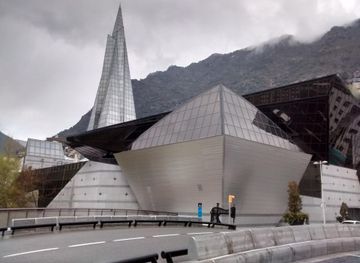
Explore more of Andorra
Explore Andorra: A mountain paradise offering stunning landscapes, world-class skiing, tax-free shopping, and rich cultural experiences in the heart of the Pyrenees.
Explore Andorra