Best Landmarks in Copenhagen Region
Planning a trip to Copenhagen Region? Discover the best landmarks in Copenhagen Region with history, expert tips, and routes. Free on web or the Evendo app.


The best landmarks in Copenhagen Region
- Top rated
- Closest to the centre
- Price level: low to high
- Time to spend: shortest first
- A–Z
25 landmarks
-
Observatory4.5★23,445 reviews
The Round Tower
A 17th-century astronomical observatory and cultural landmark in Copenhagen's Latin Quarter, featuring a unique 200-meter spiral ramp, panoramic city views, and a historic library hall hosting rotating exhibitions and events. Built by King Christian IV in 1642, the tower remains an active observatory and one of Copenhagen's most recognizable monuments.
Daily 10:00–20:00Price level $Time to spend 1–2.5 hrs
-
Sculpture4.1★27,479 reviews
The Little Mermaid
Perched on a waterside rock along Copenhagen’s Langelinie promenade, The Little Mermaid is a small bronze statue with a huge symbolic presence. Unveiled in 1913 and inspired by Hans Christian Andersen’s fairy tale, Edvard Eriksen’s 1.25 m figure gazes out over the harbor, embodying longing, transformation, and Denmark’s maritime identity. Free to visit at any hour, it’s an essential stop on a stroll past Kastellet and the harborfront, best enjoyed in soft early morning or evening light.
Time to spend 0.5–1.5 hrs
-
Plaza4.4★20,216 reviews
City Hall Square
Rådhuspladsen, Copenhagen's grand civic heart, is a vibrant public plaza anchored by the iconic City Hall—a National Romantic masterpiece completed in 1905. The square features the Dragon Fountain, sculptures including a statue of Hans Christian Andersen, and marks the beginning of Strøget, Europe's longest pedestrian shopping street. A major gathering space for events, celebrations, and demonstrations, it seamlessly blends historic architecture with contemporary urban energy.
Time to spend 0.5–3 hrs
-
Plaza4.4★17,291 reviews
Kongens Nytorv
Kongens Nytorv, or 'The King's New Square,' is Copenhagen's most iconic public plaza and a vital cultural hub in the heart of the old town. Dating back to the 17th century, this grand square is surrounded by prestigious institutions including the Royal Danish Theatre, the elegant Hotel D'Angleterre, and Kunsthal Charlottenborg art gallery. At its center stands an equestrian statue of King Christian V from 1688—Denmark's oldest royal equestrian sculpture. The square serves as a major transport hub with metro access and is steps away from the colorful Nyhavn canal and Strøget, Europe's longest pedestrian shopping street. Whether exploring world-class architecture, enjoying seasonal markets, or simply soaking in Copenhagen's historic atmosphere, Kongens Nytorv offers an unforgettable introduction to the city's character and charm.
Time to spend 0.5–3 hrs
-
Castle4.6★14,616 reviews
Kronborg Slot
Kronborg Castle is a magnificent Renaissance fortress in Helsingør, Denmark, immortalized as Elsinore in Shakespeare's Hamlet. Built between 1574 and 1585 by King Frederik II, this UNESCO World Heritage Site commands the Øresund Strait between Denmark and Sweden. Visitors explore grand ballrooms, royal chambers, underground casemates, and the legendary statue of Holger the Dane while enjoying sweeping views across the sound. Located just 45 minutes from Copenhagen, it remains one of Northern Europe's most important Renaissance castles.
Daily 10:00–17:00Price level $$Time to spend 2–3.5 hrs
-
Bridge4.6★6,922 reviews
Øresund Bridge
The Øresund Bridge is a 16-kilometre combined rail and road link connecting Copenhagen, Denmark and Malmö, Sweden across the Øresund Strait. Opened in 2000, this architectural marvel comprises an 8-kilometre cable-stayed bridge, a 4-kilometre underwater tunnel, and an artificial island. It carries over 60,000 daily travellers and is Europe's longest combined road-rail bridge, offering spectacular views of the Baltic Sea and serving as both a vital transport corridor and iconic symbol of Nordic cooperation.
Open 24 hoursPrice level $$Time to spend 0.2–2 hrs
-
Apartment complex4.4★7,350 reviews
Turning Torso
Rising 190 meters above Malmö’s Western Harbour, Turning Torso is a neo‑futurist skyscraper and Scandinavia’s most famous twisted tower. Designed by Santiago Calatrava and completed in 2005, its nine stacked cubes rotate a full 90 degrees from base to top, creating a striking spiral form that has become the city’s defining landmark. While the building is primarily residential and not generally open to casual visitors, its dramatic silhouette, waterfront setting and surrounding promenades make it a must‑see for architecture lovers and urban explorers.
Daily 10:00–20:00Time to spend 0.5–1.5 hrs
-
Opera house4.6★6,467 reviews
Copenhagen Opera House
Rising from the edge of Copenhagen’s harbor on Holmen, the Copenhagen Opera House is a striking blend of bold modern design and meticulous craftsmanship. Commissioned by the A.P. Møller Foundation and opened in 2005, this state-of-the-art venue is home to the Royal Danish Opera and one of the most advanced stages in Europe. Visitors come for world-class performances, sweeping waterfront views, dramatic architecture, and the atmospheric public plazas that wrap around the building.
Price level $$Time to spend 1–4 hrs
-
Fountain4.4★2,871 reviews
Stork Fountain
Set at the heart of Copenhagen’s old town on Amagertorv, the bronze Stork Fountain is a beloved 1894 landmark and classic meeting point along the Strøget pedestrian street. Three elegant storks poised as if about to take flight rise above a circular basin, framed by Renaissance façades, flagship shops and café terraces. Free to visit and always accessible, it is as much an everyday gathering place as a small piece of Danish history, complete with a quirky midwives’ dance tradition each May.
Open 24 hoursTime to spend 0.5–1.5 hrs
-
Historical landmark4.5★2,259 reviews
Memorial Anchor
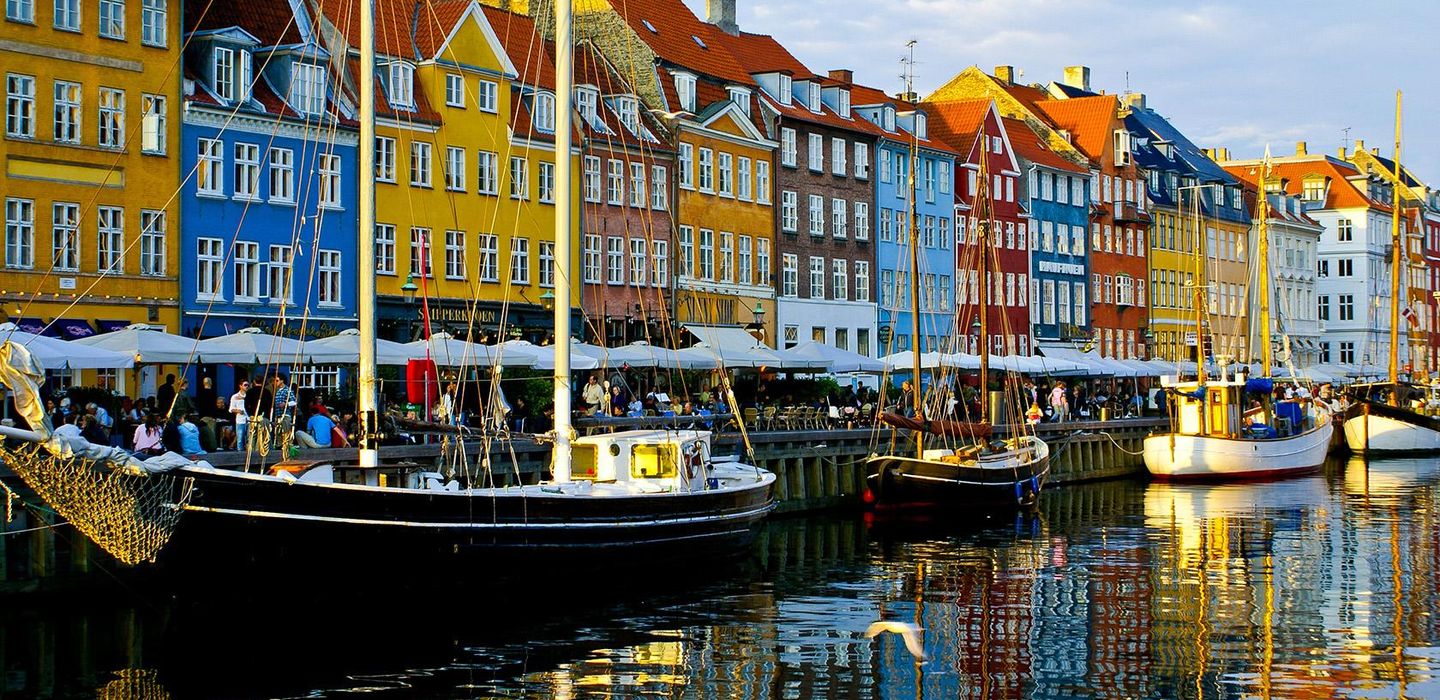
Set at the landward end of Copenhagen’s postcard‑perfect Nyhavn canal, the Memorial Anchor is a powerful open‑air monument to Danish civilian sailors who died at sea during the Second World War. The massive 19th‑century anchor from the frigate Fyn rests on a cobbled plinth with commemorative plaques and a buried capsule listing the names of the dead. Surrounded by colourful 17th‑century townhouses and historic wooden ships, it combines maritime history, quiet remembrance and one of the city’s most photogenic urban scenes.
Open 24 hoursTime to spend 0.5–1.5 hrs


Fredensborg Palace
Fredensborg Palace is a magnificent Baroque royal residence on the shores of Lake Esrum, built in 1722 by King Frederik IV as a symbol of peace following the Great Northern War. Today it serves as the spring and autumn residence of the Danish Royal Family. The palace features exquisite interiors including the iconic Dome Hall and is surrounded by one of Denmark's most impressive Baroque gardens, with seven radiating avenues, sculptures, and the famous Valley of the Norsemen. While the palace interior is normally private, the extensive palace gardens are open year-round, and exclusive guided tours of the royal chambers and private gardens are available during July.
Price level $Time to spend 2–3.5 hrs

Børsen
Børsen is one of Copenhagen's oldest and most iconic buildings, a masterpiece of Dutch Renaissance architecture built by King Christian IV between 1619 and 1640. Famous for its distinctive 56-meter Dragon Spire—four intertwined dragon tails topped with three crowns symbolizing the Scandinavian kingdoms—the building once served as Denmark's financial center and marketplace. Severely damaged by fire in April 2024, Børsen remains a powerful symbol of Copenhagen's trading heritage and architectural legacy, currently undergoing restoration.
Time to spend 0.5–2 hrs

Frederiksberg Palace
Perched atop a grassy hill in leafy Frederiksberg, Frederiksberg Palace is a stately yellow Baroque residence overlooking one of Copenhagen’s most beloved green spaces, Frederiksberg Garden. Built in the early 1700s as a summer retreat for King Frederik IV and later home to several Danish monarchs, the palace today houses the Royal Danish Military Academy and is generally not open to casual visitors, but its dramatic setting, royal stories and sweeping views across the park and zoo make it a rewarding stop for architecture buffs and urban strollers.
Time to spend 1.5–3 hrs

Statue of Andersen
A beloved bronze statue of Denmark's most famous author sits in Copenhagen's City Hall Square, holding a book and gazing toward Tivoli Gardens. Sculpted by Henry Luckow-Nielsen in 1965, this iconic monument has become one of Copenhagen's most photographed attractions, with its polished knee worn smooth by countless visitors seeking a touch of literary magic.
Open 24 hoursTime to spend 0.2–1 hr

Saint Olai Church
Saint Olai Church, Helsingør’s red-brick cathedral, rises above the medieval streets just a short stroll from Kronborg Castle. Dating back to around 1200, this Lutheran cathedral combines Gothic brickwork with a serene, whitewashed interior, intricate Renaissance altarpiece and pulpit, model ship, carved organ, old tombstones and a touching “baby tree” celebrating newborns. It remains a working parish church with regular services and concerts, offering a calm, atmospheric pause amid Elsinore’s historic harbour life.
Tue–Sat 10:00–14:00 · Sun 9:30–12:00Time to spend 0.5–1.5 hrs

St. Mary's Church
A stunning 15th-century Gothic church in Helsingør, Denmark, originally built as part of a Carmelite monastery complex established in 1430. The church features a magnificent Baroque organ once played by the legendary composer Buxtehude, intricate medieval stonework, and a serene courtyard with a 300-year-old tree. Now a functioning parish church, it represents the finest example of a complete monastic complex surviving in Denmark and stands as a masterpiece of medieval religious architecture.
Tue–Sun 10:00–15:00Time to spend 1–2.5 hrs

Lille Langebro
Lille Langebro is a striking 160-meter pedestrian and cycling bridge spanning Copenhagen's Inner Harbour, designed by the London-based architecture studio WilkinsonEyre. Completed in 2019, this elegant steel structure features a graceful curved form with distinctive raised 'wings' at its midspan and the remarkable ability to swing open for maritime traffic. The bridge connects historic Copenhagen neighborhoods while serving as a sculptural landmark that transforms into a ribbon of light after dark.
Open 24 hoursTime to spend 0.5–2 hrs

Helsingborg City Hall
Helsingborg City Hall is a striking neo-Gothic landmark anchoring the heart of this Öresund port city. Completed in the late 19th century to designs by architect Alfred Hellerström, its soaring brick clocktower, turrets and ornate stonework echo medieval fortresses while symbolising modern civic pride. Inside, ceremonial halls, painted inscriptions and historic portraits reveal the city’s political and maritime heritage, while large windows frame glimpses of the harbour and across to Denmark.
Time to spend 0.5–1.5 hrs

St. Paul's Church
Anchoring the historic Nyboder district with its striking red-brick silhouette, St. Paul’s Church is a 19th-century Lutheran landmark in central Copenhagen. Completed in 1877 and designed by Johannes Emil Gnudtzmann in a Neo-Romanesque, Italianate style, it rises above rows of ochre naval housing like a brick campanile. Inside, calm light, sculptural details and a historic organ create an intimate, contemplative atmosphere, while outside the church tower forms a focal point amid one of the city’s most characterful neighbourhoods.
Time to spend 0.5–1.5 hrs

Inugsuk
Inugsuk is an iconic stone cairn monument standing on the Langelinie promenade in Copenhagen, Denmark. This striking inuksuk—a traditional Inuit stone landmark—was erected in 1998 to commemorate the 60th anniversary of the Adventures Club of Denmark and the legacy of explorer Peter Freuchen. Located near the famous Little Mermaid statue, it has become a beloved symbol of Arctic heritage and a popular photo spot for visitors exploring Copenhagen's waterfront.
Open 24 hoursTime to spend 0.2–1 hr

Södergatan
Södergatan is Malmö's historic main street and the city's commercial heart, stretching from Stortorget toward the southern exits. Developed in the late 19th and early 20th centuries, this vibrant thoroughfare transformed from a modest route into a grand boulevard lined with elegant architecture, historic cinemas, department stores, and distinctive red-brick buildings. Today it remains a lively shopping and cultural destination, blending period architecture with contemporary commerce.
Time to spend 1–3 hrs

The Old Execution site in Copenhagen 1946-1950
Hidden in a quiet, leafy corner on the old ramparts by Christiania, the Old Execution Site in Copenhagen is a stark reminder of Denmark’s turbulent post‑war years. Here, between 1946 and 1950, 29 convicted Nazi collaborators were executed by firing squad after controversial treason trials. Today only a low concrete slab with a central drain, framed by stones and grass, marks the place. There are no grand monuments, just a hauntingly modest trace that invites reflection on justice, revenge and the difficult moral questions that followed the occupation.
Open 24 hoursTime to spend 0.5–1 hr

Kulsvierstenen
Tucked deep in Gribskov near Fredensborg, Kulsvierstenen is a modest yet powerful memorial stone raised in 1945 to honor Danish resistance fighters. On this secluded forest clearing, a resistance group received illegal weapons from Allied aircraft until a tragic firefight with German forces in April 1945. Today the boulder, flanked by tall trees and birdsong, offers a quiet, atmospheric pause on woodland trails and a poignant glimpse into North Zealand’s World War II history.
Open 24 hoursTime to spend 0.5–2 hrs

Hyllie Vattentorn
Hyllie Vattentorn is a striking white water tower in Malmö’s fast‑growing Hyllie district, instantly recognisable for its flying‑saucer silhouette. Completed in 1973 and rising 62 metres above the surrounding streets, it once housed a panoramic restaurant and today crowns a small park beside Malmö Arena and Emporia. Illuminated in blue by night, and in shifting colours for special occasions, it has become a modern symbol of the city and a quirky landmark for architecture and photography lovers.
Time to spend 0.5–1.5 hrs

Bredgade 18
At Bredgade 18 you stand on one of Copenhagen’s grand thoroughfares, in the heart of Frederiksstaden’s 18th‑century cityscape. The address sits among palatial townhouses, embassies, churches and design showrooms that line this historic boulevard between Kongens Nytorv and Esplanaden. It is a classic Copenhagen streetscape: dignified facades, stone steps, ornamented windows and glimpses of domes and spires, with galleries, antique dealers and design houses just a few doors away.
Time to spend 0.5–1.5 hrs
Explore Copenhagen Region on the map
A handpicked selection of must-see spots in Copenhagen Region, mapped for you.
More about Copenhagen Region
Copenhagen Region travel guide
Discover the Copenhagen Region: A perfect mix of historic charm and modern vibrancy, offering scenic beauty, cultural landmarks, and a high quality of life.
Tell me more about Copenhagen RegionMore to explore in Copenhagen Region

 Best attractions in Copenhagen Region

 Best shops in Copenhagen Region

 Best bars in Copenhagen Region

 Best restaurants in Copenhagen Region

 Best nightclubs in Copenhagen Region

 Best experiences in Copenhagen Region

 Best hotels in Copenhagen Region
Explore more

Explore more of Denmark
Discover Denmark: A perfect blend of history, modern design, and the cozy concept of hygge. Explore vibrant cities, serene landscapes, and world-class cuisine.
Explore Denmark
Getting your guide ready…
We are putting together a fresh copy of the Copenhagen Region guide. This can take up to a minute.
This can take a few moments. If your browser asks, choose Allow so the download can start. You'll find the guide in your Downloads folder.
Nothing happened? Download it again
Sorry, the guide is taking longer than usual. Please try again in a minute, or get it by email instead.