Christiansborg Palace, Copenhagen Travel Guide
Seat of power, royal ritual and 800 years of history gathered on one compact island in the very heart of Copenhagen.
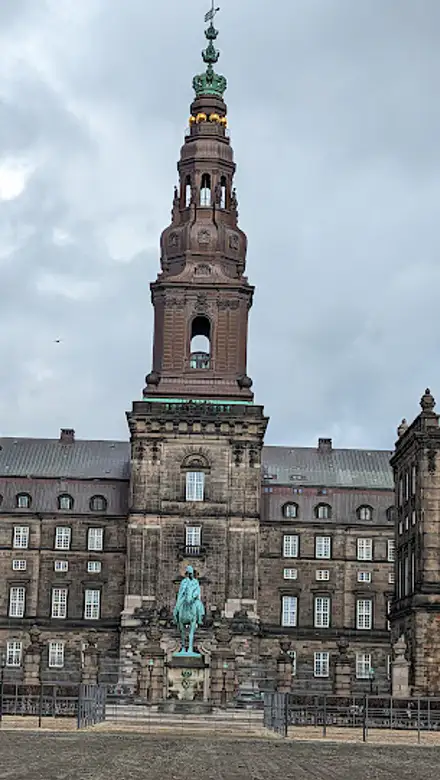
Rising over the tiny island of Slotsholmen, Christiansborg Palace is Copenhagen’s powerhouse of politics and pageantry. The current palace, completed in 1928, blends neo-Baroque heft with traces of earlier castles and palaces that have stood here for more than 800 years. Today it uniquely houses Denmark’s Parliament, Supreme Court and Prime Minister’s Office, while its glittering Royal Reception Rooms, medieval ruins, royal kitchens, tower and stables open a rare window onto the inner workings of the Danish state.
A brief summary to Christiansborg Palace
- Prins Jørgens Gård 1, Copenhagen, Indre By, 1218, DK
- Click to display
- Click to display
- Duration: 2 to 4 hours
- Mid ranged
-
 Mixed
Mixed
- Mobile reception: 5 out of 5
- Monday 10 am-5 pm
- Tuesday 10 am-5 pm
- Wednesday 10 am-5 pm
- Thursday 10 am-5 pm
- Friday 10 am-5 pm
- Saturday 10 am-5 pm
- Sunday 10 am-5 pm

Know before you go
Hi, I'm Eve. Here are a few practical things to know before exploring Christiansborg Palace.
- Allow at least three hours if you want to see the Royal Reception Rooms, the ruins, kitchens, stables and tower without rushing.
- Check which parts of the palace are open on the day of your visit, as state events can close the Royal Reception Rooms at short notice.
- The free tower viewpoint can attract queues; arrive early in the day or later in the afternoon for shorter waiting times.
- Combine your visit with a quiet break in nearby gardens on Slotsholmen to contrast the palace’s grandeur with a more intimate city atmosphere.
- Interior temperatures can vary between the cool ruins and warmer halls; layered clothing makes it easier to stay comfortable.
Do you manage this location?
Take control to get all the benefits, like improved information, better appearance, and stronger visibility across AI-powered discovery. Learn more about listing your business on Evendo
Activate your presenceOther nearby places you may find interesting
The closest places of the same kind, if this one is not quite what you had in mind.

Explore Christiansborg Palace on the Map
A handpicked selection of must-see spots near Christiansborg Palace, mapped for you.
Unlock the Best of Christiansborg Palace
Buy tickets
-
No tickets available
Book tours with entry


Getting There
-
Metro
From central Copenhagen, take the M1 or M2 metro line to Kongens Nytorv and continue on the M3 Cityringen one stop to Gammel Strand. The journey typically takes 5–10 minutes once you board. A standard single-zone ticket costs roughly 20–30 DKK and is valid on metro, bus and local trains for a limited time. Trains run frequently throughout the day, and from Gammel Strand the walk to Christiansborg is short and level, suitable for most visitors and wheelchairs.
-
City Bus
Several city bus routes stop near Slotsholmen, providing a straightforward option if you are already moving around the inner districts. Typical travel times from central hubs range between 10 and 20 minutes, depending on traffic and waiting time at the stop. A standard bus ticket within the central zones usually costs about 20–30 DKK, and low-floor buses offer easy boarding for wheelchairs and strollers. Services run regularly during the day, with reduced frequency late at night.
-
Bicycle
Cycling is one of the most convenient ways to reach Christiansborg Palace from neighbourhoods like Vesterbro, Nørrebro or Østerbro. Expect 10–20 minutes of riding time along well-marked cycle lanes on mostly flat terrain. City bikes and rental shops across Copenhagen offer hourly and daily rates, typically starting around 50–100 DKK for a few hours. Be prepared for busy bike traffic at rush hours and remember that cobbled sections around the palace can feel slightly uneven under your wheels.
-
Walking in the inner city
If you are staying in the historic centre, walking to Christiansborg is both practical and rewarding. Distances from major squares and harbourfront areas in Indre By usually translate into 10–25 minutes on foot. The route is generally flat and follows paved streets and squares, though some parts are cobbled and may feel bumpy for wheelchairs or small-wheeled strollers. Weather can change quickly in Copenhagen, so bring a rain layer or warm clothing outside the summer months.
For the on-the-go comforts that matter to you
-
 Restrooms
-
 Drink Options
-
 Drinking Water
-
 Food Options
-
 Seating Areas
-
 Sheltered Areas
-
 Trash Bins
-
 Information Boards
-
 Visitor Center
Discover more about Christiansborg Palace
Island of Power at the Heart of Copenhagen
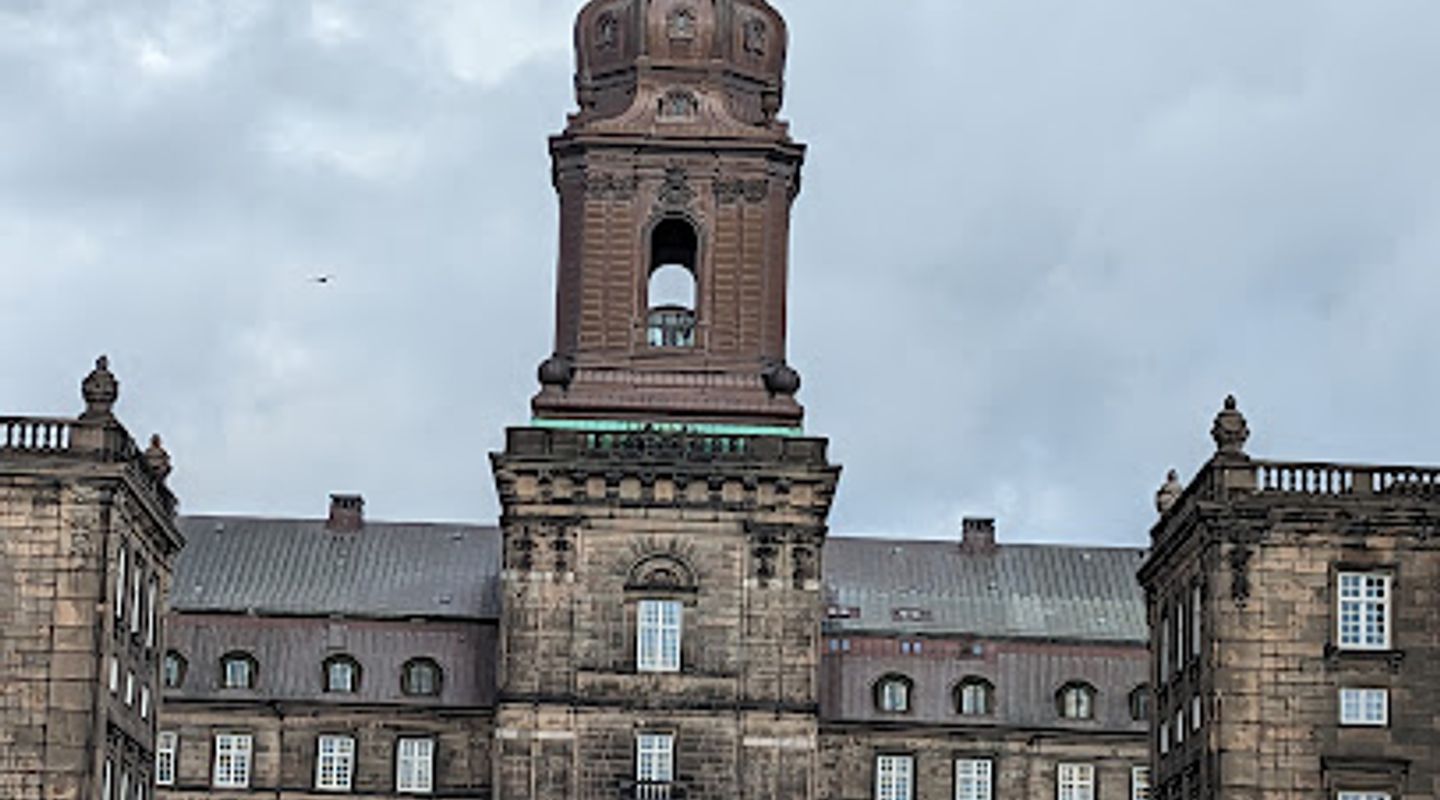
Christiansborg Palace dominates Slotsholmen, the small island that has served as Denmark’s centre of power for more than eight centuries. Long before the present granite colossus, Bishop Absalon raised a fortified castle here in the 12th century, anchoring the emerging town that became Copenhagen. Successive castles and palaces rose and fell on the same footprint, each reflecting the changing balance between monarch, church and state.The current Christiansborg, finished in 1928, was designed as the architectural expression of a modern constitutional monarchy. Its copper-clad central tower, Denmark’s tallest, has become a key feature of the city skyline, while the building’s heavy stone façades deliberately project stability and authority. Yet beneath this monumental exterior, visitors can trace layers of history literally from the ruins up.From Royal Residence to Democratic Stage
For centuries, the rulers of Denmark lived and ruled from Christiansborg’s predecessors, making decisions that shaped the kingdom and its overseas territories. Two devastating fires, in 1794 and 1884, destroyed earlier palaces, forcing the royal family to move their residence permanently to Amalienborg. What rose in their place on Slotsholmen was no longer a royal home, but a combined stage for democracy and ceremonial monarchy.Today Christiansborg uniquely gathers Parliament, the Supreme Court and the Prime Minister’s Office under the same roof as the Royal Reception Rooms. This rare arrangement means the palace is both a working seat of government and a ceremonial backdrop for state visits, royal audiences and national celebrations. Walking its corridors, you move between the symbols of people’s power and the enduring rituals of the crown.Gilded Halls and Royal Rituals
The Royal Reception Rooms form the most opulent part of a visit. Reached via grand staircases and anterooms, they unfold in a sequence of salons lined with stucco, silk wall coverings, crystal chandeliers and polished parquet floors. Here foreign heads of state are received, orders are bestowed and lavish banquets mark national milestones.The Great Hall is dominated by a cycle of modern tapestries depicting 1,100 years of Danish history, weaving Vikings, reformers and contemporary scenes into a single narrative. In the Oval Throne Room, twin thrones face a balcony from which new monarchs are traditionally proclaimed. These spaces are still used, so their availability can change with the state calendar, adding a sense that the palace is very much alive.Ruins, Kitchens and Stables Below the Surface
Beneath the palace, the Ruins reveal foundations and walls from Absalon’s medieval fortress and later castles. Down here, explanatory panels and atmospheric lighting bring siege stories, demolitions and rebuilding projects into focus, showing how each new Christiansborg literally rose on the bones of the last. It is one of the few places in the city where you can stand inside the physical timeline of Copenhagen’s power base.Elsewhere in the complex, the historic Royal Kitchen is set up as if awaiting a grand dinner, with copper pots, towering dessert stands and cleverly staged soundscapes suggesting the controlled chaos of a royal banquet in full preparation. The Royal Stables, when open, add another layer, with ceremonial horses and antique carriages under lofty timber roofs, evoking an era when statecraft moved at the pace of hooves and wheels.Views from the Tower and Moments of Stillness
Crowning the palace is its tower, which offers wide views across the copper roofs, spires and waterways of Copenhagen. On clear days you can trace the city’s evolution from medieval core to modern harbourfront, with the Øresund and, on the horizon, Sweden beyond. The tower is also a powerful vantage point for understanding how tightly knit Copenhagen’s major sights are around Slotsholmen.Despite its institutional role, Christiansborg has quieter corners. The courtyards and nearby gardens on the island provide pockets of calm between explorations of the interiors. Stepping back outside to look up at the tower and sculptural decoration, it becomes easier to read the palace as a stone chronicle of Denmark’s journey from fortress monarchy to open, parliamentary society.












Your all‑in‑one travel companion app
Explore expert travel guides, compare and book tours, experiences, hotels, and more—all from the palm of your hand. Download now for seamless trip planning wherever your wanderlust takes you.


Explore More of Copenhagen
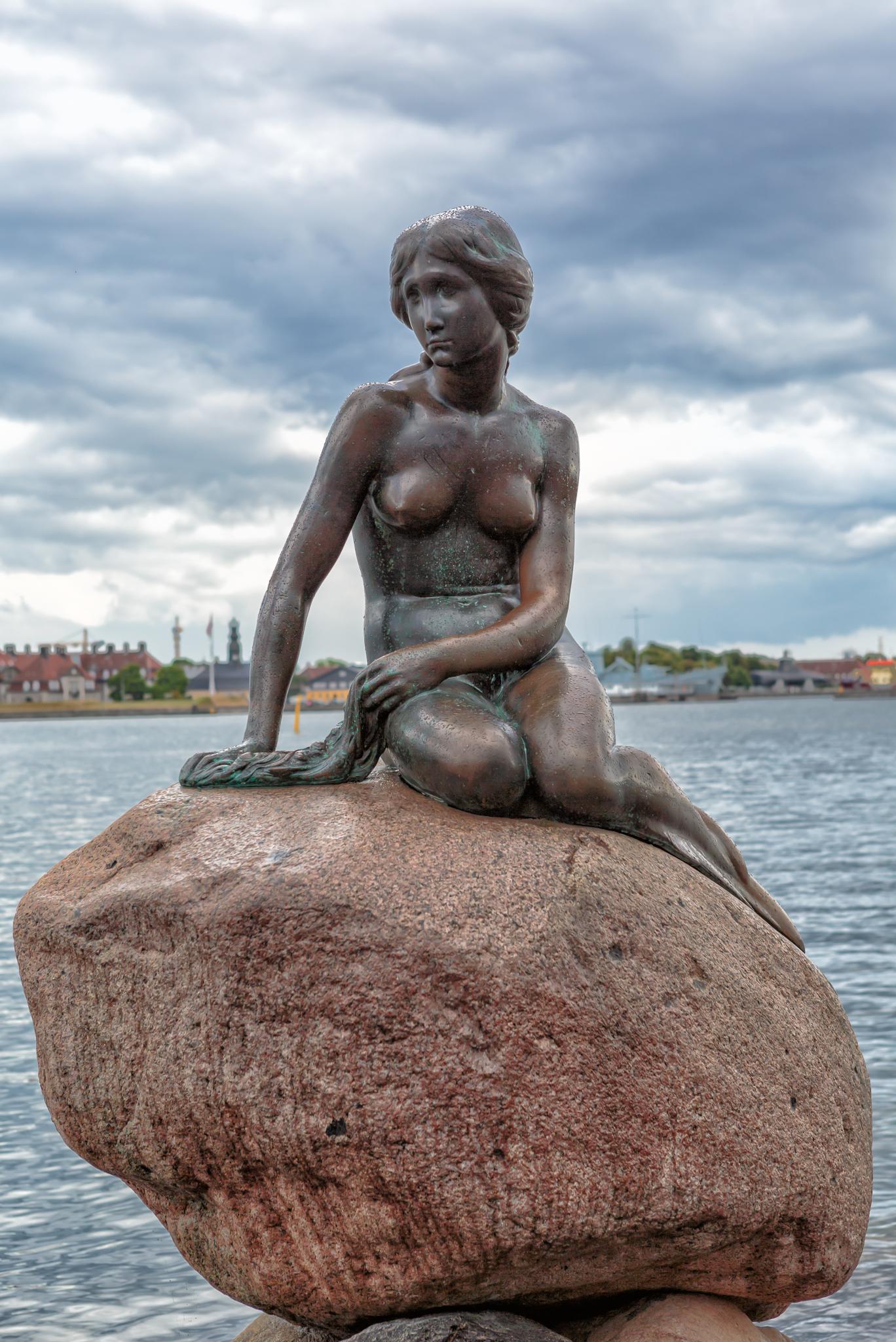
Looking beyond Christiansborg Palace? Discover Copenhagen for broader travel guides, local hot-spots, and regional highlights.
Explore Copenhagen
Discover the world of 'Nordic gold' at the Copenhagen Amber Museum, where history, science, and stunning amber artifacts meet in Nyhavn’s oldest house.
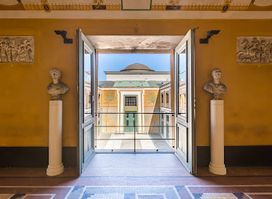
A vividly coloured neoclassical gem on Slotsholmen, preserving Bertel Thorvaldsen’s sculptures, collections and architectural legacy in Denmark’s first public museum.