DR Koncerthuset
A striking blue concert cube in Ørestad where bold architecture, world-class acoustics and Denmark’s public broadcaster come together for unforgettable live music.
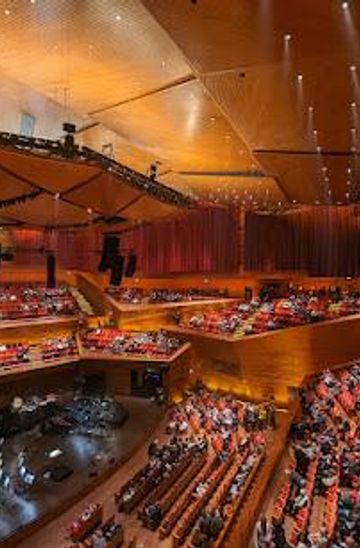
DR Koncerthuset rises like a blue, faceted cube at the edge of Copenhagen’s Ørestad district, home to the Danish Broadcasting Corporation’s acclaimed concert halls. Designed by French architect Jean Nouvel with acoustics by Yasuhisa Toyota, it houses four distinct venues, including a 1,800-seat arena-style main hall celebrated for its world-class sound. Inside, raw concrete, glowing wood, glass and dramatic lighting create an atmospheric setting for symphony concerts, jazz, talks and televised events.
A brief summary to DR Koncerthuset
- Ørestads Blvd. 13, Copenhagen, Amager Vest, 2300, DK
- Click to display
- Click to display
- Duration: 1.5 to 4 hours
- Mid ranged
-
 Indoor
- Mobile reception: 5 out of 5

Know before you go
Hi, I'm Eve. Here are a few practical things to know before exploring DR Koncerthuset.
- Arrive 30–45 minutes before showtime to enjoy the soaring foyer, find your bearings between the different halls and avoid queues at the bars and cloakrooms.
- If acoustics matter to you, look for central seats in the stalls or lower balconies in Koncertsalen, where the sound is especially balanced and enveloping.
- Check the program for guided tours on non-concert days to experience backstage areas, studios and the main hall from the performers’ perspective.
- Use the nearby metro station for stress-free travel; if you drive, allow extra time to prepay parking at the machines or via local parking apps.
- Bring a light layer, as temperatures can vary between the large foyer, corridors and the individual halls during evening events.
Do you manage this location?
Take control to get all the benefits, like improved information, better appearance, and stronger visibility across AI-powered discovery. Learn more
Activate your presenceOther nearby places you may find interesting

Getting There
-
Metro
From central Copenhagen, take metro line M1 towards Vestamager and ride to DR Byen station, which generally takes 7–10 minutes from Kongens Nytorv. Trains usually run every few minutes throughout the day and night, and a single adult ticket within the city zones typically costs around 20–30 DKK. From DR Byen station, expect a short, step-free walk along broad pavements to reach DR Koncerthuset.
-
City Bus
Several city bus lines serve the DR Byen area from different parts of Copenhagen, with typical journey times of 15–30 minutes depending on traffic and starting point. Standard bus fares are aligned with the metro system, so you can expect to pay roughly 20–30 DKK for a single adult fare within the central zones. Buses usually stop within a few minutes’ walk of DR Koncerthuset on flat, well-lit streets.
-
Bicycle
From the inner city, cycling to DR Koncerthuset typically takes 15–25 minutes, following Copenhagen’s extensive network of segregated bike lanes most of the way. The route is largely flat and suitable for casual cyclists. You can use personal bikes or city rental bikes available at various docking stations, where short rides often cost in the range of 10–30 DKK depending on duration and provider.
-
Car / Taxi
Driving from central Copenhagen to Ørestads Boulevard usually takes 10–20 minutes outside rush hour, longer when traffic is heavy. Paid parking is available in nearby lots managed by private operators, and you must prepay at ticket machines or through common parking apps, with typical evening rates starting around 15–30 DKK per hour. Taxis offer a door-to-door option, with fares from the city centre often in the 120–200 DKK range depending on time and traffic.
For the on-the-go comforts that matter to you
-
 Restrooms
-
 Drink Options
-
 Drinking Water
-
 Food Options
-
 Seating Areas
-
 Sheltered Areas
-
 Trash Bins
-
 Information Boards
-
 Visitor Center
Discover more about DR Koncerthuset
A modern landmark in Copenhagen’s new cityscape
DR Koncerthuset anchors the DR media campus in Ørestad, where the city’s historic centre gives way to glass towers, canals and open skies. From a distance you first notice the building’s sculptural blue shell, an almost monolithic volume that seems to hover above the surrounding plaza. As you approach, the facade shifts with the light, revealing a patchwork of glass and cladding that hints at the complex world inside.The concert house was conceived as both a cultural beacon and a piece of urban theatre. It sits directly by the elevated metro line, so trains glide past at eye level, underscoring the dialogue between everyday life and high culture. By night, the building glows like a lantern, signaling that something is happening within – a symphony, a radio recording, a jazz session or a televised gala.Jean Nouvel’s dramatic interiors and shifting moods
Crossing the threshold, you step into a vast, vertical foyer that feels more like a contemporary art installation than a traditional lobby. Matte grey concrete walls contrast with shiny steel floor tiles and warm wooden accents, while the glass roof pulls daylight – and after dark, starlight – deep into the space. Long views up, down and across multiple levels create a sense of anticipation as people circulate before performances.Nouvel’s design plays deliberately with contrasts: heavy and light, rough and polished, shadow and saturated colour. Corridors suddenly open onto double-height voids; light is filtered through coloured panels; and intimate corners appear between bold structural elements. The architecture encourages wandering, pausing at railings to look into the foyer or out towards the city, making the building itself part of the experience.The concert hall famed for its enveloping sound
At the heart of the complex lies the main Koncertsalen, a vineyard-style arena with seating terraced around the stage. Clad in warm timber and deep hues, it creates a cocoon-like atmosphere focused entirely on the performers. Every surface – from acoustic panels to suspended reflectors – has been shaped in collaboration with acoustician Yasuhisa Toyota to deliver clarity, warmth and intimacy.The hall’s flexible acoustics allow it to host a wide range of music, from large symphony orchestra works and choir concerts to film scores, big band nights and crossover projects. The stage and seating can be reconfigured, and adjustable acoustic elements fine-tune the sound for different ensembles. Despite its 1,800-seat capacity, the visual proximity of the balconies fosters a feeling of shared event rather than distant spectacle.Four distinct venues under one blue skin
Beyond the flagship hall, DR Koncerthuset contains three additional studios, each with its own character and scale. One is defined by a cool, monochrome palette and clear, direct acoustics suited to chamber music and broadcasts; another glows in rich red tones, designed for more intimate performances and experimental projects. This diversity allows the house to host everything from radio productions and spoken word to jazz, pop and contemporary classical.The complex operates as a working home for DR’s ensembles – including the symphony orchestra, choirs and big band – as well as a stage for visiting artists and large-scale events of national significance. Over the years it has provided the setting for televised ceremonies, international conferences and live broadcasts, cementing its role as a cultural stage that reaches far beyond the audience in the room.A visitor experience that begins before the music
Attending an event here is as much about the journey through the building as the performance itself. Before concerts, the foyer fills with a gentle hum of conversation, the clink of glasses and the soft thrum of the metro outside. Tall windows frame views of Amager’s canals and modern architecture, while internal balconies offer vantage points over the flowing crowd.Wayfinding is intuitive, with generous stairs, lifts and clearly marked levels guiding you towards the different halls. The building is designed with accessibility in mind, offering step-free routes and dedicated seating areas inside the venues. Between events, the house can be explored on guided tours, where you can move from backstage corridors to the heart of the concert hall and gain insight into how architecture, broadcasting and live music intertwine.An architectural icon with a civic role
DR Koncerthuset functions as both a neighborhood anchor for Ørestad and a national stage for Denmark’s public broadcaster. Its bold silhouette has become a visual shorthand for contemporary Copenhagen, contrasting with the city’s historic spires yet connected to them through a shared emphasis on craftsmanship and cultural life.Spending time here reveals how thoughtfully the building has been tailored to the rituals of performance: gathering, waiting, listening and lingering afterwards. Whether you come for a symphony, a radio production, a choral Christmas concert or simply to explore the architecture, the concert house offers a layered experience where space, light and sound work together to leave a lasting impression.Explore the best of what DR Koncerthuset has to offer















More about North Zealand
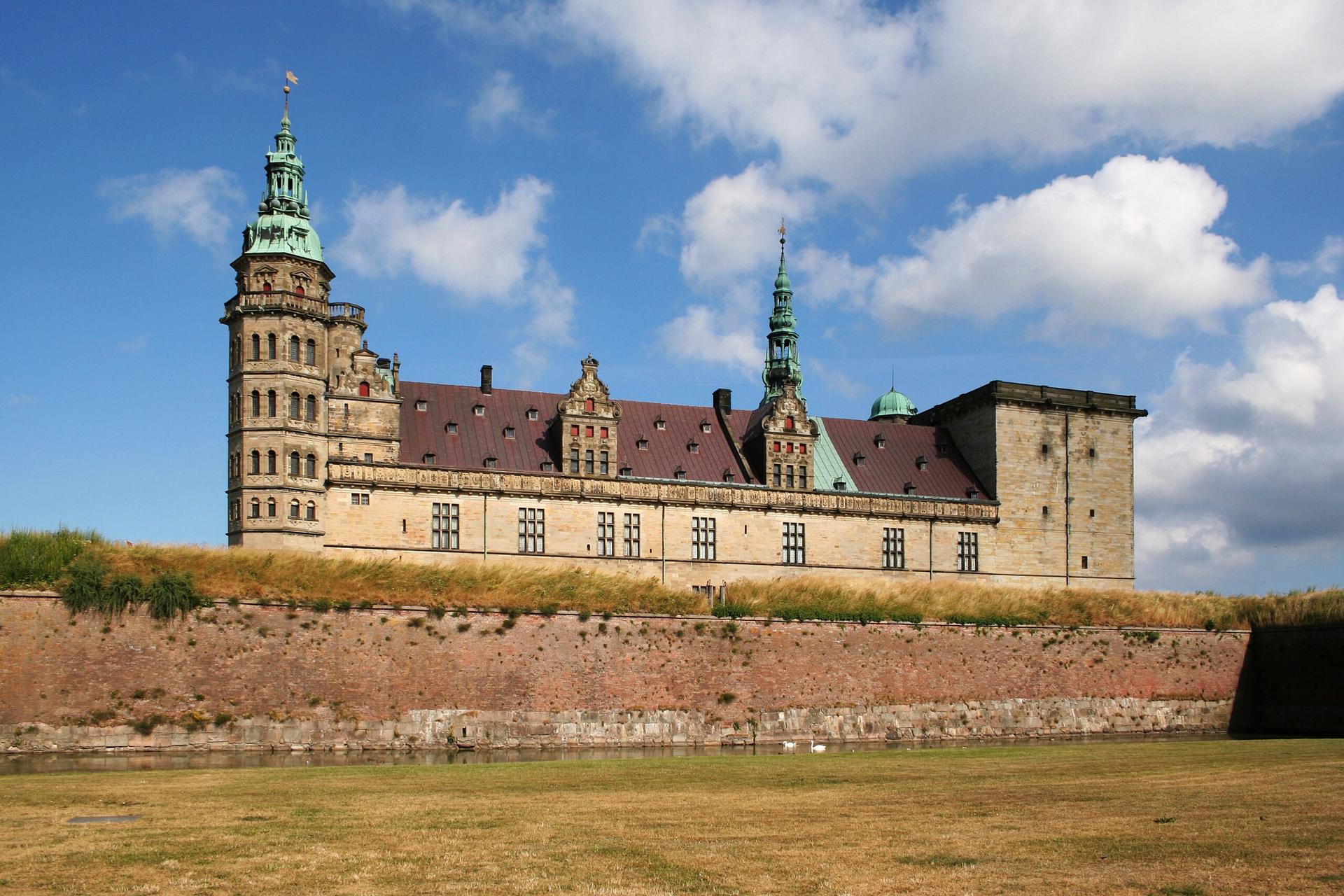
Explore North Zealand, Denmark's enchanting region of castles, beaches, and royal estates, perfect for history buffs, nature enthusiasts, and seaside lovers.
Tell me more about North Zealand
Copenhagen’s Black Diamond blends a centuries‑old national library with bold harbourfront architecture, quiet reading rooms, exhibitions, concerts and a hidden garden oasis.
Semi-wild meadows and wetlands brushing against Copenhagen’s skyline, Amager Fælled is the city’s closest taste of open Danish nature.