

The Danish Parliament, Koge Travel Guide
Historic Christiansborg Palace on Slotsholmen, where the Danish Parliament works daily beneath copper spires in a single complex shared with courtrooms and royal state rooms.
Set on the tiny islet of Slotsholmen in central Copenhagen, the Danish Parliament occupies part of Christiansborg Palace, a vast neo-baroque complex that has been the heart of Danish power for centuries. Here, under the palace’s copper-clad tower, Denmark’s modern democracy operates side by side with the Supreme Court, the Prime Minister’s offices and the royal reception rooms. Visitors can explore selected areas on guided tours, delve into the building’s dramatic history of fires and rebuilds, and glimpse how a constitutional monarchy and parliamentary system intersect in a single monumental seat of power.
A brief summary to The Danish Parliament
- Christiansborg, Indre By, Indre By, 1218, DK
- Click to display
- Click to display
- Duration: 1 to 2.5 hours
- Budget
-
 Indoor
- Mobile reception: 5 out of 5

Know before you go
Hi, I'm Eve. Here are a few practical things to know before exploring The Danish Parliament.
- If you want to see the Parliament in action, plan your visit for a weekday when the Folketing is in session; check sitting days in advance and allow extra time for security.
- Join an official guided tour of the Folketing rather than exploring alone; it provides access to more areas and gives valuable context on Danish politics and the building’s history.
- Combine a visit to the Danish Parliament with the palace tower and the ruins beneath Christiansborg to understand the full vertical story of power on Slotsholmen, from foundations to skyline.
- Arrive with only essential belongings; airport-style security and bag checks can create queues, especially during busy times and for larger groups.
- Bring a light layer even in summer; some interior corridors and stone staircases within the palace can feel cool compared with the streets outside.
Do you manage this location?
Take control to get all the benefits, like improved information, better appearance, and stronger visibility across AI-powered discovery. Learn more about listing your business on Evendo
Activate your presenceOther nearby places you may find interesting
The closest places of the same kind, if this one is not quite what you had in mind.
Explore The Danish Parliament on the Map
A handpicked selection of must-see spots near The Danish Parliament, mapped for you.
Unlock the Best of The Danish Parliament
Buy tickets
-
No tickets available
Book tours with entry


Getting There
-
Metro from central Copenhagen
From central Copenhagen, take the M3 Cityringen or M4 metro line to Gammel Strand or Rådhuspladsen; trains run every few minutes and the ride is about 3–6 minutes from Nørreport. A standard two-zone ticket costs roughly 20–30 DKK and is valid across buses, metro and S-trains. From either station, expect a short, level urban walk on paved surfaces that is suitable for wheelchairs and strollers, though weather can make conditions wet or windy near the canals.
-
Bus within the inner city
Several city bus routes serve the streets around Slotsholmen from hubs like Nørreport, Østerport and the central station, with journey times typically 10–20 minutes depending on traffic. A single two-zone bus fare is around 20–30 DKK, or you can use a travel card for better value if riding multiple times. Buses are low-floor with space for wheelchairs and prams, but peak hours can be crowded and standing may be required for part of the ride.
-
Bicycle from nearby districts
Copenhagen’s cycle lanes make reaching Christiansborg by bike straightforward from neighbourhoods such as Vesterbro, Nørrebro or Østerbro in roughly 10–20 minutes. You can rent a city bike or standard bicycle from many local providers, typically from about 100–150 DKK for a day. Surfaces are mostly flat and well marked, but be prepared for heavy bicycle traffic at rush hour and obey local cycling etiquette at junctions and along the canals.
-
On foot from the historic centre
If you are staying around Strøget, Nyhavn or the Latin Quarter, you can walk to the Danish Parliament at Christiansborg in approximately 10–20 minutes along level, urban streets. Pavements are generally well maintained, though older cobblestones appear around the palace courtyards and can be uneven for wheeled mobility aids. This option is free and allows you to appreciate the transition from shopping streets and canals into the more formal government quarter on Slotsholmen.
For the on-the-go comforts that matter to you
-
 Restrooms
-
 Drink Options
-
 Drinking Water
-
 Food Options
-
 Seating Areas
-
 Trash Bins
-
 Information Boards
-
 Visitor Center
Discover more about The Danish Parliament
Island of Power in the Heart of Copenhagen
Christiansborg Palace rises from the low-lying islet of Slotsholmen, a compact patch of land long known to Copenhageners as the Island of Power. For more than eight centuries this site has concentrated royal, judicial and political authority, evolving from fortified castle to contemporary seat of government. Today the Danish Parliament, or Folketinget, occupies much of the palace, sharing the complex with the Supreme Court, the Prime Minister’s offices and ceremonial rooms still used by the monarchy.From the outside, the parliament wing is part of a heavy, granite-clad ensemble crowned by a tall copper tower. The architecture projects solidity and continuity, a deliberate choice after centuries of upheaval and rebuilding. Stepping into the parliamentary areas, you move from the broad courtyards and cobbles of Slotsholmen into a working institution where Denmark’s laws are proposed, debated and passed.Layers of Ruins, Palaces and Political Change
The story of the Danish Parliament here begins long before democracy. In the late 12th century Bishop Absalon raised a fortress on this site, later replaced by Copenhagen Castle as royal power expanded. Over time that castle gave way to the first Christiansborg Palace, commissioned in the 18th century as a grand baroque residence for an absolute monarch. It was once the largest palace in northern Europe, its scale meant to advertise royal authority across the region.Two devastating fires, in 1794 and 1884, erased successive palaces but not the function of the island. Each reconstruction added new architectural layers while cementing Slotsholmen’s role as the nation’s political core. By the early 20th century, as Denmark entrenched constitutional rule and parliamentary government, the decision was made to rebuild Christiansborg explicitly as a democratic centre rather than a royal home.Neo-baroque Halls and Working Chambers
The current Christiansborg Palace, completed in 1928, combines historicist neo-baroque forms with classicist remnants from earlier buildings. Inside the parliamentary section, corridors lined with stone, wood panelling and subdued artwork lead to offices, committee rooms and the main chamber. The Folketing chamber itself is designed to be both formal and functional, with tiered seating, strong sightlines and a central rostrum where debates unfold.Public access is carefully structured around this working environment. Guided visits typically follow a set route, interpreting architectural details while explaining parliamentary procedure, party groupings and the legislative process. The juxtaposition of grand staircases and everyday office life underlines how Christiansborg serves simultaneously as a historical monument and a living workplace for Danish democracy.Shared Home of Monarch, Government and Courts
One of Christiansborg’s most distinctive features is its institutional coexistence. Under one roof, the Danish Parliament sits alongside the offices of the Prime Minister, the Supreme Court of Denmark and the royal reception suites. This arrangement reflects the country’s constitutional balance: a ceremonial monarchy, independent judiciary and elected legislature, each with its own function but physically interlinked around the same courtyards and corridors.For visitors, this concentration of roles becomes visible in subtle ways. Signage points toward courtrooms and ministries; security posts mark thresholds between public and restricted zones; portraits and state symbols trace the evolution from absolute rule to parliamentary governance. The building itself becomes a diagram of the Danish state, with the Folketing at its core.Experiencing the Seat of Danish Democracy
A visit to the Danish Parliament at Christiansborg is less about ornate display and more about understanding how a modern parliamentary system operates in a deeply historical setting. Depending on timing, you may glimpse activity in the chamber, see committee doors standing open, or encounter staff and politicians moving briskly between meetings. Guided tours often draw connections between the laws debated here and the wider social model that Denmark is known for.Beyond the formalities, there is a quieter fascination in simply pausing within the palace’s courtyards or under the tower and reflecting on the many regimes this small island has seen. From medieval fortifications to absolute monarchy and on to today’s constitutional order, the Danish Parliament at Christiansborg represents the latest chapter in a long narrative of power, compromise and renewal written in stone, brick and copper.












Your all‑in‑one travel companion app
Explore expert travel guides, compare and book tours, experiences, hotels, and more—all from the palm of your hand. Download now for seamless trip planning wherever your wanderlust takes you.


Explore More of Koge
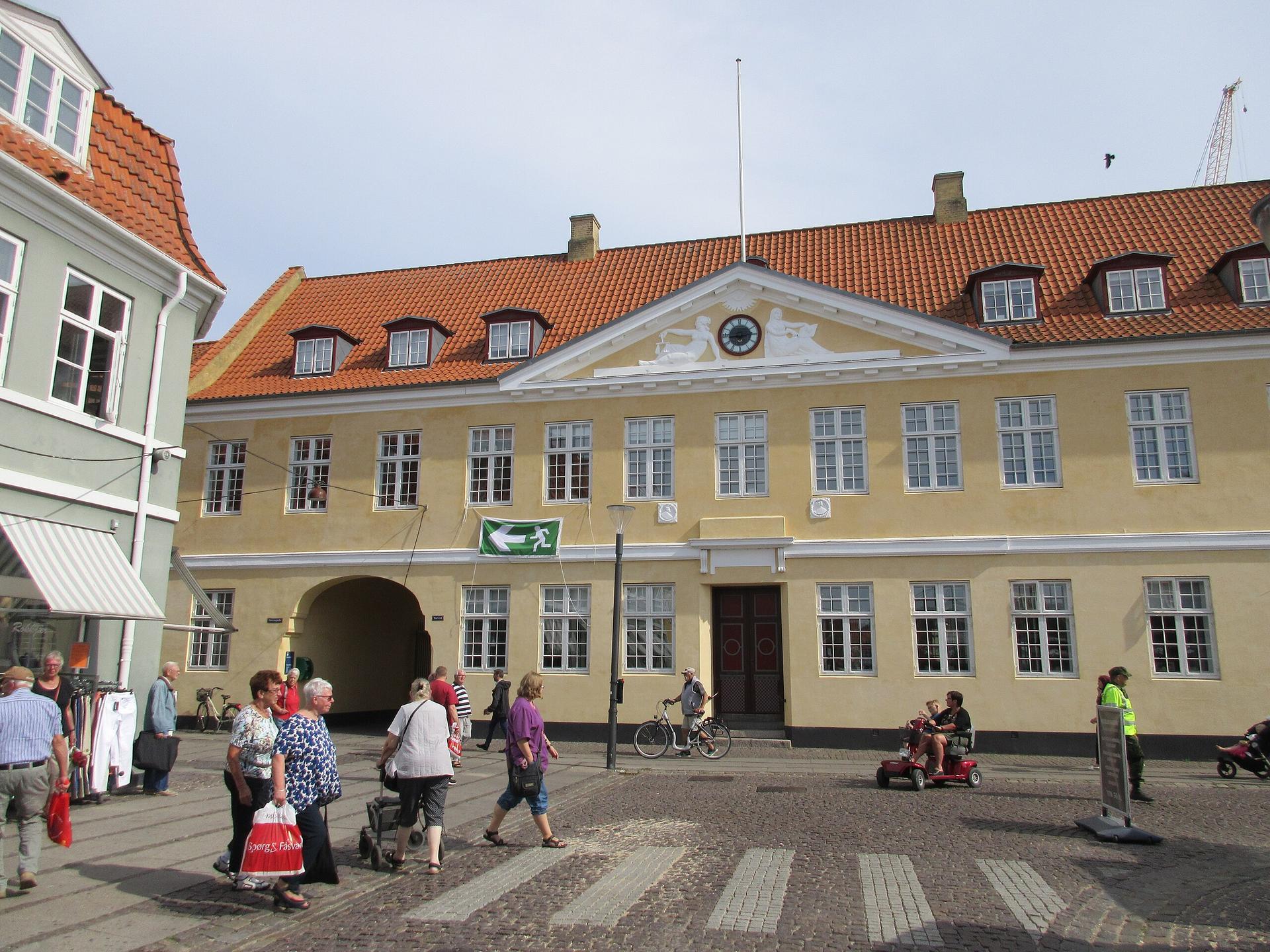
Looking beyond The Danish Parliament? Discover Koge for broader travel guides, local hot-spots, and regional highlights.
Explore Koge