

Bispens lysthus, Odense Travel Guide
Free Guide: A tiny red timber pavilion on stilts above Odense Å, Bispens Lysthus blends riverside calm, ecclesiastical history and postcard-perfect charm in the city’s green heart.


A brief summary of Bispens lysthus
A tiny red timber pavilion on stilts above Odense Å, Bispens Lysthus blends riverside calm, ecclesiastical history and postcard-perfect charm in the city’s green heart.
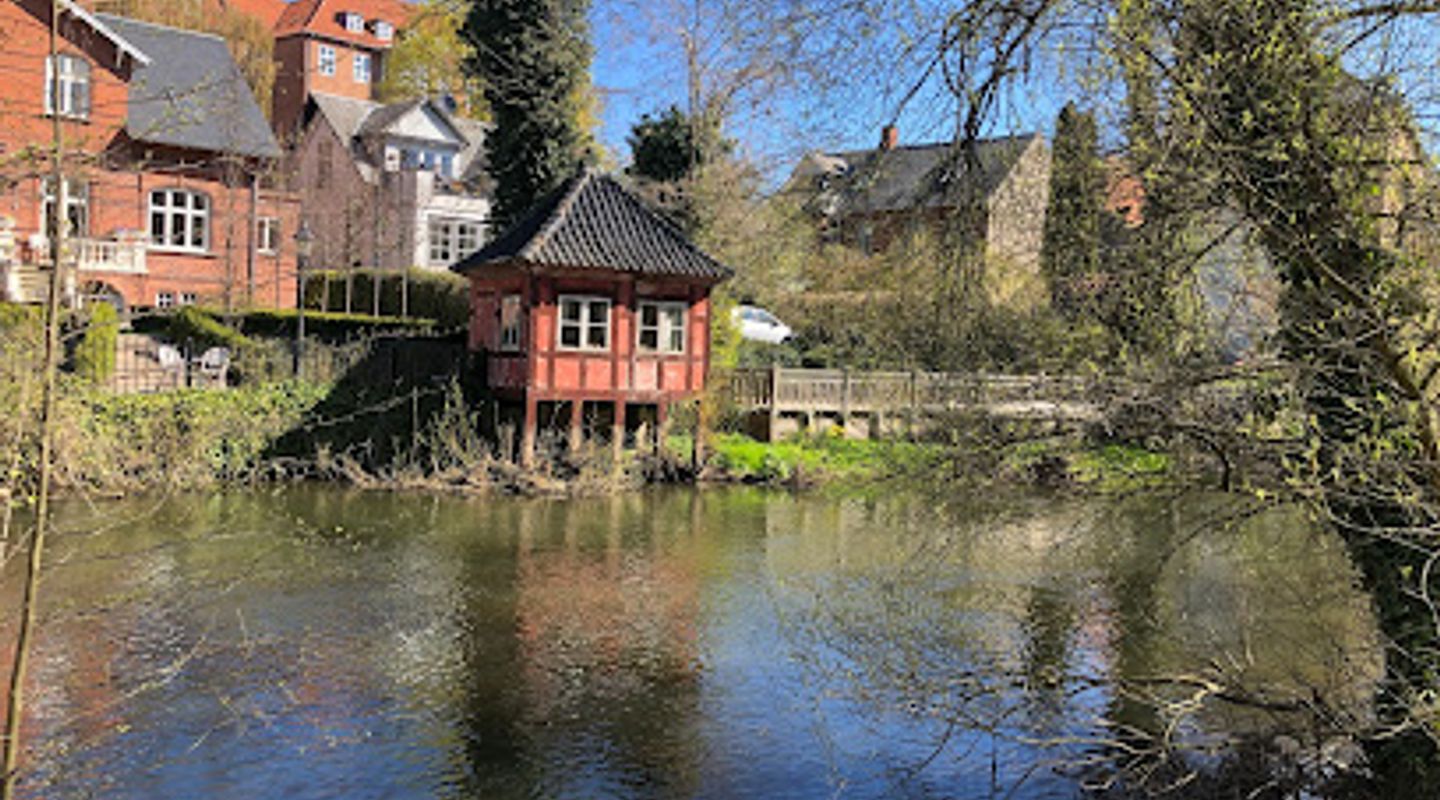
Poised on stilts above the slow curves of Odense Å, Bispens Lysthus is a small 18th‑century red timber pavilion that once belonged to the bishop’s residence. Tucked behind Filosofgangen in central Odense, this protected little gem feels almost like a countryside retreat, with water lapping beneath the floorboards and leafy parkland all around. It is admired from the river path rather than entered, offering a quiet, atmospheric pause on walks between Munke Mose and the city center.
On-site amenities
 Seating areas
 Trash bins
 Information boards
 Restrooms
 Food options
 Drink options
 Drinking water
- Address
- Filosofgangen 10, 5000 Odense
- Website
Getting there
Walking from Odense city center
City bus within Odense
Bicycle access in Odense
Car or taxi within Odense
Discover more about Bispens lysthus
A tiny pavilion with a grand ecclesiastical past
Bispens Lysthus, the Bishop’s Garden Pavilion, began life in the 18th century as a small pleasure house belonging to Odense’s bishop and his family. Set originally by the old bishop’s palace, it was designed as a retreat where church dignitaries could withdraw from formal duties and enjoy views over the water. Its name hints at a world of leisurely strolls, private conversations and quiet reading sessions away from the main residence.Though modest in scale, the pavilion is closely tied to the story of Odense as a clerical center on Funen. Bishops shaped the city’s spiritual and political life for centuries, and this intimate refuge along the river shows another side of that influence: cultured, contemplative and fond of cultivated landscapes.
Timber, stilts and reflections in the water
Architecturally, Bispens Lysthus is striking in its simplicity. The house is built in red-painted half-timbering, with white infill panels and a steep roof that gives it a distinct, almost storybook silhouette. What makes it truly memorable is its position on stilts right out over Odense Å, so that the structure seems to hover above its own shimmering reflection.Viewed from the river path, you see how the timber posts sink into the water and how the low building nestles against the bank-side greenery. In different seasons its character shifts: framed by snow and bare branches in winter, or half-hidden behind foliage in summer, always with the muted sounds of the river flowing beneath the floor.
From near demolition to protected landmark
The pavilion has not always been as cherished as it is today. When the old bishop’s residence was demolished in the early 20th century, the small garden house suddenly lost its context and, for a while, its purpose. It stood neglected and close to being dismantled altogether, its timber frame at risk of ending as firewood rather than heritage.Gradually, however, awareness grew that this unassuming structure captured an important piece of Odense’s past. It was moved and re-sited, then eventually secured on its current spot behind Filosofgangen. Today, Bispens Lysthus is a listed building, legally protected as part of Denmark’s architectural and cultural legacy and carefully maintained in its traditional style.
A riverside pause between park and city
For visitors, the pavilion is less about going inside and more about appreciating its setting. It acts as a focal point along the footpath that follows Odense Å between Hunderupvej, Munke Mose and the city center. Walkers and cyclists drift past, often slowing as the bright red house appears ahead between the trees, perched over the greenish water.Benches and grassy banks nearby encourage you to linger, watch ducks slide past the stilts and feel the city recede slightly, even though shops and streets lie just beyond the park edge. The scale is human and intimate: a single small room above the river, suggesting quiet afternoons and a time when leisure and landscape design were closely linked.
Literary echoes and postcard-perfect views
Over the years, Bispens Lysthus has also picked up a literary aura. Its proximity to places associated with Hans Christian Andersen and its almost fairytale appearance have led to many stories, speculations and illustrated postcards. Whether or not specific anecdotes are strictly factual, the mood here fits well with an author who drew inspiration from gardens, rivers and small, characterful buildings.Culturally, the pavilion has become one of those compact, easily recognized images of Odense, appearing again and again in photographs, historic prints and local histories. Standing by the railing on the path, you see why: the red timber, the calm water and the leafy backdrop combine into a scene that feels both theatrical and genuinely tranquil, a tiny stage set preserved at the heart of the modern city.
Evendo Review Centre
 Google
Guest reviews
Best time to go
Quietest: Jan, Feb & Nov · before 7am or from 10pm
Busy times are Evendo estimates for a typical year, to help you plan. Actual crowds vary with events, school holidays and the weather.
Explore Bispens lysthus on the map
A handpicked selection of must-see spots near Bispens lysthus, mapped for you.
Get your free copy of our complete guide to Bispens lysthus, delivered straight to you.
Everything on this page, from opening hours and how to get there to Eve’s tips and the best time to go, in one PDF you can read offline, print or share.
Already have an account? Sign in
Your Bispens lysthus guide is ready.
We'll send it to · Not you? Sign out

Getting your guide ready…
We are putting together a fresh copy of the Bispens lysthus guide. This can take up to a minute.
This can take a few moments. If your browser asks, choose Allow so the download can start. You'll find the guide in your Downloads folder.
Nothing happened? Download it again
Sorry, the guide is taking longer than usual. Please try again in a minute, or get it by email instead.
Other nearby places you may find interesting
The closest places of the same kind, if this one is not quite what you had in mind.
-
-
-
-
-


Swipe for more places
More to explore near Bispens lysthus

 Best experiences near Bispens lysthus
 Best hotels near Bispens lysthus
 Best landmarks near Bispens lysthus
 Best attractions near Bispens lysthus
 Best shops near Bispens lysthus
 Best restaurants near Bispens lysthus
 Best bars near Bispens lysthus
Do you manage this location?
Take control to get all the benefits, like improved information, better appearance, and stronger visibility across AI-powered discovery.
Explore more

Explore more of Odense
Discover Odense, Denmark's enchanting city where fairy tales come to life amidst historic streets, vibrant culture, and scenic beauty.
Explore Odense
Explore more of Denmark
Discover Denmark: A perfect blend of history, modern design, and the cozy concept of hygge. Explore vibrant cities, serene landscapes, and world-class cuisine.
Explore Denmark
