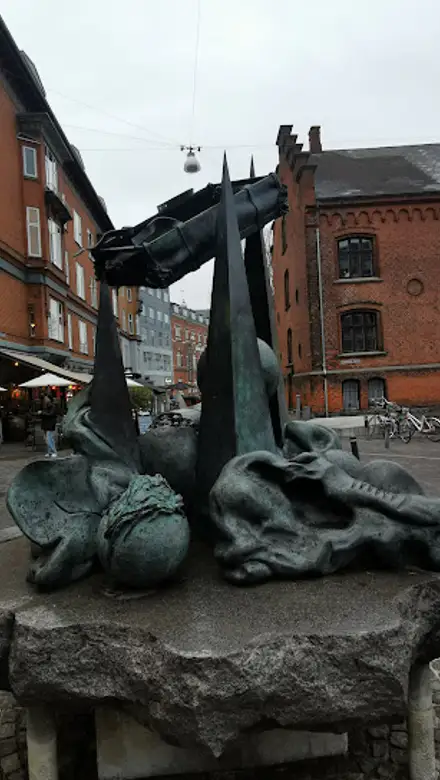
Den Flyvende Kuffert Eventyrskulptur, Odense Travel Guide
Free Guide: A bronze suitcase poised for takeoff above a shimmering fountain, this H.C. Andersen–inspired sculpture turns a small Odense square into a quiet fairytale scene.


A brief summary of Den Flyvende Kuffert Eventyrskulptur
A bronze suitcase poised for takeoff above a shimmering fountain, this H.C. Andersen–inspired sculpture turns a small Odense square into a quiet fairytale scene.
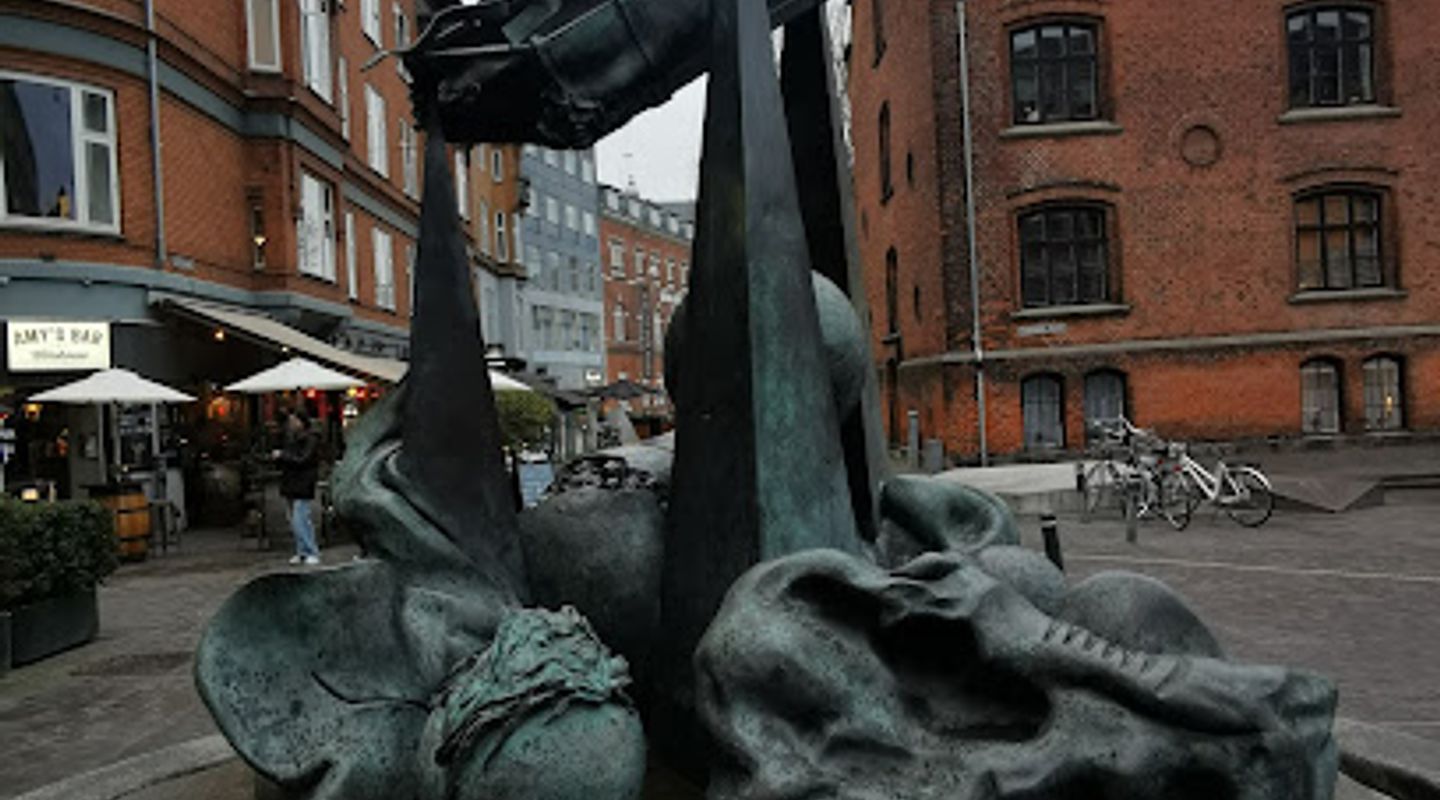
Den Flyvende Kuffert er en striking H.C. Andersen–inspired bronze and granite fountain sculpture on Ove Sprogøes Plads in central Odense. Created in 1991 by sculptor Jens Flemming Sørensen, it depicts a suitcase soaring toward the sky, balanced lightly on three pyramid-like towers that evoke distant mosques from Andersen’s fairytale world. Set above a shallow basin, it forms a small, contemplative oasis amid cafés, shops and the busy streets of Odense C.
On-site amenities
 Seating areas
 Trash bins
 Information boards
 Drink options
 Food options
Opening hours
- Every dayOpen 24 hours
Opening hours as listed on the venue’s Google Business Profile. Hours can change for services and special events, so check with the venue before you go.
- Address
- Jernbanegade 8, 5000 Odense
Getting there
Walk from central Odense
Local city bus within Odense
Odense light rail (letbane) plus short walk
Bicycle within Odense
Discover more about Den Flyvende Kuffert Eventyrskulptur
A fairytale suitcase in the heart of Odense
Den Flyvende Kuffert Eventyrskulptur sits in the very center of Odense, a compact fountain plaza framed by façades, shopfronts and café terraces. At first glance you notice the suitcase itself, cast in bronze and tilted upward as if caught mid-flight, as though it has just launched from the paving stones and is making a slow escape into the sky. Water ripples gently around the base, softening the edges of the stone and metal and adding a quiet soundtrack to the urban bustle.This is one of the city’s series of H.C. Andersen fairytale sculptures, each drawn from a different story. Here the inspiration is The Flying Trunk, where a young man escapes on a magic suitcase to a distant land. The sculpture captures that moment of departure, turning a small city square into a stage for Andersen’s imagination.
Symbolism in stone, bronze and water
Look beneath the suitcase and you will see three pyramidal towers, also in bronze, holding it aloft. Their pointed tops suggest the silhouettes of mosques in the “Turkish land” described in Andersen’s tale, a stylised reference rather than a literal skyline. The geometry is deliberate: strong triangular forms grounding an object that is trying to leave the earth behind.The entire composition rests on a granite plinth that itself appears to float. It is mounted so that the block hovers a little above the surface of the fountain basin, creating a subtle illusion of weightlessness. The contrast between dark bronze, pale granite and the reflective water makes the sculpture particularly striking in low, slanting light, when shadows stretch across the square.
The hand of Jens Flemming Sørensen
Den Flyvende Kuffert was unveiled in 1991 and is the fourth in a planned series of eight Andersen sculptures. The work is by Jens Flemming Sørensen, a largely self-taught Danish sculptor who originally trained as a tailor before turning fully to art. His practice often combines geometric shapes and organic curves, favouring durable materials such as bronze, granite and marble.Sørensen spent much of his later life in Italy, close to the marble quarries of Pietrasanta, and that sculptural sensibility carries through to this work in Odense. The clean lines of the pyramids, the carefully judged tilt of the suitcase and the balanced proportions are typical of his style, which seeks a dialogue between heavy materials and a sense of movement.
A small urban oasis on Ove Sprogøes Plads
The sculpture stands on Ove Sprogøes Plads, a pocket-sized square just off Jernbanegade. Despite its modest scale, the fountain creates a focal point: in warmer months you may hear the quiet splash of water and the murmur of conversation from the café just in front. People pass through on their way across Odense C, pausing briefly to photograph the fountain or to sit nearby.Because the basin is low and open, you can walk right up to the edge and study the suitcase and towers at close range. The surrounding paving keeps the area level and easy to navigate, and the constant movement of the city around you makes the scene feel almost theatrical, as if the suitcase might lift a little higher at any moment.
Connecting the dots of Andersen’s Odense
Den Flyvende Kuffert is part of a wider narrative that runs through Odense, where sculptures, museums and plaques all refer back to H.C. Andersen’s life and stories. Visitors often treat the fountain as a waypoint on a self-made trail, combining it with nearby Andersen-related sites and other artworks scattered through the center.Even if you do not know the original tale, standing by the fountain invites you to imagine your own version: Where is the suitcase heading, and what was left behind? In a few square meters of bronze, granite and water, the sculpture manages to capture a sense of departure, curiosity and the pull of far-away places—fitting themes in a city so closely associated with Denmark’s most famous storyteller.
Evendo Review Centre
 Google
Guest reviews
Best time to go
Quietest: Jan, Feb & Mar · before 7am or from 9pm
Busy times are Evendo estimates for a typical year, to help you plan. Actual crowds vary with events, school holidays and the weather.
Explore Den Flyvende Kuffert Eventyrskulptur on the map
A handpicked selection of must-see spots near Den Flyvende Kuffert Eventyrskulptur, mapped for you.
Get your free copy of our complete guide to Den Flyvende Kuffert Eventyrskulptur, delivered straight to you.
Everything on this page, from opening hours and how to get there to Eve’s tips and the best time to go, in one PDF you can read offline, print or share.
Already have an account? Sign in
Your Den Flyvende Kuffert Eventyrskulptur guide is ready.
We'll send it to · Not you? Sign out

Getting your guide ready…
We are putting together a fresh copy of the Den Flyvende Kuffert Eventyrskulptur guide. This can take up to a minute.
This can take a few moments. If your browser asks, choose Allow so the download can start. You'll find the guide in your Downloads folder.
Nothing happened? Download it again
Sorry, the guide is taking longer than usual. Please try again in a minute, or get it by email instead.
Other nearby places you may find interesting
The closest places of the same kind, if this one is not quite what you had in mind.
-
-
-
-
-


Swipe for more places
More to explore near Den Flyvende Kuffert Eventyrskulptur
-
 Best experiences near Den Flyvende Kuffert Eventyrskulptur
-
 Best hotels near Den Flyvende Kuffert Eventyrskulptur
-
 Best landmarks near Den Flyvende Kuffert Eventyrskulptur
-
 Best attractions near Den Flyvende Kuffert Eventyrskulptur
-
 Best shops near Den Flyvende Kuffert Eventyrskulptur
-
 Best restaurants near Den Flyvende Kuffert Eventyrskulptur
-
 Best bars near Den Flyvende Kuffert Eventyrskulptur


Do you manage this location?
Take control to get all the benefits, like improved information, better appearance, and stronger visibility across AI-powered discovery.
Explore more

Explore more of Odense
Discover Odense, Denmark's enchanting city where fairy tales come to life amidst historic streets, vibrant culture, and scenic beauty.
Explore Odense
Explore more of Denmark
Discover Denmark: A perfect blend of history, modern design, and the cozy concept of hygge. Explore vibrant cities, serene landscapes, and world-class cuisine.
Explore Denmark