
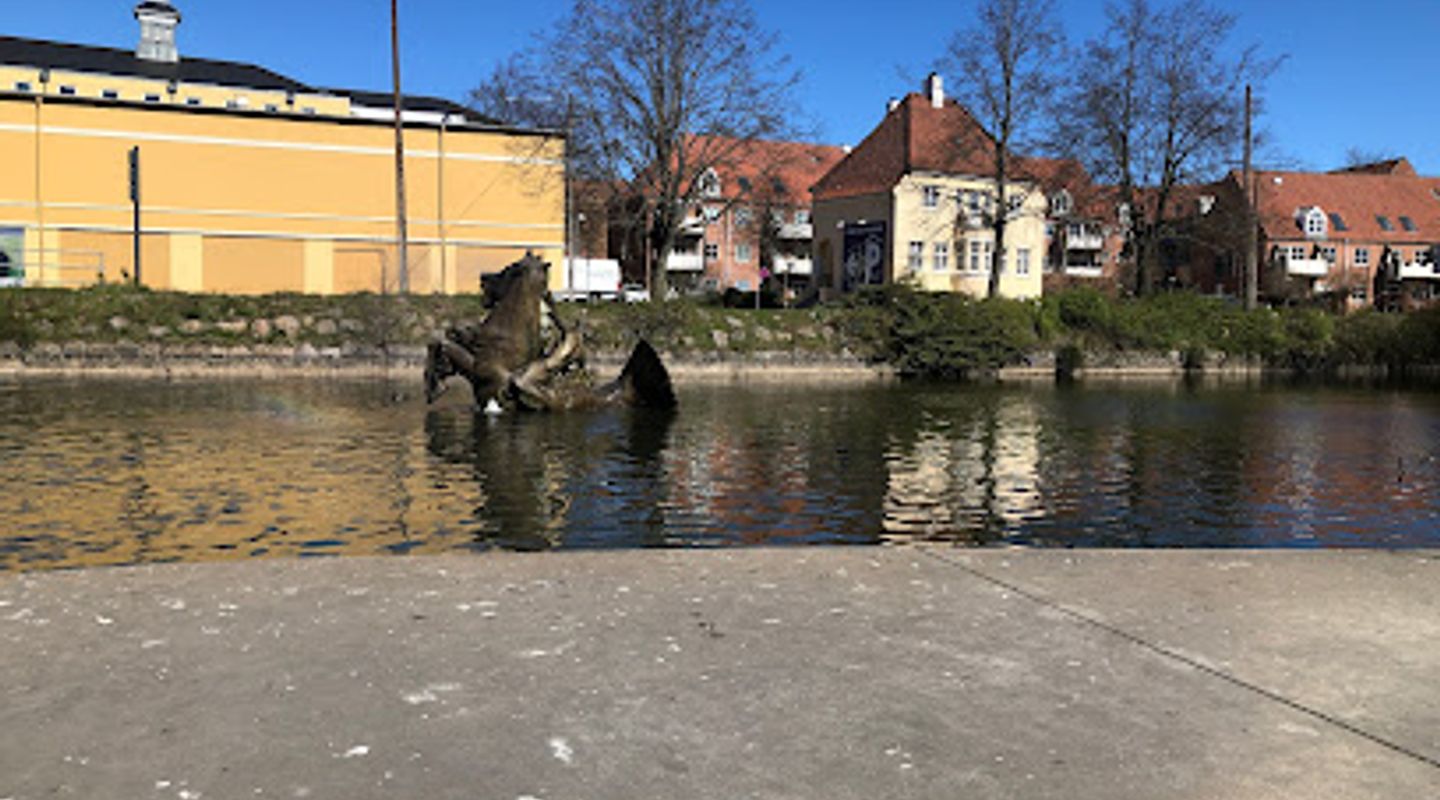
The Sea Horse, Odense Travel Guide
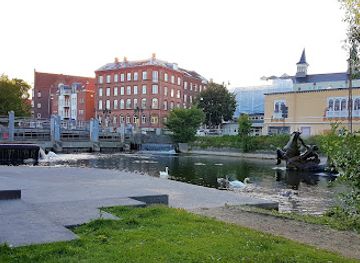
A powerful Andersen-inspired sea horse and mermaid burst from the Odense River, marking a poetic gateway between city streets and leafy Munke Mose park.
The Sea Horse is a dynamic bronze sculpture and fountain on the Odense River, right by the entrance to Munke Mose park in central Odense. Depicting a powerful sea horse rearing from the water with a mermaid on its back, it is inspired by Hans Christian Andersen’s play "Agnete and the Merman" and forms part of the city’s trail of fairy-tale sculptures. The riverside setting, gentle spray and nearby greenery make it a tranquil stop on a walk through the historic centre.
A brief summary to The Sea Horse
- Ny Vestergade 19, Odense Municipality, Odense C, 5000, DK
- Click to display
- Duration: 0.5 to 1 hours
- Free
-
 Outdoor
- Mobile reception: 5 out of 5

Know before you go
Hi, I'm Eve. Here are a few practical things to know before exploring The Sea Horse.
- Plan a short riverside loop through Munke Mose so you can view The Sea Horse from multiple angles, including the bridge and opposite bank.
- Visit in the early evening on a clear day when low sunlight makes the bronze surface glow and the reflections in the river are strongest.
- Combine the sculpture with other nearby Hans Christian Andersen statues to create your own self-guided fairy-tale walk through central Odense.
Do you manage this location?
Take control to get all the benefits, like improved information, better appearance, and stronger visibility across AI-powered discovery. Learn more about listing your business on Evendo
Activate your presenceOther nearby places you may find interesting
The closest places of the same kind, if this one is not quite what you had in mind.
Explore The Sea Horse on the Map
A handpicked selection of must-see spots near The Sea Horse, mapped for you.
Getting There
-
Walking from Odense Station
From Odense Banegård Center, allow around 15–20 minutes on foot to reach Ny Vestergade by the river. The walk is mostly flat on paved city streets and riverfront paths, suitable for most visitors and pushchairs. As this is central Odense, crossing a few busy junctions is necessary, but there are pedestrian crossings and the route is usable year-round except in severe winter ice.
-
City bus within Odense
Several local bus lines run between Odense Banegård Center and stops near Munke Mose and Ny Vestergade, with journey times typically 10–15 minutes plus a short walk. A standard single ticket within Odense usually costs around 20–30 DKK and can be bought from ticket machines or via local transport apps. Services run frequently during the day, though evening and weekend schedules are less frequent, so checking timetables in advance is advisable.
-
Cycling from central Odense
Odense is very bicycle-friendly, and The Sea Horse is about a 5–10 minute ride from the commercial centre along marked cycle lanes and shared paths beside the river. Many accommodations provide bikes, and city bike rentals typically cost from about 80–120 DKK per day. The terrain is flat and accessible for casual cyclists, but be prepared for wet or windy conditions outside summer.
For the on-the-go comforts that matter to you
-
 Restrooms
-
 Drink Options
-
 Drinking Water
-
 Food Options
-
 Seating Areas
-
 Picnic Areas
-
 Trash Bins
-
 Information Boards
Discover more about The Sea Horse
Fairy-tale guardian of the river
The Sea Horse stands where the city’s streets meet the greenery of Munke Mose, rearing from the Odense River in a burst of bronze muscle and water spray. At once animal and myth, it is captured mid-motion, nostrils flared and hooves pawing the air as if about to plunge back beneath the surface. The nearby footbridge and riverbank paths make it an almost unavoidable companion as you drift between the old town and the parkland.More than a simple ornament, the work functions as both sculpture and fountain. On calm days, ripples spread out from its base in perfect circles, mirroring the curves of its mane and tail. The sound of water softens the hum of the city, giving this corner of Odense a surprisingly contemplative atmosphere for such a central spot.From "Agnete and the Merman" to bronze
The piece draws its story from Hans Christian Andersen’s dramatic work "Agnete and the Merman", in which the border between land and sea, duty and desire, is never clear-cut. Here, the artist has translated that tension into physical form: the sea horse surges upwards, while the figure on its back is half-rider, half-creature of the deep. Together they suggest a moment of crossing between two worlds.Odense has scattered Andersen-inspired works through streets, gardens and riverbanks, and The Sea Horse is one of the most theatrical of them. It does not depict a specific scene so much as the emotional charge of the tale: the pull of the unknown, the lure of the water, and the uneasy alliance between human and mythical beings. The result feels both rooted in folklore and strikingly modern.Riverside setting in Munke Mose
Physically, the sculpture is modest in footprint but generous in presence. It rises directly from the river beside the broad entrance to Munke Mose, a leafy park where lawns slope gently to the water and trees frame the skyline. From the nearby paths you can view it at eye level, then from above as you cross the bridge, and from a distance along the curve of the river.Because it sits in open air and free public space, you are never hurried. Joggers pass, cyclists roll by, and families pause with ice creams while ducks patrol the water. The sculpture becomes part of this everyday choreography, a fixed point amid the movement around it. Reflections change with the light, from morning mist over the water to the long shadows of late evening.Experiencing the sculpture up close
Up close, the surface work rewards patient looking. The tension in the horse’s neck, the twist through its torso and the spray frozen in metal all reveal the artist’s fascination with motion. From some angles, the rider appears almost weightless; from others, you notice the subtle curve of the body leaning into the animal’s surge.There is no barrier or ticket office, only the river itself creating distance. You may find yourself walking slowly along the bank to test different viewpoints, or stepping onto the bridge to see how the sculpture aligns with trees, rooftops and the park beyond. In rain, beads of water pick out new details; in winter, low sun can sharpen the silhouette against a pale sky.Part of Odense’s fairy-tale tapestry
The Sea Horse forms one chapter in a wider open-air gallery of Andersen-themed works that thread through central Odense. Nearby, in Munke Mose and around the river, you can encounter other figures drawn from the author’s stories. This dispersal turns an ordinary city stroll into a gentle treasure hunt, with the river as a natural guide.Because of its location at a natural crossing point, The Sea Horse often becomes the sculpture visitors notice first, an informal gateway into this imaginative landscape. Whether you stay only a few minutes or linger on a bench watching the play of light on bronze and water, it offers a compact but evocative encounter with the city’s enduring bond to its most famous storyteller.












Your all‑in‑one travel companion app
Explore expert travel guides, compare and book tours, experiences, hotels, and more—all from the palm of your hand. Download now for seamless trip planning wherever your wanderlust takes you.


Explore More of Odense
Looking beyond The Sea Horse? Discover Odense for broader travel guides, local hot-spots, and regional highlights.
Explore Odense
Funen’s leading art and visual culture museum in a former woollen mill, mixing Danish art, photography, family-friendly exhibits and a Green Attraction–certified café hub.
Intimate Danish opera on a human scale in central Odense, blending classic works and bold new compositions in a modern, close-up performance space.
