Bishop Absalon Statue, Højbro Plads
Bronze warrior-bishop on a rearing horse, anchoring Højbro Plads and tracing Copenhagen’s journey from herring harbour and fortress town to confident modern capital.
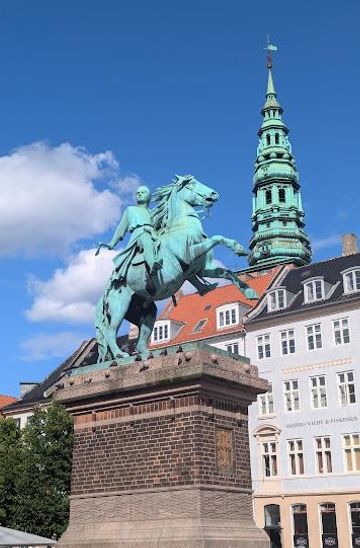
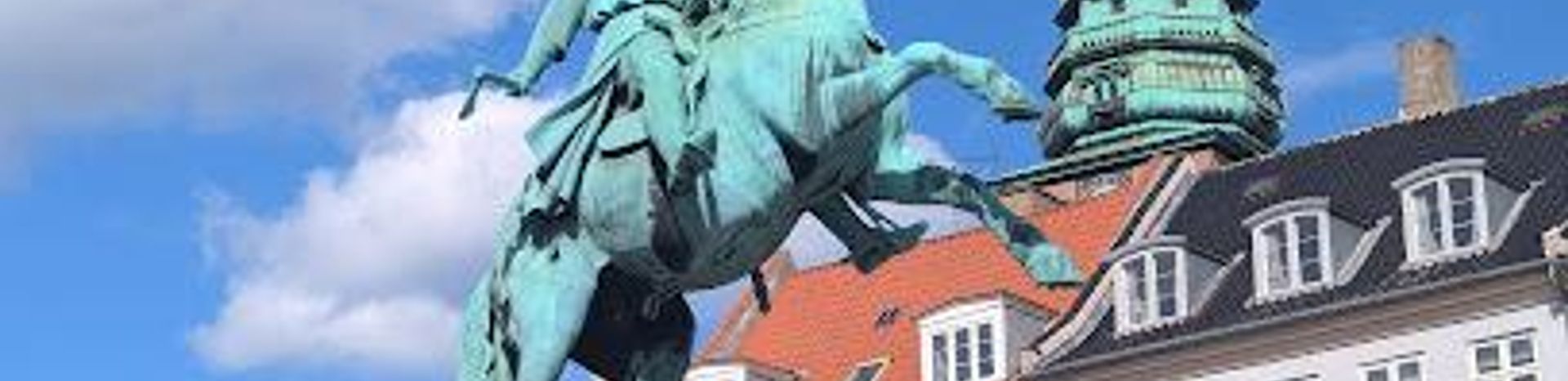
Rising above central Copenhagen’s Højbro Plads, the bronze equestrian statue of Bishop Absalon honours the warrior-bishop credited with founding the city in the 12th century. Unveiled in 1902, the dynamic figure on a rearing horse faces Christiansborg Palace, linking the busy modern square to its medieval origins. The richly detailed brick-and-granite plinth, with herring friezes and Viking ornament, quietly tells the story of how a small fishing hamlet grew into Denmark’s capital.
A brief summary to Bishop Absalon
- Højbro Pl., Copenhagen, Indre By, 1200, DK
- Click to display
- Duration: 0.25 to 1 hours
- Free
-
 Outdoor
- Mobile reception: 5 out of 5

Know before you go
Hi, I'm Eve. Here are a few practical things to know before exploring Bishop Absalon.
- Circle the statue to study the details on the plinth: the herring and wave friezes, Viking ornament and coat of arms all hint at Copenhagen’s fishing and ecclesiastical past.
- Time your visit for early morning or late evening for softer light on the bronze and fewer people in the background of your photos across the canal toward Christiansborg.
- Use the granite base as a short rest spot between exploring Strøget, Christiansborg Palace and the nearby canals, but be mindful of cyclists and delivery traffic around the square.
- In winter, combine a look at the statue with a stroll through the seasonal market that often fills Højbro Plads, when stalls and lights frame the monument in a festive setting.
- Look along the statue’s line of sight toward Christiansborg to imagine Absalon’s original fortress on Slotsholmen, where Copenhagen’s political center still stands today.
Do you manage this location?
Take control to get all the benefits, like improved information, better appearance, and stronger visibility across AI-powered discovery. Learn more
Activate your presence
Getting There
-
Metro
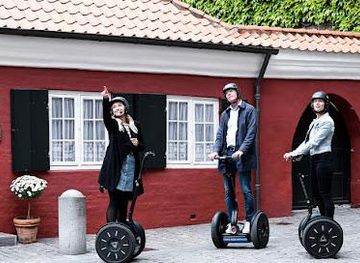
From Nørreport Station, take the M1 or M2 metro two short stops to Gammel Strand, then walk about 8–10 minutes along the canal to Højbro Plads. Trains run every few minutes throughout the day, and the ride is around 5 minutes, with a typical adult single ticket in greater Copenhagen costing roughly 20–30 DKK depending on zones and ticket type.
-
Bus
Several city buses serve the streets close to Højbro Plads. From Copenhagen Central Station, frequent buses toward the inner city reach a stop near Strøget in about 10–15 minutes, after which it is a short urban walk to the square. Expect standard city bus fares in the range of 20–30 DKK for a single journey within the central zones.
-
Bicycle
Cycling is one of the easiest ways to reach Bishop Absalon from most central districts. From Vesterbro or Nørrebro, the ride is typically 10–20 minutes along signposted cycle lanes toward the old town. Be prepared for cobblestones around the square and heavy bicycle traffic at peak commuting times; public bike-share schemes charge by the minute or via short passes, generally from around 20–40 DKK for a basic rental window.
-
Walking
If you are already in central Copenhagen, reaching Højbro Plads on foot is straightforward. From landmarks such as Nyhavn, the Round Tower or City Hall Square, expect a pleasant walk of 10–20 minutes through mostly flat, pedestrian-friendly streets. Surfaces around the square combine paving stones and cobbles, which can be uneven for strollers and wheelchairs but remain manageable with care in dry weather.
For the on-the-go comforts that matter to you
-
 Restrooms
-
 Drink Options
-
 Drinking Water
-
 Food Options
-
 Seating Areas
-
 Trash Bins
-
 Information Boards
Discover more about Bishop Absalon
A warrior-bishop at the heart of Copenhagen
Bishop Absalon’s equestrian statue dominates Højbro Plads, right in the historic center of Copenhagen. Cast in bronze and unveiled in 1902, it commemorates the 700th anniversary of the death of the man traditionally credited with founding the city in 1167. Absalon appears not as a cloistered cleric but as a commander: armor glints in the sculpted metal, a helmet frames his stern profile, and his horse rears, frozen mid-stride above the cobbled square.The statue is oriented toward Christiansborg Palace on Slotsholmen, where Absalon once built his fortified bishop’s castle. That early stronghold anchored the town’s growth, turning a vulnerable harbour and fishing hamlet into a defensible trading hub. By simply standing beneath the monument and tracing its sightline, you follow the invisible axis that ties present-day Copenhagen to its fortified medieval core.Symbolism in stone, brick and bronze
Look down from the rider to the plinth and you discover a layered narrative in stone and brick. The lower base is solid granite, shaped for casual seating and echoing the sturdiness of the old fortifications. Above it rises a red-brick block, more architectural than sculptural, binding the monument visually to the surrounding neoclassical facades that frame Højbro Plads.Around this upper section runs a frieze of stylised herring and rolling waves. These playful fish recall the herring shoals in the Øresund that once underpinned the town’s prosperity. In Absalon’s era, salted herring exports brought wealth, merchants and the need for serious defences. Viking-inspired patterns, interlacing ornament and a prominent coat of arms with a rosy cross and crossed keys underscore his role as Bishop of Roskilde, while a band of raised lettering gives his name and lifetime, quietly asserting his place in Danish history.A square born from fire and reinvention
The statue stands on a square that itself is a product of renewal. Højbro Plads was laid out after the devastating city fire of 1795, which cleared much of the dense medieval fabric between today’s Strøget and the canal. City planners carved this wide, airy space as a deliberate firebreak and as an elegant forecourt to the canal and Højbro Bridge.Most buildings surrounding the square date from the early 1800s and display restrained neoclassical detailing: clean facades, pedimented windows, delicate friezes and tall roofs. Late in the 20th century, a double row of lime trees was added, softening the space and casting dappled shade around the monument. The result is a square where the bronze horseman shares the stage with architecture that tells a quieter story of post-fire rebuilding and civic order.Experiencing Højbro Plads today
For visitors, Bishop Absalon’s statue is both a historical marker and a convenient rendezvous in the very center of town. The plinth’s granite ledges serve as informal benches; from here you can pause between shopping streets and palaces, watching cyclists stream past and boats glide along the nearby canal. Seasonal events, from markets to outdoor performances, often set up around the square, lending the monument a changing backdrop.The statue also rewards slow looking. From close up you can pick out the sculptor’s attention to chain mail links, leather straps and the taut musculature of the horse. Step back and the composition becomes a strong vertical accent in views that take in Christiansborg’s tower, the canal, and the facades lining Gammel Strand. In a compact space, the monument encapsulates Copenhagen’s origins, its mercantile success and its ongoing life as a lively, walkable capital.The people and stories behind the monument
The statue was created by sculptor Vilhelm Bissen, a leading figure in Danish sculpture at the turn of the 20th century. His design consciously casts Absalon as both churchman and statesman, reflecting the bishop’s historical role as advisor to King Valdemar I and architect of Danish power in the Baltic. Architect Martin Nyrop, best known for Copenhagen City Hall, designed the elaborate base, using brick and decorative bands to root the monument in local building traditions.Even the dedication had its drama: plans to unveil the statue on Absalon’s birthday were reshuffled to accommodate another monument, and debates over who should speak at the ceremony mirrored the political tensions of the era. Today those arguments have faded, but the statue remains a firm fixture of the cityscape. Standing at its foot, you are surrounded by centuries of layered decision-making—fortifications, fires, reconstructions, and civic art—woven into one compact urban tableau.Explore the best of what Bishop Absalon has to offer













More about North Zealand
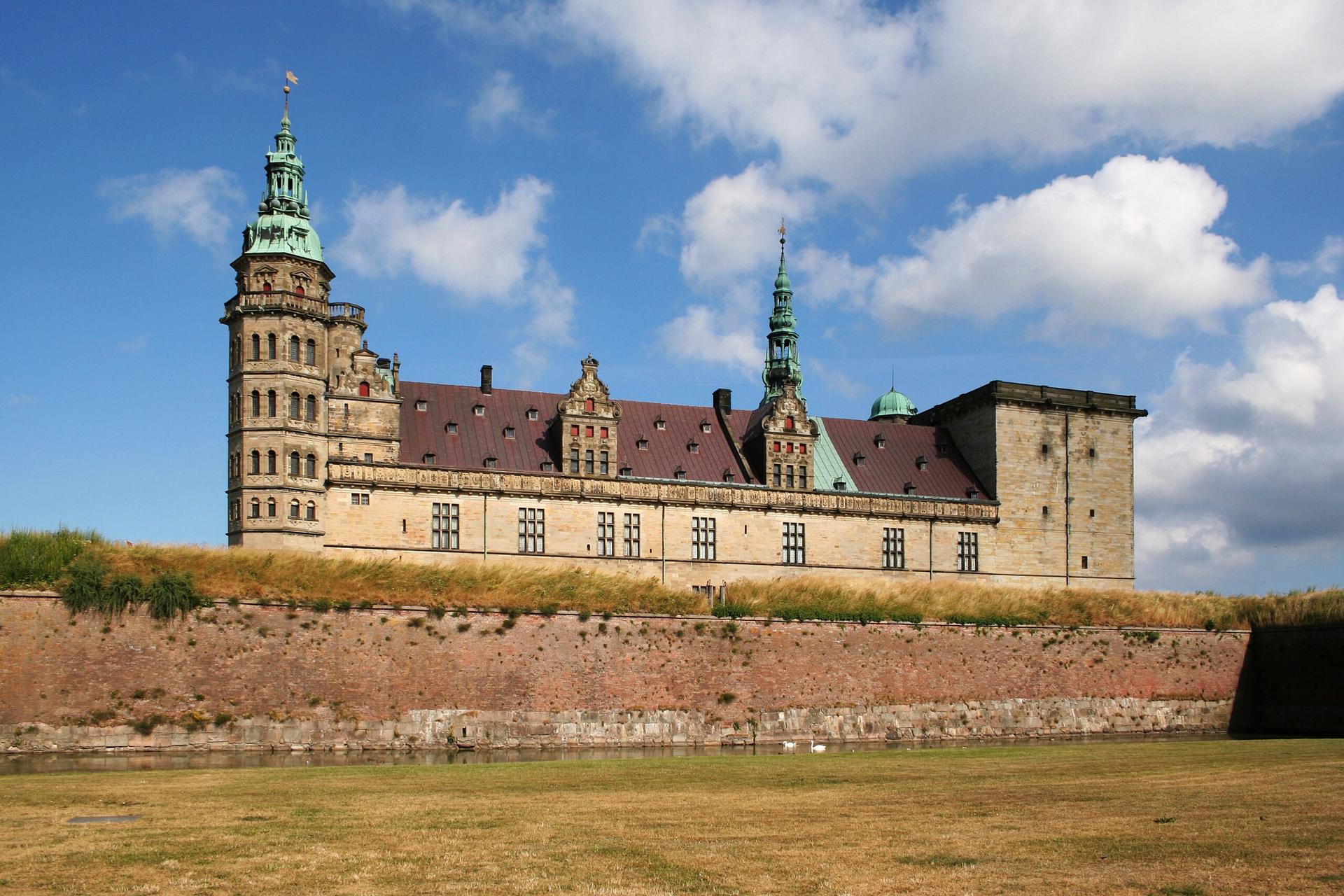
Explore North Zealand, Denmark's enchanting region of castles, beaches, and royal estates, perfect for history buffs, nature enthusiasts, and seaside lovers.
Tell me more about North Zealand
A soaring former church in central Copenhagen where centuries-old brickwork, a towering spire and intimate galleries meet bold, experimental contemporary art.
Copenhagen’s famous waterfront promenade blending royal history, iconic monuments, and scenic strolls along the city’s vibrant harborside.