

Best Landmarks Near Statue of Michael Drewsen (Silkeborg)
Planning a trip to Statue of Michael Drewsen? Discover the best landmarks nearby with history, expert tips, and routes. Free on web or the Evendo app.


The best landmarks near Statue of Michael Drewsen
- Top rated
- Closest to Statue of Michael Drewsen
- Price level: low to high
- Time to spend: shortest first
- A–Z
72 landmarks
-
History museum4.6★16,922 reviews
The Old Town
The Old Town in Aarhus is an extraordinary open-air museum where Denmark’s urban history comes alive. Wander cobbled streets lined with half-timbered houses, centuries-old shops, and artisans at work, all carefully reconstructed to reflect daily life from the 16th to the 20th centuries. Step into living history as costumed interpreters and atmospheric gardens bring a vanished world into the present.
Daily 10:00–17:00
-
Art museum4.5★12,456 reviews
ARoS Aarhus Art Museum
ARoS Aarhus Art Museum is a stunning beacon of modern art in central Aarhus, renowned for its daring architecture, panoramic rainbow walkway, and world-class exhibitions. Enriched with both Danish and international masterpieces, it offers a vibrant experience that fuses art, culture, and striking city views.
Mon–Fri 10:00–21:00 · Sat–Sun 10:00–17:00
-
Amusement park4.3★8,513 reviews
Tivoli Friheden
Tivoli Friheden is a vibrant amusement park located in Aarhus, Denmark, offering a delightful mix of thrilling rides, live entertainment, and family-friendly attractions. Ideal for visitors of all ages, this park guarantees a day filled with excitement and unforgettable memories.
-
Greenhouse4.6★4,609 reviews
Greenhouses in the Botanical Garden
Within Aarhus’s extensive Botanical Garden, the Greenhouses present a lush, immersive journey through global plant kingdoms. Wander among soaring palms, ancient cycads, Mediterranean blooms, and exotic orchids, all sheltered under striking glass domes. Dating to the late 19th century and extensively modernized, this horticultural haven blends science, beauty, and ecology in a captivating setting for all ages.
-
Tourist attraction4.4★3,405 reviews
Himmelbjerget
Denmark's iconic 147-meter hill crowned with a 25-meter red brick tower, offering panoramic views across the Silkeborg Lake District. This historic landmark, acquired for the Danish people by King Christian VIII in 1840, stands as a symbol of Danish democracy and natural beauty. Accessible via numerous hiking trails ranging from gentle 30-minute walks to extended multi-day routes, Himmelbjerget attracts nature lovers, hikers, and history enthusiasts year-round. The summit features a restaurant, souvenir shop, and children's playground, while the surrounding forests hide additional viewpoints and peaceful lakeside paths.
Open 24 hoursTime to spend 1.5–8 hrs
-
Bridge4.5★2,407 reviews
The Uncovered Bridge
A striking red steel lattice bridge spanning the Gudenå River near Brædstrup, Den Genfundne Bro is a remarkable piece of Danish industrial heritage. Built in 1899 as part of a narrow-gauge railway, the 13.4-meter-high bridge was buried beneath a dam for 85 years before its dramatic excavation and restoration in 2014. Today, it stands as one of Denmark's most beloved excursion destinations, offering visitors a unique blend of history, engineering, and natural beauty in a picturesque riverside setting.
Open 24 hoursTime to spend 1–3 hrs
-
Botanical garden4.6★2,217 reviews
Botanical Garden
SMK – Statens Museum for Kunst is Denmark’s largest art museum, showcasing works from the Renaissance to contemporary times. Located in central Copenhagen beside the Kings’ Garden, the museum’s striking blend of historic and modern architecture houses masterpieces by Rembrandt, Rubens, Danish Golden Age painters, and modern icons. With special exhibitions, lush park views, and tranquil galleries, SMK is a cultural cornerstone for art lovers and curious travelers alike.
Mon–Fri 9:00–16:00 · Sat–Sun 10:00–17:00
-
Cathedral4.6★1,643 reviews
Viborg Cathedral
Viborg Cathedral rises above the old town with twin granite towers, a symbol of royal Denmark and one of the country’s most significant historic churches. Rebuilt in the 19th century in Romanesque style yet rooted in a 12th‑century foundation, it combines fortress‑like granite walls with a luminous interior covered in vivid biblical frescoes by Joakim Skovgaard. Beneath the nave, the atmospheric crypt preserves almost 900 years of history, linking Viking‑age Christianity, medieval monarchs and modern Danish church life in one compelling landmark.
Mon–Sat 11:00–17:00 · Sun 12:00–17:00Price level $Time to spend 1–2 hrs
-
Castle4.5★1,674 reviews
Marselisborg Castle
Marselisborg Palace is the Danish royal family’s elegant summer and Christmas residence on the southern edge of Aarhus, set above the Bay of Aarhus and framed by forest and parkland. Built between 1899 and 1902 as a “people’s gift” to the future King Christian X and Queen Alexandrine, the whitewashed palace is surrounded by English-style gardens dotted with sculptures, ponds, rose beds and herb plots. While the palace itself is not open, the atmospheric park is accessible when the royals are away, offering tranquil walks, distant sea views and a refined glimpse of Danish royal life just outside the city centre.
Price level $Time to spend 1–2 hrs
-
Historical landmark4.3★1,715 reviews
Ejer Bavnehøj
Ejer Bavnehøj rises from the rolling Jutland countryside as one of Denmark’s highest natural points, crowned by the brick Genforeningstårnet, a 1924 memorial to the reunification of Southern Jutland. From this modest but wind-swept summit you get big-sky panoramas over glacially carved hills and farmland, easy paths, picnic spots, a small kiosk in season, and a short walk to neighbouring Møllehøj, officially Denmark’s highest point. It is an atmospheric pause on a road trip, blending quiet views, national history, and simple outdoor time.
Daily 8:00–22:00Time to spend 0.5–2 hrs


Mindeparken
Mindeparken (The Memorial Park) is a 65.9-acre memorial park and recreational area in southern Aarhus, adjacent to Marselisborg Palace. Inaugurated in 1925 by King Christian X, the park features a striking limestone monument honoring 4,140 Danes who fell in World War I. Beyond its solemn memorial function, Mindeparken offers lush woodlands, panoramic views across Aarhus Bay, botanical gardens including a Japanese cherry grove, and abundant space for walking, picnicking, and outdoor activities. The park seamlessly blends historical significance with natural beauty and serves as a vital green space for locals and visitors alike.
Open 24 hoursTime to spend 1.5–4 hrs

Aarhus Cathedral
Rising above the cobblestones of Store Torv, Aarhus Cathedral is Denmark’s longest church and a defining landmark of the city’s historic centre. Begun in the late 12th century and later transformed into a soaring Gothic basilica, it blends Romanesque red-brick walls, luminous whitewashed vaults and delicate frescoes. Inside, a gilded late-medieval altarpiece by Bernt Notke, a monumental organ and richly painted chapels create a space that feels both austere and intricate. Entry to the church itself is free, and for a small fee you can climb the tower for wide views over Aarhus’ rooftops and harbour.
Mon–Sat 10:00–15:00Time to spend 0.5–2 hrs

Viking Museum
The Viking Museum in Aarhus offers an immersive journey into the city's Viking past, showcasing artifacts and structures from over a millennium ago. Situated beneath the Nordea Bank at Sankt Clemens Torv, this underground museum provides a unique glimpse into the daily lives of the Vikings who once inhabited Aros, the original name for Aarhus. Visitors can explore well-preserved remnants of Viking Age structures, including parts of a human skeleton, and gain insights into the city's early history. ([en.wikipedia.org](https://en.wikipedia.org/wiki/Viking_Museum_%28Aarhus%29?utm_source=openai))
Mon–Fri 10:15–18:00 · Sat–Sun 10:15–17:00

Klostertorvet
Klostertorvet is a lively, historic square nestled at the core of Aarhus' Latin Quarter. Once a medieval monastic precinct, today it's a popular gathering place lined with cafes, bars, and shops, known for its relaxed yet vibrant atmosphere. Remnants of monastic history blend with modern Danish urban life, making it a quintessential spot to experience the pulse of Aarhus while soaking up architectural charm and local culture.

Steno Museum
The Steno Museum in Aarhus is a remarkable destination for those interested in the intersection of science and history. With its engaging exhibits, the museum showcases the fascinating world of natural sciences, geology, and the history of science. Visitors can explore interactive displays that captivate the imagination and inspire curiosity in all ages.
Tue–Sun 10:00–16:00

Himmelbjerget
Himmelbjerget, meaning 'The Sky Mountain,' is a 147-meter hill located between Ry and Silkeborg in Denmark's Lake District. Crowned with a distinctive 25-meter red brick tower erected in 1875, it stands as one of Denmark's most iconic natural landmarks and a symbol of Danish democracy. The summit offers panoramic views across glacial lakes and forested landscapes, while the surrounding area features over 40 kilometers of hiking trails through pristine nature.
Time to spend 2–7 hrs

Abbey Mill
Abbey Mill is a historic monastery and paper mill complex nestled in Denmark's Lake District near Skanderborg. This atmospheric site blends medieval heritage with industrial history, featuring preserved buildings, scenic walking trails, and panoramic viewpoints overlooking Mossø, Denmark's largest lake. The 100-metre drying barn—Denmark's longest wooden building—stands as a testament to the mill's paper-making past. Perfect for leisurely exploration, photography, and connecting with both nature and history.
Open 24 hoursTime to spend 1.5–4 hrs

Rådhusparken
Rådhusparken is a vibrant public garden at the heart of Aarhus C, situated next to the iconic City Hall. Known for its lush lawns, historic monuments, and inviting pathways, the park is an urban sanctuary where locals and visitors gather for cultural events, relaxing afternoons, or a picturesque stroll in the city center. Its history merges with the city’s architectural heritage and daily life, making it a celebrated landmark in Aarhus.
Open 24 hours

The Manor House of Hald
Hald Manor is a historic 18th-century estate near Viborg, Denmark, set on the shores of Hald Lake amid rolling glacial hills. The current manor, completed in 1798, serves as a venue for conferences and houses the Danish Centre for Writers and Translators. While the main building remains closed to public access, visitors can explore extensive parklands and discover the ruins of four earlier Hald structures dating back to 1328, creating a unique open-air museum of Danish architectural and political history.
Open 24 hoursTime to spend 1.5–4 hrs

Our Lady Church
A layered medieval masterpiece in central Aarhus, the Church of Our Lady reveals over a thousand years of Danish ecclesiastical history. Its crown jewel is the crypt—Scandinavia's oldest stone church from 1060—discovered beneath the chancel in 1955. The site encompasses three distinct sacred spaces: the atmospheric crypt chapel, the 14th-century monastery church with its distinctive glass mosaic by renowned artist Per Kirkeby, and the main church with its soaring medieval tower. Originally built as St. Nicholas' Church, it was transformed by Dominican monks into a spiritual and architectural landmark that stands as a testament to medieval craftsmanship and Denmark's early Christianization.
Mon–Fri 10:00–16:00 · Sat 10:00–14:00Time to spend 0.8–2.5 hrs

Stærke Storm af Thomas Dambo
Stærke Storm is a monumental wooden troll sculpture crafted by Danish artist Thomas Dambo, located near Ørnsø lake in Silkeborg. Standing as part of Dambo's global troll-hunting project, this intricately carved figure represents the artist's mission to transform recycled materials into whimsical public art. The sculpture draws visitors seeking adventure, art appreciation, and connection with Denmark's creative landscape.
Open 24 hoursTime to spend 0.5–2 hrs

Hotel Dania
Hotel Dania is a historic 19th‑century hotel set directly on Silkeborg’s central square, Torvet, placing you within steps of cafés, shops and the town’s lakeside promenades. Opened in 1848 and later refurbished, it blends traditional Danish grandeur with modern comforts, offering bright rooms, an on‑site restaurant and bar, and views over the square or towards nearby forests and lakes. It’s a characterful base for exploring Silkeborg and the surrounding Lake District.
Price level $$Time to spend 1–24 hrs

Store Torv
Store Torv is Aarhus’ central and historic market square, a lively open plaza flanked by centuries-old buildings and the imposing Aarhus Cathedral. Sitting at the intersection of the city’s pedestrian arteries, it has served as the city’s vibrant centerpiece for gatherings, trade, and celebrations since medieval times. Today, visitors are greeted with bustling cafés, periodic markets, and a true sense of the city’s urban life—all overlooked by the cathedral’s soaring spire.
Open 24 hours

Oberst J.C. Lunds Plads
Oberst J.C. Lunds Plads is a welcoming public square and park in the heart of Viborg's Cathedral Quarter, offering a peaceful retreat in Denmark's historic city center. Named after a military figure, this open space serves as a gathering point for locals and visitors exploring the medieval streets and landmarks that define central Jutland's cultural heritage. The square provides easy access to nearby attractions including Viborg Cathedral and the charming old town neighborhoods.
Open 24 hoursTime to spend 0.5–2 hrs

Himmelbjerget rutebåd
Denmark's highest point at 147 meters, Himmelbjerget rises dramatically from the shores of Julsø between Ry and Silkeborg. A 25-meter observation tower crowns the summit, offering panoramic views across the lake and surrounding valleys. The site combines natural beauty with accessible hiking trails, family amenities, and the option to arrive by historic paddle steamer, making it one of Denmark's most iconic destinations.
Price level $Time to spend 1.5–4 hrs

Himmelbjergtårnet
Rising from the forested slopes of Himmelbjerget near Ry, Himmelbjergtårnet is a 25 m brick memorial tower crowning one of Denmark’s most storied high points. Built in the late 19th century to honor the nation’s constitution and democratic movement, it offers sweeping views across Julsø and the Silkeborg Lakes. Easy paths, woodland trails, a playground and kiosks make this hilltop lookout a classic Danish nature outing for all ages.
Daily 10:00–17:00Price level $Time to spend 1–4 hrs

Store Troldhøj
Store Troldhøj is a distinctive cone-shaped hill rising 29 metres above the Gjern Bakker landscape in Central Jutland, Denmark. This scenic summit offers panoramic views across the Gjern Å river valley and surrounding oak scrub woodland. The hilltop features a climbing tree, making it a popular destination for families and hikers seeking accessible outdoor recreation with rewarding vistas.
Open 24 hoursTime to spend 0.8–2.5 hrs

Lille Torv
Lille Torv is a historic public square in the heart of Aarhus' Latin Quarter, nestled between Store Torv and Immervad. This vibrant pedestrian hub pulses with restaurants, cafes, and independent shops, drawing locals and visitors alike with its lively atmosphere and cobblestone charm. The square serves as a social and commercial anchor in Aarhus' old town, offering a quintessential Danish urban experience with street-level energy and architectural character.
Open 24 hoursPrice level $$Time to spend 0.5–3 hrs

Bølling Lake
Bølling Lake is a sprawling 360-hectare shallow lake in central Jutland, Denmark, located between Engesvang and Kragelund near Silkeborg. Recreated in 2004–2005, this modern natural haven offers a 12-kilometre scenic walking loop, excellent pike fishing, swimming, and historical discovery points scattered along its shores. The lake's clear waters and peaceful woodland setting make it an ideal destination for nature lovers, families, and outdoor enthusiasts seeking relaxation and active recreation.
Time to spend 1.5–4 hrs

P-plads, Knudmosebjerget
Perched atop Knudmosebjerget hill at 79.3 meters above sea level, this modest monument marks one of Herning's highest points and offers panoramic views across the surrounding landscape. Located within the 230-hectare Knudmosen conservation area, the site serves as a focal point for walkers, runners, and cyclists exploring the region's diverse network of trails through moorland, forest, and open countryside.
Time to spend 0.5–2 hrs

Møllestien
Møllestien is a historic cobblestone street in central Aarhus, Denmark, lined with colorful 19th-century working-class houses. Dating back to the 13th century, this charming lane showcases original architecture from the 1870s–1880s, featuring half-timber construction and vibrant facades adorned with flower gardens. Once a neglected slum, the street was revitalized in the 1960s by artists and students who restored the buildings and painted them in bright colors. Today, it stands as one of Aarhus's most picturesque and peaceful neighborhoods, offering a rare glimpse into the city's past while remaining centrally located and easily accessible.
Time to spend 0.5–1 hr

Marselisborgmonumentet
Set in the lush Mindeparken just south of Aarhus’ city center, the Marselisborgmonumentet stands as Denmark’s largest World War I memorial. Erected in 1934 to honor Danish volunteers who fell in foreign service during the Great War, this monumental site is surrounded by tranquil parkland and offers sweeping views over Aarhus Bay. Intricate reliefs, symbolic sculptures, and a powerful atmosphere provide both historical insight and a contemplative experience.
Open 24 hours

Lovisehøj
Lovisehøj is a 73-meter-high hill in the Silkeborg forest district, offering panoramic views across Brassø lake toward Østerskov. Named after Louise Rasmussen, Countess Danner, this scenic viewpoint combines natural beauty with historical significance. The hill is accessible via forest trails and serves as a popular destination for hikers and nature enthusiasts seeking elevated perspectives of Denmark's lake landscape.
Open 24 hoursTime to spend 1.5–3.5 hrs

Folkehuset Trøjborg
Folkehuset Trøjborg is a vibrant cultural center in Aarhus, Denmark, serving as a living room for locals and visitors alike. Nestled in the lively borough of Aarhus C, it offers welcoming spaces for socializing, enriching activities, and creative events. The center is renowned for its community-driven atmosphere, affordable café, and diverse programming — from talks and concerts to workshops and communal dining — all set in a modern, open environment with strong local character.

Frederiks Plads
Frederiks Plads is a lively urban square in central Aarhus, Denmark, seamlessly blending modern architecture with everyday greenery. Framed by striking glass buildings and featuring a vibrant park-like atmosphere, it serves as a social and recreational hub for locals and visitors alike. Although newly established, it has quickly become a defining feature of Aarhus’s cityscape, offering open lawns, benches, and art installations, set against the backdrop of the city’s energetic business and residential district.
Open 24 hours

Statue of Michael Drewsen
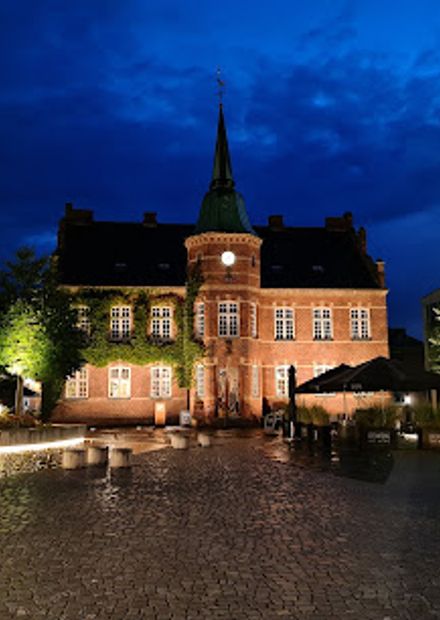
Set in Silkeborg’s central square, the bronze Statue of Michael Drewsen honours the industrialist who founded the town and launched its paper mill on the banks of the Gudenå. Standing before the old town hall and surrounded by shops, cafés, and fountains, the monument anchors daily life in Torvet while quietly recalling Silkeborg’s transformation from rural estate to modern market town.
Open 24 hoursTime to spend 0.2–1 hr

Springvand
One of Northern Europe's largest fountains, Springvandet transforms Silkeborg Langsø with spectacular water displays and synchronized light shows. Operating daily from May through September, the five jets propel lake water up to 33 meters into the air, creating a mesmerizing spectacle visible from the lakeside promenade near the town hall. An integrated weather station automatically adjusts operations based on wind conditions, ensuring a safe and stunning experience for visitors.
Time to spend 0.5–2 hrs

Jættestuen grønhøj
Hidden in the soft landscape by Bygholm Lake near Horsens, Jættestuen Grønhøj is a remarkably well‑preserved Neolithic passage grave, more than 5,000 years old. The low entrance leads into a compact stone chamber beneath a grassy mound, encircled by roughly 60 upright stones. Set between forests and open fields, it combines an evocative prehistoric monument with a gentle nature walk, making it an atmospheric stop for curious history lovers and families alike.
Time to spend 0.5–1.5 hrs

Vadestedet
Vadestedet, nestled along Åboulevarden in Aarhus, is a historic riverside area renowned for its lively atmosphere, charming cafés, and rich history dating back to the city's origins.

Silkeborg Vesterskov mindesten
Tucked deep in Silkeborg Vesterskov, this modest memorial stone marks the spot where two Danish resistance fighters, Leif Dines Pedersen and Poul Mackeprang Nielsen, are commemorated for their work and sacrifice during World War II. Surrounded by tall conifers, soft forest floor and birdsong, the clearing combines solemn remembrance with classic Silkeborg woodland scenery. A nearby parking area and picnic benches make it an easy, contemplative stop on hikes, runs or mountain‑bike loops through the forest.
Open 24 hoursTime to spend 0.5–2 hrs

Kroghs Bænk
Kroghs Bænk is a scenic viewpoint perched above Almind Sø lake in Silkeborg, Denmark, offering sweeping panoramic views across the water and towards the town. This natural vantage point sits along popular walking and hiking routes that encircle the lake, making it an ideal stop for nature lovers and photographers seeking landscape views. The bench at the site provides a perfect resting spot to absorb the tranquil forest and lake scenery.
Open 24 hoursTime to spend 0.5–2 hrs

Agnete og Havmanden
Agnete og Havmanden is an evocative bronze sculpture set in central Aarhus, depicting a poignant scene from Danish folklore. Installed in 1941, it offers an enchanting blend of art and mythology, representing Agnete and her merman family poised in the fountain at the lively Park Allé. The sculpture is a tranquil urban oasis, inviting visitors to reflect on Denmark’s narrative arts and enjoy a picturesque pause amid city bustle.
Open 24 hours

Latin Quarter
The Latin Quarter, Aarhus's oldest neighborhood, enchants visitors with its cobblestone streets, historic architecture, and vibrant atmosphere. Dating back to the 14th century, this area is a hub for unique boutiques, cozy cafés, and cultural experiences, offering a delightful blend of history and modern Danish charm.

Mindesten for Jens Vejmand
A modest roadside memorial honoring Jens Vejmand, a 19th-century stoneworker whose humble life inspired one of Denmark's most beloved folk songs. Located on Sindingvej north of Tjørring, the monument takes the form of a windbreak—the very shelter behind which Jens labored, breaking stones for road construction. The site serves as both a rest stop and a poignant tribute to working-class resilience, drawing visitors interested in Danish cultural heritage and literary history.
Open 24 hoursTime to spend 0.5–1.5 hrs

Møllen i botanisk have Århus
Møllen i Botanisk Have is a historic mill structure nestled within Aarhus's expansive Botanical Garden, offering visitors a charming glimpse into the city's industrial heritage. Located in the heart of the garden's verdant landscape, this restored mill serves as a focal point for exploration and photography. The surrounding botanical grounds feature diverse plant collections, themed gardens, and the renowned Tropical Houses with free admission, making it an ideal destination for nature lovers and history enthusiasts alike.
Time to spend 1–4 hrs

H.C. Andersen bench
A serene literary memorial near Himmelbjerget in Ry, Denmark, the H.C. Andersen Bench honors the beloved fairy tale author with an intimate semi-circle of benches surrounding a stone inscribed with opening lines from Andersen's patriotic hymn 'I Danmark er jeg født' (In Denmark I am Born). Nestled in the picturesque Danish Lake District, this reflective spot overlooks rolling hills, lush forests, and sparkling lakes that inspired Andersen's timeless stories during his frequent visits to the Silkeborg area in the 1850s.
Open 24 hoursTime to spend 0.5–2 hrs

Silkeborg Water Tower
A striking red-brick water tower built in 1902 for the C. Commichaus textile factory, this heritage-listed landmark stands as a testament to Silkeborg's industrial past. Located on Amaliegade in the town centre, the tower's distinctive architecture and prominent position make it an iconic symbol of early 20th-century Danish industrial design. Though modest in scale, it remains a cherished local landmark and a favourite photography spot for visitors exploring Silkeborg's rich cultural landscape.
Open 24 hoursTime to spend 0.2–1 hr

Befrielsessten i Herning
Befrielsessten i Herning is a solemn memorial park dedicated to those who lost their lives during Denmark's conflicts and occupations. Located in central Herning, this peaceful outdoor space serves as a place of remembrance and reflection, honoring the sacrifices made during pivotal moments in Danish history. The site features commemorative monuments and is freely accessible to visitors year-round.
Open 24 hoursTime to spend 0.2–1.5 hrs

Funder Ruin
Funder Ruin is a historic archaeological site near Silkeborg in Central Jutland, Denmark, featuring the remnants of a medieval fortress set within dense forest landscape. The ruins reveal layers of Danish medieval history, with stone foundations and scattered artifacts offering insights into the region's past. Located along forest trails near the village of Funder Kirkeby, the site attracts history enthusiasts and nature walkers exploring Silkeborg's rich cultural heritage.
Time to spend 1.5–3 hrs

Duedal Bjerg
Duedal Bjerg is a modest 117-meter hill in Silkeborg, Denmark, offering a short and accessible hiking experience in the heart of the Silkeborg Lake District. The hill features a well-maintained trail with modest elevation gain, making it ideal for families and casual hikers seeking a quick outdoor escape. The summit provides scenic views across the surrounding forested landscape and nearby lakes, with historical significance dating back to its use as a ski jumping venue in the mid-20th century.
Time to spend 0.8–1.5 hrs

Ejerbavnehøj MØDESTED
Denmark's third-highest natural point at 170.35 meters, crowned by a 13-meter stone tower built in 1924 to commemorate the reunification of southern Jutland with Denmark after World War I. Located near Skanderborg in East Jutland, this historic summit offers panoramic views across the Danish landscape and serves as a convenient roadside stop along the E45 motorway.
Price level $Time to spend 0.8–2.5 hrs

Genforeningstårn på Ejer Bavnehøj
Ejer Bavnehøj stands at 170.35 meters as Denmark's third-highest natural point, crowned by the iconic 12.5-meter Genforeningstårn tower built in 1924 to commemorate South Jutland's reunification with Denmark. From the summit, visitors enjoy panoramic views across the Ejer Bjerge landscape, and on clear days can see as far as Samsø and the Lillebælts Bridge. The site offers free parking, picnic facilities, and the challenging 1.5-kilometer Sporet ved Ejer hiking trail through varied terrain.
Open 24 hoursPrice level $Time to spend 1–3 hrs

Randershøj
Randershøj is a scenic hilltop viewpoint located in the heart of Denmark's Lake District near Silkeborg, offering panoramic views across the rolling landscape of Søhøjlandet. This modest but rewarding elevation point provides sweeping vistas of the surrounding lakes, forests, and distant landmarks, making it a popular stop for hikers and nature enthusiasts exploring the region's extensive trail network.
Time to spend 0.5–2 hrs

Den Svangre
Den Svangre, meaning 'The Pregnant Woman,' is a striking bronze sculpture located in Rådhusparken, the City Hall Park of central Aarhus. This notable public artwork stands as a testament to Danish sculptural tradition and offers visitors a serene spot to pause amid the cultural heart of the city. Surrounded by linden trees and historic architecture, the sculpture provides an intimate encounter with modern Nordic art in one of Aarhus's most significant urban spaces.
Time to spend 0.5–2 hrs

Gravhøjen i Fladbro Dyrehave
An ancient Stone Age burial mound nestled within Randers Dyrehave, a serene 14-hectare deer forest in Fladbro Skov. This archaeological site offers a unique blend of prehistoric history and natural woodland beauty, where visitors can observe fallow deer roaming freely while exploring millennia-old Danish heritage. The peaceful setting combines cultural significance with scenic forest walks.
Open 24 hoursTime to spend 1.5–3.5 hrs

Daugbjergskiltet
Daugbjergskiltet is a striking geological landmark near Viborg featuring dramatic limestone cliffs and panoramic views of the surrounding Jutland landscape. Located along Sejbækvej, this natural attraction showcases the region's distinctive chalk formations and offers scenic vistas ideal for photography and nature appreciation. The site combines geological interest with accessible outdoor exploration.
Time to spend 0.8–2.5 hrs

Slotsholmen
Slotsholmen, or 'The Castle Islet,' is a historic island in central Copenhagen's harbour that has served as Denmark's political and cultural heart for nearly 900 years. Dominated by the magnificent Christiansborg Palace—home to the Danish Parliament, Supreme Court, and Prime Minister's Office—the island is a living repository of Danish governance and heritage. Connected to the mainland by nine bridges, Slotsholmen encompasses royal palaces, government ministries, world-class museums, and medieval ruins, making it an essential destination for understanding Denmark's history and contemporary power structures.
Time to spend 1.5–4 hrs

Folkemøde Mindesten anno 1839
A historic memorial stone marking the site of Denmark's first major democratic gathering, held on Himmelbjerget in 1839. Steen Steensen Blicher convened this pivotal assembly of 500–600 ordinary citizens—farmers, merchants, and officials—to foster national unity and political awakening. The stone, erected in 1882 on Blicher's centenary, stands as a testament to the democratic ideals that would shape modern Denmark.
Time to spend 1–3 hrs

Befrielsessten i Gullestrup
A solemn liberation monument standing in the rural Danish village of Gullestrup, north of Herning. Erected in 1949 on the initiative of timber merchant Christian, this stone memorial commemorates Denmark's freedom and independence. Located near the local school, it serves as a quiet place of reflection and historical remembrance for visitors exploring Midtjylland's wartime heritage.
Open 24 hoursTime to spend 0.2–1 hr

Befrielsessten i Ravnstrup
Set amid the quiet countryside outside Viborg, the Befrielsessten i Ravnstrup is a modest liberation stone commemorating Denmark’s freedom at the end of World War II. This simple memorial, likely raised by local villagers in 1945, stands in a small green setting where flagstones, grass and trees create a calm pause in the landscape. It is a reflective stop for those exploring the Viborg area or tracing Denmark’s wartime history through its many liberation stones.
Open 24 hoursTime to spend 15–30 min

Dynæs voldsted
A striking medieval fortress ruin on a peninsula jutting into Juulsø lake near Silkeborg, Denmark. The site features a 12-meter-high rampart bank surrounded by defensive ditches, remnants of a fortified structure that once controlled waterway traffic along the Gudenå river system. Dating to the 14th–15th centuries, Dynæs exemplifies medieval military strategy in Denmark's turbulent post-Valdemar era. Public access via footpath; no facilities nearby.
Time to spend 0.8–2 hrs

Mindrebæltsbroen
Mindrebæltsbroen in central Aarhus is a colorful hotspot where urban creativity meets local history. Adorning the old infrastructure, vibrant murals and graffiti make this spot a unique open-air gallery beloved by artists and culture seekers alike. Set among the atmospheric streets of Øgadekvarteret, it blends creative spirit with the rhythms of daily city life.
Open 24 hours

Flagpladsen
Flagpladsen is a scenic plaza in Aarhus's Kongelunden area, serving as the main entrance to the Marselisborg Memorial Park. This elevated square offers panoramic views over Aarhus Bay and provides access to several interconnected attractions, including the Ole Rømer Observatory, Rømer Haven garden, and the historic memorial grounds. The plaza is a focal point for both cultural heritage and recreational exploration.
Time to spend 1.5–4 hrs

silkeborg
A historic railway hub in central Silkeborg, Denmark, serving as a vital transport connection since 1871. This beautifully preserved station building, designed by renowned Danish architect Niels Peder Christian Holsøe, sits at the heart of the town and offers frequent regional train services to Aarhus, Herning, and surrounding areas. With modern amenities including ticket offices, waiting areas, and adjacent bus terminal, it remains an essential gateway for exploring Central Jutland.
Time to spend 0.2–1 hr

Murermester Rasmus Nielsens Mindesten
A solemn memorial stone hidden within a quiet plantation on the outskirts of Silkeborg, Denmark, honoring the legacy of master mason Rasmus Nielsen (1847–1924). Erected by his children in 1924, this modest monument stands as a testament to a life of craftsmanship and community contribution in rural Jutland. The site offers a reflective escape into local history and the forested landscape that shaped the region's development.
Open 24 hoursTime to spend 0.5–1.5 hrs

Genforeningssten på Ejer Bavnehøj
Standing atop Denmark's third-highest natural point, the Genforeningssten (Reunification Stone) is a monumental 13-ton granite memorial commemorating South Jutland's reunification with Denmark in 1920. Accompanied by the iconic Genforeningstårnet tower, this historic site blends natural landscape with powerful national symbolism, offering sweeping views across the Ejer Bjerge moraine landscape and, on clear days, to Samsø and the Great Belt Bridge.
Open 24 hoursTime to spend 1–2.5 hrs

Det gamle vandtårn
A striking 41.5-meter water tower in Skanderborg, built in 1908 in reinforced concrete with distinctive castle-style architecture. Originally constructed to supply water to the growing industrial town, this landmark now stands as a testament to early 20th-century engineering and urban development. The tower's imposing silhouette dominates the skyline and offers insight into the region's technical heritage.
Time to spend 0.2–1 hr

Mindesten for H.Pontoppidan
Tucked into the green surroundings of Sdr. Anlæg in central Herning, the memorial stone for H. Pontoppidan is a quiet tribute to the general consul whose support helped transform the local heath and bog landscapes into fertile land and experimental fields. This modest monument, set among lawns, paths and mature trees, offers a brief but evocative glimpse into Jutland’s struggle to cultivate its harsh moorland and the role Pontoppidan played in that story. It is a reflective stop for history-minded visitors exploring the park.
Open 24 hoursTime to spend 15–45 min

Årtusindeskifte Eg
Årtusindeskifte Eg is a historic oak tree located in the heart of Horsens, Denmark, standing as a living monument to the passage of time and the city's cultural heritage. Situated on Storegade, this ancient tree has witnessed centuries of Danish history and serves as a symbolic landmark for locals and visitors alike. The tree represents a connection to nature within the urban landscape and offers a peaceful spot for reflection and photography.
Time to spend 0.2–1 hr

Kunst ved Kaserneboulevarden
Kunst ved Kaserneboulevarden, located at Kaserneboulevarden 28 in Aarhus, Denmark, is a vibrant art gallery showcasing modern and contemporary artworks. With rotating exhibitions featuring both local and international artists, it offers visitors a dynamic and immersive cultural experience in the heart of the city.
Open 24 hours

Mindesten for Rytterfægtningen ved Torsted
Set back from busy Vejlevej on the southern edge of Horsens, the Mindesten for Rytterfægtningen ved Torsted is a modest memorial stone in a small green strip marking a dramatic cavalry skirmish from the Second Schleswig War. Erected in 1914 on the 50th anniversary of the battle, it commemorates a handful of Danish dragoons who faced Prussian hussars here in April 1864. Today the stone offers a quiet, reflective pause and a tangible link to Denmark’s turbulent 19th‑century history amid everyday suburban surroundings.
Open 24 hoursTime to spend 15–30 min

Store Torv
Store Torv is Aarhus's largest and most historic public square, located in the Indre By neighborhood at the heart of the city center. Dominated by the impressive Aarhus Cathedral dating from around 1300, this elongated triangular plaza has served as a marketplace and civic gathering space since approximately 1200. Today it functions as a vibrant pedestrian hub surrounded by shops, restaurants, and historic buildings including the Hotel Royal and the centuries-old Løveapoteket pharmacy. The square connects seamlessly to neighboring plazas and the main shopping street, making it an essential anchor point for exploring central Aarhus.
Time to spend 0.5–2 hrs
Explore Statue of Michael Drewsen on the map
A handpicked selection of must-see spots near Statue of Michael Drewsen, mapped for you.
More about Statue of Michael Drewsen
More to explore near Statue of Michael Drewsen

 Best experiences near Statue of Michael Drewsen
 Best hotels near Statue of Michael Drewsen
 Best attractions near Statue of Michael Drewsen
 Best shops near Statue of Michael Drewsen
 Best bars near Statue of Michael Drewsen
 Best restaurants near Statue of Michael Drewsen
Explore more


Getting your guide ready…
We are putting together a fresh copy of the Statue of Michael Drewsen guide. This can take up to a minute.
This can take a few moments. If your browser asks, choose Allow so the download can start. You'll find the guide in your Downloads folder.
Nothing happened? Download it again
Sorry, the guide is taking longer than usual. Please try again in a minute, or get it by email instead.

