Horn mine Travel Guide
Free Guide: A disarmed World War II naval mine set amid Churchill Park’s greenery, quietly recalling Copenhagen’s maritime front line in a calm, open-air setting.


A brief summary of Horn mine
A disarmed World War II naval mine set amid Churchill Park’s greenery, quietly recalling Copenhagen’s maritime front line in a calm, open-air setting.
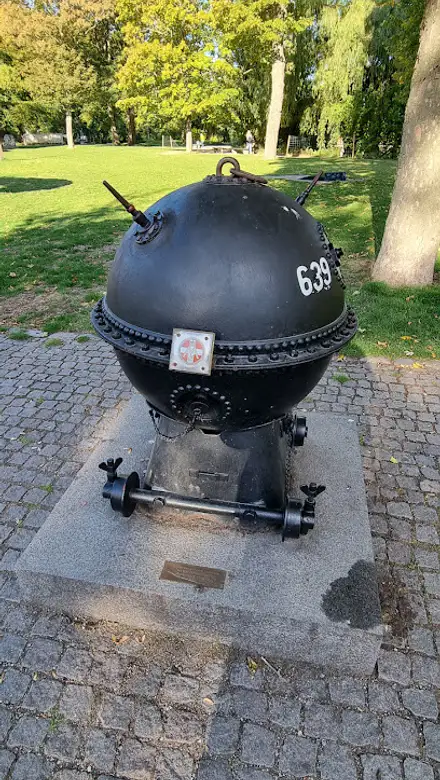
Set in the green expanse of Churchill Park in central Copenhagen, the Horn Mine is a preserved spherical naval mine from World War II, now safely disarmed and mounted as a small outdoor monument. Its spiked silhouette and heavy steel shell hint at the tense years when the seas around Denmark were sown with explosives. Today it serves as a quiet, contemplative reminder of maritime warfare and the city’s strategic role, tucked among lawns, trees and nearby historic fortifications.
On-site amenities
 Restrooms
 Drink options
 Food options
 Seating areas
 Trash bins
 Information boards
Opening hours
- Every dayOpen 24 hours
Opening hours as listed on the venue’s Google Business Profile. Hours can change for services and special events, so check with the venue before you go.
- Address
- 1263 Copenhagen
- Website
Getting there
Metro and walk
City bus
Bicycle
Taxi
Discover more about Horn mine
A wartime relic in a peaceful city park
The Horn Mine stands in Churchill Park, a leafy strip of green that wraps around the old Kastellet fortress in the heart of Copenhagen. At first glance it looks almost sculptural: a dark metal sphere, bristling with protruding horns, resting on a sturdy base among trimmed lawns and gravel paths. Only when you move closer does its weight and purpose become clear. This was once a naval weapon, designed to float just below the surface of the sea and explode on contact with a ship’s hull.In this tranquil setting, the contrast is striking. Joggers pass, children play nearby and locals cut across the park on their daily routines, while this compact monument quietly recalls a time when war at sea reached right up to Denmark’s coasts.
From deadly device to open-air monument
The mine belongs to a family of contact mines widely used during the First and, especially, the Second World War. Encased in thick steel and fitted with sensitive horns that would trigger a detonation when struck, such mines were anchored in strategic belts to deny enemy vessels access to key approaches and harbours. Danish waters in the Kattegat and the Baltic saw extensive mining, and the risk they posed lingered for decades after the fighting ended.Once recovered and rendered harmless, some mines were kept as training pieces or memorials. Here, the Horn Mine has been cleaned, preserved and fixed firmly in place. Any internal explosives and firing mechanisms have long been removed, leaving only the shell and its characteristic profile to tell the story.
A reminder of Copenhagen’s maritime frontline
Copenhagen has always lived by the sea, and during the Second World War its harbour, naval bases and shipyards were of considerable strategic interest. Minefields, patrol craft and coastal batteries formed an invisible line of defence stretching out from the city. The Horn Mine symbolizes this broader maritime theatre, where danger could lie hidden just beneath the surface, and where merchant shipping risked its passage through narrow straits and shallow channels.Placed in Churchill Park, next to historic ramparts and other military memorials, the mine links different layers of conflict history in one compact space. Here, seventeenth-century bastions, twentieth-century warfare and contemporary urban life intersect in a single view.
Details worth a closer look
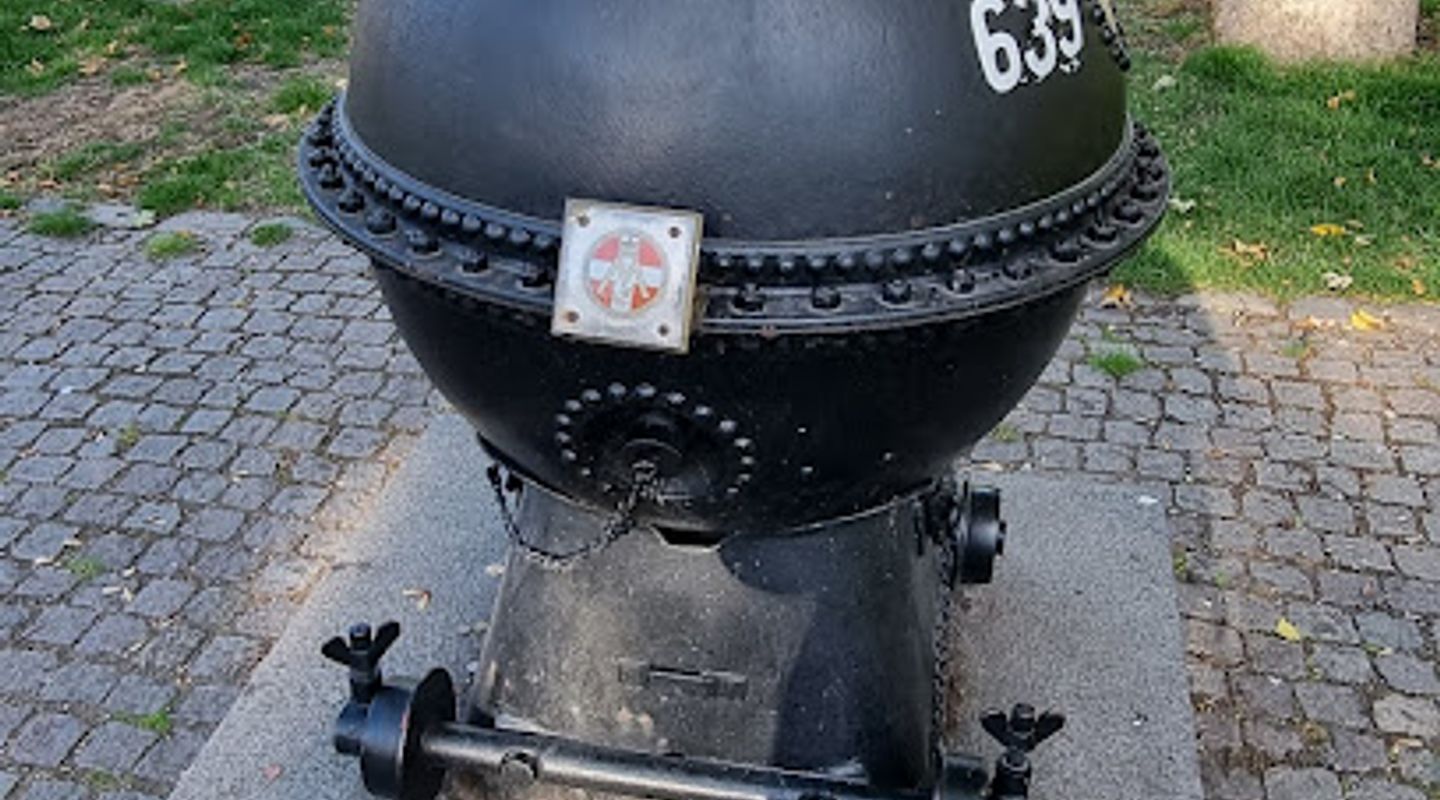
Walk right up to the mine and its craftsmanship emerges. The metal surface bears plates, seams and fittings that once connected it to mooring cables and maintenance equipment. The horns themselves are not random spikes but carefully engineered contact points, each originally wired to a detonator inside the shell. The overall form is functional, but there is a stark, almost industrial elegance to the symmetry of the sphere and the rhythm of the protrusions.Because it is outdoors and exposed to the elements, you may notice patches of weathering, subtle variations in paint and metal tone, and the way light changes its appearance through the day and across seasons. In winter frost can rim its edges; in summer the dark shell stands out against bright grass.
A brief, reflective stop on a longer walk
Most visitors encounter the Horn Mine as part of a broader stroll linking the Little Mermaid, Kastellet, Gefion Fountain and the nearby museums and churches. It is rarely a destination in itself, yet it often becomes a focal point for a short reflection on the costs of war at sea and the hidden technologies that shaped twentieth-century conflict.There is no formal exhibition here, no ticket desk or enclosed gallery – just an object, its setting and the context you bring to it. That simplicity is part of its power. A few minutes spent circling the mine, imagining it bobbing in cold, grey water, is enough to understand why such relics continue to be preserved in the heart of modern cities.
Evendo Review Centre
 Google
Guest reviews
Best time to go
Quietest: Jan, Feb & Mar · before 7am or at 9pm or at 10pm
Busy times are Evendo estimates for a typical year, to help you plan. Actual crowds vary with events, school holidays and the weather.
Explore Horn mine on the map
A handpicked selection of must-see spots near Horn mine, mapped for you.
Get your free copy of our complete guide to Horn mine, delivered straight to you.
Everything on this page, from opening hours and how to get there to Eve’s tips and the best time to go, in one PDF you can read offline, print or share.
Already have an account? Sign in
Your Horn mine guide is ready.
We'll send it to · Not you? Sign out

Getting your guide ready…
We are putting together a fresh copy of the Horn mine guide. This can take up to a minute.
This can take a few moments. If your browser asks, choose Allow so the download can start. You'll find the guide in your Downloads folder.
Nothing happened? Download it again
Sorry, the guide is taking longer than usual. Please try again in a minute, or get it by email instead.
Other nearby places you may find interesting
The closest places of the same kind, if this one is not quite what you had in mind.
-
-
-
-
-


Swipe for more places
More to explore near Horn mine

 Best experiences near Horn mine
 Best hotels near Horn mine
 Best landmarks near Horn mine
 Best attractions near Horn mine
 Best shops near Horn mine
 Best restaurants near Horn mine
 Best bars near Horn mine
Do you manage this location?
Take control to get all the benefits, like improved information, better appearance, and stronger visibility across AI-powered discovery.
Explore more
Explore more of Zealand
Discover the charm of Zealand, Denmark's largest island, blending vibrant city life in Copenhagen with serene coastal beauty and rich cultural heritage.
Explore Zealand
Explore more of Denmark
Discover Denmark: A perfect blend of history, modern design, and the cozy concept of hygge. Explore vibrant cities, serene landscapes, and world-class cuisine.
Explore Denmark