

Missouri Plateau, North Dakota Travel Guide
Discover the natural beauty and rich history of North Dakota's Missouri Plateau, a haven for outdoor enthusiasts and history buffs alike.
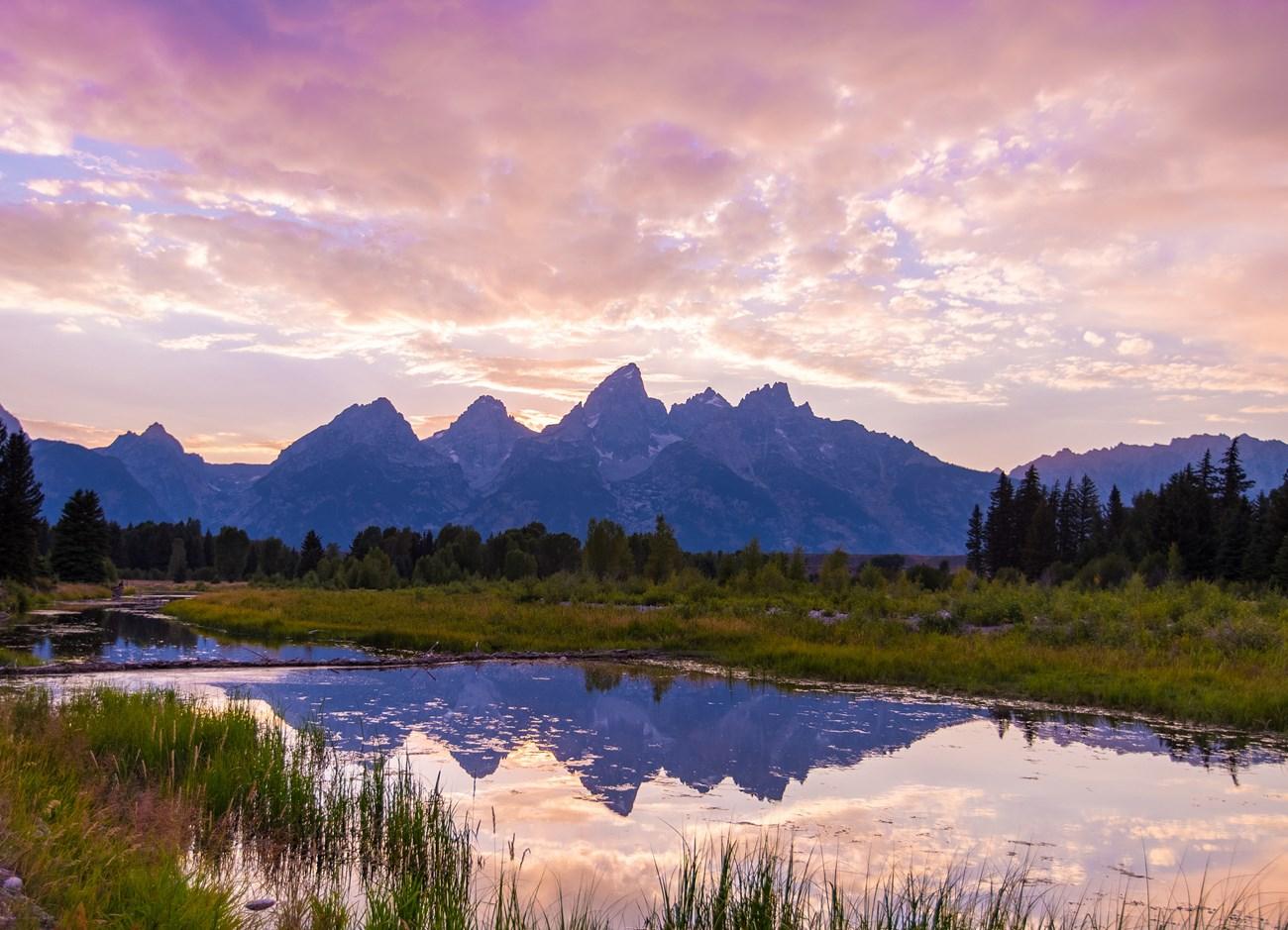
The Missouri Plateau in North Dakota is a stunning expanse of rolling hills, prairies, and unique geological formations. This region is part of the larger Great Plains and offers visitors a glimpse into the natural beauty and rich history of the United States. From hiking trails that wind through lush grasslands to scenic overlooks offering panoramic views, the Missouri Plateau is a paradise for outdoor enthusiasts. Wildlife is abundant here, with opportunities to see bison, deer, and a variety of bird species in their natural habitat. The landscape is dotted with historic sites, including remnants of Native American culture and pioneer settlements. The Missouri Plateau is also a great place for stargazing, thanks to its clear skies and minimal light pollution. Visitors can camp under the stars and enjoy the serenity of this remote area. Whether you're interested in nature, history, or simply seeking a peaceful retreat, the Missouri Plateau has something to offer everyone.

Know before you go
Hi, I'm Eve. Here are a few practical things to know before exploring Missouri Plateau.
- Check weather conditions before planning a hike, as the weather can be unpredictable.
- Bring binoculars for wildlife spotting and bird watching.
- Visit in late spring or early autumn for the most pleasant weather and fewer crowds.
- Pack plenty of water and snacks, as amenities can be sparse in some areas.
- Don't forget your camera to capture the stunning landscapes and wildlife.
- Respect the natural environment and follow Leave No Trace principles.
Top City Travel Guides in Missouri Plateau
The cities of Missouri Plateau, and the easiest places to base yourself.


Destinations in Missouri Plateau
Resorts, valleys and scenic spots worth a trip of their own.


Explore Missouri Plateau: Things to Do, Places to Eat, Hotels & More
Handpicked recommendations for top attractions, local dining, accommodations, and more

Top Attractions & Sightseeing in Missouri Plateau
Top-rated picks
Best Attractions

Theodore Roosevelt National Park
Discover the natural beauty and wildlife of Theodore Roosevelt National Park, a stunning gem in North Dakota's badlands, perfect for every adventure lover.

Painted Canyon Visitor Center
Explore the breathtaking landscapes and rich history at the Painted Canyon Visitor Center in Theodore Roosevelt National Park, North Dakota.

Dakota Zoo
Discover Dakota Zoo in Bismarck, where wildlife meets education, offering a fun-filled day for families and animal lovers alike.

World's Largest Buffalo Monument
Discover the iconic World's Largest Buffalo Monument in Jamestown, ND, a remarkable tribute to the American bison and a highlight of local heritage.

Best landmarks in Missouri Plateau
Top-rated picks
Best Landmarks

Theodore Roosevelt National Park
Experience the breathtaking landscapes and wildlife of Theodore Roosevelt National Park, where nature meets history in North Dakota's stunning Badlands.

Lonnie's | Roadhouse Café
Discover comfort food at Lonnie's Roadhouse Café in Williston, ND, where hearty breakfasts and classic American dishes await travelers and locals alike.

Famous Dave's Bar-B-Que
Experience the rich, smoky flavors of Southern-style barbecue at Famous Dave's Bar-B-Que in Williston, ND – a culinary gem for food lovers.

Williston | Brewing Company
Discover the essence of Williston at Williston Brewing Company, where craft beer and local flavors come together in a lively gastropub atmosphere.

Best restaurants in Missouri Plateau
Top-rated picks
Best Restaurants

Texas Roadhouse
Experience authentic American dining at Texas Roadhouse in Grand Forks - where great food meets warm hospitality!

Blue Moose Bar & Grill
Experience delicious American cuisine at Blue Moose Bar & Grill in East Grand Forks – where local flavors meet a vibrant atmosphere.

Pizza Ranch
Indulge in an all-you-can-eat buffet featuring delicious pizzas and crispy chicken at Pizza Ranch in Grand Forks – perfect for families and food lovers alike.

LongHorn Steakhouse
Experience the rich flavors of expertly grilled steaks at LongHorn Steakhouse in Minot - a family-friendly restaurant offering delicious American cuisine.

Best bars in Missouri Plateau
Top-rated picks
Best Bars

Lonnie's | Roadhouse Café
Discover Lonnie's Roadhouse Café in Williston, ND, where hearty breakfasts and home-style meals await in a cozy and welcoming environment.

Boots Bar & Grill
Discover Boots Bar & Grill, where delicious cuisine meets a vibrant atmosphere in the heart of Medora, North Dakota.

Williston | Brewing Company
Experience the heart of Williston at Williston Brewing Company, where delicious gastropub cuisine meets craft beer in a welcoming atmosphere.

Applebee's Grill + Bar
Experience the true flavor of American cuisine at Applebee's Grill + Bar in Williston, ND, where comfort meets casual dining.

Best nightclubs in Missouri Plateau
Top-rated picks
Best Nightclubs

The Windbreak
Discover Fargo's vibrant nightlife at The Windbreak, where great drinks, live music, and an inviting atmosphere await.

Johnny's Lounge
Discover the lively atmosphere of Johnny's Lounge, a unique blend of relaxation and gaming in Grand Forks, ND.

Eleven | Restaurant & Lounge
Discover Eleven, the vibrant restaurant and lounge in Williston, ND, offering traditional American cuisine and live music nights for an unforgettable dining experience.

Buster's Bar
Experience the lively atmosphere and delicious offerings at Buster's Bar in Williston, North Dakota – a local favorite for tourists and residents alike.

Best shops in Missouri Plateau
Top-rated picks
Best Shops

Kirkwood Mall
Discover Kirkwood Mall, Bismarck's bustling shopping center with a variety of stores, dining, and a lively atmosphere perfect for family outings.

Columbia Mall
Discover endless shopping, dining, and entertainment at Columbia Mall in Grand Forks, North Dakota, your ultimate retail destination.

Cash Wise Foods Grocery Store Williston
Discover local flavors at Cash Wise Foods in Williston, your one-stop grocery store for fresh produce, local products, and a variety of liquor options.

Dakota Square Mall
Discover Dakota Square Mall in Minot, ND – your ultimate shopping destination with diverse retail, dining, and entertainment options.

Explore Missouri Plateau on the Map
A handpicked selection of must-see spots in Missouri Plateau, mapped for you.
Missouri Plateau Essentials
-
The Missouri Plateau in North Dakota is accessible via several major airports. The closest major airport is Bismarck Municipal Airport (BIS), approximately 150 miles southeast of the Plateau. Minot International Airport (MOT) is another option, located about 130 miles northeast. From these airports, you can rent a car or take a bus to reach your destination. Bismarck and Minot both offer car rental services and regional bus routes that can take you to various points within the Missouri Plateau.
-
While exploring the Missouri Plateau, renting a car is the most convenient option due to the region's expansive and rural nature. Roads are generally well-maintained, but always check local conditions, especially in winter. Public transportation is limited, but regional buses connect major towns. For shorter distances, biking and hiking are popular, particularly within Theodore Roosevelt National Park and other nature areas.
-
The official currency is the US Dollar (USD). Credit cards are widely accepted in most establishments, including hotels, restaurants, and gas stations. However, it's advisable to carry some cash, especially when visiting smaller towns and rural areas, as some local businesses may not accept credit cards. ATMs are available in most towns, but it’s always a good idea to withdraw cash beforehand.
-
The Missouri Plateau is generally safe for tourists. However, like any travel destination, standard precautions should be taken. Avoid walking alone at night in unfamiliar or poorly lit areas. While there are no specific high-crime areas targeting tourists, always stay vigilant and aware of your surroundings. Keep your belongings secure and be cautious when interacting with strangers.
-
In case of emergency, dial 911 for immediate assistance. Local police stations and medical facilities are available throughout the Missouri Plateau region. It’s highly recommended to have travel insurance that covers medical emergencies. For minor health issues, pharmacies are available in most towns where you can purchase over-the-counter medications. Make sure to keep a list of emergency contacts and local medical facilities handy.
-
Fashion: Do dress in layers as weather can be unpredictable; avoid overly casual attire when dining in nicer establishments. Religion: Do respect local religious sites and traditions; avoid inappropriate attire when visiting. Public Transport: Do be courteous to drivers and fellow passengers; don't expect extensive public transport options in rural areas. Greetings: Do greet people with a smile and a handshake; don't ignore local customs of politeness. Eating & Drinking: Do try local dishes and beverages; avoid excessive waste as it is frowned upon.
-
To experience the Missouri Plateau like a local, visit farmer’s markets for fresh produce and local crafts. Engage with residents who are often keen to share stories and insights about the area. Don't miss visiting Theodore Roosevelt National Park for its breathtaking landscapes and wildlife. Also, take a scenic drive along the Enchanted Highway to see unique roadside sculptures. For a cozy dining experience, try local diners and cafes which offer home-cooked meals and a welcoming atmosphere.
When is the best time to visit Missouri Plateau?
Useful Local Phrases for Missouri Plateau
You don't need to speak the language perfectly. Even learning a few simple words can make conversations warmer—and locals usually appreciate the effort.
— Eve

Here are the phrases I use most often in Missouri Plateau. Try a few—you'll be surprised how far they go! 😊
❤️
-
- HelloHau
[Haw] - GoodbyeToksa
[Toke-sah] - YesEe
[Ee] - NoNa
[Nah] - Please/You're welcomeT'ank you
[T'ank you] - Thank youWopida
[Woh-pee-dah] - Excuse me/SorryPiyuk
[Pee-yook] - How are you?T'iyok?
[Tee-yok?] - Fine. And you?Kola. T'iyok?
[Koh-lah. Tee-yok?] - Do you speak English?T'iyok English?
[Tee-yok English?] - I don't understandNehin wíiyaka
[Neh-hin wee-yah-kah]
- HelloHau
-
- I'd like to see the menu, pleaseWíiyaka menu, t'ank you
[Wee-yah-kah men-oo, t'ank you] - I don't eat meatNehin wíiyaka meat
[Neh-hin wee-yah-kah meat] - Cheers!Wíiyaka t'ank you!
[Wee-yah-kah t'ank you!] - I would like to pay, pleaseWíiyaka pay, t'ank you
[Wee-yah-kah pay, t'ank you]
- I'd like to see the menu, pleaseWíiyaka menu, t'ank you
-
- Help!Hau!
[Haw!] - Go away!T'iyok t'íŋkela!
[Tee-yok tee-ng-kay-lah!] - Call the Police!T'iyok call Police!
[Tee-yok call Police!] - Call a doctor!T'iyok call doctor!
[Tee-yok call doctor!] - I'm lostNehin wíiyaka lost
[Neh-hin wee-yah-kah lost] - I'm illNehin sick
[Neh-hin sick]
- Help!Hau!
-
- I'd like to buy...Wíiyaka buy...
[Wee-yah-kah buy...] - I'm just lookingNehin just looking
[Neh-hin just looking] - How much is it?T'iyok how much?
[Tee-yok how much?] - That's too expensiveT'áŋa heci expensive
[T'ah-ngah heh-chee expensive] - Can you lower the price?T'iyok lower price?
[Tee-yok lower price?]
- I'd like to buy...Wíiyaka buy...
-
- What time is it?T'iyok time?
[Tee-yok time?] - It's one o'clockÉyA k'úta
[Eh-yah koo-tah] - Half past (10)Wíiyaka half past (10)
[Wee-yah-kah half past (10)] - MorningWíiyu
[Wee-yoo] - AfternoonWíiyu k'té
[Wee-yoo kuh-tay] - EveningWíiyu k'íyA
[Wee-yoo kee-yah] - YesterdayWíiyu k'íyA mní
[Wee-yoo kee-yah m-nee] - TodayWíiyu k'íyA
[Wee-yoo kee-yah] - TomorrowWíiyu k'té mní
[Wee-yoo kuh-tay m-nee] - 1WíiyA
[Wee-yah] - 2Ní
[Nee] - 3NíyA
[Nee-yah] - 4Ná
[Nah] - 5NáyA
[Nah-yah] - 6NíhA
[Nee-hah] - 7NínA
[Nee-nah] - 8NákA
[Nah-kah] - 9NíkhA
[Nee-kah] - 10Né
[Nay]
- What time is it?T'iyok time?
-
- Where's a/the...?Wíiyaka a/the...?
[Wee-yah-kah a/the...?] - What's the address?T'iyok address?
[Tee-yok address?] - Can you show me (on the map)?T'iyok show me (on the map)?
[Tee-yok show me (on the map)?] - When's the next (bus)?T'iyok next (bus)?
[Tee-yok next (bus)?] - A ticket (to ....)Wíiyaka ticket (to ....)
[Wee-yah-kah ticket (to ....)]
- Where's a/the...?Wíiyaka a/the...?
History of Missouri Plateau
-
The Missouri Plateau, also known as the Coteau du Missouri, is a significant geological feature formed during the last Ice Age. As glaciers retreated, they left behind a landscape marked by rolling hills, deep valleys, and numerous lakes and wetlands. This unique topography has shaped the region's natural beauty and influenced human settlement patterns for thousands of years.
-
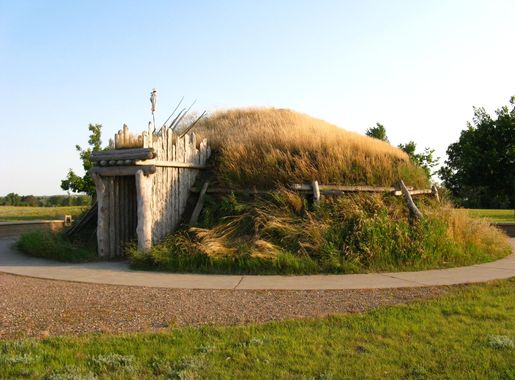
Long before European settlers arrived, the Missouri Plateau was home to various indigenous tribes, including the Mandan, Hidatsa, and Arikara. These tribes utilized the fertile plains for agriculture, hunting, and fishing, establishing thriving communities along the Missouri River. The region's rich archaeological sites offer a glimpse into the lives and cultures of these early inhabitants.
-
In 1804, the Lewis and Clark Expedition traversed the Missouri Plateau as they journeyed westward in search of a route to the Pacific Ocean. The explorers documented the region's diverse flora and fauna and established contact with local Native American tribes. Their journey through the plateau is a significant chapter in the history of American exploration.
-
During the early 19th century, the Missouri Plateau became a hub for the fur trade. Trappers and traders, including those from the American Fur Company, established trading posts along the Missouri River. These posts facilitated commerce between Native Americans and European settlers, playing a crucial role in the economic development of the region.
-
The late 19th and early 20th centuries saw a wave of homesteaders moving to the Missouri Plateau, drawn by the promise of fertile land and new opportunities. The Homestead Act of 1862 encouraged settlement, leading to the establishment of numerous farms and small towns. Agriculture, particularly wheat farming and cattle ranching, became the backbone of the local economy.
-
Completed in 1953, the Garrison Dam on the Missouri River is one of the largest earthen dams in the world. Its construction created Lake Sakakawea, which provides flood control, hydroelectric power, and irrigation for the region. The dam's construction had significant impacts on local communities, including the displacement of Native American tribes and changes in land use.
-
Today, the Missouri Plateau is the focus of numerous conservation efforts aimed at preserving its unique ecosystems and rich cultural heritage. Organizations and government agencies work to protect native wildlife, restore prairie habitats, and support sustainable land use practices. These efforts ensure that future generations can continue to enjoy the plateau's natural beauty and historical significance.
Neighbouring Regions of Missouri Plateau
The closest regions to Missouri Plateau, if you have time for more than one.




Your all‑in‑one travel companion app
Explore expert travel guides, compare and book tours, experiences, hotels, and more—all from the palm of your hand. Download now for seamless trip planning wherever your wanderlust takes you.


Explore More of North Dakota
Looking beyond Missouri Plateau? Discover North Dakota for broader travel guides, local hot-spots, and regional highlights.
Explore North DakotaMissouri Plateau in Photos
Browse through our photo collection highlighting the charm and character of the destination.




Exploring the Majestic Missouri Plateau
The Missouri Plateau in North Dakota is a stunning expanse of rolling hills, prairies, and unique geological formations. This region is part of the larger Great Plains and offers visitors a glimpse into the natural beauty and rich history of the United States. From hiking trails that wind through lush grasslands to scenic overlooks offering panoramic views, the Missouri Plateau is a paradise for outdoor enthusiasts. Wildlife is abundant here, with opportunities to see bison, deer, and a variety of bird species in their natural habitat. The landscape is dotted with historic sites, including remnants of Native American culture and pioneer settlements. The Missouri Plateau is also a great place for stargazing, thanks to its clear skies and minimal light pollution. Visitors can camp under the stars and enjoy the serenity of this remote area. Whether you're interested in nature, history, or simply seeking a peaceful retreat, the Missouri Plateau has something to offer everyone.