

Maumee Bay State Park, Ohio Travel Guide
Discover tranquility and adventure at Maumee Bay State Park in Ohio, where wetlands, meadows, and sandy shores meet on the shores of Lake Erie.
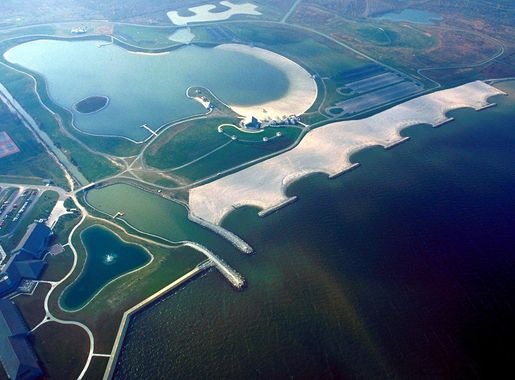
Maumee Bay State Park in Ohio offers a serene escape for nature lovers and outdoor enthusiasts alike. Spanning over 1,300 acres, the park features a unique blend of natural wetlands, lush meadows, and sandy shores along Lake Erie. The park's diverse landscape provides a habitat for a variety of wildlife, making it a haven for birdwatchers and nature photographers. Visitors can enjoy numerous recreational activities, including hiking, biking, and fishing. The park boasts several well-maintained trails that wind through scenic woodlands and wetlands, offering picturesque views and opportunities for wildlife spotting. For those who prefer water-based activities, the park's marina provides access to Lake Erie for boating, kayaking, and paddleboarding. One of the park's highlights is its expansive beach, perfect for sunbathing, swimming, and picnicking. The park also features a modern lodge with comfortable accommodations, a golf course, and an educational nature center that offers interactive exhibits and programs for all ages. Whether you're looking to relax by the water or explore the great outdoors, Maumee Bay State Park has something for everyone.

Know before you go
Hi, I'm Eve. Here are a few practical things to know before exploring Maumee Bay State Park.
- Visit during spring or fall for the best birdwatching opportunities as migratory birds pass through the area.
- Bring insect repellent in the summer months to keep mosquitoes at bay, especially near wetlands.
- Rent a bike at the park to explore the trails more efficiently and cover more ground.
- Check the park's schedule for guided nature walks and educational programs offered at the nature center.
- Book lodging or campsite reservations well in advance during peak seasons to ensure availability.
Explore Maumee Bay State Park: Things to Do, Places to Eat, Hotels & More
Handpicked recommendations for top attractions, local dining, accommodations, and more

Best attractions in Maumee Bay State Park
Top-rated picks
Best Attractions

Wildwood Preserve Metropark
Explore the lush landscapes and historic charm of Wildwood Preserve Metropark, a serene escape in Toledo, Ohio, perfect for outdoor adventures and relaxation.

Imagination Station
Discover Imagination Station, Toledo's premier science museum for fun and hands-on learning experiences for tourists and families alike.

Side Cut Metropark
Experience the tranquility of Side Cut Metropark, a beautiful park along the Maumee River, ideal for hiking, picnicking, and wildlife watching.

Maumee Bay Lodge & Conference Center
Discover the beauty of Lake Erie at Maumee Bay Lodge & Conference Center, where relaxation meets adventure in a stunning natural setting.

Best landmarks in Maumee Bay State Park
Top-rated picks
Best Landmarks

Maumee Bay Lodge & Conference Center
Experience the perfect blend of nature and comfort at Maumee Bay Lodge, your ideal retreat in Ohio's scenic landscapes.

Fort Meigs Historic Site
Explore Fort Meigs Historic Site in Perrysburg, Ohio—a premier open-air museum with rich history, reenactments, and stunning exhibits from the War of 1812.

Maumee State Forest
Experience the breathtaking beauty of Maumee State Forest, Ohio's lush oasis for hiking, camping, and wildlife observation.

Fallen Timbers Battlefield Metropark
Discover the historic Fallen Timbers Battlefield Metropark, where nature meets history in a serene setting perfect for exploration and reflection.

Best restaurants in Maumee Bay State Park
Top-rated picks
Best Restaurants

Tony Packo's Restaurant
Discover the delicious flavors of Toledo at Tony Packo's Restaurant, home of the iconic hot dog and rich local history.

Ye Olde Durty Bird
Discover the flavors of America at Ye Olde Durty Bird – where comfort food meets a family-friendly atmosphere in the heart of Toledo.

Luckie's Barn & Grill-Oregon
Discover family-friendly dining at Luckie's Barn & Grill in Oregon, Ohio - where comfort food meets vibrant bar culture.

LongHorn Steakhouse
Experience the best of traditional American dining at LongHorn Steakhouse in Maumee - where every steak is grilled to perfection.

Best bars in Maumee Bay State Park
Top-rated picks
Best Bars

Smokey Bones Maumee
Experience the best of American barbecue at Smokey Bones Maumee, where savory dishes meet a vibrant atmosphere for an unforgettable dining experience.

Luckie's Barn & Grill-Oregon
Immerse yourself in a delightful dining experience at Luckie's Barn & Grill, where family-friendly dining meets vibrant atmosphere in Oregon, Ohio.

Maumee Bay Brewing Company
Enjoy a unique brewpub experience with craft beers and delicious local cuisine at Maumee Bay Brewing Company in Toledo, Ohio.

The Village Idiot
Experience the best of Maumee at The Village Idiot, where delicious pizza meets lively music in a welcoming bar atmosphere.

Best nightclubs in Maumee Bay State Park
Top-rated picks
Best Nightclubs

The Bay Restaurant & Nightclub
Unwind with great food and vibrant nightlife at The Bay Restaurant & Nightclub in Toledo, where unforgettable experiences await every visitor.

Holiday Inn Toledo-Maumee (I-80/90), an IHG Hotel
Experience comfort and convenience at Holiday Inn Toledo-Maumee, your home away from home in the heart of Ohio.

Levi & Lilac's Whiskey Room
Discover Levi & Lilac's Whiskey Room, a hidden gem in Maumee, Ohio, where exceptional whiskey meets delightful dining in a cozy atmosphere.

Courtyard Toledo Maumee/Arrowhead
Stay at Courtyard Toledo Maumee/Arrowhead for a blend of comfort and modern amenities in the heart of Ohio, perfect for business and leisure travelers.

Best shops in Maumee Bay State Park
Top-rated picks
Best Shops

Franklin Park Mall
Discover shopping, dining, and entertainment at Franklin Park Mall, Toledo's premier shopping destination for all ages.

Maumee Bay State Park
Discover the beauty and recreation of Maumee Bay State Park, where nature meets adventure along the shores of Lake Erie.

Spring Meadows Place
Explore Spring Meadows Place in Holland, Ohio: the ultimate shopping mall with diverse stores, dining options, and family-friendly entertainment.

The Town Center at Levis Commons
Discover shopping, dining, and entertainment at The Town Center at Levis Commons in Perrysburg, Ohio - your ultimate leisure destination.

Explore Maumee Bay State Park on the Map
A handpicked selection of must-see spots in Maumee Bay State Park, mapped for you.
Maumee Bay State Park Essentials
-
Maumee Bay State Park is located in Oregon, Ohio, along the western shore of Lake Erie. The nearest major airport is Toledo Express Airport (TOL), approximately 30 miles southwest of the park. From the airport, you can rent a car or take a taxi to reach the park. Alternatively, Detroit Metropolitan Wayne County Airport (DTW) is about 60 miles north and offers more international flight options. For those driving, the park is accessible via Interstate 75 and State Route 2.
-
Once at Maumee Bay State Park, a car is the most convenient mode of transportation to explore the area. The park itself has ample parking, and many attractions are within walking or biking distance. Public transportation options are limited, but taxis and rideshare services like Uber and Lyft are available. Biking is a popular way to get around, and bike rentals are available within the park.
-
The official currency is the US Dollar (USD). Credit and debit cards are widely accepted at most establishments within and around Maumee Bay State Park. ATMs are available at the park's lodge and in nearby towns. It is advisable to carry some cash for smaller vendors and for use in areas where card payment might not be available.
-
Maumee Bay State Park is generally a safe destination for tourists. As with any travel destination, it is wise to take standard precautions. Avoid leaving valuables in plain sight in your vehicle and be cautious when walking alone after dark. While the park is safe, nearby urban areas such as Toledo have higher crime rates, so it's best to stay alert and avoid less populated areas at night.
-
In case of emergency, dial 911 for immediate assistance. The park has its own ranger station, and medical facilities are available in the nearby city of Oregon. It is recommended to have travel insurance that covers medical emergencies. For minor health issues, there are pharmacies in Oregon where you can purchase over-the-counter medications.
-
Fashion: Do wear comfortable and weather-appropriate clothing, especially if you plan to hike or engage in outdoor activities. Don't wear overly formal attire unless attending a specific event at the park lodge. Religion: Do respect the natural environment as many locals see it as a spiritual space. Public Transport: Do use rideshare services responsibly and tip your driver. Don't expect extensive public transport options. Greetings: Do greet fellow hikers and park visitors with a friendly nod or 'hello.' Eating & Drinking: Do try local dining options in Oregon and Toledo. Don’t leave food out in the park as it attracts wildlife.
-
To experience Maumee Bay State Park like a local, take advantage of the extensive trails for hiking and biking. Visit the Nature Center to learn about the local wildlife and ecosystems. Engage with park rangers who can provide insider tips on the best spots for bird watching or fishing. Don’t miss the chance to watch a sunset over Lake Erie from the park’s beach or pier.
When is the best time to visit Maumee Bay State Park?
Useful Local Phrases for Maumee Bay State Park
You don't need to speak the language perfectly. Even learning a few simple words can make conversations warmer—and locals usually appreciate the effort.
— Eve

Here are the phrases I use most often in Maumee Bay State Park. Try a few—you'll be surprised how far they go! 😊
❤️
-
- HelloHolla
[hah-lah] - GoodbyeBye for now
[bye fohr now] - YesYeah
[yeh] - NoNah
[nah] - Please/You're welcomePlease/No problem
[pleez/noh probluhm] - Thank youThanks a lot
[thanks uh lot] - Excuse me/SorryPardon me/My bad
[pahr-dn mee/my bad] - How are you?How ya doin'?
[how yuh doo-in] - Fine. And you?Good. You?
[good. yuh?] - Do you speak English?Ya speak English?
[yah speak ing-glish] - I don't understandI don't get it
[eye dont get it]
- HelloHolla
-
- I'd like to see the menu, pleaseMenu, please
[men-yoo, pleez] - I don't eat meatNo meat for me
[noh meet fohr mee] - Cheers!Cheers!
[cheers] - I would like to pay, pleaseCheck, please
[chek, pleez]
- I'd like to see the menu, pleaseMenu, please
-
- Help!Help!
[help] - Go away!Leave me alone!
[leev mee uh-lohn] - Call the Police!Call the cops!
[call the cops] - Call a doctor!Get a doc!
[get uh dahk] - I'm lostI'm lost
[eye'm lost] - I'm illI'm sick
[eye'm sik]
- Help!Help!
-
- I'd like to buy...I wanna buy...
[eye wah-nuh buy] - I'm just lookingJust browsing
[just brow-zing] - How much is it?How much?
[how much] - That's too expensiveToo pricey
[too pry-see] - Can you lower the price?Can you do a deal?
[can yuh doh uh deal]
- I'd like to buy...I wanna buy...
-
- What time is it?What's the time?
[whats the time] - It's one o'clockIt's one
[its one] - Half past (10)10:30
[ten-thur-tee] - MorningMorning
[morn-ing] - AfternoonAfternoon
[af-ter-noon] - EveningEvening
[ee-ven-ing] - YesterdayYesterday
[yes-ter-day] - TodayToday
[to-day] - TomorrowTomorrow
[to-mor-row] - 1One
[wuhn] - 2Two
[too] - 3Three
[three] - 4Four
[four] - 5Five
[five] - 6Six
[six] - 7Seven
[sev-en] - 8Eight
[ate] - 9Nine
[nine] - 10Ten
[ten]
- What time is it?What's the time?
-
- Where's a/the...?Where's the...?
[wheres the] - What's the address?What's the addy?
[whats the addy] - Can you show me (on the map)?Show me (on the map)
[show mee on the map] - When's the next (bus)?Next (bus)?
[next bus] - A ticket (to ....)Ticket (to ...)
[ticket to]
- Where's a/the...?Where's the...?
History of Maumee Bay State Park
-
Before European settlers arrived, the region now known as Maumee Bay State Park was inhabited by indigenous tribes, including the Ottawa, Miami, and Wyandot peoples. These tribes thrived on the rich natural resources, utilizing the land for hunting, fishing, and gathering. The Maumee River, flowing into Lake Erie, was a vital waterway for transportation and trade.
-
During the War of 1812, the nearby Fort Meigs played a crucial role in the defense against British forces and their Native American allies. Constructed under the direction of General William Henry Harrison, Fort Meigs withstood two major sieges in 1813. The fort's location along the Maumee River was strategic in controlling access to the Great Lakes and the Western frontier.
-
Following the War of 1812, the region around Maumee Bay was part of the infamous Great Black Swamp, a vast wetland that made travel and settlement difficult. Efforts to drain the swamp in the mid-19th century transformed the land, making it suitable for agriculture and settlement. This period marked a significant change in the landscape, paving the way for future development.
-
The late 19th and early 20th centuries saw rapid industrialization in the Toledo area, just west of Maumee Bay. The development of the Port of Toledo as a major shipping and trade hub brought economic growth to the region. Industries such as shipbuilding, glass manufacturing, and automotive production thrived, shaping the cultural and economic landscape of the area.
-
Maumee Bay State Park was officially established in 1975, as part of Ohio's efforts to preserve natural landscapes and provide recreational opportunities for residents and visitors. The park covers over 1,300 acres and includes a variety of habitats such as wetlands, marshes, and sand dunes. Its creation was a significant milestone in environmental conservation and public recreation in the region.
-
In recent decades, Maumee Bay State Park has become a focal point for environmental conservation efforts. The park's wetlands are crucial for bird migration and are part of the larger Western Lake Erie Basin, a critical ecosystem. Conservation initiatives include habitat restoration, pollution control, and education programs aimed at preserving the natural beauty and ecological importance of the area.
-
Today, Maumee Bay State Park is a popular destination for outdoor enthusiasts and families. The park offers a wide range of recreational activities, including hiking, bird watching, fishing, and swimming. Its cultural significance is celebrated through various events and programs that highlight the region's history, natural beauty, and community spirit.
Neighbouring destination travel guides
Browse our curated selection of top destinations, scenic points, and must-visit spots in the area.


Your all‑in‑one travel companion app
Explore expert travel guides, compare and book tours, experiences, hotels, and more—all from the palm of your hand. Download now for seamless trip planning wherever your wanderlust takes you.


Explore More of Northwest Ohio

Looking beyond Maumee Bay State Park? Discover Northwest Ohio for broader travel guides, local hot-spots, and regional highlights.
Explore Northwest OhioExplore More of Ohio

Looking beyond Maumee Bay State Park? Discover Ohio for broader travel guides, local hot-spots, and regional highlights.
Explore OhioMaumee Bay State Park in Photos
Browse through our photo collection highlighting the charm and character of the destination.




Maumee Bay State Park: Nature's Retreat in Ohio
Maumee Bay State Park in Ohio offers a serene escape for nature lovers and outdoor enthusiasts alike. Spanning over 1,300 acres, the park features a unique blend of natural wetlands, lush meadows, and sandy shores along Lake Erie. The park's diverse landscape provides a habitat for a variety of wildlife, making it a haven for birdwatchers and nature photographers. Visitors can enjoy numerous recreational activities, including hiking, biking, and fishing. The park boasts several well-maintained trails that wind through scenic woodlands and wetlands, offering picturesque views and opportunities for wildlife spotting. For those who prefer water-based activities, the park's marina provides access to Lake Erie for boating, kayaking, and paddleboarding. One of the park's highlights is its expansive beach, perfect for sunbathing, swimming, and picnicking. The park also features a modern lodge with comfortable accommodations, a golf course, and an educational nature center that offers interactive exhibits and programs for all ages. Whether you're looking to relax by the water or explore the great outdoors, Maumee Bay State Park has something for everyone.