Blitz Memorial, North West England Travel Guide
A moving sculpture honoring Liverpool's civilians lost in World War II bombing raids, unveiled in 2000.
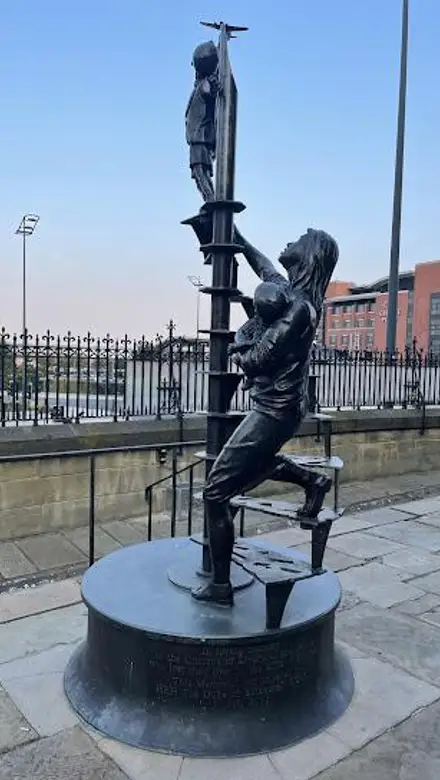
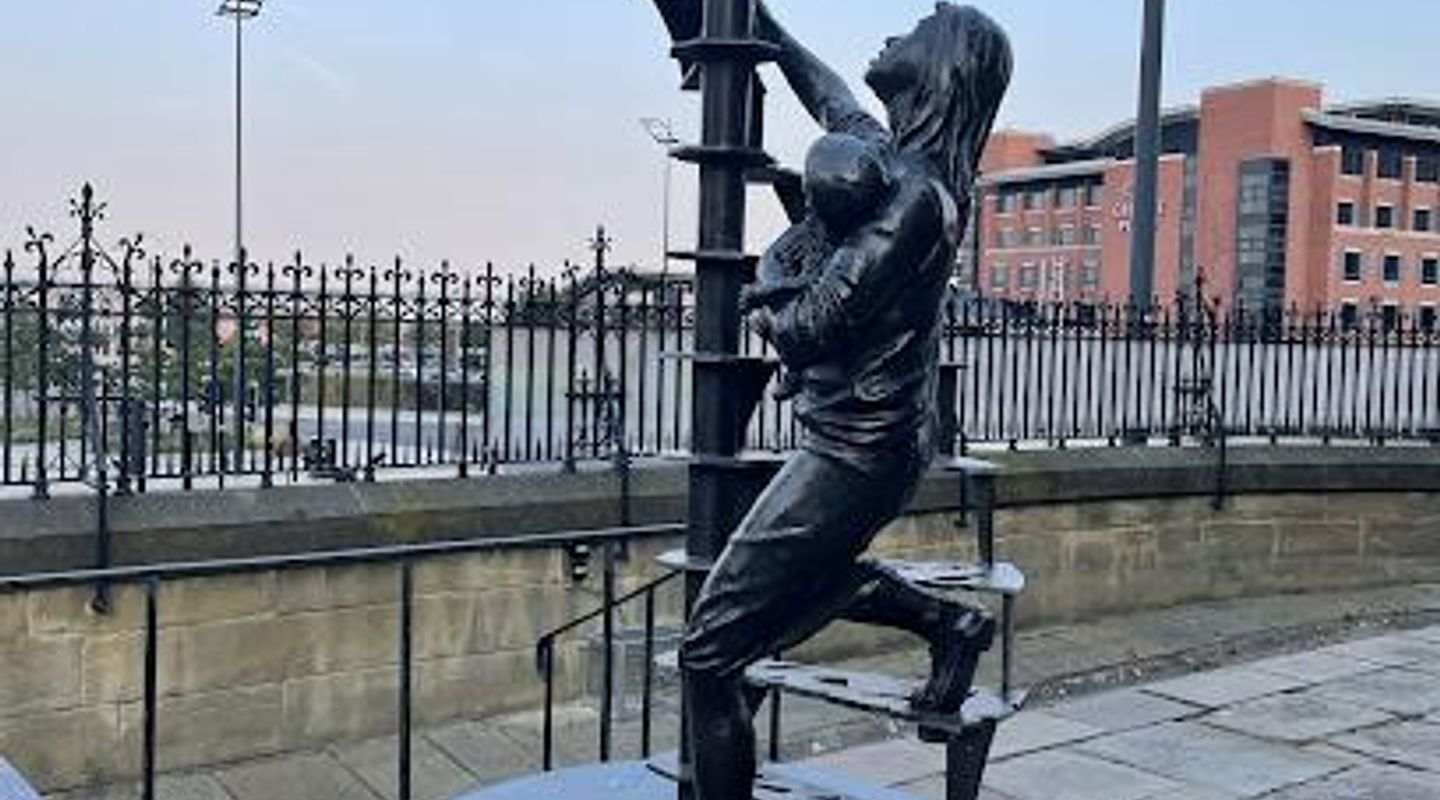
The Liverpool Blitz Memorial stands as a solemn tribute to the thousands of civilians from Liverpool and Bootle who perished during the German bombing campaigns of 1940–1942. Created by local artist Tom Murphy and unveiled by the Duke of Edinburgh in 2000, this powerful sculpture depicts a young mother clutching her baby while reaching toward her son playing with a toy airplane on a spiral staircase—a poignant representation of families seeking shelter during air raids. Located in the churchyard overlooking the River Mersey, the memorial's base bears the names of all who died, serving as a permanent reminder of the city's resilience and the human cost of war.
A brief summary to Blitz Memorial
- A5036, Liverpool, Liverpool, L2 8TZ, GB
- Duration: 0.5 to 1.5 hours
- Free
-
 Outdoor
- Mobile reception: 5 out of 5

Know before you go
Hi, I'm Eve. Here are a few practical things to know before exploring Blitz Memorial.
- Visit early morning or late afternoon for a quieter, more contemplative experience at the memorial.
- Take time to read the inscribed names at the base of the sculpture—each represents a real person lost during the bombing campaigns.
- The churchyard location offers views across the River Mersey toward the docks, providing context for why Liverpool was targeted.
- Combine your visit with nearby St Luke's Church (the bombed-out church) and the Liverpool Cenotaph to understand the full scope of the city's wartime experience.
- Check for commemorative events or ceremonies, particularly around significant dates such as VE Day or the anniversary of the May Blitz.
Do you manage this location?
Take control to get all the benefits, like improved information, better appearance, and stronger visibility across AI-powered discovery. Learn more about listing your business on Evendo
Activate your presenceOther nearby places you may find interesting
The closest places of the same kind, if this one is not quite what you had in mind.

Explore Blitz Memorial on the Map
A handpicked selection of must-see spots near Blitz Memorial, mapped for you.
Unlock the Best of Blitz Memorial
Buy tickets
-
No tickets available
Book tours with entry

Book tours without entry
-
No tours available
Getting There
-
Walking from City Centre
From Liverpool city centre, the memorial is accessible on foot via a pleasant 15–20 minute walk. Head toward the waterfront area near Albert Dock, then proceed toward the A5036 road and St Nicholas Place. The route is flat and well-signposted, passing through the historic dock area. No special equipment or fitness level required.
-
Public Transport (Bus)
Multiple bus routes serve the waterfront and city centre areas. Journey times from central Liverpool are typically 5–10 minutes depending on starting point. Buses run frequently throughout the day (every 10–20 minutes on main routes). Single fares cost approximately £1.75–£2.50 GBP. The memorial is within a short walk of several bus stops near the Albert Dock and waterfront.
-
Taxi or Ride-Share
Taxis and ride-share services (Uber, local firms) are readily available throughout Liverpool. Journey times from the city centre are typically 5–10 minutes depending on traffic. Estimated fares range from £6–£12 GBP. Drop-off is possible near St Nicholas Place, with the memorial a short walk away.
-
Parking (if driving)
Several car parks are located near the waterfront and Albert Dock area, approximately 5–10 minutes' walk from the memorial. Parking costs vary but typically range from £2–£5 GBP per hour or £8–£15 GBP for all-day parking. Street parking is limited in this area. The A5036 road provides vehicle access to the general vicinity, though pedestrian access to the memorial itself is required from nearby parking areas.
For the on-the-go comforts that matter to you
-
 Seating Areas
-
 Information Boards
-
 Trash Bins
Discover more about Blitz Memorial
A City Under Siege: Liverpool's Darkest Hours
Liverpool endured some of the most devastating bombing campaigns of World War II, second only to London in terms of casualties and destruction. Between 1940 and 1942, German bombers targeted the city relentlessly, with the most catastrophic period occurring during the May Blitz of 1941. Over eight consecutive nights in early May, the city was bombed almost continuously, resulting in approximately 1,900 deaths, 1,450 serious injuries, and more than 70,000 people left homeless. The bombing was so intense and widespread that 500 roads were rendered impassable, railways and tram lines were destroyed, and 700 water mains and 80 sewers were damaged, crippling essential services across the region.The strategic importance of Liverpool made it a prime target for enemy aircraft. The city's port was the largest on Britain's west coast and handled 90 percent of the nation's war materials from overseas. Nearly 70 of the dock's 140 berths were destroyed during the bombing campaigns, yet the port remained functional throughout the war—a testament to the determination of those who worked to keep supplies flowing to the Allied forces. Winston Churchill himself visited Liverpool in May 1941 and observed, "I see the damage done by the enemy attacks, but I also see the spirit of an unconquered people."The Memorial's Artistic Vision
Tom Murphy's sculpture, unveiled on 7 July 2000 by HRH the Duke of Edinburgh, captures the human tragedy of the Blitz through a deeply moving composition. The work depicts a young mother holding her baby in her arms while ascending a spiral staircase, her expression urgent and protective. At the top of the stairs, a young boy plays with a toy airplane, seemingly unaware of the danger surrounding his family. This juxtaposition of innocence and peril encapsulates the experience of Liverpool's civilians during the bombing raids—families desperately seeking safety while children struggled to comprehend the chaos unfolding around them.The sculpture is crafted with remarkable sensitivity to its subject matter. Murphy's artistic choice to depict the mother and child in a moment of protective urgency, contrasted with the child's oblivious play, speaks to the universal human instinct to shield the young from harm. The spiral staircase itself serves as a symbol of descent into shelter, a physical manifestation of the countless Liverpudlians who fled to air-raid shelters during the nightly bombardments.Remembrance and Recognition
The base of the memorial bears the inscribed names of all citizens from Liverpool and Bootle who lost their lives due to enemy action during World War II. This permanent record ensures that individual lives are honored and remembered, transforming the memorial from a general monument into a personal tribute to specific people whose stories might otherwise be forgotten. The memorial's placement in the churchyard overlooking the River Mersey was a deliberate choice, positioning it to overlook the docks that were the principal reason for the intensive bombing campaign.The memorial serves as a counterpoint to other war remembrances in Liverpool, including the Liverpool Cenotaph on St George's Plateau and the burnt-out shell of St Luke's Church, which stands as a stark architectural reminder of the Blitz's destructive power. Together, these sites form a landscape of memory throughout the city center, each telling a different aspect of Liverpool's wartime experience.A Symbol of Resilience and Community
The Liverpool Blitz Memorial represents far more than a record of loss; it embodies the resilience and determination of a community that endured extraordinary hardship and emerged unbroken. The bombing of Liverpool was deliberately downplayed in wartime newspapers for propaganda purposes, and many Liverpudlians felt their suffering was overlooked compared to other cities. The memorial rectifies this historical imbalance, ensuring that the city's sacrifice is properly acknowledged and its people's courage is remembered.The sculpture's emotional power lies in its specificity—it does not depict abstract concepts of heroism or patriotism, but rather the intimate, desperate reality of ordinary families facing extraordinary circumstances. The mother's protective gesture and the child's innocent play remind visitors that behind every statistic of wartime casualties were real people with hopes, fears, and futures cut short. This humanizing approach makes the memorial particularly effective as a tool for education and reflection, allowing visitors to connect emotionally with the historical events it commemorates.












Your all‑in‑one travel companion app
Explore expert travel guides, compare and book tours, experiences, hotels, and more—all from the palm of your hand. Download now for seamless trip planning wherever your wanderlust takes you.


Explore More of North West England

Looking beyond Blitz Memorial? Discover North West England for broader travel guides, local hot-spots, and regional highlights.
Explore North West England
Discover Coopers Building, a striking early 20th-century landmark that enriches Liverpool’s historic Church Street with timeless architectural charm.
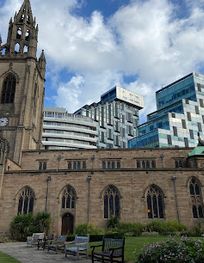
Historic Anglican parish church in Liverpool, symbolizing centuries of maritime heritage and resilience through tragedy and renewal.