Best Landmarks in York
Planning a trip to York? Discover the best landmarks in York with history, expert tips, and routes. Free on web or the Evendo app.


The best landmarks in York
- Top rated
- Closest to the centre
- Price level: low to high
- Time to spend: shortest first
- A–Z
25 landmarks
-
Cathedral4.7★20,600 reviews
York Minster
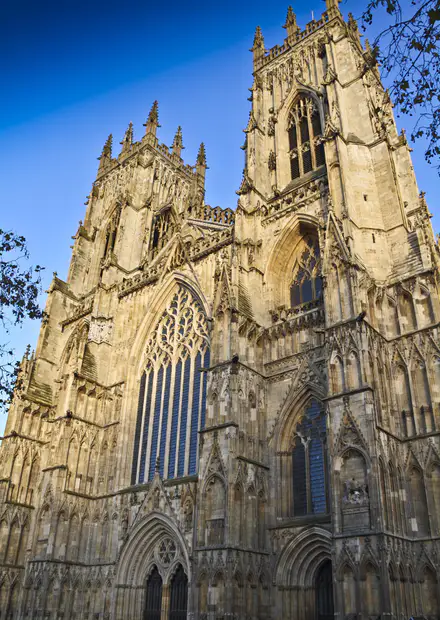
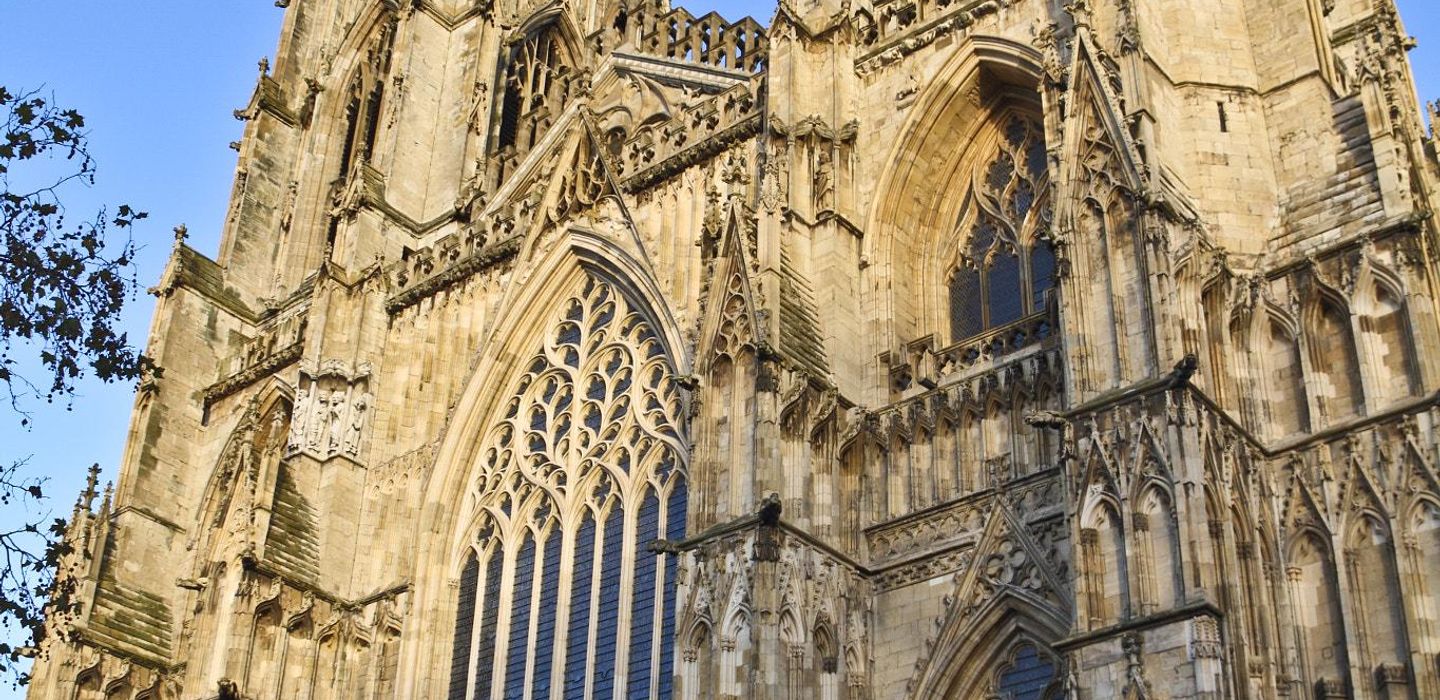
York Minster stands as England's largest Gothic cathedral north of the Alps, a breathtaking masterpiece of medieval architecture spanning 158 meters in length. Built over approximately 250 years beginning in 1220 under Archbishop Walter de Gray's vision, this magnificent structure showcases soaring Gothic vaults, intricate stone carvings, and Britain's richest collection of medieval stained glass. The cathedral's most celebrated features include the Great East Window—larger than a tennis court—and the distinctive Great West Window nicknamed 'the Heart of Yorkshire'. As the seat of the Archbishop of York, the Minster remains a functioning place of worship while welcoming thousands of visitors annually to marvel at its architectural splendor and spiritual significance.
Mon–Sat 9:30–16:00 · Sun 12:45–15:15Price level $$Time to spend 1.5–4 hrs
-
Market4.5★11,053 reviews
Shambles Market
Nestled in the heart of York at 5 Silver Street, Shambles Market is a vibrant covered market featuring over 75 stalls offering artisan crafts, fresh produce, gifts, and a lively food court. Open daily from 9am to 5pm, it blends historic charm with modern shopping and dining, making it a must-visit for those exploring York’s rich heritage and contemporary culture.
Daily 9:00–17:00Price level $$Time to spend 1–3 hrs
-
Historical landmark4.7★1,983 reviews
York City Walls
Walk the longest medieval town walls in England on this spectacular 3.4-kilometre elevated circuit around York's historic centre. Free to access and open daily from 8am to dusk, the beautifully preserved walls offer panoramic views of York Minster, the River Ouse, and centuries of architectural heritage. Pass through ancient gatehouses, quirky towers, and charming information plaques while discovering over 2,000 years of urban history visible in stone.
Daily 8:30–15:30Time to spend 1.5–4 hrs
-
Historical landmark4.5★271 reviews
Bootham Bar
Bootham Bar is a historic medieval gate in York’s city walls, standing on the site of a Roman fortress gateway dating to around 72 AD. With stonework from the 11th century and later medieval additions, it served as a defensive and commercial hub, guarding the northern entrance to the city. Visitors can explore its fortified arches, portcullis, and enjoy views of York Minster and surrounding gardens along the city walls.
Daily 8:00–18:00Time to spend 0.5–2 hrs
-
Tour operator5.0★198 reviews
Wizard Walk of York
The Wizard Walk of York is an award-winning, family-friendly walking tour that blends comedy, magic, and fantasy to enchant visitors of all ages. Set in the atmospheric streets of York, including the iconic Shambles, this one-hour experience features close-up magic tricks, humorous storytelling, and a playful search for mythical creatures. Ideal for children and Harry Potter fans, it offers a lively, interactive way to explore York’s charm without focusing on deep historical facts.
Price level $$Time to spend 1–1.5 hrs
-
Historical landmark4.7★170 reviews
Walmgate Bar
Walmgate Bar is the most complete of York’s four medieval gatehouses, standing as the only one still with its original barbican, portcullis and inner doors. Dating back to the 12th century, this fortified gateway has withstood rebellions, fires and cannon fire, and today offers a rare glimpse into York’s defensive past. Inside, a small coffee house adds a modern, quirky twist, letting visitors sip a flat white beneath centuries-old stone arches and timber framing. It’s a must-see for history lovers and a perfect starting point for walking the famous York City Walls.
Price level $Time to spend 0.5–2 hrs
-
Historical landmark4.5★152 reviews
Roman Column
Standing proudly in Minster Yard, York, the Roman Column is a striking 22-foot-high relic from the city's Roman past. This historic column is believed to be part of the ancient Roman fortress's principia, or headquarters, and a symbol of York’s rich heritage. Located near York Minster, it invites visitors to reflect on the grandeur of Roman Britain and the city's layered history.
Open 24 hoursTime to spend 0.2–1 hr
-
Historical landmark4.6★107 reviews
Baile Hill
Baile Hill is a tree-covered Norman motte rising 8 metres above the landscape in York's Bishophill area, marking the site of William the Conqueror's second defensive castle built in 1069. Now incorporated into York's historic city walls, this quiet historical gem offers an accessible walk along medieval ramparts with sweeping views of York Minster. Free to visit and largely overlooked by tourists, it provides an intimate connection to the city's layered past spanning Roman, Viking, Norman, and Civil War periods.
Daily 8:00–19:00Time to spend 0.5–1.5 hrs
-
Church4.4★93 reviews
St Crux
St Crux Parish Room is a Grade II listed building in York's city centre, constructed in 1888 from the salvaged remains of a grand medieval church. Built on the site of the original St Crux—a church documented since the Domesday Book—the modest hall preserves fragments of 15th-century masonry, architectural elements, and funerary monuments from its predecessor. The location carries profound historical significance as the burial site of Thomas Percy, seventh Earl of Northumberland, a Catholic martyr executed in 1572 and later beatified by Pope Leo XIII.
Time to spend 0.5–1.5 hrs
-
Historical landmark4.7★70 reviews
Medieval Walls
York’s Medieval City Walls form a 3.4 km (2.1 miles) circuit around the historic city centre, making them the longest medieval town walls in England. Built mainly in the 13th and 14th centuries atop earlier Roman foundations, the walls feature fortified gateways known as bars, towers, and ramparts. Walking the walls offers panoramic views of York’s skyline, including landmarks like York Minster and Clifford’s Tower, and a vivid glimpse into the city’s layered history.
Daily 8:00–21:30Time to spend 1.5–3 hrs


Barker Tower
A 14th-century riverside tower in York that once controlled medieval river traffic through a chain system stretching across the River Ouse. Originally built as a defensive structure and toll collection point, Barker Tower later served as a ferry station and even briefly as a mortuary. Today, this historic circular tower retains much of its original medieval character and now houses the Perky Peacock café, offering visitors a unique blend of history and refreshment.
Time to spend 0.5–2 hrs

Skeldergate Bridge
Skeldergate Bridge is a historic iron bridge spanning the River Ouse in York, renowned for its Gothic Revival architecture and scenic riverside views. Opened in 1881 and originally a toll bridge, it now offers free pedestrian and vehicle access. The bridge features a distinctive tower once housing its opening machinery, now repurposed as a bar, and provides picturesque vistas of York’s riverside heritage, including the old Bonding Warehouse and brick terraced houses.
Open 24 hoursTime to spend 0.5–2 hrs

Fishergate Postern Tower
Fishergate Postern Tower is a well-preserved, Grade I listed medieval tower built between 1504 and 1507 as part of York’s ancient city walls. Originally replacing the 14th-century Talkan Tower, it served as a defensive postern gate and later a dovecote. The tower features distinctive architectural elements such as a pointed arch postern with a portcullis slot, clasping buttresses, and a historic roof dating from the 16th or 17th century. It offers visitors a glimpse into York’s fortified past and panoramic views from its upper floors.
Price level $Time to spend 0.5–1.5 hrs

Monk Bar
Monk Bar stands as the tallest and most elaborate of York's four surviving medieval gatehouses, dominating the northeastern entrance to the historic city. Built in the early 14th century as a self-contained fortress, this imposing structure features four storeys, defensive loopholes, gun ports, and a working portcullis last lowered in 1953. Once serving as a prison for recusant Catholics and later a police station, Monk Bar now welcomes visitors to explore the city walls and experience centuries of English heritage from its commanding vantage point.
Time to spend 0.5–2 hrs

Fishergate Bar
Fishergate Bar is a historic medieval gateway in York’s ancient city walls, originally built around 1315. It served as a strategic entrance facing south towards Selby and was once adjacent to the flooded King's Fishpond. Damaged and bricked up after the 1489 Yorkshire Rebellion against Henry VII’s taxes, it was reopened in 1827 and remains a significant symbol of York’s rich heritage and defensive past.
Time to spend 0.5–1.5 hrs

St. Leonard's Hospital
St. Leonard's Hospital in York, founded soon after the Norman Conquest, was once the largest medieval hospital in northern England. Now a captivating ruin within York Museum Gardens, it offers insights into medieval healthcare, religious life, and education. Visitors can explore the remnants of its undercroft and stonework, reflecting its dual role as a place of physical and spiritual care until its destruction during the Reformation.
Mon–Sat 8:00–16:30Time to spend 0.5–1.5 hrs

Robin Hood Tower
Robin Hood Tower is a striking Victorian tower built in 1888–89 as part of York’s historic city walls. Located at the north corner of the medieval defenses, it replaces a ruined medieval tower and offers panoramic views of the city’s iconic Minster and the surrounding walls. The tower is a key landmark reflecting York’s rich medieval heritage and Victorian restoration efforts.
Daily 8:00–18:00Time to spend 0.5–1.5 hrs

Anglian Tower
The Anglian Tower in York is one of only two surviving non-ecclesiastical Anglo-Saxon stone structures in Britain. Nestled into the Roman city walls near Museum Gardens, this roughly 4.5-meter-high tower likely served as a watchtower or defensive post from the 7th or possibly 9th century. Its unique oolitic limestone construction and vaulted brick roof distinguish it from the surrounding Roman masonry. Rediscovered in the 19th century, the tower offers a glimpse into York’s post-Roman and early medieval military architecture.
Time to spend 0.5–1.5 hrs

Petergate House
Petergate House, located at 11 High Petergate in York, is a Grade II* listed early 18th-century townhouse that serves as the rectory to the York Oratory Church of Saint Wilfrid. This historic building sits in one of York’s oldest streets, rich with Roman and medieval heritage. The adjacent York Oratory, housed in the Gothic Revival St Wilfrid’s Church completed in 1864, is a vibrant Catholic community known for its rich liturgical life and cultural activities.
Time to spend 0.5–2 hrs

Sundial Column
Standing just east of York Minster, this elegant 18th-century sundial column is a graceful blend of art and timekeeping. Resting on four stone lions and encircled by a bench, it was originally from Drakelowe Hall in Burton-on-Trent and moved to its current spot in 1955. The column’s intricate carvings and peaceful setting make it a quiet highlight of the Minster’s eastern precincts, inviting visitors to pause and reflect in the shadow of one of England’s greatest cathedrals.
Open 24 hoursTime to spend 15–30 min

The Norman House
The Norman House in York is a remarkable late 12th-century ruin, regarded as the city’s oldest surviving house. Located just behind Stonegate, this Grade I listed scheduled monument features two preserved limestone walls, a rare Norman-style double-arched window, and remnants of a medieval garderobe. Once a grand stone residence likely owned by clergy linked to York Minster, it offers a unique glimpse into Norman domestic architecture and York’s medieval history.
Time to spend 0.5–1.5 hrs

The Cathedral and Metropolitical Church of St Peter in York
Dominating the skyline of York, York Minster is one of the world’s most magnificent Gothic cathedrals. Rising from a site of Christian worship since the 7th century, its soaring nave, vast medieval stained glass, and intricate stonework tell a story of faith, power, and craftsmanship spanning over a millennium. From the Great East Window to the Roman remains beneath its tower, the Minster offers a profound journey through history, architecture, and spirituality in the heart of northern England.
Price level $$Time to spend 1–3 hrs

Ouse Bridge
Ouse Bridge in York is a historic crossing over the River Ouse with origins dating back to Viking times. The current stone bridge, completed in 1821, replaced a medieval predecessor that once hosted houses, shops, and a chapel. It has witnessed significant events including collapses, fires, and city growth, symbolizing York’s evolving infrastructure and heritage.
Time to spend 0.5–1.5 hrs

The Stonebow
The Stonebow is a historic street and landmark in York, England, serving as a gateway to the city’s medieval heart. Known for its distinctive architecture, it links the medieval Walmgate Bar to York’s historic core. The Stonebow House, a notable structure here, blends medieval and Georgian styles and has historically served as a guildhall and post office. The Stonebow symbolizes York’s architectural evolution and rich heritage.
Time to spend 0.5–1.5 hrs

Black window cat
Club Chambers is a Grade II listed Victorian building located on Museum Street in York's city centre, designed by renowned Scottish architect George Fowler Jones in 1875. This striking three-storey structure showcases French Renaissance styling with elaborate decorative detailing, including polychrome brick, ornamental faience tilework, and intricate stone dressings. Today, it stands as a notable architectural landmark within York's historic core, positioned at the intersection of Museum Street and Lendal, offering visitors a glimpse into Victorian design excellence and craftsmanship.
Time to spend 0.2–1 hr
Explore York on the map
A handpicked selection of must-see spots in York, mapped for you.
More about York

York travel guide
York blends Roman and Viking history with medieval streets, grand architecture, museums and riverside culture for memorable sightseeing in northern England.
Tell me more about YorkMore to explore in York

 Best attractions in York

 Best shops in York

 Best bars in York

 Best restaurants in York

 Best nightclubs in York

 Best experiences in York

 Best hotels in York

 All neighbourhoods in York
Explore more

Explore more of United Kingdom
Discover the United Kingdom: A blend of rich history, stunning landscapes, and vibrant cities, offering a unique travel experience for every visitor.
Explore United Kingdom
Getting your guide ready…
We are putting together a fresh copy of the York guide. This can take up to a minute.
This can take a few moments. If your browser asks, choose Allow so the download can start. You'll find the guide in your Downloads folder.
Nothing happened? Download it again
Sorry, the guide is taking longer than usual. Please try again in a minute, or get it by email instead.