

Free Monument Valley Travel Guide & Mobile App
Explore Monument Valley with free travel guides. Discover regional history, expert tips, proposed trips, and audio guides on web or mobile app.


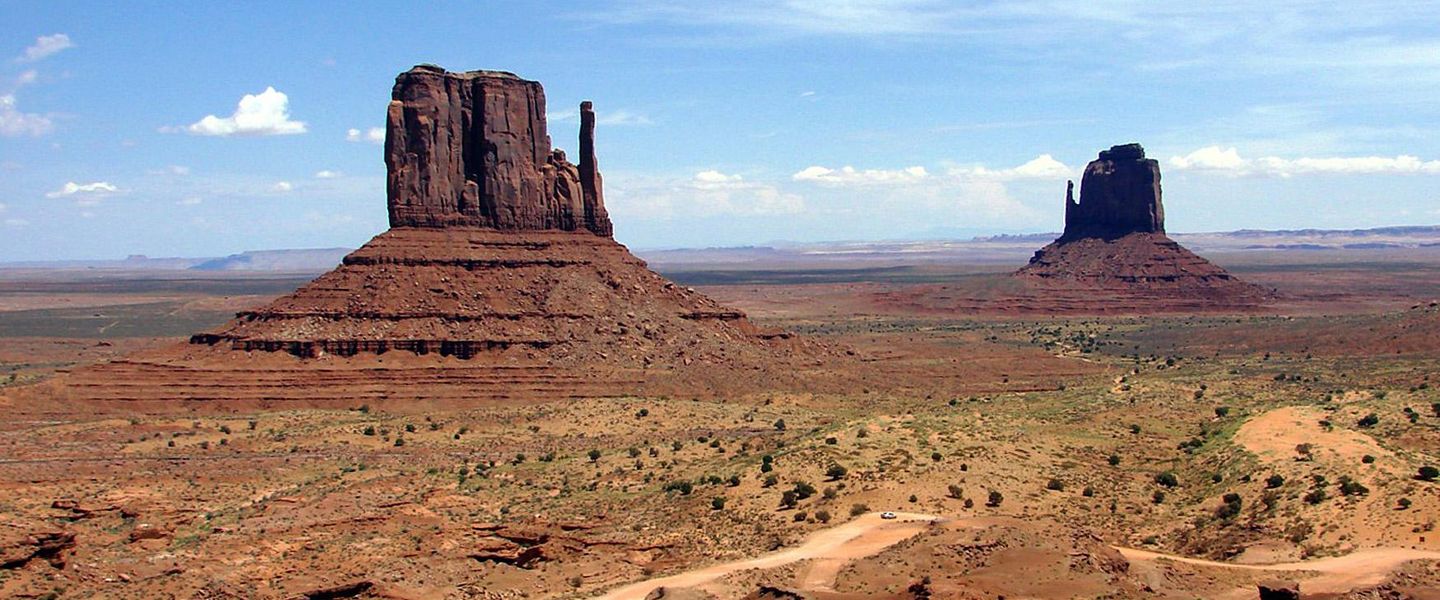


Explore Arizona's Monument Valley for Diné culture, vast sandstone formations, guided valley tours and unforgettable high-desert light.
Read more about Monument Valley
Getting to and around Monument Valley
How to get there
Transportation
Destinations in Monument Valley
Resorts, valleys and scenic spots worth a trip of their own.

Swipe for more destinations
Best attractions in Monument Valley
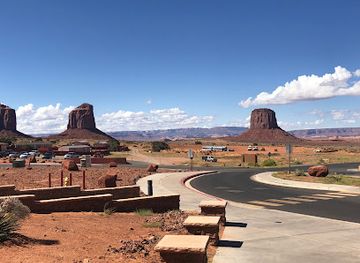
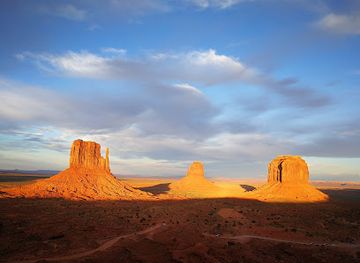
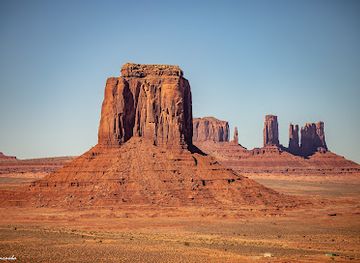
Monument Valley Navajo Tribal Park is the region's central attraction, with its visitor centre, panoramic overlook and Valley Drive through a concentration of sandstone formations. The unpaved route passes close to landmarks such as the East and West Mitten Buttes, Merrick Butte, Elephant Butte and the Three Sisters, while the open spaces between them reveal the scale of the Colorado Plateau. Guided Navajo tours extend the experience into locations and viewpoints that are not available from the public road and add cultural, geological and historical interpretation. Photography is especially rewarding around sunrise and sunset, although conditions can be cold, windy or dusty. The surrounding landscape also supports scenic driving, stargazing, birdwatching and quiet observation of desert plants and wildlife. Nearby Kayenta provides a useful base for understanding the wider Navajo Nation and for arranging supplies, while Oljato-Monument Valley offers closer access to the park. Monument Valley is not a conventional resort destination: attractions are dispersed, facilities are limited and the value of a visit lies as much in landscape and interpretation as in formal entertainment.
-
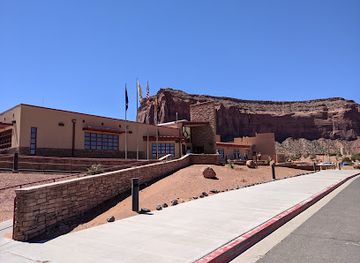
Monument Valley Tribal Park Visitor Center
Explore the breathtaking beauty and rich culture at the Monument Valley Tribal Park Visitor Center, a gateway to the iconic Navajo landscapes.
-
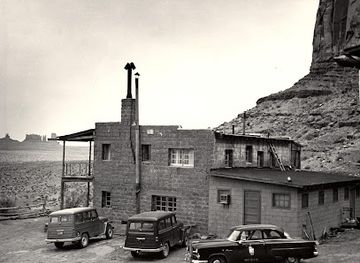
Goulding's Lodge
Discover Goulding's Lodge: Where Comfort Meets Culture in the Heart of Monument Valley's Breathtaking Landscapes.
-
John Ford Point
Experience the breathtaking beauty of John Ford Point in Oljato-Monument Valley, Utah, a cinematic gem surrounded by iconic landscapes.
-
Monument Valley Tribal Tours
Discover the enchanting landscapes and rich Navajo culture of Monument Valley through guided tours that offer an unforgettable experience.


Best landmarks in Monument Valley
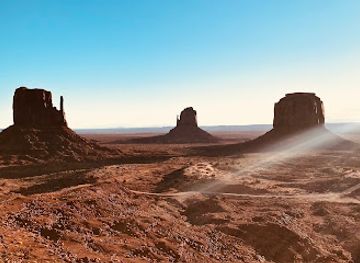
The East and West Mitten Buttes are Monument Valley's most recognisable landmarks, their paired silhouettes often forming the defining image of the Arizona side of the valley. Merrick Butte rises nearby, while Rain God Mesa occupies a central position in the landscape and is associated with Diné cultural understanding as well as geological presence. Elephant Butte and the Three Sisters add further variation to the sandstone skyline, showing how erosion has shaped towers, mesas and narrow residual forms from the same broad plateau. John Ford's Point, reached from the Valley Drive, carries the legacy of the films that made the landscape internationally familiar, although its significance should be considered alongside the valley's living Diné identity. The visitor-centre overlook provides the classic wide view across the formations, while the road below reveals their changing scale and colour. These landmarks are not isolated monuments in a managed garden: they stand within a working cultural landscape where access, photography and movement require respect.
-
Tourist attraction
Four Corners Monument
Experience the unique thrill of standing in four states at once at the Four Corners Monument, a landmark of geography and Native American culture.
-
Visitor center
Monument Valley Tribal Park Visitor Center
Discover the iconic red rock buttes and rich Navajo culture at the Monument Valley Tribal Park Visitor Center, your gateway to the heart of the American Southwest.
-
Lodge
Goulding's Lodge
Experience the history and beauty of Monument Valley at Goulding's Lodge, a landmark offering stunning views, tours, and a glimpse into the Old West.
-
Tourist attraction
John Ford Point
Experience the iconic vistas of Monument Valley from John Ford Point, a timeless symbol of the American West, made famous by classic Western films.


Explore Monument Valley on the map
Plan your trip on one map. See where the top cities, national parks and sights are, and book hotels and experiences in a few clicks.
Best hotels in Monument Valley
Best restaurants in Monument Valley
Dining in Monument Valley is practical and regional rather than restaurant-focused, with options concentrated around the tribal park, Oljato-Monument Valley and Kayenta. Menus commonly combine familiar American fare with Navajo and broader Southwestern influences; where available, visitors may encounter fry bread, mutton or lamb dishes, beans, stews and blue-corn preparations. Fry bread is an important food associated with Navajo history, but recipes and serving styles vary between cooks and communities. Diners can also find cafés, hotel restaurants, family-run establishments and convenience stores suited to remote-road travel. Kayenta offers the broadest choice of everyday meals and supplies, while accommodation near the park may be the most convenient option for early starts. Roadside vendors and local traders sometimes sell baked goods, snacks or prepared food, but availability is not guaranteed. Carrying provisions is sensible, especially for long drives, and visitors should distinguish Diné food traditions from the much wider category of generic Southwestern cuisine.
-
Native American restaurant
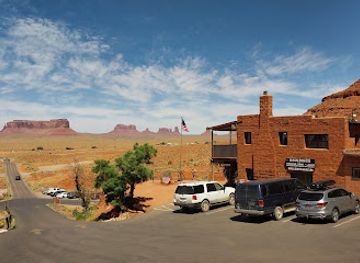
Goulding's Stagecoach Dining Room
Experience authentic Native American cuisine at Goulding's Stagecoach Dining Room in Monument Valley with stunning views and rich cultural heritage.
-
American
The View Restaurant
Experience breathtaking views and authentic American cuisine at The View Restaurant in Monument Valley.
Best bars in Monument Valley
Monument Valley has little conventional nightlife, and alcohol is not the focus of the destination. Evening activity centres on eating at accommodation or in Kayenta, watching the changing light over the formations, attending cultural interpretation where offered and viewing the exceptionally dark desert sky. Some hotels and restaurants provide a quiet place to relax, but visitors should not expect a bar or nightclub district, late-night transport or an extensive live-music circuit. The Navajo Nation has its own laws and regulations concerning alcohol, and visitors should respect restrictions applying to particular communities, facilities and tribal-park areas. Plan evening journeys carefully because roads are dark, distances are long and wildlife or livestock may be present. Stargazing, photography and conversation are more characteristic of a night in Monument Valley than organised entertainment, with weather and seasonal temperatures shaping how long visitors remain outdoors.
-
Visitor center
Monument Valley Tribal Park Visitor Center
Explore the breathtaking Monument Valley Tribal Park Visitor Center, where stunning landscapes and rich Navajo culture await you.
-
Grill
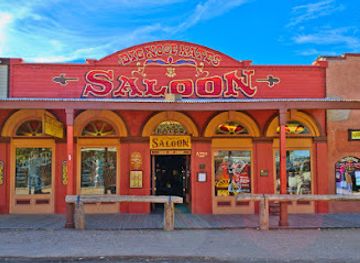
Big Nose Kate's Saloon
Discover the Wild West spirit at Big Nose Kate's Saloon in Tombstone, Arizona - where hearty food and rich history combine!
-
Restaurant
Goulding's Lodge
Explore the breathtaking landscapes and rich culture of Monument Valley at Goulding's Lodge, a perfect blend of hospitality and adventure.
-
John Ford Point
Discover the stunning beauty of John Ford Point, a cinematic landmark in Oljato-Monument Valley, Utah, showcasing iconic red rock formations.
Best shops in Monument Valley
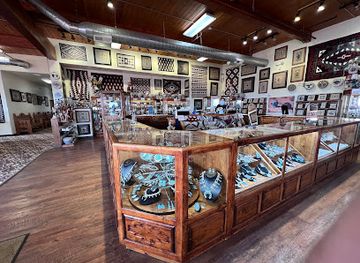
Shopping in Monument Valley centres on authentic Navajo arts, practical provisions and small-scale trading rather than conventional retail. Visitors may find Navajo rugs, woven textiles, silver and turquoise jewellery, pottery, handmade crafts and artwork at trading posts, visitor facilities, galleries and roadside stalls around the park and in Kayenta. Styles, materials and prices vary considerably, so ask about the maker, technique, provenance and whether an item is handmade before buying. A properly identified Navajo rug or piece of jewellery can support living artistic traditions, while vague claims of Native origin deserve caution. Kayenta provides the region's most useful concentration of groceries, fuel, basic supplies and general shopping; retail options are otherwise widely dispersed. Packaged foods and locally made crafts are more practical purchases than fashion or luxury goods. Be respectful when browsing, never handle delicate work without permission and remember that archaeological objects, plants and naturally collected material should not be removed from the landscape.
-
Visitor center
Monument Valley Tribal Park Visitor Center
Explore Monument Valley's stunning landscapes and rich Navajo culture at the Tribal Park Visitor Center, a must-visit destination for every traveler.
-
Gift shop
Goulding's Lodge
Discover the Charm of Goulding's Lodge: A Cultural Oasis in Monument Valley, Where Heritage Meets Hospitality and Stunning Landscapes Await.
-
 Hotel
The View Hotel
Experience breathtaking views and comfort at The View Hotel, the perfect retreat in Monument Valley, Utah.
-
RV park
Goulding's Resort RV & Campground
Experience the breathtaking beauty of Monument Valley at Goulding's Resort RV & Campground, offering comfort and adventure in the heart of nature.

Get your free copy of our complete guide to Monument Valley, delivered straight to you.
Everything on this page, from attractions and restaurants to essentials and local phrases, in one PDF you can read offline, print or share.
Already have an account? Sign in
Your Monument Valley guide is ready.
We'll send it to · Not you? Sign out

Getting your guide ready…
We are putting together a fresh copy of the Monument Valley guide. This can take up to a minute.
This can take a few moments. If your browser asks, choose Allow so the download can start. You'll find the guide in your Downloads folder.
Nothing happened? Download it again
Sorry, the guide is taking longer than usual. Please try again in a minute, or get it by email instead.
Monument Valley essentials
Currency and Payment
Safety
Emergency Situations
Do's and Don'ts
Local Tips
From Eve
Local phrases worth knowing
You don't need to get them perfect. A few words go a long way, and locals appreciate the effort.
Basics
| English | Local | Say it |
|---|---|---|
| Hello | Yá'át'ééh | [yah-t'eh] |
| Goodbye | Hágoónee' | [hah-go-nee] |
| Yes | Aoo' | [ah-oh] |
| No | Dooda | [doh-dah] |
| Please/You're welcome | Ahéhee' | [ah-heh-eh] |
| Thank you | Ahéhee' | [ah-heh-eh] |
| Excuse me/Sorry | Yá'át'ééh shí éí | [yah-t'eh shee eh] |
| How are you? | Ha'ííshjéé'? | [hah-ee-sh-jay] |
| Fine. And you? | T'áá shoodí? | [tah shoh-dee] |
| Do you speak English? | T'áá shikaadééł nihíji'? | [tah shika-dehl nih-hee-jee] |
| I don't understand | T'áá' íiyisí nish'ááh? | [tah ee-yee-see nish-ah] |
Eating & Drinking
| English | Local | Say it |
|---|---|---|
| I'd like to see the menu, please | Dóó shikaadééł nihíji' menu | [doh shee-kah-dehl nih-hee-jee menu] |
| I don't eat meat | T'áá' íiyisí nish'ááh naaldlooshii | [tah ee-yee-see nish-ah naahl-dlo-shee] |
| Cheers! | Nééz naashá | [nayz nah-shah] |
| I would like to pay, please | Dóó shikaadééł nihíji' biniiyééh | [doh shee-kah-dehl nih-hee-jee bee-nee-yeh] |
Emergencies
| English | Local | Say it |
|---|---|---|
| Help! | Ch'ééh dleeł! | [cheh-dlee] |
| Go away! | Doo shił yéego! | [doo shil yeh-go] |
| Call the Police! | Yá'át'ééh shí éí police! | [yah-t'eh shee eh police] |
| Call a doctor! | Yá'át'ééh shí éí doctor! | [yah-t'eh shee eh doctor] |
| I'm lost | Nihíji' t'áá' íiyisí | [nih-hee-jee tah ee-yee-see] |
| I'm ill | Nihíji' t'áá' íiyisí ádíízh | [nih-hee-jee tah ee-yee-see ah-dee-zh] |
Shopping
| English | Local | Say it |
|---|---|---|
| I'd like to buy... | Dóó shikaadééł nihíji' ... | [doh shee-kah-dehl nih-hee-jee ...] |
| I'm just looking | Nihíji' doo shikaadééł | [nih-hee-jee doo shee-kah-dehl] |
| How much is it? | Dííjį' shikaadééł? | [dee-jee nah-shee-kah-dehl] |
| That's too expensive | Dííjį' naalnish'ááh | [dee-jee nah-lni-shah] |
| Can you lower the price? | Nihíji' biniiyééh nits'ííh? | [nih-hee-jee bee-nee-yeh nits-ee] |
Time & Numbers
| English | Local | Say it |
|---|---|---|
| What time is it? | Dííjį' shikaadééł? | [dee-jee nah-shee-kah-dehl] |
| It's one o'clock | Dóó shikaadééł t'áá' íiyisí | [doh shee-kah-dehl tah ee-yee-see] |
| Half past (10) | T'áá' shikaadééł (10) t'áá' íiyisí | [tah shee-kah-dehl (10) tah ee-yee-see] |
| Morning | T'áá' yá'át'ééh | [tah yah-t'eh] |
| Afternoon | T'áá' yá'át'ééh | [tah yah-t'eh] |
| Evening | T'áá' yá'át'ééh | [tah yah-t'eh] |
| Yesterday | T'áá' yéézh | [tah yayzh] |
| Today | T'áá' yéézh | [tah yayzh] |
| Tomorrow | T'áá' yéézh | [tah yayzh] |
| 1 | T'áá' íiyisí | [tah ee-yee-see] |
| 2 | Naaki | [nah-kee] |
| 3 | T'áá' naaki | [tah nah-kee] |
| 4 | Doo shił naaki | [doo shil nah-kee] |
| 5 | Naaki hólǫ́ | [nah-kee ho-lo] |
| 6 | Naaki hólǫ́dǫ́ǫ́ | [nah-kee ho-lo-do] |
| 7 | Naaki hólǫ́dǫ́ǫ́dǫ́ǫ́ | [nah-kee ho-lo-do-do] |
| 8 | Naaki hólǫ́dǫ́ǫ́dǫ́ǫ́dǫ́ǫ́ | [nah-kee ho-lo-do-do-do] |
| 9 | Naaki hólǫ́dǫ́ǫ́dǫ́ǫ́dǫ́ǫ́dǫ́ǫ́ | [nah-kee ho-lo-do-do-do-do] |
| 10 | Naaki hólǫ́dǫ́ǫ́dǫ́ǫ́dǫ́ǫ́dǫ́ǫ́dǫ́ǫ́ | [nah-kee ho-lo-do-do-do-do-do] |
Transport & Directions
| English | Local | Say it |
|---|---|---|
| Where's a/the...? | Dííjį' ...? | [dee-jee nah] |
| What's the address? | Dííjį' address? | [dee-jee address] |
| Can you show me (on the map)? | Nihíji' shikaadééł (nílį́į́h)? | [nih-hee-jee shee-kah-deh (nil-i)] |
| When's the next (bus)? | Dííjį' t'áá' shikaadééł (bus)? | [dee-jee tah nah-shee-kah-dehl (bus)] |
| A ticket (to ....) | Dóó shikaadééł ticket (....) | [doh shee-kah-dehl ticket (....)] |
History of Monument Valley
Ancient Puebloan Presence
The Monument Valley area contains evidence of ancestral Puebloan occupation, including archaeological traces associated with farming communities that lived across the Colorado Plateau. These communities cultivated crops where water and soils allowed, used local stone and sandstone shelters, and participated in wider networks of movement and exchange. The visible ruins and artefacts are part of a broader regional history rather than isolated curiosities. Visitors should never disturb archaeological sites or remove objects, which are protected under applicable law.
Diné Settlement and Cultural Landscape
The Diné, commonly known as the Navajo, developed enduring relationships with the Four Corners landscape over centuries. Their history includes migration traditions, farming, herding, weaving and the use of desert plants and water sources. Monument Valley forms part of Diné Bikéyah, where landforms carry cultural and spiritual meaning. This perspective remains central to the visitor experience: the valley is not simply scenery but a place connected to community, identity, ceremony and continuing cultural practice.
Spanish, Mexican and United States Expansion
The wider region was drawn into Spanish and later Mexican spheres of influence before becoming part of the United States after the Mexican–American War. The nineteenth century brought increasing military, political and economic pressure on Diné communities. The Long Walk and internment at Bosque Redondo in the 1860s caused profound disruption, followed by the establishment of the Navajo reservation and the return of many Diné people. These events remain fundamental to understanding the region's modern history.
Navajo Nation and Land-Based Economy
After returning from Bosque Redondo, Diné communities rebuilt livelihoods through farming, sheep and cattle herding, weaving and trade. The reservation's boundaries and governance developed through a series of federal actions, while the Navajo Nation later established its own elected government. In and around Monument Valley, ranching, home-based craft production and community life continue alongside tourism. Navajo rugs, jewellery and other arts are therefore connected to living economic and cultural traditions, not merely to visitor souvenirs.
Monument Valley Navajo Tribal Park
The Navajo Nation created Monument Valley Navajo Tribal Park in the twentieth century to manage tourism and protect the valley's natural and cultural resources. This approach places interpretation and access within a Navajo institutional framework. The Valley Drive and guided tours allow visitors to experience the formations while recognising restrictions around sacred, private or environmentally sensitive places. The park's development also reflects a wider effort by Indigenous communities to present their own histories and manage tourism on their lands.
Cinema, Photography and Global Recognition
During the twentieth century, Monument Valley became one of the most recognisable landscapes in the United States through photography, advertising and western films, notably productions associated with director John Ford. Film brought international attention and helped establish the valley's visual identity, but it often presented a simplified frontier mythology. Contemporary interpretation increasingly places those images alongside Diné history, living communities and the valley's geological and spiritual significance, giving visitors a fuller understanding of the place.
Monument Valley in Photos
Browse through our photo collection highlighting the charm and character of the destination.
Neighbouring regions of Monument Valley
The closest regions to Monument Valley, if you have time for more than one.
-

-

-

-
-


Swipe for more regions
Explore more

Explore more of Arizona
Discover Arizona: From the majestic Grand Canyon and red rocks of Sedona to the vibrant cities of Phoenix and Scottsdale, explore the diverse beauty and culture of the Grand Canyon State.
Explore Arizona