

Free Ali Bayramli Travel Guide & Mobile App
Plan your Ali Bayramli trip with Evendo. Get free guides to top attractions, restaurants, hotels, and bars. Web access or download the mobile app.


Ali Bayramli, now Shirvan, offers Kura River landscapes, Azerbaijani history, oil heritage and a quieter base for exploring southern Azerbaijan.
A City Known Today as Shirvan
Ali Bayramli is the former name of Shirvan, an industrial city in central-southern Azerbaijan situated on the Kura River. The name remains familiar in older maps, travel references and local memory, while official usage has returned to Shirvan. Unlike Azerbaijan’s celebrated Caspian resorts or historic walled cities, this is a functional regional centre whose character is shaped by the river plain, oil and energy industries, broad roads and the everyday life of southern Azerbaijan.Read more about Ali Bayramli
River Plain and Regional Setting
Local Life and Heritage
When is the best time to visit Ali Bayramli?
Best: May–June, September · 23–27°C| Month | High (°C) |
|---|---|
| January | 4 |
| February | 5 |
| March | 10 |
| April | 19 |
| May (best) | 23 |
| June (best) | 27 |
| July | 29 |
| August | 29 |
| September (best) | 23 |
| October | 17 |
| November | 11 |
| December | 7 |
Explore Ali Bayramli on the map
Plan your Ali Bayramli trip on one map. See where the top attractions, landmarks, restaurants, bars and hotels are, find what's near where you're staying, and book hotels and experiences in a few clicks.
Best hotels in Ali Bayramli
Best restaurants in Ali Bayramli
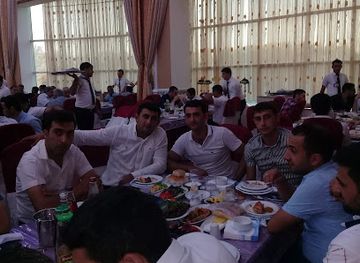
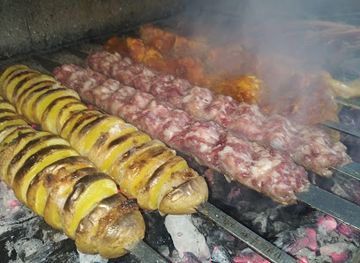
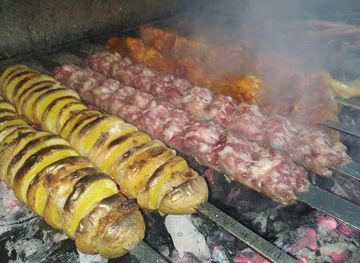
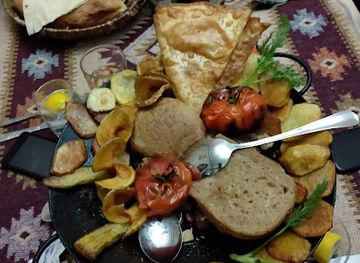
Dining in Shirvan reflects the wider food culture of Azerbaijan and the agricultural setting of the Kura-Aras plain. Local restaurants and cafés commonly centre on grilled meats, kebabs, rice dishes, soups, flatbreads, salads and seasonal vegetables, while tea remains an important part of hospitality. Plov, prepared in many regional styles, and dolma are familiar choices, although recipes vary from kitchen to kitchen. Roadside establishments and modest family-run eateries may offer more regional character than formal dining rooms, with menus influenced by what is available locally. Markets provide opportunities to see fruit, herbs, dairy products and other ingredients used in home cooking. Dining customs are generally sociable, and shared dishes are common. Visitors should not expect a concentrated restaurant quarter or a large international dining scene; opening patterns, menus and payment methods can vary, making local recommendations particularly useful.
-
Restaurant
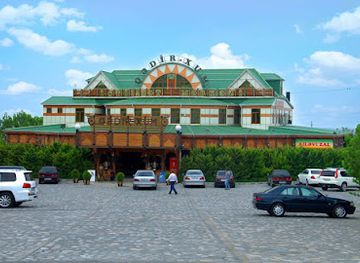
QƏDİR-XUM
Experience authentic Azerbaijani cuisine at QƏDİR-XUM in Hajigabul - a culinary journey through rich flavors and warm hospitality.
30 min drive · 10 km from city centre
-
Restaurant
Yeganә Şadlıq Sarayı
Experience the essence of Azerbaijani cuisine at Yeganә Şadlıq Sarayı in Shirvan—where tradition meets taste in an elegant setting.
9 min drive · 2.9 km from city centre
-
Restaurant
Donerland.az
Experience authentic Azerbaijani cuisine at Donerland.az in Shirvan - where every bite tells a story.
10 min drive · 3.2 km from city centre
-
Restaurant
Zeyneb Ailevi Türk Restoranı
Experience authentic Turkish flavors at Zeyneb Ailevi Türk Restoranı in Shirvan – where tradition meets taste.
14 min drive · 4.6 km from city centre
Best bars in Ali Bayramli
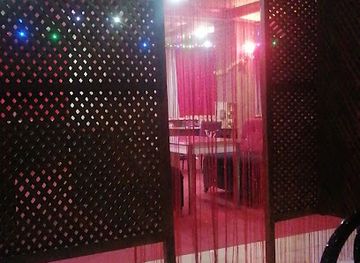
Shirvan has a restrained evening scene centred more on cafés, tea houses, family restaurants and informal social gatherings than on nightclubs. After dark, central streets and public spaces may remain active, particularly in warmer weather, while entertainment is generally local and low-key rather than designed for international visitors. Tea houses provide an important setting for conversation and watching daily life, although some venues are primarily male social spaces and visitors should follow the tone of the establishment. Restaurants may offer the most straightforward evening meal, while larger hotels, where present, are more likely than independent venues to provide familiar service for travellers. There is no need to expect a defined bar district comparable with Baku. Alcohol is available in Azerbaijan, but public behaviour should remain discreet and respectful, especially near religious sites and residential neighbourhoods.
-
Restaurant
Donerland.az
Discover the authentic taste of Azerbaijani döner at Donerland.az, a culinary delight in the heart of Shirvan that promises a memorable dining experience.
10 min drive · 3.2 km from city centre
-
Restaurant
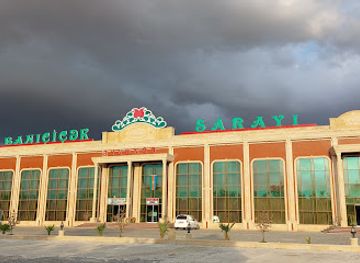
Banıçiçek Eylence
Experience the rich flavors of Azerbaijan at Banıçiçek Eylence, a delightful restaurant in Shirvan offering traditional and international cuisine.
16 min drive · 5.3 km from city centre
-
Restaurant
Gul Bagi (Restoran)
Discover the authentic flavors of Azerbaijan at Gul Bagi Restaurant in Shirvan, a delightful dining experience awaits you.
17 min walk · 1.4 km from city centre
-
 Bar
BarAkıyan Noyabr Surpriz
Discover the lively atmosphere of Akıyan Noyabr Surpriz, a top-notch bar in Shirvan, Azerbaijan, offering unique drinks and vibrant entertainment.
16 min drive · 5.3 km from city centre
Best nightclubs in Ali Bayramli
Shirvan has a restrained evening scene centred more on cafés, tea houses, family restaurants and informal social gatherings than on nightclubs. After dark, central streets and public spaces may remain active, particularly in warmer weather, while entertainment is generally local and low-key rather than designed for international visitors. Tea houses provide an important setting for conversation and watching daily life, although some venues are primarily male social spaces and visitors should follow the tone of the establishment. Restaurants may offer the most straightforward evening meal, while larger hotels, where present, are more likely than independent venues to provide familiar service for travellers. There is no need to expect a defined bar district comparable with Baku. Alcohol is available in Azerbaijan, but public behaviour should remain discreet and respectful, especially near religious sites and residential neighbourhoods.
-
Night club
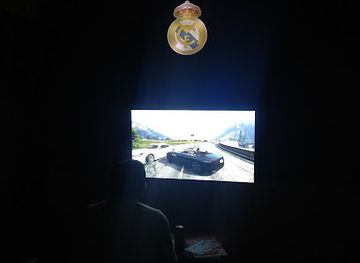
El Clasico Game Center
Discover the vibrant nightlife of Shirvan at El Clasico Game Center, a premier destination for unforgettable moments and lively entertainment.
9 min drive · 3.1 km from city centre
-
Night club
001 KAFE
Discover Shirvan's nightlife at 001 KAFE, a vibrant night club offering great music, diverse crowds, and an unforgettable atmosphere.
18 min drive · 6.0 km from city centre
-
Bar
Akıyan Noyabr Surpriz
Discover the vibrant atmosphere and local flavors of Shirvan at Akıyan Noyabr Surpriz, the ultimate bar experience in Azerbaijan.
16 min drive · 5.3 km from city centre
-
Night club
QUTAB ADIL
Discover the electrifying nightlife at Qutab Adil, Shirvan's premier night club offering vibrant music, dance, and unforgettable experiences.
10 min drive · 3.4 km from city centre
Best shops in Ali Bayramli
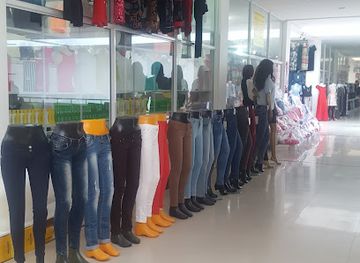
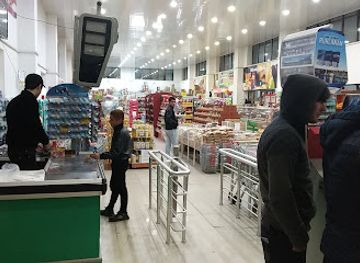
Shopping in Shirvan is primarily practical and local, with everyday markets, small grocery shops, bakeries, clothing stores and independent retailers serving residents from the city and nearby settlements. A market visit offers a glimpse of the region’s food culture through seasonal fruit, vegetables, herbs, dairy products, bread and other household produce. Travellers may also find Azerbaijani tea, sweets, preserves and packaged regional foods that are easier to carry than delicate handicrafts. The city is not a major centre for luxury retail, antiques or specialist artisan workshops, and its commercial streets have a functional character. Bargaining should not be assumed in ordinary shops, while market practices vary. For a broader selection of traditional crafts, carpets and nationally branded goods, Baku and established regional tourist centres generally offer more choice than Shirvan.
-
Shopping mall
Şirvan ticarət mərkəzi
Discover the heart of Shirvan at the Şirvan Shopping Mall, where shopping, dining, and entertainment come together for a memorable experience.
12 min drive · 4.0 km from city centre
-
Shopping mall
Elit Ticarət Mərkəzi_Elite Trade Center
Explore Shirvan's Elite Trade Center: A Shopping Haven with Local Flavors, Entertainment, and Modern Retail Experiences.
9 min drive · 3.0 km from city centre
-
Grocery store
Yaşıl Market
Experience the local culture at Yaşıl Market, Shirvan's vibrant grocery store offering fresh produce and unique Azerbaijani delicacies.
11 min drive · 3.7 km from city centre
-
Grocery store
Arcline Şirvan Ofice
Explore the flavors of Azerbaijan at Arcline Şirvan, your go-to grocery store for fresh produce and local delicacies.
10 min drive · 3.2 km from city centre

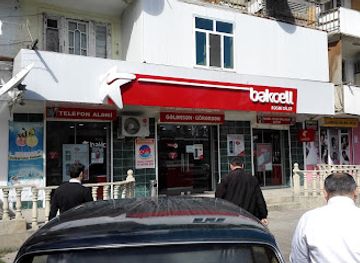
Get your free copy of our complete guide to Ali Bayramli, delivered straight to you.
Everything on this page, from attractions and restaurants to essentials and local phrases, in one PDF you can read offline, print or share.
Already have an account? Sign in
Your Ali Bayramli guide is ready.
We'll send it to · Not you? Sign out

Getting your guide ready…
We are putting together a fresh copy of the Ali Bayramli guide. This can take up to a minute.
This can take a few moments. If your browser asks, choose Allow so the download can start. You'll find the guide in your Downloads folder.
Nothing happened? Download it again
Sorry, the guide is taking longer than usual. Please try again in a minute, or get it by email instead.
Ali Bayramli essentials
Local Tips
From Eve
Local phrases worth knowing
You don't need to get them perfect. A few words go a long way, and locals appreciate the effort.
Basics
| English | Local | Say it |
|---|---|---|
| Hello | Salam | [sah-lahm] |
| Goodbye | Sag ol | [sahg ohl] |
| Yes | Bəli | [bay-lee] |
| No | Xeyr | [khayr] |
| Please/You're welcome | Xahiş edirəm | [khah-heesh eh-dee-rehm] |
| Thank you | Təşəkkür edirəm | [teh-sheh-koor eh-dee-rehm] |
| Excuse me/Sorry | Bağışlayın | [bah-ghuhsh-lah-yuhn] |
| How are you? | Necəsən? | [neh-jeh-suhn] |
| Fine. And you? | Yaxşıyam. Sən? | [yahkh-shee-yahm. sahn] |
| Do you speak English? | İngilis dili biliyirsiniz? | [een-gee-lees dee-lee bee-lee-yeer-see-neeze] |
| I don't understand | Anlamıram | [ahn-lah-muh-rahm] |
Eating & Drinking
| English | Local | Say it |
|---|---|---|
| I'd like to see the menu, please | Menyunu görə bilərəmmi, xahiş edirəm | [mehn-yoo-noo goh-ruh bee-luh-rehm-mee, khah-heesh eh-dee-rehm] |
| I don't eat meat | Mən ət yemirəm | [muhn aht yeh-mee-rehm] |
| Cheers! | Sağ ol | [sahg ohl] |
| I would like to pay, please | Ödəmək istəyirəm, xahiş edirəm | [uh-deh-mehk ees-teh-yeer-ehm, khah-heesh eh-dee-rehm] |
Emergencies
| English | Local | Say it |
|---|---|---|
| Help! | Kömək edin! | [kuh-muhk eh-deen] |
| Go away! | Get! | [get] |
| Call the Police! | Polisi çağırın! | [poh-lee-see chah-ghuh-ruhn] |
| Call a doctor! | Həkim çağırın! | [heh-keem chah-ghuh-ruhn] |
| I'm lost | Yolumu itirmişəm | [yoh-loo-moo ee-teer-mee-shuhm] |
| I'm ill | Mən xəstəyəm | [muhn khes-teh-yuhm] |
Shopping
| English | Local | Say it |
|---|---|---|
| I'd like to buy... | Satın almaq istəyirəm... | [saht-uhn ahl-mahk ees-teh-yeer-ehm...] |
| I'm just looking | Sadəcə baxıram | [sah-deh-jeh bakh-uh-rahm] |
| How much is it? | Ne qədərdir? | [neh guh-dehr-deer] |
| That's too expensive | Çox bahadır | [choh bah-hah-deer] |
| Can you lower the price? | Qiyməti aşağı sala bilərsiniz? | [kee-yuh-meh-tee ah-shah-uh sah-lah bee-luh-rsee-neez] |
Time & Numbers
| English | Local | Say it |
|---|---|---|
| What time is it? | Saat neçədir? | [saht neh-jeh-deer] |
| It's one o'clock | Bir tamdır | [beer tahm-duhr] |
| Half past (10) | Onun yarısı | [oh-noon yah-ruh-suh] |
| Morning | Səhər | [suh-hehr] |
| Afternoon | Günortası | [goon-or-tuh-suh] |
| Evening | Axşam | [akh-shahm] |
| Yesterday | Dünən | [doo-nehn] |
| Today | Bu gün | [boo goon] |
| Tomorrow | Sabah | [sah-bah] |
| 1 | Bir | [beer] |
| 2 | İki | [ee-kee] |
| 3 | Üç | [ooch] |
| 4 | Dörd | [dohrd] |
| 5 | Beş | [besh] |
| 6 | Altı | [ahl-tuh] |
| 7 | Yeddi | [yehd-dee] |
| 8 | Səkkiz | [suhk-keez] |
| 9 | Doqquz | [dohk-kooz] |
| 10 | On | [ohn] |
Transport & Directions
| English | Local | Say it |
|---|---|---|
| Where's a/the...? | ... haradadır? | [... hah-rah-dah-deer] |
| What's the address? | Ünvanı nədir? | [oon-vah-nuh neh-deer] |
| Can you show me (on the map)? | (Xəritədə) göstərə bilərsiniz? | [(khe-ree-teh-duh) gohs-teh-reh bee-luh-rsee-neez] |
| When's the next (bus)? | Növbəti (avtobus) neçədədir? | [nohv-beh-tee (ahv-toh-boos) neh-jeh-deh-deer] |
| A ticket (to ....) | Bir bilet (....a) | [beer bee-leht (ah)] |
History of Ali Bayramli
An Ancient Kura-Aras Setting
The territory around present-day Shirvan belongs to the broad Kura-Aras lowland, a corridor that has long connected the Caspian basin with the interior of the South Caucasus. Communities in this fertile but flood-prone environment depended on river water, grazing and agriculture, while routes across the plain encouraged movement between settlements. The modern city should not be confused with the medieval and early modern city of Shamakhi, historically associated with the wider Shirvan region. Rather, its identity developed later, in a landscape shaped by changing settlements, irrigation and the economic importance of the Kura.
Shirvan Under Successive Powers
The wider Shirvan region was governed at different times by local dynasties and larger empires, including the Shirvanshahs, Safavid Iran and the Russian Empire. Control of the lowlands brought strategic and economic importance, although the present urban centre did not emerge as one of the region’s principal medieval capitals. Russian administrative influence expanded during the nineteenth century after the incorporation of much of present-day Azerbaijan into the Russian Empire. The period introduced new patterns of administration, commercial exchange and resource exploitation that later helped shape the modern settlement.
Oil and the Modern Settlement
The city’s modern development is associated with the expansion of oil production and energy infrastructure in Azerbaijan during the late imperial and Soviet periods. Industry, rail connections and planned housing transformed what had been a rural lowland environment into a regional urban centre. Soviet investment brought technical institutions, public buildings, utilities and broad streets, while the surrounding agricultural landscape continued to support rural communities. This industrial foundation explains why Shirvan’s built environment is more modern and functional than the historic stone architecture found in places such as Baku, Shaki or Sheki.
The Ali Bayramli Name
In the Soviet period the city was known as Ali Bayramli, commemorating Ali Bayramov, an Azerbaijani revolutionary active during the early twentieth century. The name reflected the political culture of the Soviet era, when towns and cities were frequently renamed after revolutionary figures. The city’s industrial growth and administrative importance continued under this name, and Ali Bayramli remains widely recognisable in older documents and international references. The former name is therefore an important part of the city’s twentieth-century identity, even though it is no longer the official designation.
Return to Shirvan
In 2008 the city was officially renamed Shirvan, reconnecting its civic identity with the historic regional name. Modern Shirvan remains an important local centre for the surrounding lowland settlements, with an economy linked to energy, public administration, trade and agriculture. Its present-day character reflects several overlapping legacies: the ancient importance of the Kura plain, the administrative transformations of the Russian and Soviet periods, and independent Azerbaijan’s effort to recover historical place names. The city’s streets and institutions consequently preserve a modern regional story rather than a compact architectural past.
Ali Bayramli in Photos
Browse through our photo collection highlighting the charm and character of the destination.
Cities near Ali Bayramli
The closest cities to Ali Bayramli, if you have time for more than one stop.
-

-

-

-

-


Swipe for more cities
Explore more
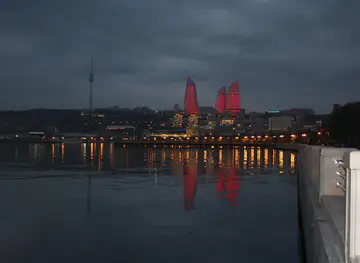
Explore more of Azerbaijan
Discover Azerbaijan: A captivating blend of ancient heritage, stunning natural landscapes, and vibrant modernity at the crossroads of Europe and Asia.
Explore Azerbaijan