

Greenwich Point Park Travel Guide - Free Web & App
Your ultimate guide to Greenwich Point Park. Discover top landmarks, proposed trips, and local tips. Free on the web or via the Evendo companion app.


Greenwich Point Park in Connecticut pairs Long Island Sound beaches, coastal trails, wetlands, historic ruins and Manhattan views with Old Greenwich charm.
Landscapes on Long Island Sound
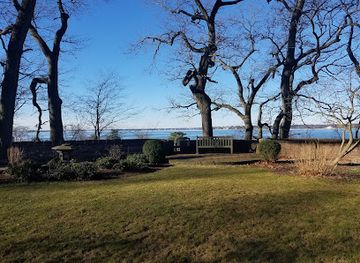
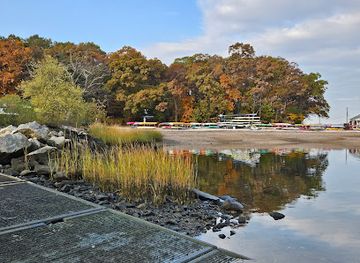
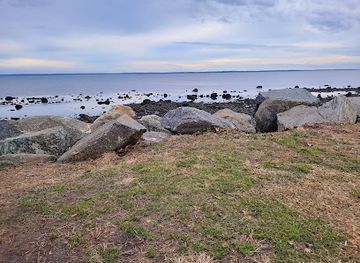
Greenwich Point Park, widely known as Tod’s Point, occupies a 147-acre peninsula extending into Long Island Sound from Old Greenwich in southwestern Connecticut. Its shoreline combines a broad sandy beach, rocky edges, salt marsh, tidal creek, coastal woodland and open lawns, creating a remarkably varied landscape within a compact park. On clear days, the views reach across the Sound towards Long Island and, from some positions, towards the Manhattan skyline.Read more about Greenwich Point Park
A Historic Estate Landscape
Visiting the Point
When is the best time to visit Greenwich Point Park?
Best: June, August–September · 24–28°C| Month | High (°C) | Rainfall (mm) |
|---|---|---|
| January | 4 | 79 |
| February | 6 | 76 |
| March | 10 | 93 |
| April | 16 | 105 |
| May | 21 | 102 |
| June (best) | 26 | 86 |
| July | 28 | 95 |
| August (best) | 28 | 96 |
| September (best) | 24 | 99 |
| October | 19 | 93 |
| November | 13 | 94 |
| December | 7 | 98 |
Getting to and around Greenwich Point Park
How to get there
Transportation
Best attractions in Greenwich Point Park
Greenwich Point Park’s main attraction is its varied Long Island Sound shoreline, where a sandy beach, rocky margins, tidal marsh and open coastal lawns occupy the same peninsula. The beach is the focus of warm-weather recreation when seasonal access and swimming arrangements permit, while the loop road and paths lead towards quieter views across the water and towards Long Island. The marsh and creek edges are useful places to observe coastal birdlife without entering sensitive habitat, and the wooded interior provides shade and a change of atmosphere from the exposed shore. Historic remnants associated with the former Innis Arden estate add context to the landscape, while the park’s position creates broad horizons and occasional views towards the New York metropolitan skyline. Nearby Old Greenwich is not part of the park but serves as its principal village gateway, with shops, cafés and restaurants that complement a visit to the peninsula.
-
Nature preserve
Tod's Inlet
Discover Tod Inlet: Where nature embraces history in a tranquil Vancouver Island setting. Explore lush trails and uncover the past.
-
Park
Pelican Island
Discover the serene beauty of Pelican Island in Old Greenwich, CT: a haven for birdwatchers, nature enthusiasts, and coastal history buffs.
Explore Greenwich Point Park on the map
Plan your trip on one map. See where the top attractions, landmarks, restaurants and hotels are, and book hotels and experiences in a few clicks.
Best hotels in Greenwich Point Park
Best shops in Greenwich Point Park
Shopping is concentrated outside Greenwich Point Park, chiefly in Old Greenwich and the established commercial areas of Greenwich and nearby Stamford. Old Greenwich is the most convenient setting for refreshments, everyday supplies, independent businesses, clothing, gifts and services before or after a visit to the peninsula. Greenwich’s larger retail areas offer a broader selection, while Stamford provides further high-street and specialist shopping beyond the immediate park gateway. There is no extensive shopping district within Tod’s Point, and visitors should not expect a large permanent craft market or a range of park-based souvenir outlets. Useful purchases associated with a coastal day include food for a picnic, sun protection, water and outdoor clothing, while regional food and gift products are more likely to be found in surrounding village and town businesses than inside the park.
-
Peninsula
Greenwich Point
Experience the tranquility and natural beauty of Greenwich Point, a picturesque peninsula ideal for outdoor activities and family fun.
Get your free copy of our complete guide to Greenwich Point Park, delivered straight to you.
Everything on this page, from attractions and restaurants to essentials and local phrases, in one PDF you can read offline, print or share.
Already have an account? Sign in
Your Greenwich Point Park guide is ready.
We'll send it to · Not you? Sign out

Getting your guide ready…
We are putting together a fresh copy of the Greenwich Point Park guide. This can take up to a minute.
This can take a few moments. If your browser asks, choose Allow so the download can start. You'll find the guide in your Downloads folder.
Nothing happened? Download it again
Sorry, the guide is taking longer than usual. Please try again in a minute, or get it by email instead.
Greenwich Point Park essentials
Currency and Payment
Safety
Emergency Situations
Do's and Don'ts
Local Tips
From Eve
Local phrases worth knowing
You don't need to get them perfect. A few words go a long way, and locals appreciate the effort.
Basics
| English | Local | Say it |
|---|---|---|
| Hello | Howdy | [haw-dee] |
| Goodbye | See ya | [see yah] |
| Yes | Yup | [yuhp] |
| No | Nah | [nuh] |
| Please/You're welcome | Please and thank ya | [pleez and thank yah] |
| Thank you | Thanks a lot | [thanks uh lot] |
| Excuse me/Sorry | Pardon me | [par-dun me] |
| How are you? | How's it goin'? | [hows it goin] |
| Fine. And you? | Doin' alright. How 'bout you? | [doin alright. how bout you] |
| Do you speak English? | Ya speak English? | [yah speak ing-glish] |
| I don't understand | I'm lost | [I'm lost] |
Eating & Drinking
| English | Local | Say it |
|---|---|---|
| I'd like to see the menu, please | Can I check out the menu? | [kan eye chek out the menu] |
| I don't eat meat | I don't eat meat | [I don't eat meat] |
| Cheers! | Cheers! | [Cheers!] |
| I would like to pay, please | I'm ready to pay | [I'm ready to pay] |
Emergencies
| English | Local | Say it |
|---|---|---|
| Help! | Help! | [Help!] |
| Go away! | Get lost! | [get lost] |
| Call the Police! | Call the cops! | [call the cops] |
| Call a doctor! | Get a doc! | [get a doc] |
| I'm lost | I'm lost | [I'm lost] |
| I'm ill | I'm sick | [I'm sick] |
Shopping
| English | Local | Say it |
|---|---|---|
| I'd like to buy... | I wanna buy... | [I wanna buy] |
| I'm just looking | Just browsing | [just browsing] |
| How much is it? | How much does it cost? | [how much duz it cost] |
| That's too expensive | That's pricey | [thats pricey] |
| Can you lower the price? | Can ya drop the price? | [can yah drop the price] |
Time & Numbers
| English | Local | Say it |
|---|---|---|
| What time is it? | What's the time? | [whats the time] |
| It's one o'clock | It's one | [its one] |
| Half past (10) | It's half past ten | [its half past ten] |
| Morning | Morning | [Morning] |
| Afternoon | Afternoon | [Afternoon] |
| Evening | Evening | [Evening] |
| Yesterday | Yesterdee | [yesterdee] |
| Today | Today | [Today] |
| Tomorrow | Tomorra | [tomorra] |
| 1 | One | [wun] |
| 2 | Two | [too] |
| 3 | Three | [three] |
| 4 | Four | [four] |
| 5 | Five | [five] |
| 6 | Six | [six] |
| 7 | Seven | [seven] |
| 8 | Eight | [ate] |
| 9 | Nine | [nine] |
| 10 | Ten | [ten] |
Transport & Directions
| English | Local | Say it |
|---|---|---|
| Where's a/the...? | Where's the...? | [wheres the] |
| What's the address? | What's the address? | [whats the address] |
| Can you show me (on the map)? | Can ya show me (on the map)? | [can yah show me on the map] |
| When's the next (bus)? | When's the next (bus)? | [whens the next bus] |
| A ticket (to ....) | A ticket (to ....) | [A ticket (to ....)] |
History of Greenwich Point Park
Coastal Lands Before the Park
The peninsula forms part of the maritime landscape of southwestern Connecticut, where coastal waters, tidal marshes and sheltered inlets shaped human activity long before the modern park existed. Indigenous communities used the wider Greenwich coast for fishing, gathering and travel, while European settlement later introduced farms, roads and private ownership. The shoreline’s value has always been connected to both its resources and its position on Long Island Sound, a major waterway linking coastal communities throughout the region.
The Innis Arden Estate
In the late nineteenth and early twentieth centuries, Greenwich became a favoured location for wealthy New York residents establishing country estates. J. Kennedy Tod acquired land at Greenwich Point and developed the Innis Arden estate, named after a Scottish literary setting. The property included a substantial residence and landscaped grounds, reflecting the period’s fashion for expansive suburban and coastal retreats. Several surviving features and the park’s designed open spaces continue to suggest this estate history, although the peninsula is now experienced primarily as public shoreline.
From Private Property to Public Park
The Town of Greenwich acquired Greenwich Point in 1945, opening the peninsula as a public recreational landscape. This change reflected a broader twentieth-century movement in which private estates and shorefront properties were converted into parks, beaches and civic amenities. Public ownership allowed the site to serve residents and visitors as a place for bathing, walking, picnicking and observing the Sound, while retaining elements of its former landscaped character.
Conservation and Coastal Recreation
Contemporary Greenwich Point is shaped by the continuing balance between recreation and the changing coastal environment. Beaches, salt-marsh areas and shoreline habitats are affected by storms, erosion, tides and sea-level pressures, while the park’s popularity creates additional demands on access and facilities. Seasonal rules, beach management and restrictions intended to protect habitats are therefore part of the modern visitor experience. The peninsula’s significance lies not in untouched wilderness but in its role as a publicly accessible coastal landscape with historic, recreational and ecological importance.
Greenwich Point Park in Photos
Browse through our photo collection highlighting the charm and character of the destination.
Neighbouring destination travel guides
The closest destinations to Greenwich Point Park, if you have time for more than one.
-

-

-

-

-


Swipe for more destinations
Explore more

Explore more of Fairfield County
Explore Fairfield County, Connecticut, for coastal towns, art museums, historic estates, river valleys, beaches and easy rail access from New York.
Explore Fairfield County
Explore more of Connecticut
Discover Connecticut: A blend of charming coastal towns, rich history, and scenic landscapes, perfect for nature lovers, history buffs, and cultural enthusiasts.
Explore Connecticut