

Free Makarska Travel Guide & Mobile App
Plan your Makarska trip with Evendo. Get free guides to top attractions, restaurants, hotels, and bars. Web access or download the mobile app.


Makarska blends Dalmatian history, pebble beaches and Adriatic island views with Biokovo hikes, seafood dining and memorable coastal sightseeing.
Coastal Setting
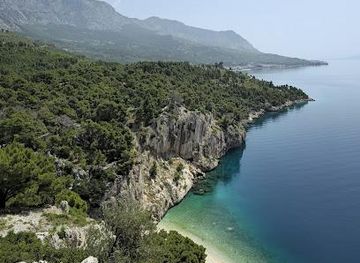
Makarska occupies a narrow strip of Croatia’s central Dalmatian coast, where the Adriatic Sea meets the steep limestone slopes of the Biokovo mountain range. The setting defines the town: a compact historic centre faces a sheltered harbour, while a palm-lined waterfront and long pebble beaches extend along the Makarska Riviera. Offshore, the islands of Brač and Hvar form a changing horizon, reached by seasonal boat connections and excursions.Read more about Makarska
Historic Streets and Seaside Life
Mountain and Marine Landscapes
When is the best time to visit Makarska?
Best: April–May, September · 21–28°C| Month | High (°C) |
|---|---|
| January | 12 |
| February | 14 |
| March | 17 |
| April (best) | 21 |
| May (best) | 25 |
| June | 29 |
| July | 31 |
| August | 31 |
| September (best) | 28 |
| October | 21 |
| November | 17 |
| December | 14 |
Getting to and around Makarska
How to get there
Transportation
Best attractions in Makarska
Makarska’s attractions are concentrated within a compact coastal setting. Kacic Square forms the historic centre, with the Church of St Mark and nearby stone lanes leading towards the Franciscan monastery and its Malacological Museum, known for its extensive shell collection. The waterfront promenade frames the harbour and gives access to the long city beaches, while the St Peter peninsula offers paths, small coves and broad views over the sea and the Makarska Riviera. Osejava Forest Park extends the walking possibilities south-east of the old town, combining shaded paths with rocky shoreline and viewpoints. The town is also a base for visiting Biokovo Nature Park, although the park and its Skywalk are in the mountains outside Makarska. Seasonal boat trips connect the harbour with nearby islands and coastal sights, adding a maritime dimension to the town’s museums, churches, beaches and walking routes.
-
National park
Biokovo Nature Park - Skywalk
Discover the breathtaking beauty of Biokovo Nature Park, featuring the iconic Skywalk and stunning views of the Adriatic coastline.
20 min drive · 6.7 km from city centre
-
Park
St. Peter's Forest Park
Experience the breathtaking views and lush landscapes of St. Peter's Forest Park in Makarska, a perfect escape for nature enthusiasts and families alike.
6 min walk · 0.5 km from city centre
-
Tourist attraction
Skywalk Biokovo
Experience breathtaking views and thrilling heights at Skywalk Biokovo, Croatia's stunning glass walkway above the Adriatic Sea.
17 min drive · 5.6 km from city centre
-
Osejava Forest Park
Discover the serene beauty of Osejava Forest Park in Makarska, where nature and breathtaking views await every traveler.


Best landmarks in Makarska
The Church of St Mark stands on Kacic Square and remains one of Makarska’s clearest historic markers, linking the main civic space with the town’s Catholic heritage. The Franciscan monastery is another important landmark, both for its long religious role and for the Malacological Museum housed within its complex. Along the harbour, the distinctive St Peter lighthouse on the peninsula marks the entrance to the sheltered bay and has become closely associated with Makarska’s seafront identity. The Baroque fountain in Kacic Square reflects the importance of water supply in the historic settlement, while stone houses and narrow lanes preserve the scale of the old town. The statue of St Peter on the peninsula adds a modern devotional presence to a headland shaped by paths, coves and maritime views.
-
National park
Biokovo Nature Park - Skywalk
Experience breathtaking panoramic views from a glass platform suspended over the Adriatic Sea at Biokovo Nature Park's Skywalk.
20 min drive · 6.7 km from city centre
-
Park
St. Peter Forest Park
Escape to St. Peter Forest Park in Makarska for breathtaking Adriatic views, tranquil trails, and a serene natural retreat.
6 min walk · 0.5 km from city centre
-
Beach
Makarska Beach
Experience the pristine beauty and vibrant atmosphere of Makarska Beach, a stunning destination on the Dalmatian coast, perfect for relaxation and adventure.
6 min walk · 0.5 km from city centre
-
Church
Vepric - Shrine of Our Lady of Lourdes
Discover Vepric Shrine in Makarska: a peaceful sanctuary mirroring Lourdes, offering spiritual reflection amidst stunning natural beauty.
7 min drive · 2.4 km from city centre


Explore Makarska on the map
Plan your Makarska trip on one map. See where the top attractions, landmarks, restaurants, bars and hotels are, find what's near where you're staying, and book hotels and experiences in a few clicks.
Best hotels in Makarska
Best restaurants in Makarska
Makarska’s food culture is rooted in central Dalmatian cooking, with seafood, olive oil, garlic, herbs and seasonal vegetables appearing prominently on menus. Grilled fish, squid, prawns and octopus are common choices, while black risotto coloured with cuttlefish ink reflects the wider Adriatic tradition. Local restaurants range from family-run konobas, where simple preparations and regional wines take centre stage, to modern waterfront dining with more elaborate presentations. The market near the centre provides fruit, vegetables and other everyday foods, and bakeries offer pastries and bread for the beach or a walk. Inland influences appear in dishes using lamb, cured meats and mountain produce, while the wider Dalmatian coast contributes staples such as pašticada, a slow-cooked beef dish, and peka, meat or seafood cooked beneath a bell-like lid. Menus are strongly seasonal and can change considerably outside summer.
-
Restaurant
Restoran Bounty
Discover Restoran Bounty in Makarska: A Mediterranean paradise offering exquisite cuisine and vibrant cocktails with stunning sea views.
4 min walk · 0.4 km from city centre
-
Restaurant
Papar Grill & Boutique Mesnica
Experience authentic Croatian cuisine at Papar Grill & Boutique Mesnica in Makarska—where flavor meets tradition in a welcoming atmosphere.
3 min walk · 0.2 km from city centre
-
Restaurant
Tempera Streetfood & Bar
Experience the best of Croatian street food at Tempera Streetfood & Bar in Makarska - where tradition meets innovation.
9 min walk · 0.7 km from city centre
-
Restaurant
Gastro Diva
Discover culinary excellence at Gastro Diva in Makarska - where traditional flavors meet modern cuisine for an unforgettable dining experience.
4 min walk · 0.3 km from city centre


Best bars in Makarska
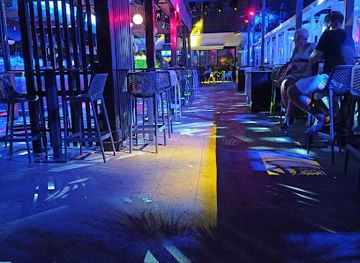
Makarska’s evening life is concentrated around the harbour, waterfront promenade and central streets, with a distinctly seasonal rhythm. Early evenings suit relaxed drinks at cafés and bars facing the sea, while later hours bring busier terraces and music-oriented venues aimed largely at summer visitors. The town has a selection of bars and clubs rather than the broad, year-round nightlife of a major city, and activity is noticeably quieter outside the high season. Restaurants and gelaterias contribute to the promenade’s social atmosphere, while occasional concerts and cultural performances add alternatives to clubbing. Visitors should expect sound and crowds around the busiest waterfront areas in summer, but quieter streets can be found around the older centre and residential edges. Walking between venues is generally straightforward, although taxis are useful for accommodation outside the central area.
-
Bar
Buba
Experience the vibrant nightlife at Buba, a lively bar in Makarska offering stunning views, delicious drinks, and a welcoming ambiance.
5 min drive · 1.6 km from city centre
-
Brewpub
Pivnica Pivac
Experience the charm of Pivnica Pivac, Makarska's premier brewpub offering local craft beers and delicious Croatian cuisine in a stunning marina setting.
7 min walk · 0.6 km from city centre
-
Pub
Hops! Beer & Food Factory
Savor the essence of Makarska at Hops! Beer & Food Factory, where craft beer meets delicious cuisine in a vibrant atmosphere.
7 min walk · 0.5 km from city centre
-
Bar
Nautica
Experience the charm of Nautica in Makarska, where vibrant atmosphere, stunning sea views, and delicious drinks come together for an unforgettable experience.
3 min walk · 0.3 km from city centre


Best nightclubs in Makarska
Makarska’s evening life is concentrated around the harbour, waterfront promenade and central streets, with a distinctly seasonal rhythm. Early evenings suit relaxed drinks at cafés and bars facing the sea, while later hours bring busier terraces and music-oriented venues aimed largely at summer visitors. The town has a selection of bars and clubs rather than the broad, year-round nightlife of a major city, and activity is noticeably quieter outside the high season. Restaurants and gelaterias contribute to the promenade’s social atmosphere, while occasional concerts and cultural performances add alternatives to clubbing. Visitors should expect sound and crowds around the busiest waterfront areas in summer, but quieter streets can be found around the older centre and residential edges. Walking between venues is generally straightforward, although taxis are useful for accommodation outside the central area.
-
Bar
Buba
Experience the vibrant nightlife of Makarska at Buba, a lively bar with refreshing cocktails and stunning coastal views, perfect for relaxation and socializing.
5 min drive · 1.6 km from city centre
-
Bar
Makarana
Experience the lively ambiance of Makarana Beach Club in Makarska, Croatia – where stunning views meet a vibrant nightlife scene.
6 min walk · 0.5 km from city centre
-
Bar
Nautica
Experience the vibrant nightlife of Makarska at Nautica, a coastal bar offering stunning views and a lively atmosphere.
3 min walk · 0.3 km from city centre
-
Bar
Makarano Bar
Discover the vibrant nightlife at Makarano Bar in Makarska, where lively music and exquisite drinks create unforgettable evenings by the sea.
6 min drive · 1.9 km from city centre


Best shops in Makarska
Shopping in Makarska is centred on the old town, waterfront streets and the market area rather than on a large enclosed retail district. Market stalls offer seasonal fruit, vegetables and local provisions, while small shops sell olive oil, wine, dried herbs, honey and other Dalmatian food products suitable for taking home. Visitors will also encounter beachwear, sandals, artwork and conventional seaside souvenirs, particularly along the busiest summer streets. Independent boutiques and craft-oriented retailers are mixed with cafés and everyday businesses in the historic centre. Products associated with the wider region often include lavender, olive-wood objects and handmade jewellery, though quality and provenance vary, so labels and producers are worth checking. Larger supermarkets serve practical needs, while specialist shopping is more limited and seasonal than in Split or Dubrovnik.
-
Electronics store
Pevex | Makarska
Discover the ultimate electronics store in Makarska, offering cutting-edge technology and exceptional customer service for all your electronic needs.
5 min drive · 1.6 km from city centre
-
Shopping mall
SPOT Mall Makarska
Explore SPOT Mall Makarska, where shopping meets leisure in a modern setting, perfect for tourists seeking retail and dining delights.
13 min walk · 1.1 km from city centre
-
Shopping mall
Capitol Park Makarska
Discover the vibrant heart of shopping and entertainment at Capitol Park Makarska, where retail therapy meets local culture amidst stunning Croatian scenery.
5 min drive · 1.7 km from city centre
-
Men's clothing store
Galileo
Explore contemporary men's fashion at Galileo in Makarska, where style meets quality in a vibrant shopping experience.
14 min walk · 1.1 km from city centre


Get your free copy of our complete guide to Makarska, delivered straight to you.
Everything on this page, from attractions and restaurants to essentials and local phrases, in one PDF you can read offline, print or share.
Already have an account? Sign in
Your Makarska guide is ready.
We'll send it to · Not you? Sign out

Getting your guide ready…
We are putting together a fresh copy of the Makarska guide. This can take up to a minute.
This can take a few moments. If your browser asks, choose Allow so the download can start. You'll find the guide in your Downloads folder.
Nothing happened? Download it again
Sorry, the guide is taking longer than usual. Please try again in a minute, or get it by email instead.
Makarska essentials
Currency and Payment
Safety
Emergency Situations
Do's and Don'ts
Local Tips
From Eve
Local phrases worth knowing
You don't need to get them perfect. A few words go a long way, and locals appreciate the effort.
Basics
| English | Local | Say it |
|---|---|---|
| Hello | Bok | [Bohk] |
| Goodbye | Doviđenja | [Dov-ee-jen-ya] |
| Yes | Da | [Dah] |
| No | Ne | [Neh] |
| Please/You're welcome | Molim | [Moh-leem] |
| Thank you | Hvala | [Hvah-lah] |
| Excuse me/Sorry | Oprostite | [O-praw-stee-teh] |
| How are you? | Kako si? | [Kah-koh see] |
| Fine. And you? | Dobro. A ti? | [Doh-bro. Ah tee] |
| Do you speak English? | Govoriš li engleski? | [Go-vo-ree-sh lee eng-les-kee] |
| I don't understand | Ne razumijem | [Neh rah-zoo-mee-yem] |
Eating & Drinking
| English | Local | Say it |
|---|---|---|
| I'd like to see the menu, please | Mogu li vidjeti jelovnik, molim | [Moh-goo lee vee-dyeh-tee yeh-lov-neek, moh-leem] |
| I don't eat meat | Ne jedem meso | [Neh yeh-dem meh-so] |
| Cheers! | Živjeli! | [Zhee-ve-lee] |
| I would like to pay, please | Želim platiti, molim | [Zheh-leem plah-tee-tee, moh-leem] |
Emergencies
| English | Local | Say it |
|---|---|---|
| Help! | Pomoć! | [Poh-mohtch] |
| Go away! | Idi dalje! | [Ee-dee dah-lyeh] |
| Call the Police! | Pozovi policiju! | [Poh-zoh-vee poh-lee-tsee-yoo] |
| Call a doctor! | Pozovi doktora! | [Poh-zoh-vee dohk-toh-rah] |
| I'm lost | Izgubio sam se | [Iz-goo-byoh sahm seh] |
| I'm ill | Bolestan sam | [Boh-leh-stahn sahm] |
Shopping
| English | Local | Say it |
|---|---|---|
| I'd like to buy... | Želim kupiti... | [Zheh-leem koo-pee-tee] |
| I'm just looking | Samo gledam | [Sah-moh gleh-dam] |
| How much is it? | Koliko košta? | [Koh-lee-koh kohs-tah] |
| That's too expensive | To je previše skupo | [Toh yeh preh-vee-sheh skoo-poh] |
| Can you lower the price? | Možete li spustiti cijenu? | [Moh-zheh-teh lee spoo-stee-tee tsee-yeh-noo] |
Time & Numbers
| English | Local | Say it |
|---|---|---|
| What time is it? | Koliko je sati? | [Koh-lee-koh yeh sah-tee] |
| It's one o'clock | Jedan je sat | [Yeh-dahn yeh saht] |
| Half past (10) | Polovina (10) | [Poh-lo-vee-nah (des-et)] |
| Morning | Jutro | [Yoo-troh] |
| Afternoon | Popodne | [Poh-pohd-neh] |
| Evening | Večer | [Veh-chehr] |
| Yesterday | Jučer | [Yoo-chehr] |
| Today | Danas | [Dah-nahs] |
| Tomorrow | Sutra | [Soo-trah] |
| 1 | Jedan | [Yeh-dahn] |
| 2 | Dva | [Dvah] |
| 3 | Tri | [Tree] |
| 4 | Četiri | [Cheh-tee-ree] |
| 5 | Pet | [Peh-t] |
| 6 | Šest | [Shehst] |
| 7 | Sedam | [Seh-dahm] |
| 8 | Osam | [Oh-sahm] |
| 9 | Devet | [Deh-vet] |
| 10 | Deset | [Deh-set] |
Transport & Directions
| English | Local | Say it |
|---|---|---|
| Where's a/the...? | Gdje je...? | [Gdyeh yeh] |
| What's the address? | Koja je adresa? | [Koh-yah yeh ah-dreh-sah] |
| Can you show me (on the map)? | Možete li mi pokazati (na karti)? | [Moh-zheh-teh lee mee poh-kah-zahtee (nah kahr-tee)] |
| When's the next (bus)? | Kada je sljedeći (autobus)? | [Kah-dah yeh sleh-dey-chee (ow-toh-boos)] |
| A ticket (to ....) | Jednu kartu (do ....) | [Yehd-noo kahr-too (doh)] |
History of Makarska
Early Settlements and Roman Roots
The Makarska area was inhabited before Roman rule by communities associated with the wider Illyrian world, whose settlements occupied the coast and the slopes of the Biokovo massif. Roman administration brought the region into the province of Dalmatia and connected it to maritime and overland networks. The ancient settlement known as Muccurum is generally associated with the Makarska area, although the precise relationship between the Roman name and the later town is not entirely straightforward. Roman influence survives mainly through archaeological evidence and the broader urban and agricultural pattern of the coast rather than through a large, intact ancient city.
Medieval Makarska and the Diocese
During the early medieval period, the settlement developed within the shifting political landscape of the eastern Adriatic, influenced by Croatian rulers, coastal authorities and regional powers. Makarska became an important ecclesiastical centre through the Diocese of Makarska, traditionally traced to the medieval period and later united with the Diocese of Split. Religious institutions helped preserve the town’s role when political control changed repeatedly. The old centre’s churches and stone buildings reflect later rebuilding, but the continuity of the town’s coastal and diocesan identity is rooted in this medieval development.
Venetian Rule and Ottoman Pressure
From the late medieval era into the early modern period, Makarska stood between the maritime power of Venice and the Ottoman territories advancing through the Balkan interior. Venetian influence became decisive on the coast, while Ottoman pressure shaped settlement, defence and trade across the neighbouring hinterland. Makarska’s position gave it strategic importance beyond its modest size, and the town’s architecture and church institutions developed within this contested borderland. The period also encouraged movement between the coast and inland villages, helping form the cultural landscape now associated with the Makarska Riviera.
Habsburg Administration and Coastal Commerce
After the end of Venetian rule in 1797, Makarska passed through French administration during the Napoleonic period before becoming part of the Habsburg imperial system. Nineteenth-century administration brought new legal and economic structures, while maritime trade, fishing, olive growing and agriculture remained central to local livelihoods. The town’s waterfront and civic institutions took on a more recognisably modern form, and improved connections with surrounding settlements strengthened its regional role. These changes unfolded alongside the preservation of older religious buildings and the compact street pattern of the historic centre.
Tourism and the Modern Riviera
Tourism expanded along the Makarska Riviera during the twentieth century, particularly after the Second World War, when improved roads, accommodation and transport made the coast accessible to a wider public. Under Yugoslavia, Makarska developed as a major resort while retaining fishing, commerce and local agriculture. Following Croatia’s independence in 1991, tourism continued to shape the town’s economy, bringing extensive seasonal activity but also increasing pressure on beaches, roads and accommodation. Contemporary Makarska combines a historic coastal settlement with a resort infrastructure that serves as a base for Biokovo and the central Dalmatian islands.
Travel experiences inspired by this city


Swipe for more travel diaries
Makarska in Photos
Browse through our photo collection highlighting the charm and character of the destination.
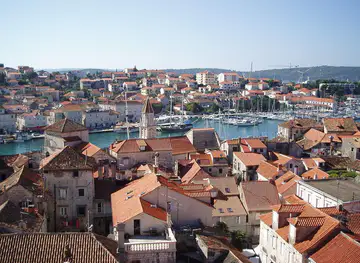
Cities near Makarska
The closest cities to Makarska, if you have time for more than one stop.
-

-

-
-

-


Swipe for more cities
Explore more

Explore more of Croatia
Discover Croatia: A Mediterranean paradise with stunning coastlines, ancient cities, and rich cultural heritage. Perfect for beach lovers, history buffs, and nature enthusiasts.
Explore Croatia