

Bishop Absalon, Køge Travel Guide
Free Guide: Commanding Højbro Plads on a rearing horse, Bishop Absalon’s bronze monument unites Copenhagen’s medieval origins, maritime wealth and political power in a single urban icon.


A brief summary of Bishop Absalon
Commanding Højbro Plads on a rearing horse, Bishop Absalon’s bronze monument unites Copenhagen’s medieval origins, maritime wealth and political power in a single urban icon.
Rising above Copenhagen’s central Højbro Plads, the equestrian statue of Bishop Absalon honours the 12th‑century warrior‑bishop credited with founding the city. Unveiled in 1902 on the 700th anniversary of his death, the bronze figure rears on horseback facing Christiansborg, where Absalon’s fortress once stood. The richly decorated brick and granite pedestal, with friezes of herring and Viking motifs, links the monument to Copenhagen’s medieval fishing roots and maritime wealth.
On-site amenities
 Seating areas
 Trash bins
 Information boards
 Drink options
 Food options
Opening hours
- Every dayOpen 24 hours
Opening hours as listed on the venue’s Google Business Profile. Hours can change for services and special events, so check with the venue before you go.
- Address
- Højbro Pl., 1200 København
- Website
Getting there
Metro from central Copenhagen stations
City bus within central Copenhagen
Cycling in the historic centre
Discover more about Bishop Absalon
A warrior-bishop at the heart of Copenhagen
The equestrian statue of Bishop Absalon dominates Højbro Plads, a busy square in Copenhagen’s historic centre. Cast in bronze and unveiled in 1902 to mark 700 years since Absalon’s death, it captures the figure traditionally credited with founding the city in 1167. Here he is not a cloistered churchman but a formidable commander, presented as the driving force behind Copenhagen’s rise from fishing hamlet to fortified town.Absalon sits astride a rearing horse, clad in mail and helmet, a battle‑axe raised in his right hand. The dynamic pose, high above the heads of passers‑by, suggests a moment of decision on the battlefield and reflects his role as both church leader and royal adviser. The statue faces Christiansborg Palace on Slotsholmen, where Absalon’s original castle once guarded the harbour, while his head turns toward the City Hall, visually linking past and present power centres.
Symbolism carved in stone and brick
The plinth beneath the horse is as carefully designed as the sculpture itself. Its lower section is hewn from granite and deliberately shaped to double as informal seating, drawing everyday city life right up to the base of the monument. Above it rises a red‑brick block, solid and fortress‑like, echoing the medieval stronghold that once stood across the water.Running around the upper part is a sculpted frieze of fish and stylised waves, a nod to the Øresund strait and the herring fisheries that enriched Copenhagen in Absalon’s day. Other decorative bands weave in Viking‑inspired ornament, fusing Christian bishop and Nordic warrior in one narrative. On the front you can spot a shield with a rosy cross and crossed keys, referencing Absalon’s role as Bishop of Roskilde and his authority within the Danish church.
Commemorating the city’s founder
Absalon lived from 1128 to 1201 and rose to become archbishop and chief adviser to King Valdemar I. From this powerful position he promoted territorial expansion in the Baltic, strengthened royal authority and encouraged closer ties between Denmark and Rome. His decision to build a fortress on the low islet that would become Copenhagen fixed the city’s strategic importance at the entrance to the Baltic Sea.The statue was commissioned as a gift to the city by banker Axel Heide, with sculptor Vilhelm Bissen responsible for the equestrian figure and architect Martin Nyrop designing the plinth. Their collaboration produced a piece that is both memorial and urban landmark, anchoring Højbro Plads within Copenhagen’s broader story of monarchy, church and maritime trade.
A focal point in Højbro Plads
Højbro Plads itself was laid out after the devastating fire of 1795 as part of a reconstruction plan that opened up the dense medieval streets with a broad, airy square. Today the space links the Strøget pedestrian thoroughfare with the canal and Højbro Bridge, framed by neoclassical facades and lines of lime trees. The constant flow of cyclists, shoppers and street performers passes directly around the base of Absalon’s horse.From the statue you can look toward Christiansborg’s tower, the canal and nearby spires, using the monument as a convenient orientation point in the city centre. Seasonal events, including markets and festivals, often fill the square, but the statue remains a steady visual anchor amid changing decorations and stalls.
Experiencing the sculpture up close
Standing beside the plinth, details emerge that are easy to miss from a distance: the texture of Absalon’s chain mail, the tension in the horse’s muscles, and the inscription band bearing the dates “1128 ABSALON 1201.” Around the sides, a scrolling text in Danish praises him as brave, clever, visionary and devoted to learning, offering a succinct character sketch in stone.Because the statue is completely outdoors and always accessible, it can be appreciated in different lights and seasons, from crisp winter mornings to long Scandinavian summer evenings. Whether you pause briefly on a city stroll or sit at the granite base to absorb the square’s ambience, Bishop Absalon’s monument offers both a snapshot of Danish history and a striking piece of urban sculpture.
Evendo Review Centre
 Google
Guest reviews
Best time to go
Quietest: Jan, Feb & Mar · before 8am
Busy times are Evendo estimates for a typical year, to help you plan. Actual crowds vary with events, school holidays and the weather.
Explore Bishop Absalon on the map
A handpicked selection of must-see spots near Bishop Absalon, mapped for you.
Get your free copy of our complete guide to Bishop Absalon, delivered straight to you.
Everything on this page, from opening hours and how to get there to Eve’s tips and the best time to go, in one PDF you can read offline, print or share.
Already have an account? Sign in
Your Bishop Absalon guide is ready.
We'll send it to · Not you? Sign out

Getting your guide ready…
We are putting together a fresh copy of the Bishop Absalon guide. This can take up to a minute.
This can take a few moments. If your browser asks, choose Allow so the download can start. You'll find the guide in your Downloads folder.
Nothing happened? Download it again
Sorry, the guide is taking longer than usual. Please try again in a minute, or get it by email instead.
Unlock the best of Bishop Absalon
Skip-the-line tickets, guided tours with entry, and walking tours of the area, booked in a few clicks.


Other nearby places you may find interesting
The closest places of the same kind, if this one is not quite what you had in mind.
-
-
-
-
-


Swipe for more places
More to explore near Bishop Absalon

 Best experiences near Bishop Absalon
 Best hotels near Bishop Absalon
 Best landmarks near Bishop Absalon
 Best attractions near Bishop Absalon
 Best shops near Bishop Absalon
 Best restaurants near Bishop Absalon
 Best bars near Bishop Absalon
Do you manage this location?
Take control to get all the benefits, like improved information, better appearance, and stronger visibility across AI-powered discovery.
Explore more
Explore more of Køge
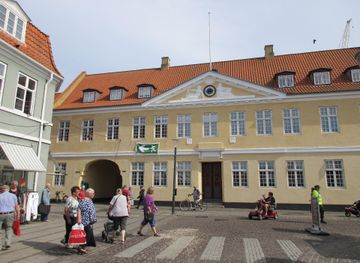
Explore Køge, Denmark's coastal gem, with its medieval charm, beautiful marina, and close proximity to the stunning Stevns Klint UNESCO World Heritage site.
Explore Køge
Explore more of Denmark
Discover Denmark: A perfect blend of history, modern design, and the cozy concept of hygge. Explore vibrant cities, serene landscapes, and world-class cuisine.
Explore Denmark
