
Dodekalitten, Lolland Travel Guide
Twelve colossal granite faces overlooking the Småland waters, singing in electronic harmony—Denmark's monumental fusion of sculpture, sound, and ancient memory.
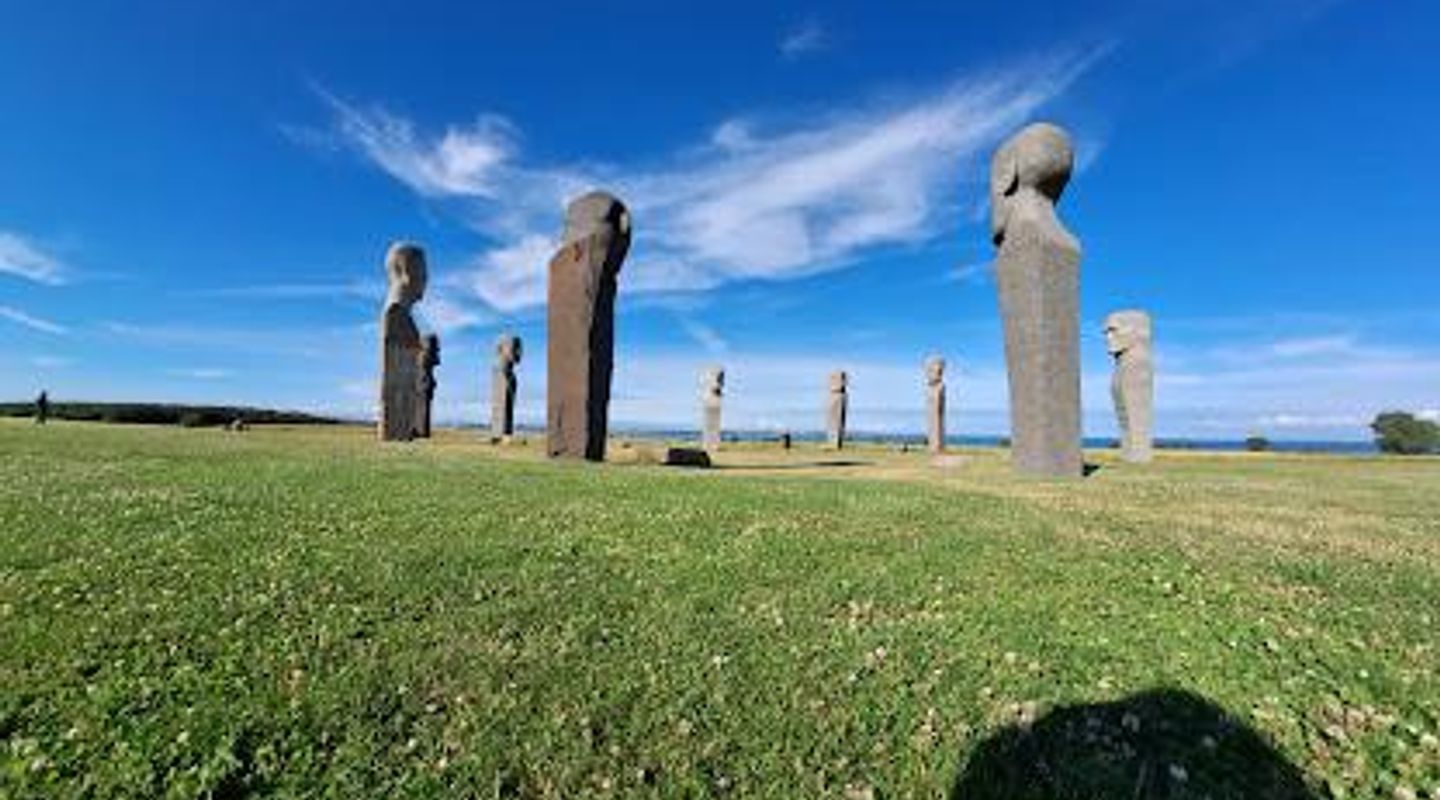
A monumental open-air sculpture park on Lolland's coast featuring twelve colossal granite figures carved with human faces, each 7–9 metres tall and weighing 25–45 tonnes. Created by sculptor Thomas Kadziola over more than a decade, the stones form a 40-metre circle accompanied by an electronic soundscape composed by Wayne Siegel. Standing amid these enigmatic megaliths while listening to the ambient music creates a deeply contemplative experience, blending contemporary art with ancient standing-stone traditions. The site overlooks the Småland waters and Bronze Age burial mounds, offering sweeping views across fields toward the sea.
A brief summary to Dodekalitten
- Kragenæsvej 62, Lolland Municipality, Torrig L, 4943, DK
- Click to display
- Click to display
- Duration: 1 to 3 hours
- Free
-
 Outdoor
- Mobile reception: 3 out of 5

Know before you go
Hi, I'm Eve. Here are a few practical things to know before exploring Dodekalitten.
- Visit during sunrise or sunset for magical light across the stone faces and dramatic views toward the Småland waters. The changing angle of sunlight reveals different aspects of the carved features.
- Stand at the centre of the stone circle during daylight hours to fully experience the electronic soundscape. The music is most prominent between sunrise and sunset.
- Wear comfortable walking shoes and bring weather-appropriate clothing. The site is fully exposed to the elements, and the walk from Kragenæs involves uneven terrain.
- Allow at least 1–2 hours to explore the circle, sit among the sculptures, and absorb the atmosphere. Many visitors find themselves lingering longer than expected.
- Check the official website for upcoming concerts and cultural events held at the site. Dodekalitten occasionally hosts performances that transform the space into a unique outdoor venue.
Do you manage this location?
Take control to get all the benefits, like improved information, better appearance, and stronger visibility across AI-powered discovery. Learn more about listing your business on Evendo
Activate your presenceOther nearby places you may find interesting
The closest places of the same kind, if this one is not quite what you had in mind.

Explore Dodekalitten on the Map
A handpicked selection of must-see spots near Dodekalitten, mapped for you.
Getting There
-
Walking from Kragenæs Harbour
From Kragenæs Harbour car park, follow the Hjertesti (Heart Path) trail through Klinkeskov Forest. The walk to Dodekalitten takes approximately 15–20 minutes depending on pace. The path is scenic but uneven in places; wear comfortable walking shoes. This is the most atmospheric approach and recommended for visitors with reasonable mobility.
-
Car via Ravnsby (Disabled Access)
From Nykøbing Falster, drive south on the E47 motorway toward Rødby for approximately 14 km. Exit toward Lolland and follow signs for Kragenæsvej. Disabled parking bays are located at Glentehøjvej on the southern approach via Ravnsby, providing vehicle access close to the site. Standard parking is available at Kragenæs Harbour. No parking fees apply.
-
Public Transport from Maribo or Nakskov
Take bus 725 from Maribo station (48 DKK, approximately 36 minutes) or bus 719 from Nakskov, both arriving at Rævegade stop. From there, walk approximately 1 km through Klinkeskov Forest to reach Dodekalitten. Buses run hourly on weekdays but only six times daily on Saturdays and Sundays; check schedules in advance.
-
Guided Tour from Copenhagen
Organized day tours depart from Copenhagen Central Station area, typically including transport by minibus, a guide, and visits to nearby attractions such as Holmegaard Glass Factory. Tours usually allocate 2 hours at Dodekalitten. Prices vary by operator and group size but typically range from 140–200 DKK per person for transport alone.
For the on-the-go comforts that matter to you
-
 Seating Areas
-
 Picnic Areas
-
 Information Boards
Discover more about Dodekalitten
A Monument to Migration and Memory
Dodekalitten draws its name from the Greek word meaning "twelve stones," a reference to the twelve monumental granite sculptures that form the heart of this extraordinary artwork. The concept behind the installation is rooted in a profound historical narrative: the sculptures represent wanderers who migrated to Lolland approximately 7,500 years ago, fleeing catastrophic floods triggered by the breakthrough of the Bosporus Strait, which devastated some of the most advanced agricultural cultures of the ancient world. This mythic dimension infuses the site with a sense of timelessness, inviting visitors to contemplate human resilience, displacement, and the enduring search for belonging across millennia.The Vision of Thomas Kadziola
Sculptor Thomas Kadziola, born in Copenhagen in 1962, conceived Dodekalitten as a contemporary Nordic temple—a spiritual and artistic sanctuary for the modern age. Work on the installation began in earnest in 2010 at Ellevehøj, with the first stone sculpture completed in 2012. The project remains a work in progress, with the vision of completing all twelve figures by the original target date. Each sculpture stands roughly 7 to 9 metres in height, carved from granite quarried in Sweden and selected with meticulous care. The top 2 metres of each figure features a carved human face—some completed with haunting detail, others still emerging from the stone. Kadziola's artistic statement reveals his hope that when finished, the twelve figures will "mirror lived lives others will recognize themselves in," functioning as a kind of zodiac of human experience.The Soundscape: Music Embedded in Stone
Composer Wayne Siegel created an integral component of the artwork: a permanent electronic sound installation called Solkreds. The music emanates from granite sitting stones positioned next to each sculpture, creating an immersive auditory experience that shifts between audible and silent passages. The composition features electronic voices that form slowly developing harmonies, sometimes loud and commanding, sometimes barely perceptible. Siegel drew inspiration from the contrasting beauty and harshness of South Sea Island landscapes, translating that duality into a soundscape that evolves throughout the day. The music is most prominent during daylight hours, enhancing the contemplative atmosphere and inviting visitors to experience the stones as singing sentinels overlooking the landscape.Setting and Landscape Significance
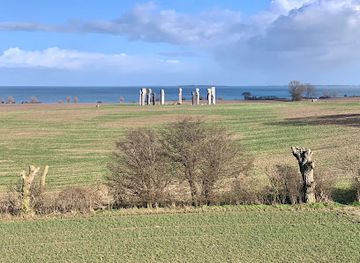
The Dodekalitten occupies a commanding position atop the "Lolland Alps," a modest elevation that nonetheless offers sweeping panoramic views across the Småland waters toward the archipelago beyond. The site sits near Bronze Age burial mounds, including the Glentehøj chamber, anchoring the artwork within layers of historical time. The surrounding landscape—open fields, distant seascapes, and the small fishing village of Kragenæs below—creates a natural amphitheatre for contemplation. Standing at the centre of the stone circle as the electronic music washes across the landscape produces a profoundly surreal sensation, one deliberately designed to encourage introspection and emotional resonance. The interplay between the monumental human faces, the ambient soundscape, and the vast natural horizon creates what many visitors describe as a spiritually charged atmosphere.Access and the Heart Path
Visitors typically approach Dodekalitten via the "Hjertesti" (Heart Path), a scenic walking trail that winds through Klinkeskov Forest before emerging into open fields. The walk from Kragenæs Harbour takes approximately 15–20 minutes, depending on pace and fitness level. Disabled access is available from the south via Ravnsby, with dedicated parking bays at Glentehøjvej. The site itself is open 24 hours a day, and admission is free, making it accessible to all visitors regardless of budget or schedule. The journey to the sculptures is as much part of the experience as the destination itself, with the gradual transition from forest to open landscape building anticipation for the encounter with the monumental figures.A Living Artwork and Cultural Meeting Place
Dodekalitten functions not merely as a static installation but as a dynamic cultural venue and ongoing artistic project. The site occasionally hosts outdoor concerts, performances, and cultural events, ranging from rock to classical music, transforming the stone circle into a natural stage. Local artists and community members contribute to the evolving character of the space, from kindergarten art projects to professional performances. The artwork has become Denmark's largest social art project, supported by contributions from individuals and organizations committed to its vision. This collaborative spirit reflects Kadziola's broader intention to create a landmark that belongs to Lolland and its people, serving as both a beacon for artistic expression and a gathering place for contemplation and celebration.












Your all‑in‑one travel companion app
Explore expert travel guides, compare and book tours, experiences, hotels, and more—all from the palm of your hand. Download now for seamless trip planning wherever your wanderlust takes you.


Explore More of Lolland
Looking beyond Dodekalitten? Discover Lolland for broader travel guides, local hot-spots, and regional highlights.
Explore Lolland