Danaë Travel Guide
Free Guide: A serene bronze heroine from Greek myth, Gerhard Henning’s Danaë reclines quietly in Odense’s King’s Garden, bridging baroque greenery and modern city life.


A brief summary of Danaë
A serene bronze heroine from Greek myth, Gerhard Henning’s Danaë reclines quietly in Odense’s King’s Garden, bridging baroque greenery and modern city life.
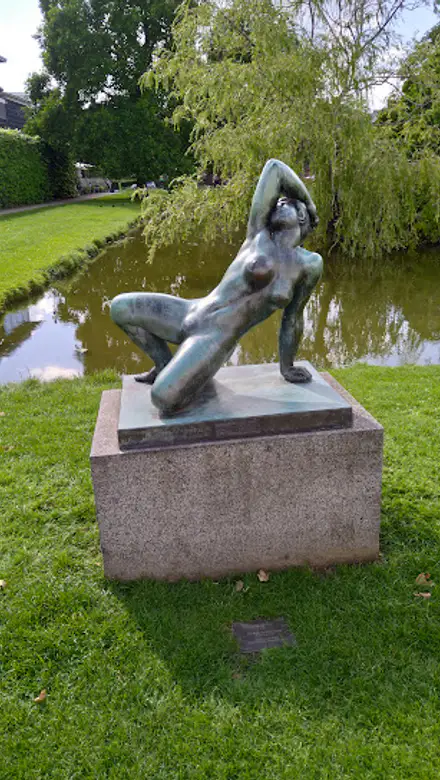
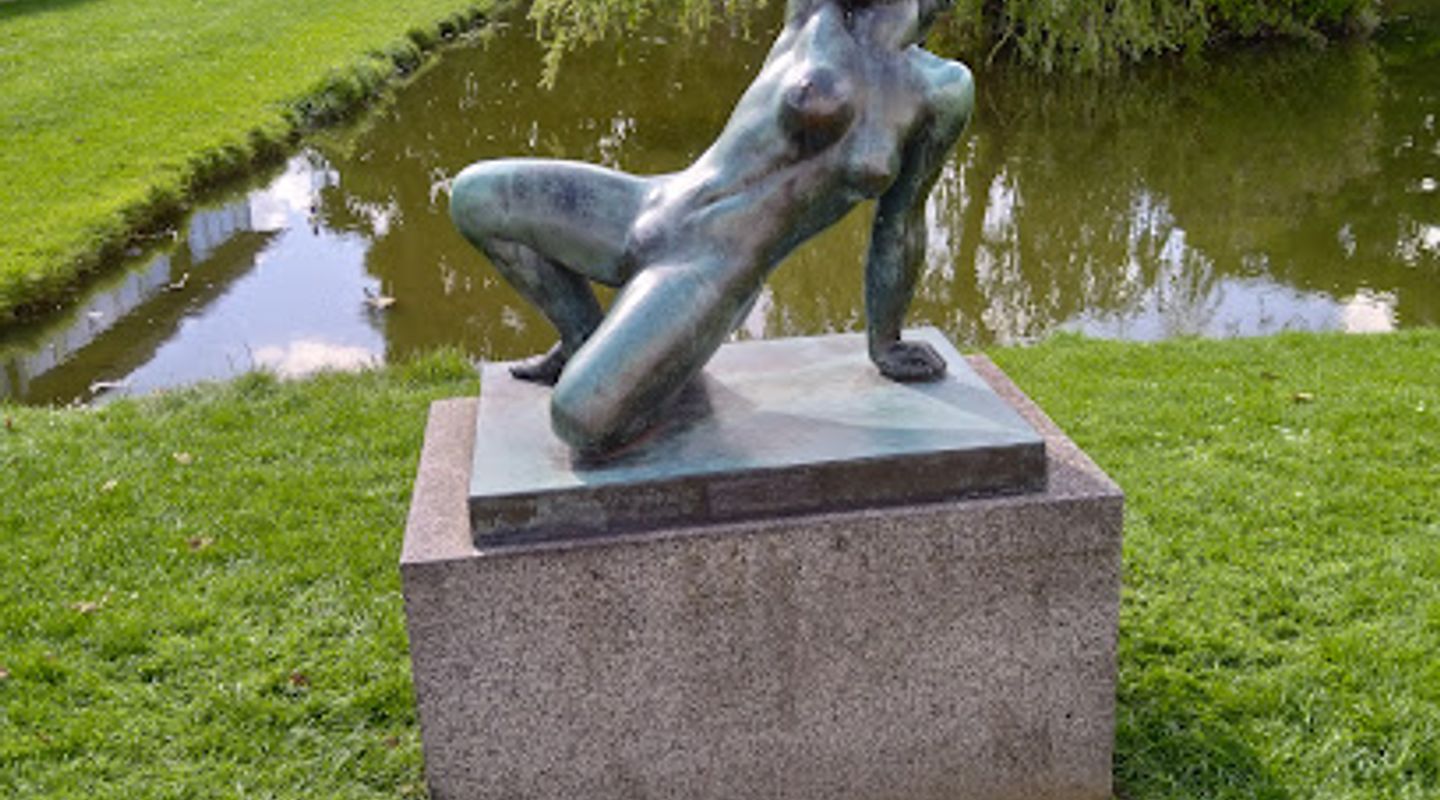
Tucked into a leafy corner of Odense’s Kongens Have, the bronze sculpture **Danaë** brings a touch of classical myth to this baroque city park. Created by Swedish-born sculptor Gerhard Henning and gifted to Odense by the Ny Carlsberg Foundation, the reclining female figure captures a quiet, sensual stillness amid lawns, flowerbeds and a nearby duck pond. It is a small but characterful stop, ideal to seek out as you wander between the station, Odense Castle and the surrounding gardens.
On-site amenities
 Seating areas
 Trash bins
 Information boards
 Restrooms
 Drinking water
 Food options
- Address
- Kongenshave, Jernbanegade, 5000 Odense
- Website
Getting there
On foot from Odense Banegård (central station)
Local city bus to central Odense
Bicycle within Odense
Discover more about Danaë
Mythic figure in a Danish garden
Gerhard Henning’s bronze **Danaë** rests quietly among the trees and flowerbeds of Kongens Have, the King’s Garden, in central Odense. The sculpture depicts the princess from Greek mythology, famed for the moment when Zeus visited her in a shower of gold. Here, however, the drama is muted: Henning’s Danaë is stretched out, self-contained and calm, her curves flowing gently rather than striking a heroic pose. The intimate scale suits the garden perfectly, drawing you closer rather than shouting for attention across the lawns.Henning, Swedish-born but long active in Denmark, became known for his lyrical, sensuous treatment of the human body. In Danaë he combines classical subject matter with a distinctly Nordic softness. The bronze surface catches the shifting light from the park’s canopy, so that on bright days highlights trace the figure’s outline, while on overcast afternoons she seems to sink further into contemplation.
A journey from cement to bronze
Danaë has not always looked as she does today. In 1928 the Ny Carlsberg Foundation donated an early version in metallic cement to Odense, installed first in Munke Mose and later in what is now Eventyrhaven. Wind, rain and frost gradually wore that figure down until it had to be moved indoors to the local museum. The present bronze cast, again a gift from the same foundation, arrived in 1965 and spent some years in Eventyrhaven before being relocated in 1984 to Kongens Have beside the castle.That slow migration across Odense has made Danaë a quiet thread in the city’s cultural landscape, crossing from riverside park to fairytale garden and finally to the formal royal grounds. The current bronze has aged far more gracefully than its cement predecessor: the metal has taken on a soft patina, especially in the folds and hollows, hinting at decades of Danish weather and the touch of countless curious hands.
Setting among baroque lines and city life
Kongens Have itself dates back to the 1720s, originally laid out as a baroque garden for the adjacent Odense Castle. Straight avenues of trees, clipped hedges and open lawns still echo that formal geometry, even though plantings have changed over time. Today it is a green breathing space framed by the castle, the railway station and city streets, with ducks circling the pond and flowerbeds adding seasonal colour.Within this setting, Danaë occupies a more intimate corner near the water and mature trees. You glimpse her between trunks or over the curve of the pond, a human-scale counterpoint to the castle’s white façades and the long, ordered lines of the avenues. Other sculptures are dotted through the park, but Henning’s reclining figure feels particularly at ease here, half-hidden yet easy to find for those who look.
Pause, detail and quiet observation
Encountering Danaë is less about spectacle and more about taking a moment to slow down. From close range you notice the modelling of the limbs, the relaxed turn of the head, and the way the figure occupies her base as if it were a bed or low couch. The bronze is smooth in places, rougher in others, bearing the marks of both artist and foundry.Benches nearby invite you to sit and share her point of view across the grass and the pond. The sounds of the city filter in—bicycle bells, train announcements, children playing—yet the immediate circle around the sculpture often feels surprisingly calm. It is an easy detour if you are already in the garden, and a rewarding one for anyone interested in twentieth-century sculpture, classical themes, or simply finding a quiet focal point for a few reflective minutes.
An artful stop on a wider Odense walk
Because Kongens Have links the station area with Odense’s historic core, Danaë fits naturally into a broader wander through the city. Nearby you find the castle, theatres, churches and, a short stroll away, the clusters of sights linked to Hans Christian Andersen. In that company, Henning’s mythological heroine adds another layer to Odense’s blend of stories—this time drawn not from Danish folklore, but from the ancient Mediterranean, reimagined in bronze beneath Danish skies.Seen in this light, Danaë is both a standalone artwork and part of a sequence of sculptures scattered through Odense’s parks and riversides. Spending a little time here, you begin to notice how carefully the figure is oriented within the landscape, how the garden frames her, and how she, in turn, gives the surrounding greenery a focal point of quiet human presence.
Evendo Review Centre
 Google
Guest reviews
Best time to go
Quietest: Jan, Feb & Mar · before 7am or from 9pm
Busy times are Evendo estimates for a typical year, to help you plan. Actual crowds vary with events, school holidays and the weather.
Explore Danaë on the map
A handpicked selection of must-see spots near Danaë, mapped for you.
Get your free copy of our complete guide to Danaë, delivered straight to you.
Everything on this page, from opening hours and how to get there to Eve’s tips and the best time to go, in one PDF you can read offline, print or share.
Already have an account? Sign in
Your Danaë guide is ready.
We'll send it to · Not you? Sign out

Getting your guide ready…
We are putting together a fresh copy of the Danaë guide. This can take up to a minute.
This can take a few moments. If your browser asks, choose Allow so the download can start. You'll find the guide in your Downloads folder.
Nothing happened? Download it again
Sorry, the guide is taking longer than usual. Please try again in a minute, or get it by email instead.
Other nearby places you may find interesting
The closest places of the same kind, if this one is not quite what you had in mind.
-
-
-
-
-


Swipe for more places
More to explore near Danaë

 Best experiences near Danaë
 Best hotels near Danaë
 Best landmarks near Danaë
 Best attractions near Danaë
 Best shops near Danaë
 Best restaurants near Danaë
 Best bars near Danaë
Do you manage this location?
Take control to get all the benefits, like improved information, better appearance, and stronger visibility across AI-powered discovery.
Explore more
Explore more of Funen
Discover Funen, Denmark's lush island treasure, where fairy tales come to life amidst scenic landscapes, historic castles, and vibrant cultural heritage.
Explore Funen
Explore more of Denmark
Discover Denmark: A perfect blend of history, modern design, and the cozy concept of hygge. Explore vibrant cities, serene landscapes, and world-class cuisine.
Explore Denmark