

Ruka-Kuusamo, Finland Travel Guide
Discover the natural beauty and adventure of Ruka-Kuusamo, where pristine landscapes, thrilling activities, and rich cultural experiences await you in every season.
Ruka-Kuusamo, nestled in the heart of Finland, is a paradise for nature lovers and adventure seekers alike. This stunning destination is known for its breathtaking landscapes, pristine forests, and crystal-clear lakes. Whether you're visiting in summer or winter, Ruka-Kuusamo offers a plethora of activities that cater to all interests and ages. In winter, Ruka transforms into a snowy wonderland, perfect for skiing, snowboarding, and snowshoeing. The Ruka Ski Resort is one of Finland's premier ski destinations, offering well-groomed slopes and state-of-the-art facilities. If you're lucky, you might even witness the magical Northern Lights dancing across the night sky. During the warmer months, Ruka-Kuusamo reveals its lush greenery and vibrant wildlife. Hiking trails abound, taking you through serene forests and along the banks of tranquil rivers. The Oulanka National Park, with its famous Karhunkierros (Bear's Trail), is a must-visit for any hiking enthusiast. For those who prefer water activities, kayaking and fishing in the region's numerous lakes and rivers provide a peaceful escape. Ruka-Kuusamo is also rich in culture and tradition. You can immerse yourself in the local way of life by visiting the many villages in the area, where you can sample traditional Finnish cuisine and experience the warm hospitality of the locals. Don't miss the chance to visit a reindeer farm and learn about the Sami culture that has shaped the region for centuries.

Know before you go
Hi, I'm Eve. Here are a few practical things to know before exploring Ruka-Kuusamo.
- Visit during the shoulder seasons (late spring or early autumn) to avoid crowds and enjoy milder weather.
- Pack layers, as the weather can change rapidly, especially in the mountains.
- Book accommodation and activities in advance, especially during peak winter season.
- Rent a car to explore the region at your own pace and access remote trails and attractions.
- Try local delicacies such as reindeer stew and fresh fish from the lakes.
Explore Ruka-Kuusamo: Things to Do, Places to Eat, Hotels & More
Handpicked recommendations for top attractions, local dining, accommodations, and more

Best attractions in Ruka-Kuusamo
Top-rated picks
Best Attractions

Oulangan Taika Oy
Explore the breathtaking landscapes of Oulanka National Park with Oulangan Taika Oy, your guide to unforgettable outdoor adventures in Finland.

Kiutaköngäs
Explore Kiutaköngäs, a stunning nature preserve in Finland, known for its breathtaking landscapes, diverse wildlife, and year-round outdoor activities.

Jyrävä Rapids
Experience the breathtaking beauty of Jyrävä Rapids, a natural wonder in Kuusamo, Finland, perfect for nature lovers and adventure seekers.

Myllykoski Rapids
Explore Myllykoski Rapids in Kuusamo, Finland – a captivating natural attraction perfect for nature lovers and adventure seekers alike.

Best landmarks in Ruka-Kuusamo
Top-rated picks
Best Landmarks

Kiutaköngäs
Experience the pristine landscapes and serene beauty of Kiutaköngäs, a captivating nature preserve in Finland, perfect for nature lovers and outdoor enthusiasts.

Jyrävä Rapids
Experience the breathtaking beauty and thrilling adventures at Jyrävä Rapids, a natural gem in Kuusamo, Finland.
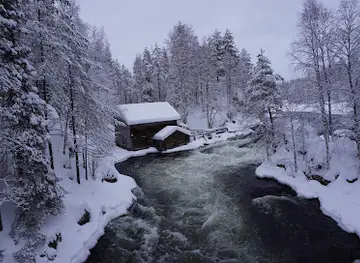
Myllykoski Rapids
Discover the stunning natural beauty of Myllykoski Rapids in Kuusamo, Finland, where adventure and tranquility meet amid breathtaking landscapes.

Erä-Susi Huskies
Discover the magic of dogsledding in Rukatunturi at Erä-Susi Huskies, where adventure meets the breathtaking beauty of Finnish wilderness.

Best restaurants in Ruka-Kuusamo
Top-rated picks
Best Restaurants

Ruka Trek & Hard Trek Café
Discover Ruka Trek & Hard Trek Café – your gateway to outdoor adventures and exceptional dining in Kuusamo.

Hanki Baari Ruka
Discover Hanki Baari in Rukatunturi: Where traditional Finnish cuisine meets modern flair in a cozy setting.

Restaurant Tapio
Discover authentic Scandinavian flavors at Restaurant Tapio in Kuusamo – where every dish tells a story of Finnish heritage.
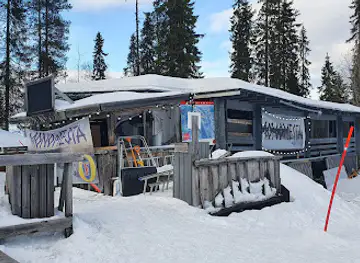
Monomesta
Experience delightful flavors at Monomesta Café in Kuusamo - where great food meets cozy ambiance amidst stunning Finnish landscapes.

Best bars in Ruka-Kuusamo
Top-rated picks
Best Bars

Hanki Baari Ruka
Experience the charm of Hanki Baari Ruka, a cozy bar and restaurant in Rukatunturi, where delicious cuisine meets stunning natural beauty.

Restaurant Tapio
Experience the authentic taste of Scandinavian cuisine at Restaurant Tapio in Kuusamo, where local ingredients meet traditional flavors.

Pizzeria Ruka
Discover the taste of Italy amidst the stunning landscapes of Kuusamo at Pizzeria Ruka, where authentic flavors meet a warm atmosphere.

CAMP Kitchen & Bar - RUKA
Experience the best of Finnish cuisine at CAMP Kitchen & Bar in Ruka, where culinary excellence meets breathtaking views.

Best nightclubs in Ruka-Kuusamo
Top-rated picks
Best Nightclubs

Rukatunturi
Experience the magic of Rukatunturi, Finland's leading ski resort, where adventure meets breathtaking winter landscapes.

Ski Booster - Bar - Cafe - Grill
Discover the cozy charm of Ski Booster, the ultimate bar and grill in Kuusamo, offering delicious food and a vibrant atmosphere for all visitors.

Arctic Boutique hotel & restaurant RUKAN KAARNA
Discover the charm of Arctic Boutique hotel & restaurant RUKAN KAARNA, where luxury meets nature in the stunning landscapes of Kuusamo, Finland.

Ravintola Peak
Experience the taste of Finland at Ravintola Peak, where local ingredients meet stunning views in the heart of Kuusamo.

Best shops in Ruka-Kuusamo
Top-rated picks
Best Shops

Sport House Ruka
Explore the great outdoors with top-notch equipment rentals at Sport House Ruka – your gateway to adventure in Kuusamo, Finland.

The lure Oy Kuusamo, factory shop / Lifestyle Suvanto Kuusamo
Discover quality fishing, camping, and outdoor clothing at The Lure Oy Kuusamo – your gateway to adventure in the heart of Finnish nature.

Head Ruka Ski Rent
Discover the best ski rentals and outdoor gear at Head Ruka Ski Rent, your winter sports partner in Kuusamo's stunning landscapes.

Ruka Pedestrian Village
Experience the magic of Ruka Pedestrian Village, where breathtaking nature meets cozy winter charm in the heart of Finnish Lapland.

Explore Ruka-Kuusamo on the Map
A handpicked selection of must-see spots in Ruka-Kuusamo, mapped for you.
Ruka-Kuusamo Essentials
-
Ruka-Kuusamo is located in Northern Finland, close to the Arctic Circle. The nearest airport is Kuusamo Airport (KAO), which has regular flights from Helsinki. From the airport, Ruka is approximately a 30-minute drive. You can rent a car, take a taxi, or use a shuttle bus service to get to your destination. Alternatively, you can drive from Helsinki, which takes around 9-10 hours.
-
Ruka-Kuusamo offers various modes of transportation. Local buses run regularly between Kuusamo town and Ruka village. Taxis are available but can be expensive. Renting a car is a convenient option if you plan to explore the surrounding areas. During the winter season, there are ski buses that connect various ski resorts and accommodations. For a unique experience, consider renting a snowmobile.
-
The official currency in Finland is the Euro (EUR). Credit and debit cards are widely accepted in hotels, restaurants, and shops. ATMs are available in Kuusamo and Ruka village. It is advisable to carry some cash for smaller purchases or in case you visit more remote areas where card payment might not be accepted.
-
Ruka-Kuusamo is generally very safe for tourists. There are no specific areas with high crime rates targeting tourists. However, standard precautions should always be taken: avoid walking alone at night in unfamiliar areas and keep an eye on your belongings in crowded places. The natural environment can be harsh, especially in winter, so always follow safety guidelines when engaging in outdoor activities.
-
In case of emergency, dial 112 for immediate assistance. This number can be used for police, fire, and medical emergencies. Kuusamo has a well-equipped hospital and several clinics. It is recommended to have travel insurance that covers medical emergencies. Pharmacies are available in Kuusamo town and some larger hotels may also have basic first-aid supplies.
-
Fashion: Do dress warmly, especially during the winter months. Layering is key. Avoid overly flashy or revealing clothing. Religion: Do respect local customs and traditions, though Finland is generally secular. Public Transport: Do be courteous and give up your seat to elderly passengers. Don't talk loudly on your mobile phone. Greetings: Do greet people with a handshake. A simple 'Moi' (Hi) or 'Hei' (Hello) is sufficient. Eating & Drinking: Do try local delicacies like reindeer meat and Finnish pastries. Don't refuse food or drink offerings as it can be considered impolite.
-
To experience Ruka-Kuusamo like a local, visit the local markets and try the regional foods. Engage with locals, as they are often friendly and willing to share insights about the area. Don't miss out on the opportunity to experience a traditional Finnish sauna. For a unique experience, consider taking a husky sled ride or a reindeer safari. Also, the Northern Lights are a must-see during the winter months.
When is the best time to visit Ruka-Kuusamo?
Useful Local Phrases for Ruka-Kuusamo
You don't need to speak the language perfectly. Even learning a few simple words can make conversations warmer—and locals usually appreciate the effort.
— Eve

Here are the phrases I use most often in Ruka-Kuusamo. Try a few—you'll be surprised how far they go! 😊
❤️
-
- HelloHei
[hey] - GoodbyeNäkemiin
[nah-keh-meen] - YesKyllä
[kuh-lah] - NoEi
[ay] - Please/You're welcomeOle hyvä
[oh-leh huu-vaa] - Thank youKiitos
[kee-tohs] - Excuse me/SorryAnteeksi
[ahn-tehk-see] - How are you?Mitä kuuluu?
[mee-tah koo-loo] - Fine. And you?Hyvää. Entä sinä?
[huh-vah. en-tah see-nah] - Do you speak English?Puhutko englantia?
[poo-hoot-koh eng-lahn-tee-ah] - I don't understandEn ymmärrä
[ayn um-mair-rah]
- HelloHei
-
- I'd like to see the menu, pleaseSaisinko ruokalistan, kiitos
[sai-sin-koh roo-kah-lis-tahn, kee-tohs] - I don't eat meatEn syö lihaa
[ayn syuh lee-haa] - Cheers!Kippis!
[keep-peess] - I would like to pay, pleaseHaluan maksaa, kiitos
[hah-lu-ahn mahk-sah, kee-tohs]
- I'd like to see the menu, pleaseSaisinko ruokalistan, kiitos
-
- Help!Apua!
[ah-poo-ah] - Go away!Mene pois!
[meh-neh poys] - Call the Police!Soita poliisille!
[soy-tah poh-lee-see-leh] - Call a doctor!Soita lääkärille!
[soy-tah lah-kah-rih-leh] - I'm lostOlen eksynyt
[oh-lehn ek-suh-nuut] - I'm illOlen sairas
[oh-lehn sahy-rahs]
- Help!Apua!
-
- I'd like to buy...Haluan ostaa...
[hah-lu-ahn oh-stah] - I'm just lookingKatson vain
[kaht-sohn vain] - How much is it?Paljonko se maksaa?
[pahl-yon-koh seh mahk-sah] - That's too expensiveSe on liian kallis
[seh ohn lee-ahn kahl-lis] - Can you lower the price?Voitko laskea hintaa?
[voyt-koh lah-skeh-ah hin-tah-ah]
- I'd like to buy...Haluan ostaa...
-
- What time is it?Mitä kello on?
[mee-tah keh-loh ohn] - It's one o'clockKello on yksi
[keh-loh ohn uuks-ee] - Half past (10)Puoli (kymmenen)
[poo-oh-lee (kuum-meh-nehn)] - MorningAamu
[ah-moo] - AfternoonIltapäivä
[eeltah-pai-vah] - EveningIlta
[eel-tah] - YesterdayEilen
[ay-lehn] - TodayTänään
[tah-nahn] - TomorrowHuomenna
[hoo-mehn-nah] - 1Yksi
[uuks-ee] - 2Kaksi
[kahk-see] - 3Kolme
[kohl-meh] - 4Neljä
[nel-yah] - 5Viisi
[vee-see] - 6Kuusi
[koo-see] - 7Seitsemän
[sayt-seh-mahn] - 8Kahdeksan
[kah-dehk-sahn] - 9Yhdeksän
[uh-dehk-sahn] - 10Kymmenen
[kuum-meh-nehn]
- What time is it?Mitä kello on?
-
- Where's a/the...?Missä on...
[mees-sah ohn] - What's the address?Mikä on osoite?
[mee-kah ohn oh-soy-teh] - Can you show me (on the map)?Voitko näyttää minulle (kartalla)?
[voyt-koh nayt-tah min-ool-leh (kar-tah-lah)] - When's the next (bus)?Milloin seuraava (bussi)?
[meel-loin seur-ah-vah (boos-see)] - A ticket (to ....)Lippu (....)
[leep-poo]
- Where's a/the...?Missä on...
History of Ruka-Kuusamo
-
The region of Ruka-Kuusamo has been inhabited by the indigenous Sami people for thousands of years. They were traditionally semi-nomadic, relying on reindeer herding, fishing, and hunting for their livelihood. Archaeological evidence, such as ancient tools and rock paintings, points to their long-standing presence in the area.
-
During the late Middle Ages, the Kuusamo area came under the influence of the Novgorod Republic and subsequently the Russian Empire. The border between Sweden and Russia was disputed for centuries, leading to several changes in control. The Treaty of Nystad in 1721 and the Treaty of Åbo in 1743 were significant in defining the region's political landscape.
-
Ruka-Kuusamo played a strategic role during World War II. The area was occupied by German forces from 1941 to 1944, which led to significant military activity. The Lapland War (1944-1945) between Finland and Nazi Germany resulted in considerable destruction, including the scorched earth tactics employed by retreating German forces.
-
After World War II, the region underwent substantial reconstruction. The Finnish government invested in infrastructure, including roads and public buildings, to revitalize the area. The development of Ruka as a ski resort began in the 1950s, which transformed the local economy and attracted tourists from around the world.
-
Ruka-Kuusamo is rich in cultural traditions, many of which have been preserved and celebrated through local festivals. The Kuusamo Nature Photo Festival and the Ruka Nordic Skiing Events are notable examples. These events highlight the region's natural beauty and cultural heritage, drawing visitors and fostering community spirit.
-
In recent years, Ruka-Kuusamo has become a hub for ecotourism, emphasizing sustainable practices and conservation. The Oulanka National Park and the Karhunkierros hiking trail are prime examples of how the region balances tourism with environmental stewardship. These efforts ensure that the natural landscapes and wildlife are preserved for future generations.
Neighbouring destination travel guides
Browse our curated selection of top destinations, scenic points, and must-visit spots in the area.


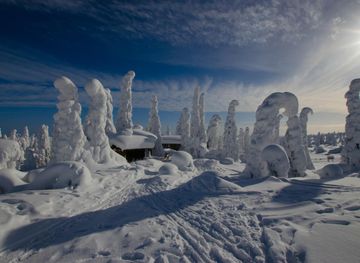


Your all‑in‑one travel companion app
Explore expert travel guides, compare and book tours, experiences, hotels, and more—all from the palm of your hand. Download now for seamless trip planning wherever your wanderlust takes you.


Explore More of Lapland
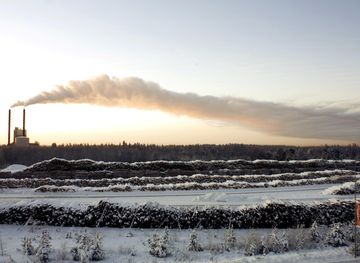
Looking beyond Ruka-Kuusamo? Discover Lapland for broader travel guides, local hot-spots, and regional highlights.
Explore LaplandExplore More of Finland

Looking beyond Ruka-Kuusamo? Discover Finland for broader travel guides, local hot-spots, and regional highlights.
Explore FinlandRuka-Kuusamo in Photos
Browse through our photo collection highlighting the charm and character of the destination.


The Enchanting Wilderness of Ruka-Kuusamo
Ruka-Kuusamo, nestled in the heart of Finland, is a paradise for nature lovers and adventure seekers alike. This stunning destination is known for its breathtaking landscapes, pristine forests, and crystal-clear lakes. Whether you're visiting in summer or winter, Ruka-Kuusamo offers a plethora of activities that cater to all interests and ages. In winter, Ruka transforms into a snowy wonderland, perfect for skiing, snowboarding, and snowshoeing. The Ruka Ski Resort is one of Finland's premier ski destinations, offering well-groomed slopes and state-of-the-art facilities. If you're lucky, you might even witness the magical Northern Lights dancing across the night sky. During the warmer months, Ruka-Kuusamo reveals its lush greenery and vibrant wildlife. Hiking trails abound, taking you through serene forests and along the banks of tranquil rivers. The Oulanka National Park, with its famous Karhunkierros (Bear's Trail), is a must-visit for any hiking enthusiast. For those who prefer water activities, kayaking and fishing in the region's numerous lakes and rivers provide a peaceful escape. Ruka-Kuusamo is also rich in culture and tradition. You can immerse yourself in the local way of life by visiting the many villages in the area, where you can sample traditional Finnish cuisine and experience the warm hospitality of the locals. Don't miss the chance to visit a reindeer farm and learn about the Sami culture that has shaped the region for centuries.