

Honeymoon Island State Park Travel Guide - Free Web & App
Your ultimate guide to Honeymoon Island State Park. Discover top landmarks, proposed trips, and local tips. Free on the web or via the Evendo companion app.


Honeymoon Island State Park in Florida offers Gulf beaches, coastal trails, wildlife, ferry access to Caladesi Island and a peaceful barrier-island escape.
Barrier-Island Landscapes
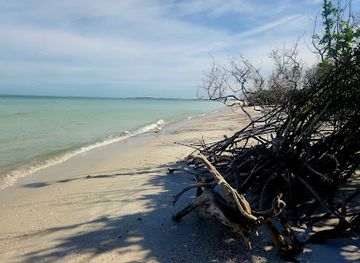
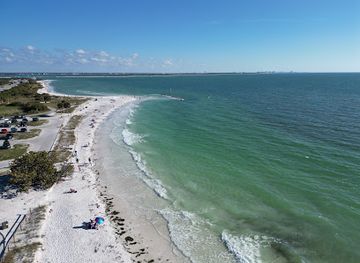
Honeymoon Island State Park occupies a long, narrow barrier island off Florida’s central Gulf Coast, reached by road across the Dunedin Causeway. Its western shoreline faces the open Gulf of Mexico, while calmer waters and tidal flats lie to the east. The island’s character is shaped by pale sand, coastal scrub, sea oats, mangroves and maritime woodland, with broad beaches that change continually under the influence of wind, waves and storms.Read more about Honeymoon Island State Park
Wildlife and Coastal Nature
Beaches, Trails and Island Access
When is the best time to visit Honeymoon Island State Park?
Best: March–April, November · 24–27°C| Month | High (°C) | Rainfall (mm) |
|---|---|---|
| January | 20 | 66 |
| February | 21 | 70 |
| March (best) | 24 | 76 |
| April (best) | 27 | 74 |
| May | 29 | 94 |
| June | 31 | 184 |
| July | 32 | 216 |
| August | 32 | 226 |
| September | 31 | 191 |
| October | 28 | 94 |
| November (best) | 24 | 79 |
| December | 21 | 78 |
Getting to and around Honeymoon Island State Park
How to get there
Transportation
Best attractions in Honeymoon Island State Park
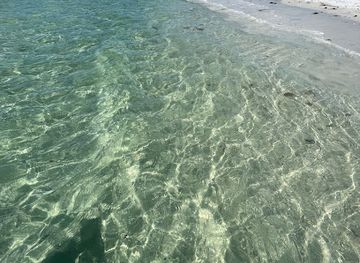
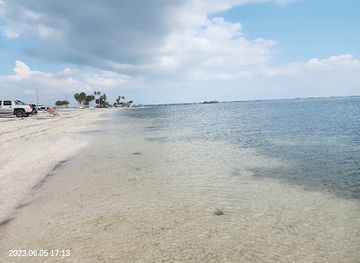
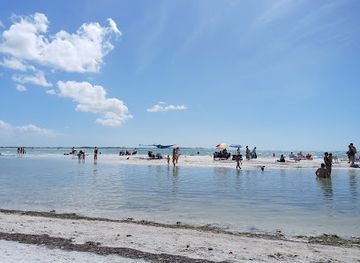
Honeymoon Island State Park’s principal attraction is its Gulf-facing shoreline, where broad sandy beaches open towards the horizon and provide space for walking, sunbathing and swimming when conditions allow. Inland, the Osprey Trail leads through coastal habitats where visitors may see ospreys, wading birds and other wildlife, while the island’s scrub and maritime vegetation offer a different experience from the exposed beach. The eastern shore looks across St Joseph Sound towards the mainland and nearby islands, creating calmer waterscapes and changing views with the tide. A passenger ferry commonly links the park with Caladesi Island State Park, allowing visitors to experience a second protected barrier island from the same gateway, subject to weather and operating conditions. The Dunedin Causeway is also part of the wider visitor setting, connecting the natural landscape with the mainland community of Dunedin. Storms, erosion and seasonal closures can alter access to particular stretches of coast, so park notices remain important.
-
State park
Caladesi Island State Park
Explore the untouched beauty of Caladesi Island State Park, where pristine beaches and rich wildlife create an unforgettable Florida escape.
-
Bridge
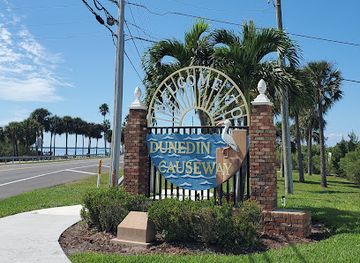
The Dunedin Causeway
Discover the natural beauty of The Dunedin Causeway, a stunning bridge linking the mainland to pristine beaches and breathtaking sunsets.
-
Public beach
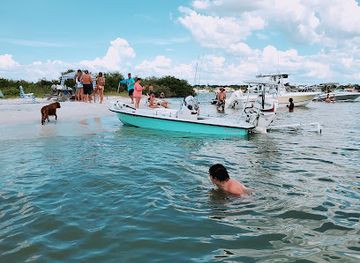
Honeymoon Island State Park Pet Beach
Discover Honeymoon Island State Park Pet Beach, where sandy shores meet serenity for you and your furry companions in Florida's coastal paradise.
-
Canoe & kayak rental service
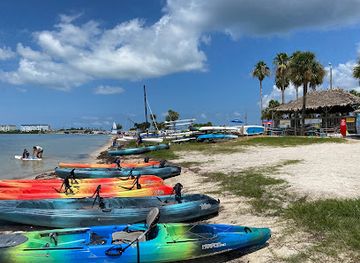
Sail Honeymoon Inc
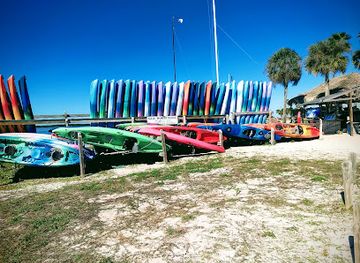
Explore the serene waters of Dunedin with Sail Honeymoon Inc, your go-to canoe and kayak rental service for adventure and discovery.
Best landmarks in Honeymoon Island State Park
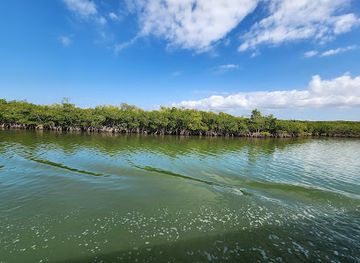
The defining landmark of Honeymoon Island is the barrier island itself: a narrow, mobile strip of sand and coastal vegetation separating the Gulf of Mexico from St Joseph Sound. Its open western beaches, shifting dunes and sea-oat-covered areas illustrate the dynamic edge between land and sea, while the eastern shoreline provides views across sheltered coastal waters towards the mainland and neighbouring islands. The Dunedin Causeway is the principal human-made approach, transforming an offshore landscape into a readily accessible state park while remaining visually connected to the Gulf coast. The island’s proximity to Caladesi Island is another important geographical feature, with the two state parks forming a protected sequence of barrier-island habitats. Unlike a historic town, Honeymoon Island has relatively little architectural heritage; its significance lies chiefly in its coastal geography, wildlife habitat, public conservation status and continuing exposure to storms and erosion.
-
State park
Caladesi Island State Park
Explore the natural splendor of Caladesi Island State Park: pristine beaches, scenic trails, and vibrant wildlife await in this Florida paradise.
-
Public beach
Honeymoon Island State Park Pet Beach
Discover Honeymoon Island State Park Pet Beach, an idyllic getaway for pet lovers, featuring stunning views, sandy shores, and nature trails in sunny Florida.
-
Beach
Honeymoon Island Beach
Discover the tranquil beauty of Honeymoon Island Beach, Florida's perfect getaway for sun-seekers and nature lovers.
-
Park
Honeymoon Causeway
Discover the breathtaking beauty and outdoor adventures at Honeymoon Causeway in Honeymoon Island State Park, a perfect coastal retreat for nature enthusiasts.
Explore Honeymoon Island State Park on the map
Plan your trip on one map. See where the top attractions, landmarks, restaurants and hotels are, and book hotels and experiences in a few clicks.
Best hotels in Honeymoon Island State Park
Best restaurants in Honeymoon Island State Park
Honeymoon Island itself is not a dining destination, and visitors should not expect a choice of restaurants within the park. The practical approach is to bring water and suitable food for a day outdoors, while checking current park information for any concession facilities or seasonal services. More substantial dining is concentrated in nearby Dunedin, whose food scene includes independent restaurants, cafés, breweries and casual eateries, with further choice in Clearwater and along the wider Pinellas County coast. Seafood is naturally prominent across the Gulf region, although menus vary between establishments; visitors can also find American, Cuban, Latin American and international cooking in the surrounding towns. Dunedin is particularly convenient after a park visit because it lies at the mainland end of the causeway, whereas travelling farther south or towards Clearwater offers a broader range of dining styles and evening options.
-
Grill
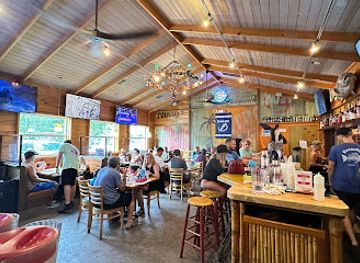
Frenchy's Outpost Bar and Grill
Experience the vibrant atmosphere and delicious seafood at Frenchy's Outpost Bar and Grill in Dunedin - a true taste of Florida's coastal cuisine.
-
Restaurant
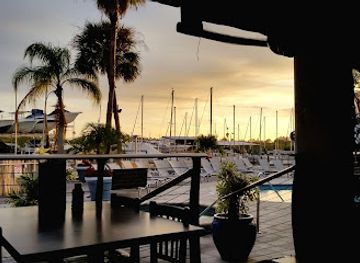
Ozona Blue Grilling Co
Experience exquisite American and Caribbean cuisine at Ozona Blue Grilling Co in Palm Harbor – where every meal is a celebration of flavor.
-
Seafood
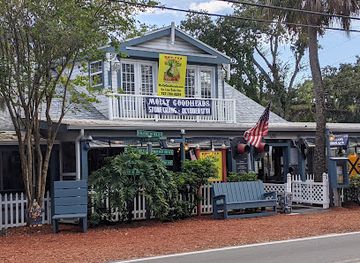
Molly Goodhead's Raw Bar & Restaurant
Discover fresh seafood delights at Molly Goodhead's Raw Bar & Restaurant in Ozona - where flavor meets coastal charm.
-
Restaurant
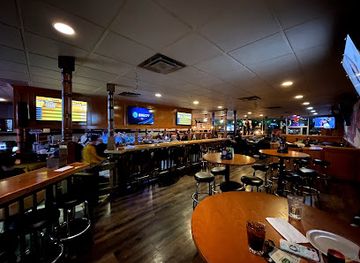
Cricketers British Pub & Restaurant Dunedin
Discover the best of British cuisine at Cricketers Pub & Restaurant in Dunedin - where delicious food meets lively entertainment!
Best bars in Honeymoon Island State Park
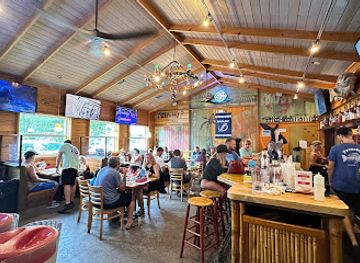
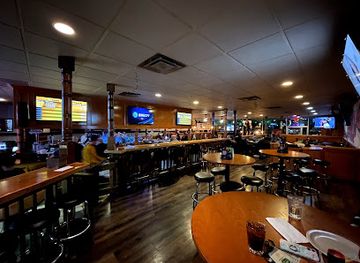
Honeymoon Island State Park has no nightclub district and its evening character is governed by park hours, darkness, weather and the natural setting rather than organised nightlife. After sunset, visitors generally return to mainland accommodation rather than remain on the island, with current park rules determining access and permitted activities. Dunedin provides the closest established evening scene, centred on traditional pubs, breweries, casual bars, restaurants and occasional live entertainment, while Clearwater offers a larger selection of bars and resort-oriented venues. St Petersburg, farther away, has the region’s broadest concentration of late-evening entertainment. Availability and opening arrangements vary, and the quiet residential character of Dunedin means that evening activity is more relaxed than in a major Florida nightlife centre.
-
Grill
Frenchy's Outpost Bar and Grill
Experience the best of Florida's seafood at Frenchy's Outpost Bar and Grill in Dunedin, where fresh flavors meet stunning waterfront views.
-
Bar
Cricketers British Pub & Restaurant Dunedin
Discover Cricketers British Pub & Restaurant in Dunedin: where hearty British fare meets a lively pub atmosphere and live entertainment.
-
Grill
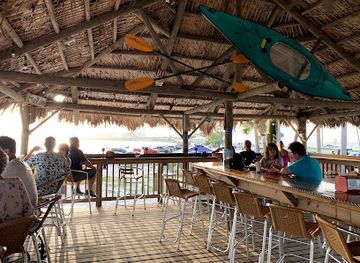
High & Dry Grill
Experience the vibrant Tiki vibes at High & Dry Grill in Dunedin, where delicious grilled cuisine meets refreshing cocktails in a relaxed coastal setting.
-
Grill
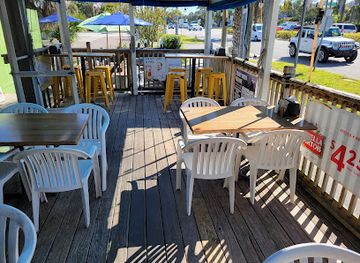
Sandbar Grill
Discover the unique flavors of Sandbar Grill in Dunedin, where delicious seafood meets mouthwatering burgers in a charming waterfront setting.
Best shops in Honeymoon Island State Park
Shopping is limited on Honeymoon Island itself, where the emphasis is on recreation and conservation rather than retail. Visitors should obtain beach supplies, food, water and outdoor essentials on the mainland before crossing the Dunedin Causeway, particularly if planning a full day in the park. Dunedin offers the nearest substantial choice of independent shops, galleries, cafés and businesses selling gifts, clothing, art and locally themed products, with additional retail available in Clearwater and larger Pinellas County centres. Regional goods may include Florida food products, coastal artwork, handmade crafts and practical beach or outdoor equipment, although individual stock changes. The area’s shopping character is more independent and community-oriented in Dunedin than the large-scale commercial retail found elsewhere in the Tampa Bay region. There is no extensive shopping street or permanent market within the state park.
-
State park
Honeymoon Island State Park
Experience the untouched beauty of Honeymoon Island State Park, a tranquil escape featuring pristine beaches, diverse wildlife, and endless outdoor adventures.
-
Public beach
Honeymoon Island State Park Pet Beach
Experience the beauty of Honeymoon Island State Park Pet Beach, a pet-friendly paradise with stunning views and endless outdoor activities.
-
Canoe & kayak rental service
Sail Honeymoon Inc
Explore the stunning waters of Dunedin with top-notch canoe and kayak rentals at Sail Honeymoon Inc, your gateway to aquatic adventures.
-
Cafe
South Beach Pavilion Cafe
Discover the South Beach Pavilion Cafe – a coastal haven in Dunedin offering fresh flavors and stunning ocean views for an unforgettable dining experience.
Get your free copy of our complete guide to Honeymoon Island State Park, delivered straight to you.
Everything on this page, from attractions and restaurants to essentials and local phrases, in one PDF you can read offline, print or share.
Already have an account? Sign in
Your Honeymoon Island State Park guide is ready.
We'll send it to · Not you? Sign out

Getting your guide ready…
We are putting together a fresh copy of the Honeymoon Island State Park guide. This can take up to a minute.
This can take a few moments. If your browser asks, choose Allow so the download can start. You'll find the guide in your Downloads folder.
Nothing happened? Download it again
Sorry, the guide is taking longer than usual. Please try again in a minute, or get it by email instead.
Honeymoon Island State Park essentials
Currency and Payment
Safety
Emergency Situations
Do's and Don'ts
Local Tips
From Eve
Local phrases worth knowing
You don't need to get them perfect. A few words go a long way, and locals appreciate the effort.
Basics
| English | Local | Say it |
|---|---|---|
| Hello | Howdy | [haw-dee] |
| Goodbye | See ya | [see yah] |
| Yes | Yep | [yep] |
| No | Nah | [nah] |
| Please/You're welcome | Please/No worries | [pleez/no wuhr-eez] |
| Thank you | Thanks | [thanks] |
| Excuse me/Sorry | Excuse me/My bad | [ex-kyooz me/my bad] |
| How are you? | How you doin'? | [how yoo doo-in'] |
| Fine. And you? | Good. You? | [good. yoo?] |
| Do you speak English? | Ya speak English? | [yah speak ing-lish?] |
| I don't understand | I ain't gettin' it | [I aint get-tin' it] |
Eating & Drinking
| English | Local | Say it |
|---|---|---|
| I'd like to see the menu, please | Let me see what's cookin', please | [let me see whats cook-in', please] |
| I don't eat meat | I ain't into meat | [I aint in-toe meat] |
| Cheers! | Bottoms up! | [bottoms up!] |
| I would like to pay, please | I'm ready to settle up, please | [Im ready to set-tle up, please] |
Emergencies
| English | Local | Say it |
|---|---|---|
| Help! | SOS! | [S-O-S!] |
| Go away! | Beat it! | [beat it!] |
| Call the Police! | Get the cops! | [get the cops!] |
| Call a doctor! | Get a doc! | [get a doc!] |
| I'm lost | I'm turned around | [I'm turned a-round] |
| I'm ill | I ain't feelin' right | [I aint feel-in' right] |
Shopping
| English | Local | Say it |
|---|---|---|
| I'd like to buy... | I'm lookin' to purchase... | [I'm look-in' to pur-chase...] |
| I'm just looking | I'm just browsin' | [I'm just brows-in'] |
| How much is it? | What's the damage? | [whats the dam-age?] |
| That's too expensive | That's a bit steep | [thats a bit steep] |
| Can you lower the price? | Can you do better on the price? | [Can you do bet-ter on the price?] |
Time & Numbers
| English | Local | Say it |
|---|---|---|
| What time is it? | What's the time? | [whats the time?] |
| It's one o'clock | It's one | [its one] |
| Half past (10) | Ten thirty | [ten thir-ty] |
| Morning | Mornin' | [morn-in'] |
| Afternoon | Afternoon | [after-noon] |
| Evening | Evenin' | [even-in'] |
| Yesterday | Yest'day | [yest-day] |
| Today | Today | [to-day] |
| Tomorrow | Tomorrer | [tom-or-er] |
| 1 | One | [wun] |
| 2 | Two | [too] |
| 3 | Three | [three] |
| 4 | Four | [four] |
| 5 | Five | [five] |
| 6 | Six | [six] |
| 7 | Seven | [seven] |
| 8 | Eight | [eight] |
| 9 | Nine | [nine] |
| 10 | Ten | [ten] |
Transport & Directions
| English | Local | Say it |
|---|---|---|
| Where's a/the...? | Where's the...? | [wheres the...?] |
| What's the address? | What's the addy? | [whats the addy?] |
| Can you show me (on the map)? | Can you point it out (on the map)? | [Can you point it out (on the map)?] |
| When's the next (bus)? | When's the next (bus)? | [Whens the next (bus)?] |
| A ticket (to ....) | A ticket (to ....) | [A ticket (to ....)] |
History of Honeymoon Island State Park
A Shifting Gulf Barrier Island
Honeymoon Island is part of Florida’s Gulf Coast barrier-island system, a landscape formed and reshaped by waves, currents, storms and changing sea levels rather than by permanent geological stability. Sand dunes, beaches, coastal scrub and tidal margins have altered repeatedly over time, while vegetation has helped bind sections of the island together. Its position at the mouth of St Joseph Sound has given it both an exposed Gulf shoreline and more sheltered eastern habitats. Understanding this natural movement is central to understanding the park: beaches migrate, inlets change and storm damage can rapidly alter familiar access points and shorelines.
Indigenous Coastal Homelands
The wider Pinellas Peninsula and St Joseph Sound formed part of the traditional homeland of Indigenous peoples long before modern settlement. Coastal communities used the region’s estuaries, shellfish beds, fishing grounds and freshwater sources, leaving archaeological evidence elsewhere around the Gulf coast of long-term relationships with marine and island environments. The modern park landscape should therefore be understood within a much older human history, even though Honeymoon Island itself has limited visible built heritage. European exploration, mapping and later coastal development brought new names and land-use patterns to an area already known and used by Indigenous communities.
From Coastal Settlement to Tourist Island
The island’s modern name is associated with twentieth-century promotion of the Gulf coast as a place for holidays and romantic escapes. In the 1930s, developer Clinton Washburn promoted the island as a resort destination and used the name Honeymoon Isle, helping establish the identity that endured. Roads, causeways and recreational access later tied the island more closely to Dunedin and the growing communities of Pinellas County. Hurricane activity and the mobile nature of barrier islands repeatedly affected plans for development, while the surrounding coast increasingly became one of Florida’s most visited recreational regions.
Public Protection and State Park Management
Honeymoon Island became a Florida state park in the late twentieth century, bringing its beaches, scrub and coastal habitats into public recreational and conservation management. State ownership helped preserve a substantial natural shoreline despite intense development elsewhere in the Tampa Bay region. Management now balances beach use, parking, swimming, wildlife protection, storm recovery and access to neighbouring Caladesi Island State Park. The park’s present identity is consequently the result of both ecological processes and deliberate conservation: a public coastal landscape where recreation takes place within habitats that remain vulnerable to erosion, tropical weather and rising visitor pressure.
Honeymoon Island State Park in Photos
Browse through our photo collection highlighting the charm and character of the destination.
Neighbouring destination travel guides
The closest destinations to Honeymoon Island State Park, if you have time for more than one.
-

-

-

-

-


Swipe for more destinations
Explore more

Explore more of Tampa Bay Area
Explore the Tampa Bay Area for Gulf beaches, waterfront museums, Cuban heritage, wildlife, outdoor adventures and lively Florida city culture.
Explore Tampa Bay Area
Explore more of Florida
Discover Florida: A Sunshine State full of dazzling beaches, iconic theme parks, rich history, and stunning natural parks, offering endless adventures for every traveler.
Explore Florida