

Free Bar Harbor Travel Guide & Mobile App
Plan your Bar Harbor trip with Evendo. Get free guides to top attractions, restaurants, hotels, and bars. Web access or download the mobile app.


Bar Harbor, Maine blends Acadia National Park scenery, island heritage, coastal walks, seafood, galleries and year-round New England character.
Harbour, Island and National Park
Bar Harbor occupies the eastern shore of Mount Desert Island on Maine’s rugged Atlantic coast, where a compact harbour town faces Frenchman Bay and the granite landscapes of Acadia National Park rise nearby. The town is a natural base for exploring the park’s carriage roads, rocky coastline, spruce-covered mountains and tidal islands, while its own streets offer a gentler rhythm of galleries, cafés, bookshops and seafood restaurants. The waterfront is particularly atmospheric in the early morning, when fishing boats, excursion vessels and working harbour activity share the bay with the distant outline of the Schoodic Peninsula.Read more about Bar Harbor
From Summer Resort to Working Community
Exploring Mount Desert Island
When is the best time to visit Bar Harbor?
Best: June–August · 21–24°C| Month | High (°C) | Rainfall (mm) |
|---|---|---|
| January | 1 | 80 |
| February | 3 | 70 |
| March | 6 | 90 |
| April | 11 | 100 |
| May | 17 | 90 |
| June (best) | 21 | 90 |
| July (best) | 24 | 100 |
| August (best) | 24 | 100 |
| September | 20 | 110 |
| October | 14 | 110 |
| November | 8 | 100 |
| December | 2 | 90 |
Getting to and around Bar Harbor
How to get there
Transportation
Best attractions in Bar Harbor
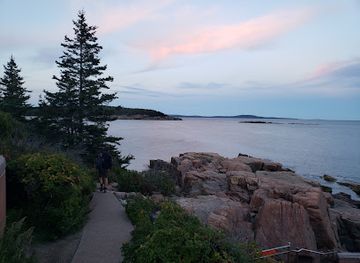
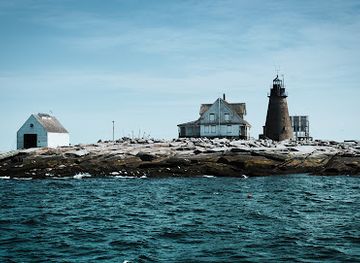
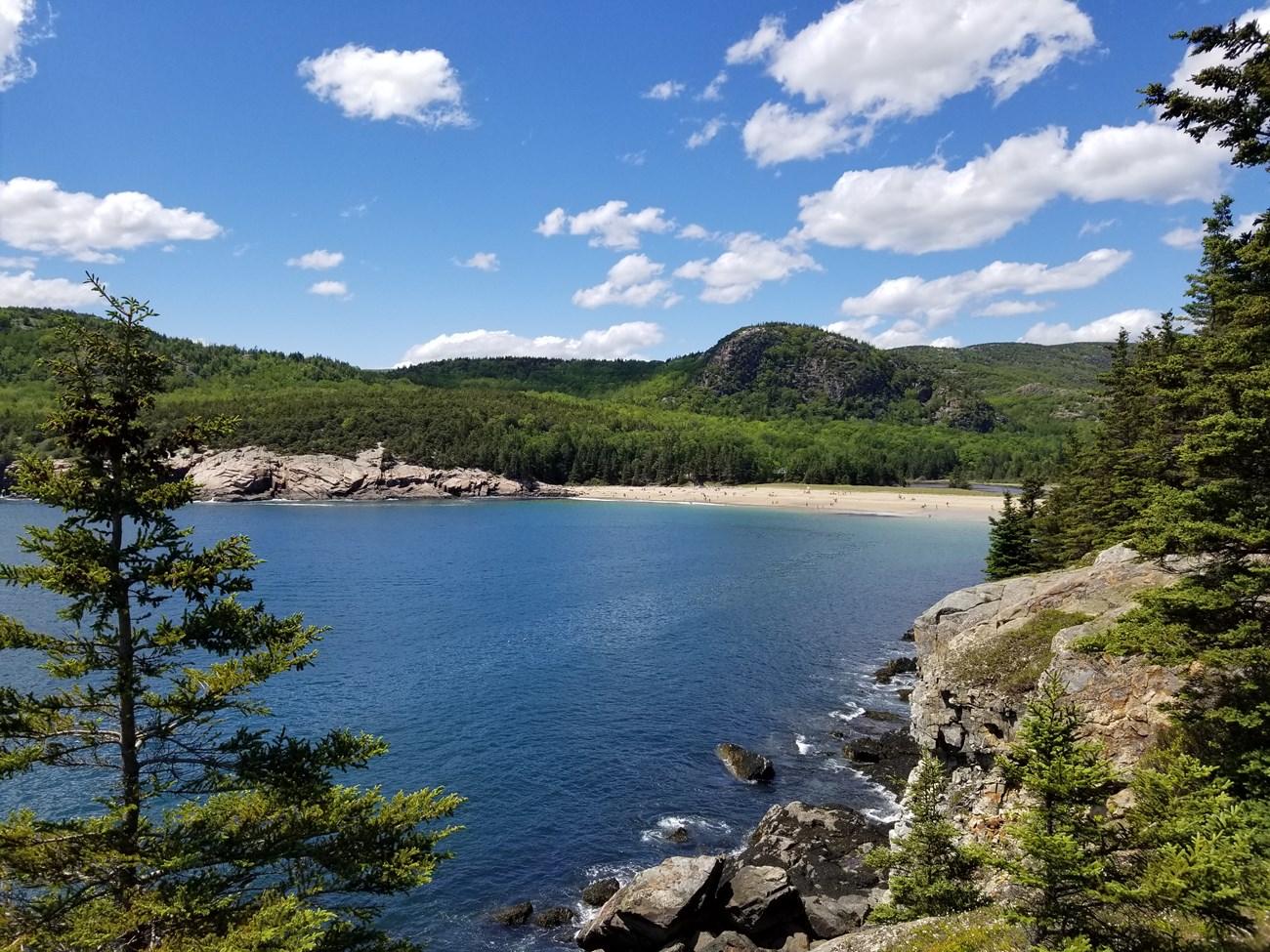
Bar Harbor’s principal attraction is its relationship with Acadia National Park, where visitors can explore granite shorelines, spruce forest and mountain scenery within a short journey of the town. The Ocean Path links Sand Beach with Thunder Hole and Otter Cliff, creating one of the island’s most accessible coastal walks, while Jordan Pond offers a gentler setting beside the Bubbles and woodland trails. Cadillac Mountain provides broad views over Frenchman Bay and the Porcupine Islands, subject to current access arrangements. In town, the Shore Path traces the waterfront, the Abbe Museum presents Wabanaki art and history, and the Bar Harbor Historical Society occupies the former La Rochelle summer cottage. Boat excursions reveal lighthouses, seabirds and marine life from the water, while nearby villages such as Northeast Harbor and Southwest Harbor provide a quieter perspective on Mount Desert Island’s maritime communities.
-
National park
Acadia National Park
Discover Acadia National Park: A breathtaking blend of rugged coastlines, towering mountains, and rich wildlife awaits you in Maine's premier national park.
23 min drive · 7.8 km from city centre
-
Scenic spot
Thunder Hole
Experience the awe-inspiring Thunder Hole in Bar Harbor, Maine, where crashing waves create a spectacular show of nature's power.
23 min drive · 7.5 km from city centre
-
Visitor center
Hulls Cove Visitor Center
Discover the beauty of Acadia National Park at Hulls Cove Visitor Center, your gateway to Maine's stunning landscapes and rich natural heritage.
13 min drive · 4.2 km from city centre
-
Park
Agamont Park
Explore the natural beauty and stunning ocean views at Agamont Park in Bar Harbor, the perfect retreat for relaxation and adventure.
5 min walk · 0.4 km from city centre


Best landmarks in Bar Harbor
The Shore Path is one of Bar Harbor’s defining civic landscapes, following the edge of Frenchman Bay from the town centre towards historic summer estates and offering views of the Porcupine Islands. The West Street Historic District preserves several substantial nineteenth- and early twentieth-century buildings associated with the resort era, while the Abbe Museum is a cultural landmark for its interpretation of Wabanaki peoples and artistic traditions. St. Saviour’s Episcopal Church, with its stone architecture and stained glass, reflects the town’s historic religious and seasonal community. In the wider park landscape, the carriage roads and their carefully built granite bridges express John D. Rockefeller Jr.’s conservation vision, while nearby landmarks such as Sand Beach and Cadillac Mountain reveal the geological forces that shaped Mount Desert Island. Together these sites connect Bar Harbor’s resort past with its maritime and conservation identity.
-
Scenic spot
Thunder Hole
Discover the awe-inspiring Thunder Hole in Acadia National Park, where the Atlantic Ocean roars against rocky cliffs, creating a breathtaking natural spectacle.
23 min drive · 7.5 km from city centre
-
Whale watching tour agency
Bar Harbor Whale Watch Co
Discover the breathtaking beauty of Maine's coastline with Bar Harbor Whale Watch Co, where unforgettable marine adventures await.
5 min walk · 0.4 km from city centre
-
Park
Agamont Park
Discover the serene beauty of Agamont Park, a picturesque waterfront destination in Bar Harbor, perfect for relaxation and exploration.
5 min walk · 0.4 km from city centre
-
Irish pub
Leary's Landing Irish Pub
Discover the heart of Irish culture in Bar Harbor at Leary's Landing Irish Pub, where hearty food, craft drinks, and live music await.
1 min walk · 0.1 km from city centre


Explore Bar Harbor on the map
Plan your Bar Harbor trip on one map. See where the top attractions, landmarks, restaurants, bars and hotels are, find what's near where you're staying, and book hotels and experiences in a few clicks.
Best hotels in Bar Harbor
Best restaurants in Bar Harbor
Bar Harbor’s dining scene is shaped by the cold waters of the Gulf of Maine and the traditions of coastal New England. Lobster appears steamed, baked, in rolls and in other straightforward preparations, while mussels, scallops, haddock, oysters and fried clams reflect the surrounding fishing grounds. Blueberries, Maine’s signature fruit, feature in pies, pancakes and breakfast baking, and cafés commonly serve hearty morning fare for visitors heading into Acadia. The town centre and waterfront contain the largest concentration of restaurants, from informal seafood counters and clam shacks to polished dining rooms, bakeries and ice-cream shops. Seasonal menus often follow the local catch and harvest, while nearby farmers and small producers contribute vegetables, preserves and cheeses. Reservations are useful in summer and autumn, although casual counter-service options provide a more flexible alternative.
-
Restaurant
Side Street Cafe
Experience the best of American cuisine at Side Street Cafe in Bar Harbor - where fresh flavors meet coastal charm.
3 min walk · 0.2 km from city centre
-
Seafood
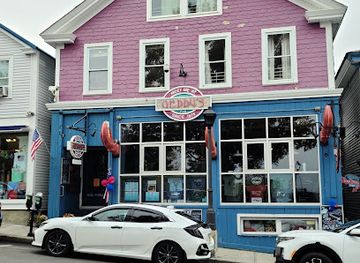
Geddy's
Discover Geddy's in Bar Harbor: A Seafood Paradise Offering Fresh Flavors and Family-Friendly Dining.
4 min walk · 0.4 km from city centre
-
Breakfast
Jordan's Restaurant - Breakfast - Lobster Rolls - Burgers - Pancakes - Sandwiches
Experience the flavors of Maine at Jordan's Restaurant in Bar Harbor—famous for lobster rolls, pancakes, burgers & more!
6 min walk · 0.5 km from city centre
-
Seafood
Stewman's Lobster Pound
Experience authentic Maine seafood at Stewman's Lobster Pound - where fresh flavors meet stunning waterfront views in Bar Harbor.
5 min walk · 0.4 km from city centre


Best bars in Bar Harbor
Bar Harbor’s evening scene is sociable and seasonal rather than centred on large nightclubs. Main Street and the waterfront contain traditional pubs, hotel bars, breweries and restaurants where visitors gather after walks in Acadia, with live music and informal entertainment more common during the warmer months. Some venues emphasise Maine beer, cocktails or harbour views, while others retain the atmosphere of a local tavern. The town also hosts occasional concerts, theatre and cultural performances, and boat operators may offer evening cruises in Frenchman Bay. Outside the peak season, hours and programming become more limited, and quieter evenings are part of the town’s character. Visitors should remember that alcohol service, identification requirements and closing times follow Maine law, and should arrange transport before drinking if staying beyond the walkable centre.
-
Bar
Side Street Cafe
Experience the warm hospitality and delicious American cuisine at Side Street Cafe, a must-visit bar and restaurant in Bar Harbor, Maine.
3 min walk · 0.2 km from city centre
-
Seafood
Geddy's
Experience the best of Maine's seafood at Geddy's, a beloved family-friendly restaurant in Bar Harbor featuring a diverse menu and vibrant atmosphere.
4 min walk · 0.4 km from city centre
-
Restaurant
Thirsty Whale Tavern
Experience the vibrant culinary scene of Bar Harbor at Thirsty Whale Tavern, featuring delicious seafood, burgers, and unique craft cocktails.
3 min walk · 0.3 km from city centre
-
Grill
Blaze
Experience the best of Bar Harbor at Blaze, where wood-fired flavors and craft brews create unforgettable dining moments.
1 min walk · 0.1 km from city centre


Best nightclubs in Bar Harbor
Bar Harbor’s evening scene is sociable and seasonal rather than centred on large nightclubs. Main Street and the waterfront contain traditional pubs, hotel bars, breweries and restaurants where visitors gather after walks in Acadia, with live music and informal entertainment more common during the warmer months. Some venues emphasise Maine beer, cocktails or harbour views, while others retain the atmosphere of a local tavern. The town also hosts occasional concerts, theatre and cultural performances, and boat operators may offer evening cruises in Frenchman Bay. Outside the peak season, hours and programming become more limited, and quieter evenings are part of the town’s character. Visitors should remember that alcohol service, identification requirements and closing times follow Maine law, and should arrange transport before drinking if staying beyond the walkable centre.
-
Seafood
Geddy's
Experience the best of Maine's seafood at Geddy's, a family-friendly restaurant in the heart of Bar Harbor, offering diverse and delicious options for all palates.
4 min walk · 0.4 km from city centre
-
Bar
Paddy's Irish Pub & Restaurant
Discover the flavors of Ireland at Paddy's Irish Pub & Restaurant in Bar Harbor, where authentic cuisine meets warm hospitality in a lively atmosphere.
5 min walk · 0.4 km from city centre
-
Irish pub
Leary's Landing Irish Pub
Discover the heart of Ireland at Leary's Landing Irish Pub in Bar Harbor, where culinary delights and lively music await.
1 min walk · 0.1 km from city centre
-
Wine bar
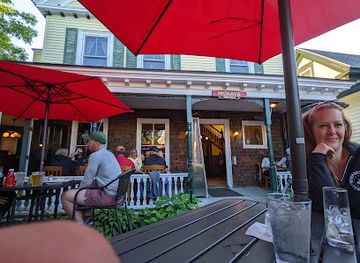
McKay's Public House
Discover the charm of McKay's Public House, where organic dining meets an extensive wine selection in the heart of Bar Harbor, Maine.
2 min walk · 0.2 km from city centre


Best shops in Bar Harbor
Shopping in Bar Harbor is concentrated around Main Street, Cottage Street, West Street and the waterfront, where independent galleries, bookshops, outdoor specialists, clothing stores and souvenir retailers occupy the town’s compact commercial core. Local shopping often reflects the landscape: visitors will find Maine-made foods, blueberry products, coastal artwork, photography, nautical gifts and practical equipment for walking in Acadia. The Abbe Museum shop is a useful source of books and Indigenous-inspired work, although purchases should be approached with attention to authentic attribution and cultural context. Nearby villages offer additional galleries and craft-oriented businesses, while seasonal markets and farm stands provide regional produce when operating. Retail activity is strongly seasonal, with the broadest choice during the warmer months and a quieter selection outside the principal visitor period.
-
Clothing store
Debbahs
Explore Bar Harbor's unique clothing and gift store, Debbahs, where you can find everything from children's apparel to local souvenirs.
2 min walk · 0.2 km from city centre
-
Book store
Sherman's Maine Coast Book Shop Bar Harbor
Explore the enchanting Sherman's Maine Coast Book Shop in Bar Harbor, where books meet toys in a cozy coastal retreat.
3 min walk · 0.3 km from city centre
-
Gift shop
Cool As A Moose
Explore Cool As A Moose in Bar Harbor for unique gifts, local crafts, and a taste of Maine's vibrant culture.
1 min walk · 0.1 km from city centre
-
Art gallery
A LITTLE MAD shop
Explore A LITTLE MAD shop in Bar Harbor, where art meets unique gifts, capturing the essence of Maine's creativity and charm.
5 min walk · 0.4 km from city centre


Get your free copy of our complete guide to Bar Harbor, delivered straight to you.
Everything on this page, from attractions and restaurants to essentials and local phrases, in one PDF you can read offline, print or share.
Already have an account? Sign in
Your Bar Harbor guide is ready.
We'll send it to · Not you? Sign out

Getting your guide ready…
We are putting together a fresh copy of the Bar Harbor guide. This can take up to a minute.
This can take a few moments. If your browser asks, choose Allow so the download can start. You'll find the guide in your Downloads folder.
Nothing happened? Download it again
Sorry, the guide is taking longer than usual. Please try again in a minute, or get it by email instead.
Bar Harbor essentials
Currency and Payment
Safety
Emergency Situations
Do's and Don'ts
Local Tips
From Eve
Local phrases worth knowing
You don't need to get them perfect. A few words go a long way, and locals appreciate the effort.
Basics
| English | Local | Say it |
|---|---|---|
| Hello | Ayuh | [ah-yuh] |
| Goodbye | See ya later | [see yah lay-tah] |
| Yes | Yup | [yup] |
| No | Naw | [naw] |
| Please/You're welcome | Sure thing | [suh-thing] |
| Thank you | Much obliged | [muhch uh-blaiged] |
| Excuse me/Sorry | Pardon | [pah-dun] |
| How are you? | How's it goin'? | [hows it goin] |
| Fine. And you? | Good. You? | [good. yoo] |
| Do you speak English? | Ya speak English? | [yah speak ing-glish] |
| I don't understand | I ain't catchin' on | [I aint catch-in on] |
Eating & Drinking
| English | Local | Say it |
|---|---|---|
| I'd like to see the menu, please | Can I take a peek at the menu, please | [can eye take a peek at the menu, please] |
| I don't eat meat | I don't do meat | [I dont do meat] |
| Cheers! | Bottoms up! | [bottoms up] |
| I would like to pay, please | I'll settle up now, if ya don't mind | [ill settle up now, if yah dont mind] |
Emergencies
| English | Local | Say it |
|---|---|---|
| Help! | Heave ho! | [heeve ho] |
| Go away! | Get lost! | [get lost] |
| Call the Police! | Ring up the Law! | [ring up the law] |
| Call a doctor! | Call for the Doc! | [call for the doc] |
| I'm lost | I'm turned around | [im turned around] |
| I'm ill | I ain't feelin' right | [i aint feelin right] |
Shopping
| English | Local | Say it |
|---|---|---|
| I'd like to buy... | I'm lookin' to purchase... | [im lookin to purchase] |
| I'm just looking | Just browsin' | [just browsin] |
| How much is it? | How much ya askin'? | [how much yah ask-in] |
| That's too expensive | That's a bit steep | [thats a bit steep] |
| Can you lower the price? | Can ya knock it down a bit? | [can yah knock it down a bit] |
Time & Numbers
| English | Local | Say it |
|---|---|---|
| What time is it? | What's the time? | [whats the time] |
| It's one o'clock | It's one | [its one] |
| Half past (10) | Ten thirty | [ten thirty] |
| Morning | Mornin' | [morn-in] |
| Afternoon | Afternoon | [afternoon] |
| Evening | Evenin' | [even-in] |
| Yesterday | Yest'day | [yest-day] |
| Today | Today | [today] |
| Tomorrow | Morrer | [morrer] |
| 1 | One | [one] |
| 2 | Two | [two] |
| 3 | Three | [three] |
| 4 | Four | [four] |
| 5 | Five | [five] |
| 6 | Six | [six] |
| 7 | Seven | [seven] |
| 8 | Eight | [eight] |
| 9 | Nine | [nine] |
| 10 | Ten | [ten] |
Transport & Directions
| English | Local | Say it |
|---|---|---|
| Where's a/the...? | Where's the... | [wheres the] |
| What's the address? | Where's it to? | [wheres it to] |
| Can you show me (on the map)? | Can ya point it out (on the map)? | [can yah point it out on the map] |
| When's the next (bus)? | When's the next one? | [whens the next one] |
| A ticket (to ....) | A fare (to ....) | [a fare to] |
History of Bar Harbor
Wabanaki Homeland and Early Settlement
Mount Desert Island lies within the ancestral homeland of the Wabanaki peoples, including the Mi’kmaq, who travelled through and lived across the wider region long before European settlement. The island’s waters, forests and shorelines supported fishing, hunting and seasonal movement. French explorer Samuel de Champlain recorded the island in 1604 and gave it the name Île des Monts Déserts, referring to its exposed mountain summits. European settlement developed gradually, with English-speaking communities forming around farming, fishing, timber and maritime trade. The cultural landscape remains connected to Wabanaki history, which is interpreted in contemporary Bar Harbor particularly through the work of the Abbe Museum.
Farming, Fishing and Maritime Growth
During the eighteenth and nineteenth centuries, communities on Mount Desert Island relied on agriculture, boatbuilding, fishing and coastal commerce. The settlement now known as Bar Harbor was called Eden until 1918, when its name was changed to reflect the town’s setting beside the harbour. Its sheltered waters supported fishing vessels and shipping, while the surrounding countryside supplied small farms and timber. The town’s relationship with the sea shaped its streets, wharves and commercial life, and remains visible in the working harbour beside the visitor-oriented waterfront. These maritime foundations preceded the arrival of wealthy seasonal residents who would transform Bar Harbor’s appearance and economy.
The Gilded Age Summer Colony
From the late nineteenth century, Bar Harbor became one of the most fashionable summer resorts in the United States. Wealthy families, including the Rockefellers, Morgans and Astors, built large seasonal residences known locally as ‘cottages’, supported by elaborate gardens, private clubs and extensive domestic staffs. The town’s visitors enjoyed carriage drives, sailing, tennis and mountain excursions, while local residents found new employment in construction, hospitality and estate services. The resort era left a substantial architectural and social imprint on Mount Desert Island, although much of the grandest development was later lost. The surviving buildings and landscape fragments help explain Bar Harbor’s historic character.
Conservation and Acadia National Park
Conservationists, landowners and philanthropists worked in the early twentieth century to protect Mount Desert Island from intensive development. John D. Rockefeller Jr. financed and helped design the island’s celebrated carriage-road system, whose stone bridges and carefully adapted routes remain among Acadia’s defining features. Sieur de Monts National Monument was established in 1916, becoming Lafayette National Park in 1919 and Acadia National Park in 1929. The protected landscape altered the island’s future by preserving mountains, forests, wetlands and shoreline for public use. Bar Harbor’s modern identity as a gateway to Acadia is rooted in this conservation movement.
Fire and Reconstruction
In October 1947, a major wildfire swept across parts of Mount Desert Island during an exceptionally dry period. The fire destroyed hundreds of homes and buildings, including many of the grand summer cottages around Bar Harbor, and reshaped the physical and economic landscape. Some historic structures survived, while others were rebuilt or replaced in a more restrained post-war style. Acadia National Park also suffered extensive damage, though its forests gradually regenerated. The disaster marked the end of much of Bar Harbor’s Gilded Age appearance and accelerated its transition towards the tourism, hospitality and outdoor recreation economy that characterises the town today.
A Contemporary Coastal Town
Since the mid-twentieth century, Bar Harbor has developed as the principal visitor centre on Mount Desert Island, serving travellers exploring Acadia National Park and the surrounding coast. Tourism brought hotels, restaurants, galleries, boat excursions and seasonal employment, while marine science became an important local presence through institutions such as the MDI Biological Laboratory in nearby Salsbury Cove and the College of the Atlantic in Bar Harbor. The town continues to balance a highly seasonal visitor economy with year-round community needs, working waterfront interests and conservation concerns. Its present character reflects the combined influence of Wabanaki heritage, maritime livelihoods, resort history and protected coastal landscapes.
Bar Harbor in Photos
Browse through our photo collection highlighting the charm and character of the destination.
Cities near Bar Harbor
The closest cities to Bar Harbor, if you have time for more than one stop.
-

-

-
 Camden
Discover Camden, Maine: A scenic coastal town offering historic charm, outdoor adventures, and vibrant cultural events, nestled between Camden Hills and Penobscot Bay.
1 h 31 min drive · 71 km from city centre
-

-


Swipe for more cities
Explore more

Explore more of Maine
Discover Maine's breathtaking landscapes, charming coastal towns, and rich cultural heritage. From Acadia's cliffs to fresh lobster feasts, Maine promises an unforgettable adventure.
Explore Maine