

South End (Boston) Travel Guide - Free
Explore South End in Boston with Evendo's free guide. Find the best shops, historic streets, restaurants, and gems on web or mobile.


South End Boston blends Victorian rowhouses, SoWa markets, art spaces, leafy squares, independent dining and nightlife beside the city's historic centre.
Rowhouses and Garden Squares
South End occupies a broad, walkable area just south of Back Bay and west of Boston's Chinatown, its residential streets arranged around a sequence of landscaped squares. The neighbourhood is best known for its mid-nineteenth-century brick rowhouses, many built in the Italianate style with bay windows, ornate cornices and iron railings. Tremont Street, Shawmut Avenue and Washington Street provide its main commercial routes, while Union Park, Chester Square, Peters Park and Titus Sparrow Park offer quieter spaces among the dense terraces.Read more about South End
Art, Food and South of Washington
Everyday South End
Explore South End on the map
A handpicked selection of must-see spots in South End, mapped for you.
Best hotels in South End
Best restaurants in South End
South End has one of Boston's most concentrated independent dining scenes, particularly along Tremont Street, Shawmut Avenue and the streets near Union Park. The choice includes small restaurants, wine bars, cafés, bakeries and relaxed evening venues, with influences ranging from contemporary American cooking and Italian traditions to Spanish-style tapas and pan-Asian dishes. Established names such as Myers + Chang, Toro, Coppa and Barcelona Wine Bar are associated with the neighbourhood's restaurant culture, while smaller businesses add variety from block to block. SoWa contributes food vendors and seasonal market eating rather than a single permanent food identity. Dining rooms often occupy converted ground-floor premises in the old rowhouse district, making the setting part of the experience; visitors should check current opening arrangements and reservations independently rather than assuming every venue operates daily.
-
Greek
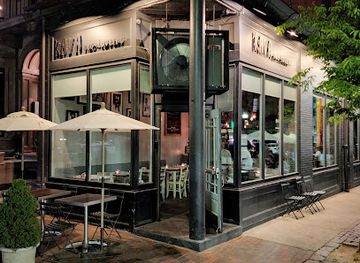
KAVA Neo-Taverna
Experience authentic Greek flavors in Boston at KAVA Neo-Taverna - where tradition meets modern culinary excellence.
2 min walk · 0.2 km from neighbourhood centre
-
Mediterranean
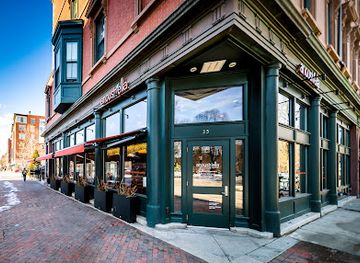
anoush'ella
Experience authentic Mediterranean flavors at Anoush'ella in Boston's South End – where every meal tells a story.
4 min walk · 0.3 km from neighbourhood centre
-
Cambodian
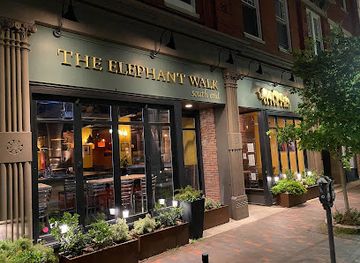
The Elephant Walk South End
Discover the exquisite fusion of Cambodian and French cuisine at The Elephant Walk South End in Boston's vibrant South End.
2 min walk · 0.1 km from neighbourhood centre
Best shops in South End
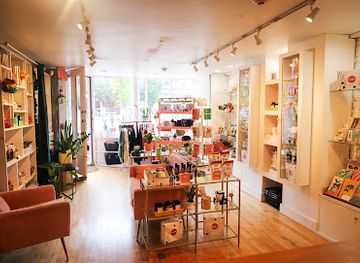
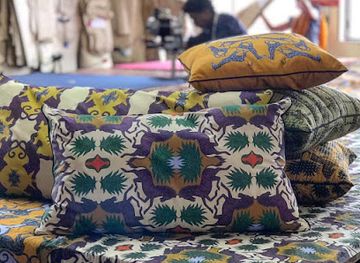
Shopping in South End is concentrated in independent businesses rather than a single conventional retail centre. Tremont Street and Shawmut Avenue offer cafés, galleries, homewares, fashion, specialist food shops and other small-scale retailers, while the SoWa district is known for galleries, artists' studios, design-led businesses and seasonal open-market stalls. The SoWa Open Market, when operating, combines local food, crafts, vintage goods and maker products in an outdoor setting, with dates and participation varying by season. Around the historic squares, shopfronts occupy former residential and commercial buildings, giving retail browsing an architectural context that differs from the larger chains of nearby Back Bay. Visitors should distinguish the market's scheduled days from the permanent galleries and businesses around it, as the district is much quieter outside events.
-
Gift shop
Gifted
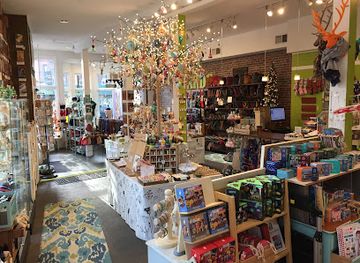
Discover unique gifts and local treasures at Gifted, Boston's charming gift shop specializing in baby products, fashion accessories, and more.
3 min walk · 0.3 km from neighbourhood centre
-
Gift shop
Bos. Shop South End
Explore Bos. Shop South End: A treasure trove of local artisan gifts in Boston's vibrant South End, supporting Black-owned businesses.
3 min walk · 0.3 km from neighbourhood centre
-
Clothing store
VIOLA LOVELY
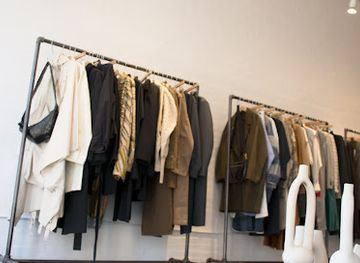
Discover chic fashion at Viola Lovely in Boston's South End, where style meets sophistication in a beautifully curated boutique.
2 min walk · 0.1 km from neighbourhood centre
-
Gift shop
PATCH NYC
Explore PATCH NYC: A treasure trove of unique gifts, home goods, and fashion accessories in Boston's vibrant South End.
3 min walk · 0.2 km from neighbourhood centre
South End essentials
Getting There
Getting Around
Safety
Emergency Situations
Do's and Don'ts
Local Tips

From Eve
Local phrases worth knowing
You don't need to get them perfect. A few words go a long way, and locals appreciate the effort.
Basics
| English | Local | Say it |
|---|---|---|
| Hello | Wassup | [wah-sup] |
| Goodbye | Later | [lay-tuh] |
| Yes | Yeah | [yeh] |
| No | Nah | [nah] |
| Please/You're welcome | Please/No problem | [pleez/no prob-lem] |
| Thank you | Thanks | [thanks] |
| Excuse me/Sorry | Pardon/Sorry | [par-dun/sor-ee] |
| How are you? | How you doin'? | [how yuh doo-in'] |
| Fine. And you? | Cool. You? | [cool. yuh?] |
| Do you speak English? | Ya speak English? | [ya speak ing-glish?] |
| I don't understand | I don't get it | [i don't get it] |
Eating & Drinking
| English | Local | Say it |
|---|---|---|
| I'd like to see the menu, please | Can I check the menu, please | [can ai chek the menu, please] |
| I don't eat meat | I don't do meat | [ai don't do meat] |
| Cheers! | Cheers! | [cheers!] |
| I would like to pay, please | I need to cash out, please | [ai need tuh cash out, please] |
Emergencies
| English | Local | Say it |
|---|---|---|
| Help! | Help! | [help!] |
| Go away! | Get lost! | [get lost!] |
| Call the Police! | Call the cops! | [call the cops!] |
| Call a doctor! | Call a doc! | [call a doc!] |
| I'm lost | I'm lost | [ai'm lost] |
| I'm ill | I'm sick | [ai'm sick] |
Shopping
| English | Local | Say it |
|---|---|---|
| I'd like to buy... | I wanna cop... | [ai wanna cop...] |
| I'm just looking | I'm just browsing | [ai'm just brows-ing] |
| How much is it? | How much? | [how much?] |
| That's too expensive | That's mad pricey | [that's mad prahy-see] |
| Can you lower the price? | Can you do a deal? | [can you do uh deal?] |
Time & Numbers
| English | Local | Say it |
|---|---|---|
| What time is it? | What's the time? | [what's the time?] |
| It's one o'clock | It's one | [it's one] |
| Half past (10) | Ten thirty | [ten thur-tee] |
| Morning | Mornin' | [mornin'] |
| Afternoon | Afternoon | [after-noon] |
| Evening | Evenin' | [evenin'] |
| Yesterday | Yestuhday | [yes-tuh-day] |
| Today | Today | [tuh-day] |
| Tomorrow | Tomorruh | [tom-or-uh] |
| 1 | One | [wun] |
| 2 | Two | [too] |
| 3 | Three | [three] |
| 4 | Four | [four] |
| 5 | Five | [five] |
| 6 | Six | [six] |
| 7 | Seven | [sev-en] |
| 8 | Eight | [ate] |
| 9 | Nine | [nine] |
| 10 | Ten | [ten] |
Transport & Directions
| English | Local | Say it |
|---|---|---|
| Where's a/the...? | Where's the...? | [where's the...?] |
| What's the address? | Where's the addy? | [where's the add-ee?] |
| Can you show me (on the map)? | Can you point it out? | [can you point it out?] |
| When's the next (bus)? | When's the next (bus)? | [when's the next (bus)?] |
| A ticket (to ....) | A ticket to... | [a ticket to...] |
History of South End
Land Reclaimed from the Tidal Flats
Much of modern South End was created through nineteenth-century land reclamation on tidal marshes south of the older Boston peninsula. From the 1830s, streets and residential plots were laid out over filled ground as Boston expanded beyond its historic core. The new district was planned with broad avenues and landscaped squares, an arrangement that still distinguishes South End from Boston's more irregular early streets. Early development was encouraged by the area's proximity to the commercial centre and by improved links along Washington Street, although the neighbourhood's marshy origins continued to influence drainage and construction. Its urban form was therefore shaped as much by engineering and speculative expansion as by gradual settlement.
The Victorian Residential District
During the mid-nineteenth century, South End became a substantial residential district for middle- and upper-middle-class households. Developers built continuous brick rowhouses around formal squares, using repeated façades while varying entrances, bay windows and decorative details. Union Park, Chester Square and the surrounding streets became particularly coherent examples of this planned Victorian environment. Churches, schools, shops and small businesses supplied local needs, while nearby Back Bay was developing as another major area of nineteenth-century expansion. The neighbourhood was never exclusively wealthy: rented rooms, service work and commercial premises brought a varied social life to the terraces, creating a denser and more mixed district than its formal architecture might suggest.
Migration and Changing Communities
By the late nineteenth and early twentieth centuries, South End's social composition had broadened considerably. Irish, Jewish, Italian, Black and other immigrant communities lived and worked in the district, alongside long-established residents. The neighbourhood contained boarding houses, small businesses, churches, social organisations and entertainment venues, with Washington Street serving as an important commercial spine. Black Bostonians established a particularly significant presence in and around the South End, contributing to local religious, civic and cultural life. Housing conditions varied sharply, and the large nineteenth-century buildings were increasingly divided into smaller units as wealthier residents moved to newer suburbs or other parts of the city.
Preservation and Urban Change
South End experienced disinvestment and population loss in the twentieth century, followed by organised preservation and reinvestment. Advocates opposed the large-scale clearance of historic housing and helped secure recognition for the South End Historic District in 1973, protecting much of its Victorian architectural character. The Boston Center for the Arts, established in the former Cyclorama complex in the 1970s, added a major cultural institution to the neighbourhood. Renovation brought many rowhouses and commercial buildings back into active use, but rising property values also displaced some lower-income residents and altered the area's social balance. Contemporary South End combines preserved nineteenth-century fabric with new housing, restaurants, galleries and creative businesses.
South End in Photos
Browse through our photo collection highlighting the charm and character of the destination.
Neighbourhoods near South End
The closest neighbourhoods to South End, if you have time for more than one stop.
-

-

-

-

-


Swipe for more neighbourhoods
Explore more

Explore more of Boston
Boston blends Revolutionary history, harbour walks, world-class museums, brownstone streets and lively neighbourhoods into a richly rewarding American city break.
Explore Boston