

Fairmount (Philadelphia) Travel Guide - Free
Explore Fairmount in Philadelphia with Evendo's free guide. Find the best shops, historic streets, restaurants, and gems on web or mobile.


Fairmount Philadelphia pairs the Philadelphia Museum of Art, Eastern State Penitentiary, leafy streets, local cafés and Schuylkill walks for culture-filled city breaks.
Museums, Mansions and Open Space
Fairmount occupies the broad, leafy area north-west of central Philadelphia, where residential streets rise towards the Philadelphia Museum of Art and descend towards the Schuylkill River. The name refers historically to Fair Mount, the prominent hill overlooking the river; today it describes a neighbourhood whose identity is closely tied to art, civic architecture, parks and everyday city life. Its eastern edge is marked by the imposing walls of Eastern State Penitentiary, while the western side opens towards Fairmount Park and the riverfront.Read more about Fairmount
Street Life and Architecture
Culture by the Schuylkill
Best attractions in Fairmount
Fairmount’s principal attractions form a compact cultural and outdoor circuit. The Philadelphia Museum of Art anchors the western end of the Benjamin Franklin Parkway, with extensive collections and broad views towards the city from its approach. Nearby, the Rodin Museum presents one of the largest collections of Auguste Rodin’s work outside France, while the Barnes Foundation lies close to the Parkway in the wider museum district. Eastern State Penitentiary offers a very different experience: visitors move through a vast, partially ruined nineteenth-century prison renowned for its radial plan and heavy stone walls. Beyond the institutions, the area’s appeal includes the museum grounds, the paths towards Lemon Hill, and connections to the Schuylkill River Trail. Boathouse Row is just across the river and is best described as a nearby sight rather than a landmark inside Fairmount itself.
-
Art museum
Philadelphia Museum of Art
Explore the Philadelphia Museum of Art, a cultural gem featuring a vast collection of art, stunning architecture, and vibrant community events.
9 min walk · 0.8 km from neighbourhood centre
-
City park
East Fairmount Park
Explore the lush landscapes and cultural treasures of East Fairmount Park, an urban oasis in Philadelphia that rejuvenates the soul.
6 min drive · 1.9 km from neighbourhood centre
-
Park
Fairmount Park
Discover the beauty and tranquility of Fairmount Park, Philadelphia's expansive urban oasis, offering recreation, history, and stunning landscapes.
7 min drive · 2.2 km from neighbourhood centre
-
History museum
Eastern State Penitentiary
Discover the eerie tales and architectural beauty of Eastern State Penitentiary, a historic landmark and museum in Philadelphia revealing America's prison history.
10 min walk · 0.8 km from neighbourhood centre


Best landmarks in Fairmount
Fairmount’s landmarks reflect Philadelphia’s water, prison, museum and park histories. The Philadelphia Museum of Art is the neighbourhood’s most recognisable structure, a monumental building occupying the former Fair Mount reservoir site at the Parkway’s western end. Eastern State Penitentiary, with its imposing perimeter walls and radial cellblock plan, is an unusually prominent historical building embedded in the residential city rather than isolated in a rural setting. The Rodin Museum contributes a smaller Beaux-Arts-style presence along the Parkway, while the Fairmount Water Works by the Schuylkill records the civic infrastructure that helped shape the area’s name and landscape. The Water Works, Boathouse Row and Lemon Hill are closely related to Fairmount’s river-and-park setting, although Boathouse Row stands across the river and the exact edges of the neighbourhood are informal.
-
Historical landmark
Fairmount Water Works
Explore Fairmount Water Works, a historical landmark in Philadelphia with interactive exhibits, stunning views, and family-friendly activities.
9 min walk · 0.8 km from neighbourhood centre
-
Historical place
Lemon Hill Mansion
Explore the historical beauty of Lemon Hill Mansion in Fairmount Park, Philadelphia, where nature and history come together in perfect harmony.
7 min walk · 0.6 km from neighbourhood centre
-
Historical place museum
Woodford Mansion
Explore Woodford Mansion, a beautifully preserved historical landmark in West Philadelphia, showcasing 18th-century architecture and captivating stories.
7 min drive · 2.4 km from neighbourhood centre
-
Sculpture
Joan of Arc Statue
Discover the Joan of Arc Statue in Philadelphia, a stunning sculpture honoring courage, surrounded by beautiful scenery along Kelly Drive.
8 min walk · 0.7 km from neighbourhood centre


Explore Fairmount on the map
A handpicked selection of must-see spots in Fairmount, mapped for you.
Best hotels in Fairmount
Best restaurants in Fairmount
Fairmount’s dining scene is concentrated most clearly along Fairmount Avenue and the surrounding residential blocks, where cafés, casual restaurants, bars and neighbourhood meeting places serve both local residents and museum visitors. The area is well suited to an informal meal before or after Eastern State Penitentiary or the art museum, with options ranging from contemporary American cooking and Italian-influenced plates to sandwiches, brunch-style menus and everyday café fare. Established local names have included Fare, A Mano, Zorba’s Tavern, Tela’s Market and Bar Hygge, though individual businesses and menus can change. The character is less about a single defining cuisine than about a walkable, mixed-use restaurant strip connected to a settled residential community. Visitors should distinguish Fairmount’s own dining cluster from the larger restaurant concentrations of nearby Spring Garden, Logan Square and Rittenhouse.
-
Greek
Zorba's Tavern
Savor authentic Greek dishes in a cozy atmosphere at Zorba's Tavern - A must-visit Mediterranean restaurant in Philadelphia.
10 min walk · 0.8 km from neighbourhood centre
-
American
Jack's Firehouse
Experience the vibrant flavors of American cuisine at Jack's Firehouse in Fairmount, Philadelphia - where history meets delicious dining.
11 min walk · 0.9 km from neighbourhood centre
-
Bar
Urban Saloon
Discover Urban Saloon in Fairmount - where delicious burgers meet an extensive craft beer selection in a lively atmosphere.
11 min walk · 0.9 km from neighbourhood centre
-
Bar
The Bishop's Collar
Experience the lively spirit of Fairmount at The Bishop's Collar – where craft beer meets delicious American cuisine in a warm atmosphere.
8 min walk · 0.6 km from neighbourhood centre


Best bars in Fairmount
Fairmount’s nightlife is neighbourhood-scaled rather than club-oriented, with pubs, beer bars, restaurants and relaxed gathering places centred on Fairmount Avenue. London Grill and Kite & Key are among the established names associated with the area, while The Bishop’s Collar lies near the river and museum approaches; venues and programming can change, so current details should be checked directly. Evenings generally focus on conversation, food, televised sport, beer and cocktails rather than large dance floors or late-night entertainment. The proximity of Eastern State Penitentiary can add seasonal evening activity around special events, but this should not be confused with a permanent club district. Residential streets begin quickly beyond the main commercial strip, making considerate departure behaviour important after dark.
-
Bar
Urban Saloon
Experience the best of Philadelphia's nightlife at Urban Saloon, a lively bar and grill with delicious burgers and live sports.
11 min walk · 0.9 km from neighbourhood centre
-
Irish pub
The Black Taxi
Experience the warmth of Irish hospitality at The Black Taxi, a must-visit pub in Philadelphia with authentic cuisine and a lively atmosphere.
6 min walk · 0.5 km from neighbourhood centre
-
Bar
Bar Hygge
Discover the cozy charm of Bar Hygge in Philadelphia, where craft beers and delicious food create the perfect local experience.
18 min walk · 1.4 km from neighbourhood centre
-
Bar
The Bishop's Collar
Discover a cozy bar in Fairmount, Philadelphia, offering delicious American cuisine and a vibrant selection of craft beers and cocktails.
8 min walk · 0.6 km from neighbourhood centre


Best nightclubs in Fairmount
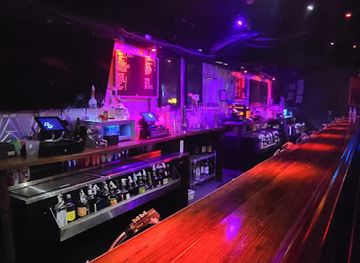
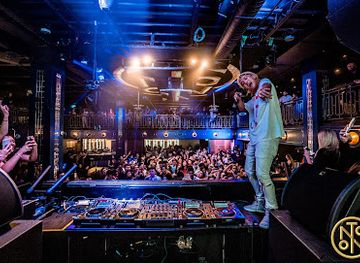
Fairmount’s nightlife is neighbourhood-scaled rather than club-oriented, with pubs, beer bars, restaurants and relaxed gathering places centred on Fairmount Avenue. London Grill and Kite & Key are among the established names associated with the area, while The Bishop’s Collar lies near the river and museum approaches; venues and programming can change, so current details should be checked directly. Evenings generally focus on conversation, food, televised sport, beer and cocktails rather than large dance floors or late-night entertainment. The proximity of Eastern State Penitentiary can add seasonal evening activity around special events, but this should not be confused with a permanent club district. Residential streets begin quickly beyond the main commercial strip, making considerate departure behaviour important after dark.
-
Night club
Concourse
Discover Concourse, Philadelphia's lively night club, where great music, dancing, and vibrant nights await.
7 min drive · 2.4 km from neighbourhood centre
-
Night club
NOTO Philadelphia
Discover the heartbeat of Philadelphia's nightlife at NOTO, where live music and dance unite in an unforgettable experience.
7 min drive · 2.5 km from neighbourhood centre
Best shops in Fairmount
Shopping in Fairmount is primarily local and practical, with independent food shops, cafés, small retailers and services concentrated around Fairmount Avenue rather than a large enclosed shopping centre. Tela’s Market is associated with the neighbourhood’s everyday food provision, while nearby businesses offer groceries, prepared food, gifts and small lifestyle purchases alongside the area’s restaurants. Visitors will find more specialised museum shops at institutions such as the Philadelphia Museum of Art, the Rodin Museum and the Barnes Foundation, where books, exhibition catalogues and design-led gifts reflect the local cultural landscape. Fairmount is not Philadelphia’s main destination for department stores, luxury retail or large markets; its appeal lies in combining a resident-oriented commercial strip with cultural shopping connected to the Parkway museums.
-
Gift shop
Ali's Wagon
Explore Ali's Wagon in Fairmount, Philadelphia, for unique gifts, delightful baskets, and charming home goods that embody the city's creative spirit.
13 min walk · 1.0 km from neighbourhood centre
-
Vintage clothing store
Retro Rewind Vintage & Thrift
Explore Retro Rewind Vintage & Thrift for unique and stylish vintage clothing in the heart of Philadelphia's Fairmount neighborhood.
3 min walk · 0.2 km from neighbourhood centre
-
Gift shop
Project HOMEspun Boutique
Explore Project HOMEspun Boutique in Philadelphia for unique gifts and clothing that support a noble cause.
5 min drive · 1.6 km from neighbourhood centre


Fairmount essentials
Getting There
Getting Around
Safety
Emergency Situations
Do's and Don'ts
Local Tips

From Eve
Local phrases worth knowing
You don't need to get them perfect. A few words go a long way, and locals appreciate the effort.
Basics
| English | Local | Say it |
|---|---|---|
| Hello | Hey | [hay] |
| Goodbye | See ya | [see yuh] |
| Yes | Yup | [yuhp] |
| No | Nah | [nah] |
| Please/You're welcome | Please/No problem | [pleez/no problum] |
| Thank you | Thanks | [thaynks] |
| Excuse me/Sorry | Sorry | [sor-ee] |
| How are you? | How you doin'? | [hao yoo doh-in?] |
| Fine. And you? | I'm good. You? | [ahm good. yoo?] |
| Do you speak English? | You speak English? | [yoo speek ing-glish?] |
| I don't understand | I don't get it | [ah dohn't get it] |
Eating & Drinking
| English | Local | Say it |
|---|---|---|
| I'd like to see the menu, please | Can I see the menu? | [kan eye see thee men-yoo?] |
| I don't eat meat | I don't eat meat | [ah dohn't eat meet] |
| Cheers! | Cheers! | [cheers] |
| I would like to pay, please | Can I pay, please | [kan eye pay, pleez] |
Emergencies
| English | Local | Say it |
|---|---|---|
| Help! | Help! | [help!] |
| Go away! | Leave! | [leev!] |
| Call the Police! | Call the cops! | [kawl thee cops!] |
| Call a doctor! | Get a doc! | [get ah dock!] |
| I'm lost | I'm lost | [ahm lost] |
| I'm ill | I'm sick | [ahm sik] |
Shopping
| English | Local | Say it |
|---|---|---|
| I'd like to buy... | I wanna buy... | [ah wah-na buy...] |
| I'm just looking | Just lookin' | [just look-in'] |
| How much is it? | How much? | [hao much?] |
| That's too expensive | Too pricey | [too prahy-see] |
| Can you lower the price? | Can you do better? | [kan yoo doh bet-ter?] |
Time & Numbers
| English | Local | Say it |
|---|---|---|
| What time is it? | What time is it? | [wut tyme iz it?] |
| It's one o'clock | It's one | [its wun] |
| Half past (10) | Half past ten | [haff past ten] |
| Morning | Morning | [morn-ing] |
| Afternoon | Afternoon | [aft-er-noon] |
| Evening | Evening | [ee-ven-ing] |
| Yesterday | Yesterday | [yess-ter-day] |
| Today | Today | [toh-day] |
| Tomorrow | Tomorrow | [toh-mor-row] |
| 1 | One | [wun] |
| 2 | Two | [too] |
| 3 | Three | [three] |
| 4 | Four | [for] |
| 5 | Five | [fahyv] |
| 6 | Six | [siks] |
| 7 | Seven | [sev-uhn] |
| 8 | Eight | [ayt] |
| 9 | Nine | [nine] |
| 10 | Ten | [ten] |
Transport & Directions
| English | Local | Say it |
|---|---|---|
| Where's a/the...? | Where's the...? | [wheres thee...?] |
| What's the address? | What's the address? | [whuts thee uh-dress?] |
| Can you show me (on the map)? | Can you show me on the map? | [kan yoo show mee on thee map?] |
| When's the next (bus)? | When's the next bus? | [whens thee nekst bus?] |
| A ticket (to ....) | A ticket to ... | [ah tick-et to ...] |
History of Fairmount
Fair Mount and the Schuylkill Ridge
The neighbourhood takes its name from Fair Mount, a hill above the Schuylkill River that became an important geographical reference in Philadelphia’s early development. Before the modern streetscape formed, the area consisted largely of elevated ground, country estates and open land north-west of the settled city. Its position above the river gave it practical as well as scenic importance: the Schuylkill was central to Philadelphia’s water supply, transport and industrial growth, while the surrounding slopes offered space beyond the dense colonial core. The name survived as the area gradually changed from rural outskirts into an urban district.
Waterworks and Fairmount Park
Philadelphia’s first municipal waterworks began operating at Fair Mount in the early nineteenth century, using the Schuylkill to supply the growing city. The complex expanded with pumping and reservoir infrastructure, and its landscaped grounds became a popular public pleasure area. In 1855, the city created Fairmount Park, protecting large stretches of land along the Schuylkill from intensive development. The park’s creation helped preserve the open, green setting associated with the neighbourhood and established the river corridor as a recreational landscape. The surviving Fairmount Water Works, located by the river below the art museum, remains a nearby reminder of this civic history.
Urban Growth and Eastern State
As Philadelphia expanded north-west during the nineteenth century, Fairmount acquired streets of rowhouses and larger residences alongside institutions and industrial activity. Eastern State Penitentiary opened in 1829 on what was then the edge of the city, introducing a radical radial-plan prison intended to encourage solitary reflection. Its massive stone walls later stood amid a much denser neighbourhood as development spread around them. The area’s housing, churches, commercial premises and public institutions reflected Philadelphia’s wider industrial-era growth, while the river and park continued to distinguish Fairmount from the more tightly built districts south and east.
Museums on the Parkway and the River
The modern cultural identity of Fairmount developed through the creation of major civic and artistic institutions around the Benjamin Franklin Parkway and the Schuylkill landscape. The Philadelphia Museum of Art occupies the former reservoir site at the western end of the Parkway; its main building opened in 1928, with later additions and surrounding institutions strengthening the area’s museum quarter. The nearby Rodin Museum opened in 1929, and the Barnes Foundation moved to the Parkway in the twenty-first century. These developments brought international cultural attention while leaving Fairmount a mixed residential neighbourhood rather than converting it entirely into a museum district.
Fairmount in Photos
Browse through our photo collection highlighting the charm and character of the destination.
Neighbourhoods near Fairmount
The closest neighbourhoods to Fairmount, if you have time for more than one stop.
-
-

-
-

-


Swipe for more neighbourhoods
Explore more

Explore more of Philadelphia
Philadelphia combines Revolutionary history, world-class museums, cheesesteaks and lively neighbourhoods with riverfront trails and celebrated American landmarks.
Explore Philadelphia