The Royal Institution of Great Britain
Explore centuries of groundbreaking science and iconic lectures at London’s historic Royal Institution, home to Faraday’s legacy and the famous Christmas Lectures.
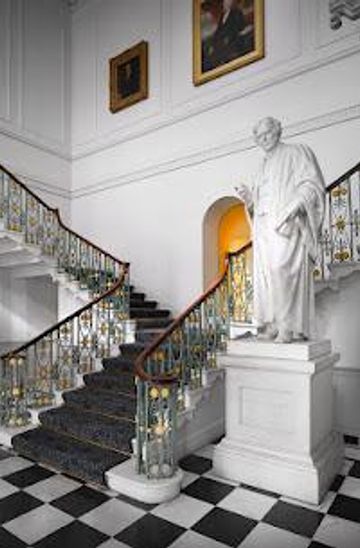
Founded in 1799, the Royal Institution (Ri) is a historic scientific organisation located at 21 Albemarle Street, London. It has been a centre for scientific education, research, and public engagement for over two centuries, hosting pioneering scientists like Michael Faraday and Humphry Davy. The Grade I listed building houses the iconic lecture theatre, laboratories, and the Faraday Museum, renowned for its Christmas Lectures and interactive exhibits.
A brief summary to The Royal Institution
- 21 Albemarle St, London, W1S 4BS, GB
- Click to display
- Click to display
- Duration: 1 to 2 hours
- Mid ranged
-
 Indoor
- Mobile reception: 5 out of 5
- Monday 9 am-5 pm
- Tuesday 9 am-5 pm
- Wednesday 9 am-5 pm
- Thursday 9 am-5 pm
- Friday 9 am-5 pm
Local tips
- Visit the Faraday Museum to see original scientific instruments and interactive exhibits that bring history to life.
- Attend one of the famous Christmas Lectures or public talks for an engaging science experience.
- Book a guided heritage tour to access the historic lecture theatre and learn about the Institution’s scientific milestones.
- Check opening hours carefully; the Institution is open Monday to Friday from 9am to 5pm and closed on weekends and public holidays.

Getting There
-
Tube
The nearest station is Green Park, about a 5-minute walk away, served by the Jubilee, Victoria, and Piccadilly lines. Piccadilly Circus and Oxford Circus stations are also within a 10-minute walk, offering additional access via Piccadilly, Bakerloo, Central, and Victoria lines.
-
Bus
Several bus routes serve the Mayfair area with stops near Albemarle Street. Typical journey times from central London range from 15 to 30 minutes depending on traffic. Check local schedules for frequency and route details.
-
Walking
If staying nearby, walking to the Royal Institution offers a pleasant urban stroll through Mayfair’s elegant streets. The terrain is flat and accessible, suitable for wheelchair users, though note that the main entrance is currently accessible via Grafton Street due to ongoing works.
For the on-the-go comforts that matter to you
-
 Restrooms
-
 Drink Options
-
 Food Options
-
 Seating Areas
-
 Information Boards
-
 Visitor Center
The Royal Institution location weather suitability
-
 Any Weather
-
 Mild Temperatures
-
 Rain / Wet Weather
Discover more about The Royal Institution
Founding Vision and Early History
The Royal Institution of Great Britain was established in 1799 by leading scientists and philanthropists, including Henry Cavendish and Sir Benjamin Thompson, Count Rumford. Its mission was to diffuse scientific knowledge and facilitate the introduction of useful mechanical inventions through public lectures and demonstrations. The founding meeting took place at the residence of Joseph Banks, then President of the Royal Society. Shortly after, the Institution purchased the Georgian townhouse at 21 Albemarle Street in Mayfair, which remains its home to this day. The Royal Charter was granted in 1800, marking its formal recognition and commitment to science education.Architectural Evolution and Facilities
Originally a simple Georgian terraced house built in 1756, the building underwent significant alterations to accommodate laboratories, libraries, meeting rooms, and a steeply raked lecture theatre designed by Thomas Webster in 1800. This theatre remains a defining feature, known for its excellent sightlines and as the venue for the famous Christmas Lectures. A grand façade was added in 1837, lending the building its distinguished appearance. The adjoining 20 Albemarle Street was later converted into the Davy-Faraday Research Laboratory, funded by Ludwig Mond in 1896, further expanding the Institution's scientific capabilities.Scientific Legacy and Contributions
The Royal Institution has been home to many groundbreaking discoveries and celebrated scientists. Humphry Davy, who joined in 1801, invented the miner’s safety lamp and isolated several chemical elements. Michael Faraday, the first Fullerian Professor of Chemistry, conducted pioneering work in electromagnetism and electrochemistry here. The Institution has hosted continuous scientific research and public engagement, including the establishment of chemical lectures for medical students in 1816 and the initiation of the Christmas Lectures in 1825, which continue to inspire audiences today.Public Engagement and Educational Programs
The Royal Institution remains dedicated to making science accessible to the public. Its Faraday Museum offers interactive exhibits and preserves Faraday's original laboratory. Regular tours introduce visitors to the building’s rich history and scientific heritage. The Institution also runs lectures, courses, and special events, fostering a vibrant community of science enthusiasts. The Christmas Lectures, initiated in the 19th century, are a highlight, combining education and entertainment to engage audiences of all ages.Modern Role and Accessibility
Today, the Royal Institution operates as an independent charity, continuing its mission to inspire deeper thinking about science. The building is wheelchair accessible, with lifts and adapted entrances. It is located in a prestigious area of London, close to Green Park and Piccadilly Circus stations, making it easily reachable by public transport. The Institution balances its historic character with modern scientific outreach, maintaining its status as a unique cultural and educational landmark.Notable Features and Visitor Experience
Visitors can explore the Grade I listed building’s historic theatre, laboratories, and the Faraday Museum, which houses scientific instruments and artifacts. The atmosphere blends historic grandeur with the excitement of discovery, offering a sensory experience of science’s evolution. The Institution’s location on Albemarle Street, London’s first one-way street, adds to its distinctive urban charm. Whether attending a lecture or exploring exhibits, visitors engage with a legacy that has shaped modern science and public understanding.Explore the best of what The Royal Institution has to offer















More about Windsor
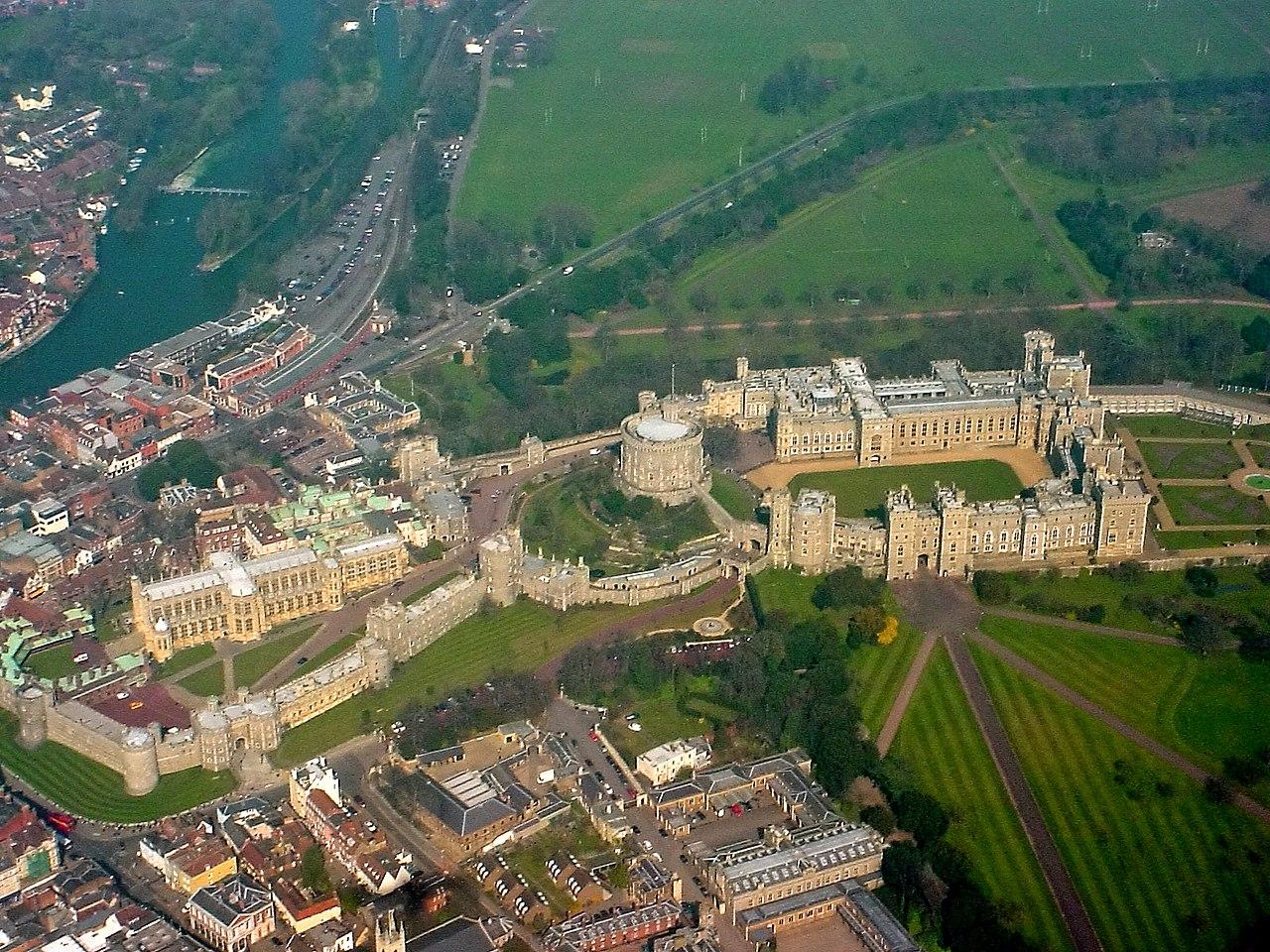
Discover Windsor, a historic town in Berkshire, England, known for its royal heritage, stunning Windsor Castle, scenic parks, vibrant town center, and family-friendly attractions.
Tell me more about Windsor
Discover Jermyn Street, London’s iconic destination for timeless menswear, bespoke tailoring, and refined British craftsmanship in a historic setting.
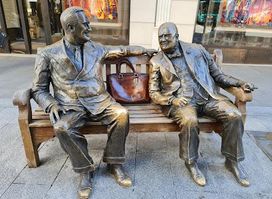
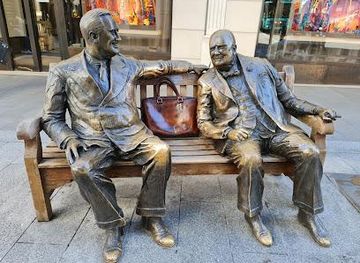
An intimate bronze sculpture of Churchill and Roosevelt sharing a bench, symbolizing 50 years of peace and the enduring UK-US alliance on London’s New Bond Street.
Want to improve this location?
Activate this location now and let Evendo enhance its appearance, information, and visibility for millions of travellers.