

Devil's Lake State Park Travel Guide - Free Web & App
Your ultimate guide to Devil's Lake State Park. Discover top landmarks, proposed trips, and local tips. Free on the web or via the Evendo companion app.


Devil's Lake State Park in Wisconsin pairs quartzite bluffs, clear water and glacial scenery with hiking, camping, paddling and year-round outdoor adventure.
A Landscape Shaped by Ice and Stone
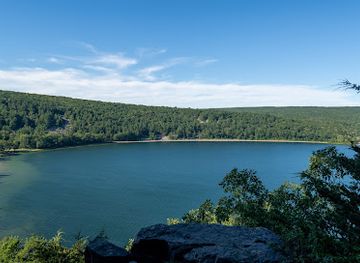
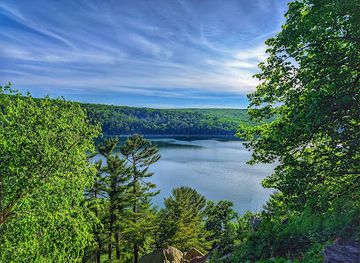
Devil's Lake State Park lies in south-central Wisconsin, close to Baraboo and within the wider Baraboo Range. Its defining feature is a 360-acre lake enclosed on three sides by steep quartzite bluffs, whose exposed rock faces and forested slopes rise dramatically above the water. The quartzite is part of an exceptionally old Baraboo Range landscape, while the lake's present form was shaped by glacial deposits during the Ice Age. The result is a compact but varied park of woodland, shoreline, talus slopes, wetlands and elevated viewpoints across more than 9,000 acres.Read more about Devil's Lake State Park
Trails, Water and Wildlife
A Park with a Strong Regional Identity
When is the best time to visit Devil's Lake State Park?
Best: May–June, September · 22–26°C| Month | High (°C) | Rainfall (mm) |
|---|---|---|
| January | -2 | 32 |
| February | 0 | 28 |
| March | 6 | 42 |
| April | 16 | 70 |
| May (best) | 22 | 85 |
| June (best) | 26 | 94 |
| July | 29 | 102 |
| August | 28 | 91 |
| September (best) | 23 | 76 |
| October | 16 | 61 |
| November | 7 | 46 |
| December | 1 | 34 |
Getting to and around Devil's Lake State Park
How to get there
Transportation
Best attractions in Devil's Lake State Park
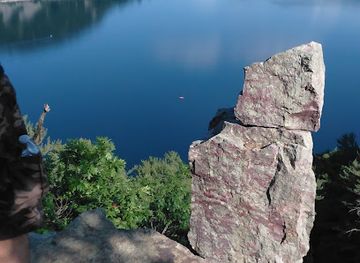
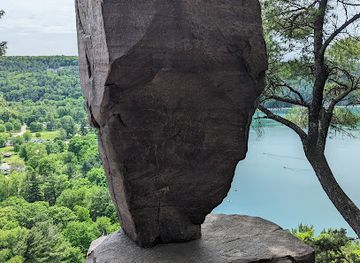
Devil's Lake is the park's focal point, with beaches, wooded shoreline, picnic areas and opportunities for swimming, paddling and fishing where conditions and regulations permit. The East Bluff and West Bluff trails provide elevated views over the water and the Baraboo Range, while rock formations such as Devil's Doorway and Balanced Rock give the hiking network its distinctive character. The Ice Age National Scenic Trail passes through the park, linking its glacial landscape with a wider Wisconsin route. Lower woodland paths, wetlands and quieter shore sections offer a slower alternative to the main climbs, and the park's campgrounds make it possible to experience the landscape beyond a short visit. Nearby Baraboo adds museums, shops and restaurants, while Wisconsin Dells is a separate regional visitor centre rather than part of the state park itself.
-
History museum
Circus World | A Wisconsin Historic Site
Experience the enchanting world of circus history at Circus World, Baraboo's premier museum and tourist attraction celebrating the magic of the circus.
-
Zoo
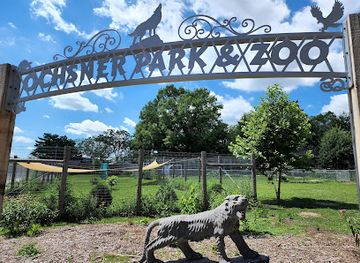
Ochsner Park Zoo
Discover Ochsner Park Zoo in Baraboo, WI - a charming zoo with diverse wildlife and beautiful park surroundings, perfect for family fun and learning.
-
Nature preserve
East Bluff State Natural Area
Explore the breathtaking views and diverse wildlife at East Bluff State Natural Area, a tranquil escape in the heart of Wisconsin.
-
Hiking area
Ice Age Trail - Devil's Lake Segment
Explore the breathtaking landscapes of the Ice Age Trail - Devil's Lake Segment, a must-visit hiking destination for nature lovers in Wisconsin.
Best landmarks in Devil's Lake State Park
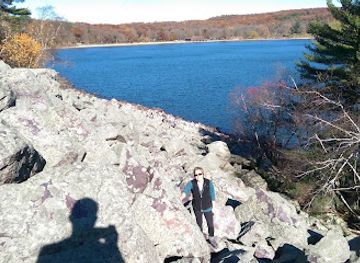
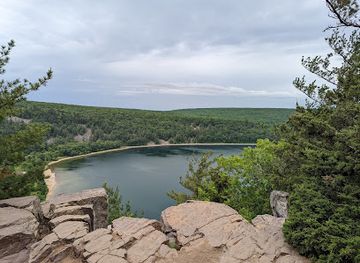
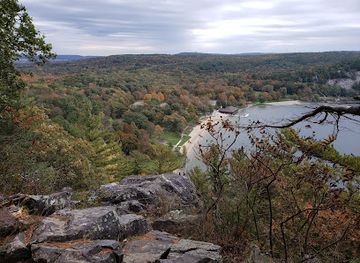
The most important landmarks at Devil's Lake are natural: the 360-acre lake, the East and West Bluffs, and the exposed Baraboo quartzite that frames the water. Devil's Doorway is a striking rock formation on the East Bluff, while Balanced Rock is a smaller but well-known geological feature reached by a rocky trail. The cliffs and ridges are significant not only as viewpoints but as surviving expressions of the ancient Baraboo Range, later reshaped by glacial activity. The Ice Age National Scenic Trail adds a national-scale landscape connection, following evidence of Wisconsin's glacial past through the park. There are no large historic urban monuments within the park; its identity rests on the relationship between old bedrock, glacial landforms, woodland and water.
-
History museum
Circus World | A Wisconsin Historic Site
Explore Circus World in Baraboo, Wisconsin, where the vibrant history of the circus comes alive through captivating performances and engaging exhibits.
-
Lake
Devils Lake
Discover the breathtaking landscapes and outdoor adventures at Devils Lake, Wisconsin's stunning natural retreat for nature enthusiasts and tourists alike.
-
Nature preserve
Pewit's Nest
Explore the serene beauty of Pewit's Nest, a nature preserve in Baraboo, Wisconsin, where stunning landscapes and rich biodiversity await.
-
Snack bar
Devil's Lake State Park - South Shore Concessions
Discover delightful snacks and refreshments at South Shore Concessions in Devil's Lake State Park, surrounded by breathtaking natural beauty.
Explore Devil's Lake State Park on the map
Plan your trip on one map. See where the top attractions, landmarks, restaurants and hotels are, and book hotels and experiences in a few clicks.
Best hotels in Devil's Lake State Park
Best restaurants in Devil's Lake State Park
Devil's Lake State Park has limited dining infrastructure, so most visitors bring provisions or eat in nearby Baraboo, which has the area's broadest choice of cafés, restaurants, taverns and takeaway food. Wisconsin Dells, farther west, provides a larger and more tourism-oriented selection. The wider Wisconsin setting is associated with dairy products, farm produce, burgers, fish fries, bakery items and tavern cooking, although individual menus vary and should not be assumed to represent a fixed local cuisine. Picnic areas inside the park are well suited to packed lunches after a morning on the bluffs, and visitors staying in campsites often plan meals around nearby groceries or self-catering facilities. Farm shops and seasonal producers may be found in the surrounding countryside, but opening patterns and availability can change.
-
American
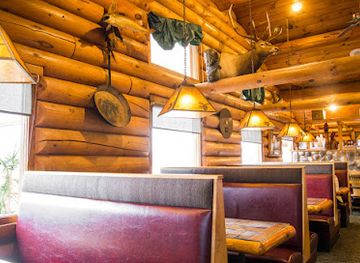
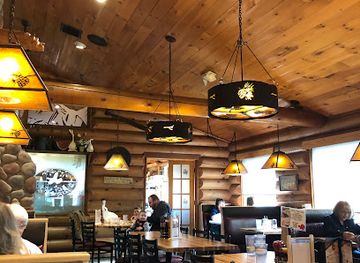
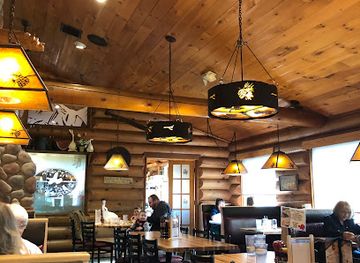
Log Cabin Family Restaurant
Experience comforting American cuisine at Log Cabin Family Restaurant in Baraboo - where family meals are cherished and flavors are unforgettable.
-
Mexican
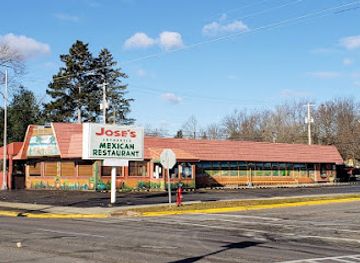
Jose's Authentic Mexican Restaurant
Experience authentic Mexican cuisine at Jose's Authentic Mexican Restaurant in Baraboo - where every meal is a fiesta!
-
Hamburger
Baraboo Burger Company
Experience mouthwatering burgers in Baraboo at Baraboo Burger Company - where taste meets quality in every bite.
-
Breakfast
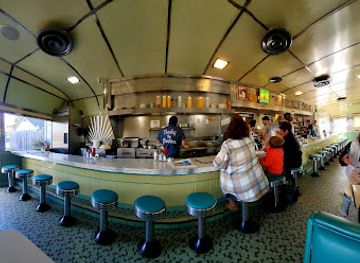
Broadway Diner
Discover Broadway Diner in Baraboo: where delicious breakfasts meet warm hospitality in a cozy setting.
Best bars in Devil's Lake State Park
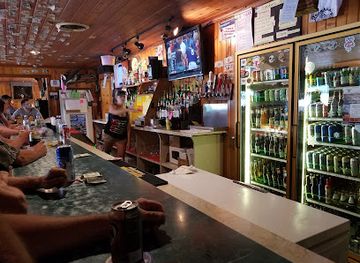
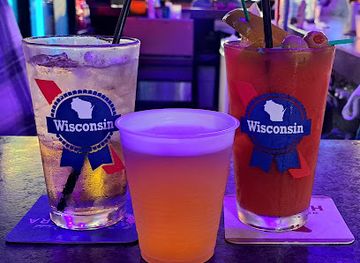
Evening entertainment at Devil's Lake is primarily outdoors or centred on quiet campground and picnic-area time rather than nightlife. Campers may enjoy stargazing, conversation and the changing light over the bluffs, subject to park rules and seasonal conditions, while Baraboo provides the nearest established choice of traditional taverns, bars and casual evening venues. Wisconsin Dells has a more developed entertainment scene, but it is a separate resort area rather than part of Devil's Lake State Park. Visitors seeking live performances or a broader range of late-evening options should check current local listings in those gateway towns, as rural venues and seasonal events do not operate on a uniform schedule.
-
Mexican
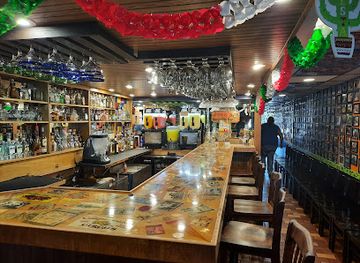
Jose's Authentic Mexican Restaurant
Experience the vibrant flavors of Mexico at Jose's Authentic Mexican Restaurant in Baraboo, WI – a perfect spot for families and food lovers.
-
Bar
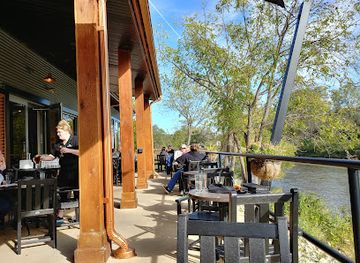
Baraboo Burger Company
Experience the best of American cuisine at Baraboo Burger Company with gourmet burgers, local brews, and a vibrant atmosphere in Wisconsin.
-
Distillery
Driftless Glen Distillery
Discover the art of craft distilling at Driftless Glen Distillery, where artisanal spirits meet local flavors in a picturesque Wisconsin setting.
-
Bar
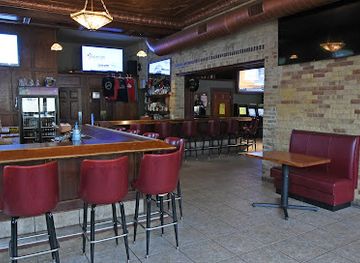
Gem City Saloon & Eatery
Experience the vibrant culture of Baraboo at Gem City Saloon & Eatery, where delicious bar food meets a welcoming atmosphere.
Best nightclubs in Devil's Lake State Park
Evening entertainment at Devil's Lake is primarily outdoors or centred on quiet campground and picnic-area time rather than nightlife. Campers may enjoy stargazing, conversation and the changing light over the bluffs, subject to park rules and seasonal conditions, while Baraboo provides the nearest established choice of traditional taverns, bars and casual evening venues. Wisconsin Dells has a more developed entertainment scene, but it is a separate resort area rather than part of Devil's Lake State Park. Visitors seeking live performances or a broader range of late-evening options should check current local listings in those gateway towns, as rural venues and seasonal events do not operate on a uniform schedule.
-
Lounge
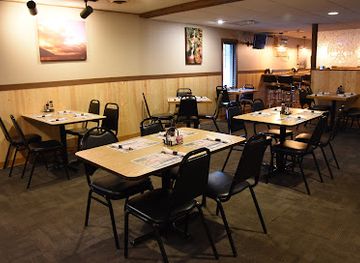
Quindt's Towne Lounge Restaurant & Bar
Discover the vibrant atmosphere and delicious cuisine at Quindt's Towne Lounge in Baraboo, where food, fun, and friendship come together.
-
Bar
Frankie's
Discover Frankie's, a vibrant bar in Baraboo offering a warm atmosphere, diverse drinks, and friendly service, perfect for tourists and locals alike.
-
Bar
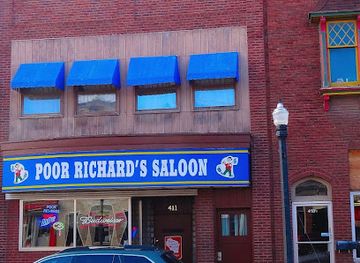
Poor Richard's Bar
Discover the vibrant atmosphere and affordable drinks of Poor Richard's Bar, a local favorite in Baraboo, Wisconsin, perfect for unwinding after a day of exploration.
-
Bar
Bumps
Discover Bumps, a lively bar in Baraboo offering great drinks, a welcoming atmosphere, and the chance to meet locals and fellow travelers.
Best shops in Devil's Lake State Park
Shopping within Devil's Lake State Park is limited and focused on practical visitor needs rather than a substantial retail scene. Baraboo is the principal place to buy groceries, outdoor supplies, camping essentials and locally made food, with additional retail choice in Wisconsin Dells. Visitors may find Wisconsin-produced dairy goods, maple products, craft beverages, pottery, artwork and other regional products in shops or seasonal outlets around the wider Baraboo area, though exact availability changes. The park is better suited to carrying provisions and equipment in than to browsing a shopping district. Independent businesses in Baraboo can also provide books, gifts and locally themed items connected with the area's natural and cultural heritage.
-
State park
Devil's Lake State Park
Discover the breathtaking cliffs and serene waters of Devil's Lake State Park, a must-visit destination for outdoor enthusiasts in Wisconsin.
-
Department store
Walmart Supercenter
Discover the convenience of Walmart Supercenter in Baraboo: your all-in-one destination for groceries, clothing, electronics, and more.
-
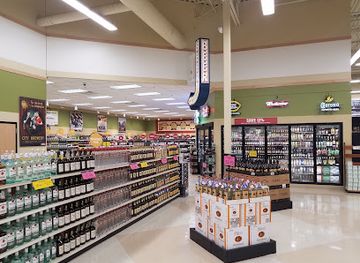
Grocery store
Festival Foods
Discover the flavors of Wisconsin at Festival Foods, Baraboo's premier grocery store, featuring fresh produce, local specialties, and gourmet delights.
-
Grocery store
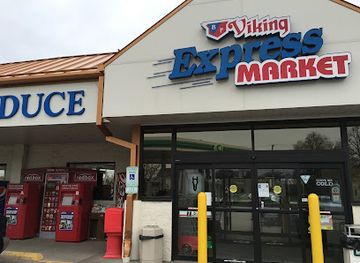
Pierce's Express Market
Discover local flavors and essentials at Pierce's Express Market in Baraboo, your go-to grocery store for fresh produce and Wisconsin specialties.

Get your free copy of our complete guide to Devil's Lake State Park, delivered straight to you.
Everything on this page, from attractions and restaurants to essentials and local phrases, in one PDF you can read offline, print or share.
Already have an account? Sign in
Your Devil's Lake State Park guide is ready.
We'll send it to · Not you? Sign out

Getting your guide ready…
We are putting together a fresh copy of the Devil's Lake State Park guide. This can take up to a minute.
This can take a few moments. If your browser asks, choose Allow so the download can start. You'll find the guide in your Downloads folder.
Nothing happened? Download it again
Sorry, the guide is taking longer than usual. Please try again in a minute, or get it by email instead.
Devil's Lake State Park essentials
Currency and Payment
Safety
Emergency Situations
Do's and Don'ts
Local Tips
From Eve
Local phrases worth knowing
You don't need to get them perfect. A few words go a long way, and locals appreciate the effort.
Basics
| English | Local | Say it |
|---|---|---|
| Hello | Howdy | [haw-dee] |
| Goodbye | See ya | [see yah] |
| Yes | Yah | [yah] |
| No | Nah | [nah] |
| Please/You're welcome | Please and thank ya | [pleez and thank yah] |
| Thank you | Much obliged | [muhch uh-blah-jed] |
| Excuse me/Sorry | Pardon me | [par-dun me] |
| How are you? | Howdy | [haw-dee] |
| Fine. And you? | Doin' alright. How 'bout you? | [doin' alright. How 'bout yah] |
| Do you speak English? | Ya speak English? | [yah speak ing-glish] |
| I don't understand | I ain't catchin' on | [I ain't ketch-in' on] |
Eating & Drinking
| English | Local | Say it |
|---|---|---|
| I'd like to see the menu, please | I reckon I'll take a gander at the grub, if ya don't mind | [I reckon I'll take uh gan-der at the grub, if yah don't mind] |
| I don't eat meat | I ain't no carnivore | [I ain't no car-ni-vore] |
| Cheers! | Bottoms up! | [Bottoms up] |
| I would like to pay, please | I reckon it's time to settle up | [I reckon it's time to set-tul up] |
Emergencies
| English | Local | Say it |
|---|---|---|
| Help! | SOS! | [S-O-S!] |
| Go away! | Scram! | [scram!] |
| Call the Police! | Get the coppers! | [Get the cop-pers!] |
| Call a doctor! | Fetch a sawbones! | [Fetch uh saw-bones!] |
| I'm lost | I'm turned around | [I'm turned around] |
| I'm ill | I'm feelin' under the weather | [I'm feelin' under the weath-er] |
Shopping
| English | Local | Say it |
|---|---|---|
| I'd like to buy... | I reckon I'll take... | [I reckon I'll take...] |
| I'm just looking | I'm just browsin' | [I'm just brow-sin'] |
| How much is it? | What's the damage? | [What's the dam-age?] |
| That's too expensive | That's a bit steep | [That's uh bit steep] |
| Can you lower the price? | Can ya do me a solid and knock the price down? | [Can yah do me uh sol-id and knock the price down?] |
Time & Numbers
| English | Local | Say it |
|---|---|---|
| What time is it? | What's the hootenanny? | [What's the hoot-en-an-ny?] |
| It's one o'clock | It's high noon | [It's high noon] |
| Half past (10) | 10:30 | [ten-thirty] |
| Morning | Mornin' | [Morn-in'] |
| Afternoon | Afternoon | [Afternoon] |
| Evening | Evenin' | [Even-in'] |
| Yesterday | Yest'day | [Yest-day] |
| Today | Today | [Today] |
| Tomorrow | Tomorrow | [Tomorrow] |
| 1 | One | [One] |
| 2 | Two | [Two] |
| 3 | Three | [Three] |
| 4 | Four | [Four] |
| 5 | Five | [Five] |
| 6 | Six | [Six] |
| 7 | Seven | [Seven] |
| 8 | Eight | [Eight] |
| 9 | Nine | [Nine] |
| 10 | Ten | [Ten] |
Transport & Directions
| English | Local | Say it |
|---|---|---|
| Where's a/the...? | Where's the... | [Where's the...] |
| What's the address? | Where's it at? | [Where's it at?] |
| Can you show me (on the map)? | Can ya point it out (on the map)? | [Can ya point it out (on the map)?] |
| When's the next (bus)? | When's the next one (bus)? | [When's the next one (bus)?] |
| A ticket (to ....) | A ticket (to ....) | [A ticket (to ....)] |
History of Devil's Lake State Park
Ancient Baraboo Quartzite
The bedrock around Devil's Lake belongs to the Baraboo Range, an ancient geological formation created more than a billion years ago. Quartzite, transformed from sandstone by heat and pressure, now appears in the park's prominent bluffs and exposed rock faces. This durable stone has resisted erosion more effectively than surrounding materials, helping create the distinctive ridges that define the landscape. The area's geological importance is central to understanding both the lake's setting and the broader identity of the Baraboo Hills.
Glacial Formation of the Lake
During the last Ice Age, glaciers altered the Baraboo landscape and left deposits that helped block the valleys at either end of the present lake. Devil's Lake is therefore a glacially formed body of water rather than a conventional river valley lake. As the ice retreated, it left behind the combination of water, rocky elevations and surrounding wetlands that visitors see today. The park remains part of the wider Ice Age landscape recognised by the Ice Age National Scenic Trail.
Ho-Chunk Connections
The Baraboo region has longstanding connections with the Ho-Chunk people, whose homeland historically extended across parts of present-day Wisconsin. Indigenous knowledge, travel and use of the wider landscape predate the creation of the state park and remain an essential part of the area's human history. The name Devil's Lake reflects later English-language interpretation rather than the full cultural meaning of the place. Visitors should understand the park as a landscape with Indigenous history, not simply as a recreational site established in the modern era.
From Resort Landscape to State Park
Devil's Lake became increasingly known to non-Indigenous visitors during the nineteenth century as transport connections and tourism developed around the Baraboo area. Wisconsin established Devil's Lake State Park in 1911, protecting the lake, bluffs and surrounding woodland while formalising public recreation. Later improvements added roads, campgrounds, picnic facilities and managed trails. Conservation work has since balanced heavy recreational use with protection of cliffs, forests, shoreline habitats and the geological character that continues to attract visitors.
Devil's Lake State Park in Photos
Browse through our photo collection highlighting the charm and character of the destination.
Neighbouring destination travel guides
The closest destinations to Devil's Lake State Park, if you have time for more than one.
-

-

-

-

-


Swipe for more destinations
Explore more

Explore more of Baraboo Range
Explore the Baraboo Range for quartzite bluffs, Devil’s Lake trails, circus history, wildlife conservation and the river country of south-central Wisconsin.
Explore Baraboo Range
Explore more of Wisconsin
Discover Wisconsin: A Midwestern gem offering stunning natural landscapes, rich cultural experiences, and a taste of America's finest dairy products.
Explore Wisconsin