

Union Square (San Francisco) Travel Guide - Free
Explore Union Square in San Francisco with Evendo's free guide. Find the best shops, historic streets, restaurants, and gems on web or mobile.


Union Square San Francisco brings together grand hotels, landmark shopping, cable cars, Maiden Lane, galleries and downtown culture in a historic urban plaza.
A Plaza at the City’s Commercial Core
Union Square occupies a compact, highly urban stretch of central San Francisco, centred on its namesake plaza and extending through the surrounding blocks of Powell, Geary, Post, Stockton and Grant streets. Its setting is defined by department stores, historic hotels, theatres, restaurants, galleries and the cable-car lines that climb Nob Hill and continue towards Fisherman’s Wharf. The square itself, with its lawns, palms, monument and broad paved edges, functions as both a formal civic space and a useful orientation point in the city centre.Read more about Union Square
Architecture, Shopping and Street Life
A Downtown Base
Best attractions in Union Square
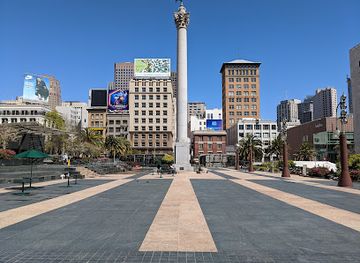
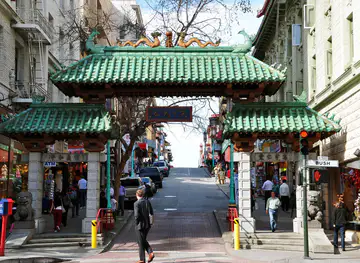
Union Square is centred on its broad namesake plaza, where lawns, paved terraces, palms and the Dewey Monument create an open civic room amid dense commercial streets. The square is a useful place to watch cable cars arrive and depart nearby, although the Powell Street turnaround is technically just south of the plaza. Maiden Lane, a short pedestrian street east of Union Square, provides a more intimate architectural and shopping walk, with boutiques and cafés occupying carefully maintained façades. The surrounding blocks offer grand department-store interiors, historic hotels, galleries and the Theatre District’s performance venues close to the western edge. Walking north leads towards the distinctive streets and shops of Chinatown, while Grace Cathedral and Nob Hill are nearby uphill landmarks rather than attractions within the square itself. The neighbourhood’s strongest sightseeing experience is the contrast between formal public space, retail architecture and continuously moving downtown street life.
-
Escape room center
The Escape Game San Francisco (Downtown)
Experience immersive escape room adventures in downtown San Francisco. Solve puzzles, uncover clues, and race against the clock!
5 min walk · 0.4 km from neighbourhood centre
-
City park
Washington Square
Discover historic Washington Square, a vibrant park in San Francisco's North Beach, surrounded by cafes, landmarks, and Italian culture.
18 min walk · 1.4 km from neighbourhood centre
-
Tourist attraction
Hallidie Building
A pioneering architectural marvel in San Francisco's Financial District, featuring a revolutionary glass curtain wall design from 1918.
6 min walk · 0.5 km from neighbourhood centre
-
Tourist attraction
Hearts of San Francico Art Sculpture
Iconic heart sculptures in Union Square, supporting San Francisco's public hospital through public art and fundraising.
1 min walk · 0.1 km from neighbourhood centre


Best landmarks in Union Square
Union Square’s defining landmark is the Dewey Monument, a Doric column topped by a statue of Victory and dedicated in 1903; it stands at the centre of the plaza as a reminder of the square’s civic and military commemorative history. The surrounding streets are marked by grand early twentieth-century commercial buildings and hotels whose stone façades, elaborate entrances and upper-storey details express the district’s rise as San Francisco’s retail centre. Maiden Lane is significant for its pedestrianised historic streetscape and intimate scale, contrasting with the broad traffic corridors around the plaza. The Powell Street cable-car terminus, immediately south of Union Square, is a major transport landmark closely associated with the neighbourhood, even though the tracks and turnaround lie outside the plaza itself. Nearby Grace Cathedral and Chinatown are important landmarks on the wider walking circuit, but belong to adjacent areas rather than Union Square proper.
-
Historical landmark
Union Square
Experience the vibrant heart of San Francisco in Union Square, a historic plaza offering world-class shopping, theater, events, and iconic landmarks in a dynamic downtown setting.
1 min walk · 0.1 km from neighbourhood centre
-
Business center
Flood Building
Experience San Francisco history at the Flood Building, a Beaux-Arts landmark in Union Square, offering stunning architecture and a glimpse into the city's vibrant past.
4 min walk · 0.3 km from neighbourhood centre
-
Historical place
Phelan Building
A historic flatiron building in San Francisco's Financial District, rebuilt after the 1906 earthquake, offering a glimpse into the city's past and present with its unique architecture and prime location.
3 min walk · 0.2 km from neighbourhood centre
-
Historical landmark
Frank Lloyd Wright Spiral Interior
Discover Frank Lloyd Wright's architectural masterpiece in San Francisco's Maiden Lane, a hidden gem showcasing a unique spiral design and serene atmosphere, a precursor to the Guggenheim Museum.
2 min walk · 0.1 km from neighbourhood centre


Explore Union Square on the map
A handpicked selection of must-see spots in Union Square, mapped for you.
Best hotels in Union Square
Best restaurants in Union Square
Dining around Union Square ranges from long-established American restaurants and hotel dining rooms to contemporary Californian cooking, cafés, bakeries and polished international restaurants. Historic names such as Sears Fine Food and John’s Grill reflect the district’s long association with visitors, theatre-goers and downtown workers, while newer restaurants occupy renovated commercial spaces and hotel addresses. The blocks around Powell, Geary, Post and Stockton streets provide the greatest concentration, with further choices towards the Theatre District and Chinatown just beyond the neighbourhood’s commonly understood limits. Maiden Lane contributes small cafés and a more leisurely daytime setting, whereas the larger streets favour quick lunches, pre-theatre meals and business dining. The area is not defined by one cuisine: its food culture mirrors San Francisco’s broader mix of Californian, American, European and Asian influences, with Chinatown’s specialised dining scene beginning nearby rather than being part of Union Square proper.
-
American
Sears Fine Food
Experience the best of American comfort food and authentic Swedish cuisine at Sears Fine Food in San Francisco's vibrant Union Square.
2 min walk · 0.1 km from neighbourhood centre
-
Thai
Kin Khao
Experience authentic Thai flavors at Kin Khao in San Francisco's Union Square – where tradition meets innovation in every dish.
4 min walk · 0.3 km from neighbourhood centre
-
American
Roxanne Cafe
Discover delicious American comfort food at Roxanne Cafe in San Francisco's Union Square—where every meal is a delightful experience.
3 min walk · 0.3 km from neighbourhood centre
-
French
Café de la Presse
Discover authentic French cuisine at Café de la Presse in San Francisco's Union Square - your cozy bistro for brunch, lunch, and delightful desserts.
4 min walk · 0.3 km from neighbourhood centre


Best bars in Union Square
Union Square’s evening scene is shaped more by hotel bars, restaurant lounges, theatre audiences and polished cocktail rooms than by a dense cluster of nightclubs. Several grand hotels around the plaza provide formal places for drinks, while bars and restaurants on Geary, Post and nearby Powell streets serve visitors before or after performances in the adjacent Theatre District. The district becomes quieter when retail businesses close, although central hotels and late dining keep selected blocks active. Cable-car routes and busy transport streets remain important visual features after dark, but they are not substitutes for nightlife venues. Visitors seeking larger clubs or a more concentrated late-night scene generally need to continue into other parts of downtown or SoMa; those areas should not be presented as Union Square venues. The neighbourhood is best suited to a drink, dinner or performance-led evening rather than an all-night party circuit.
-
Irish pub
Johnny Foley's Irish House
Discover the heart of Ireland in San Francisco at Johnny Foley's Irish House, where lively music and delicious food create unforgettable moments.
3 min walk · 0.2 km from neighbourhood centre
-
Bar
Cityscape
Experience the vibrant nightlife at Cityscape, where stunning views and craft cocktails create an unforgettable bar experience in San Francisco.
5 min walk · 0.4 km from neighbourhood centre
-
Bar
Rickhouse
Experience the vibrant cocktail culture of San Francisco at Rickhouse, where craft meets creativity in a chic bar ambiance.
5 min walk · 0.4 km from neighbourhood centre
-
Grill
Last Drop Tavern
Discover Last Drop Tavern in San Francisco's Union Square, where delicious New American cuisine meets creative cocktails in a vibrant atmosphere.
3 min walk · 0.2 km from neighbourhood centre


Best nightclubs in Union Square
Union Square’s evening scene is shaped more by hotel bars, restaurant lounges, theatre audiences and polished cocktail rooms than by a dense cluster of nightclubs. Several grand hotels around the plaza provide formal places for drinks, while bars and restaurants on Geary, Post and nearby Powell streets serve visitors before or after performances in the adjacent Theatre District. The district becomes quieter when retail businesses close, although central hotels and late dining keep selected blocks active. Cable-car routes and busy transport streets remain important visual features after dark, but they are not substitutes for nightlife venues. Visitors seeking larger clubs or a more concentrated late-night scene generally need to continue into other parts of downtown or SoMa; those areas should not be presented as Union Square venues. The neighbourhood is best suited to a drink, dinner or performance-led evening rather than an all-night party circuit.
-
Night club
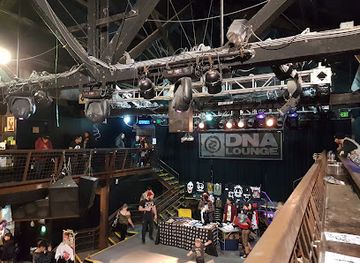
DNA Lounge
Experience the vibrant nightlife of San Francisco at DNA Lounge, a unique venue for music, dining, and dancing in the heart of SoMa.
6 min drive · 1.9 km from neighbourhood centre
-
Bar
Tunnel Top Lounge and Bar
Discover the unique blend of art and cocktails at San Francisco's Tunnel Top Lounge and Bar, a vibrant spot in Union Square.
3 min walk · 0.2 km from neighbourhood centre
-
Night club
Hawthorn SF Nightclub and Lounge
Discover the electrifying atmosphere, expertly crafted cocktails, and unforgettable dance parties at Hawthorn SF Nightclub and Lounge in San Francisco.
3 min walk · 0.3 km from neighbourhood centre
-
Night club
Monarch
Experience the vibrant nightlife at Monarch, San Francisco's premier night club and live music venue with electrifying performances and creative cocktails.
10 min walk · 0.8 km from neighbourhood centre


Best shops in Union Square
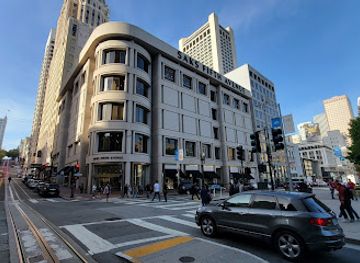
Shopping is Union Square’s most established identity, concentrated around the plaza, Stockton Street, Post Street, Geary Street and the adjoining blocks. The district contains major department stores, luxury fashion addresses, jewellery shops, beauty retailers and international brands, with Macy’s Union Square among its most recognisable landmarks. Maiden Lane offers a smaller-scale contrast through boutiques, cafés, galleries and carefully presented independent premises in a pedestrian setting. Retail activity extends towards the Theatre District and Chinatown, where the character changes from department-store and luxury shopping to specialist goods, food and gift shops. The neighbourhood’s commercial architecture is part of the experience: large historic façades and hotel arcades reveal how San Francisco’s central shopping district developed. Visitors should distinguish the Union Square retail core from the former Westfield San Francisco Centre area farther south, where the commercial landscape has been changing and individual premises may not operate as they once did.
-
Clothing store
Urban Outfitters
Discover Urban Outfitters in San Francisco's Union Square, a trendy hub for fashion-forward clothing, unique home decor, and stylish accessories.
4 min walk · 0.3 km from neighbourhood centre
-
Department store
Saks Fifth Avenue
Discover the ultimate luxury shopping experience at Saks Fifth Avenue in San Francisco's Union Square, featuring top designer brands and exquisite accessories.
1 min walk · 0.1 km from neighbourhood centre
-
Leather goods store
Louis Vuitton San Francisco Union Square
Explore the luxury of Louis Vuitton in San Francisco's Union Square, where timeless elegance meets modern sophistication in leather goods.
1 min walk · 0.1 km from neighbourhood centre
-
Women's clothing store
Angelic Pretty San Francisco
Discover whimsical women's fashion at Angelic Pretty San Francisco, where chic elegance meets unique Japanese-inspired designs in the heart of the city.
4 min walk · 0.3 km from neighbourhood centre



Union Square essentials
Getting There
Getting Around
Safety
Emergency Situations
Do's and Don'ts
Local Tips

From Eve
Local phrases worth knowing
You don't need to get them perfect. A few words go a long way, and locals appreciate the effort.
Basics
| English | Local | Say it |
|---|---|---|
| Hello | Hey | [hey] |
| Goodbye | Later | [lay-tur] |
| Yes | Yup | [yuhp] |
| No | Nope | [nohp] |
| Please/You're welcome | Please/No worries | [pleez/noh wur-eez] |
| Thank you | Thanks | [thaynks] |
| Excuse me/Sorry | Sorry | [saw-ree] |
| How are you? | How you doin'? | [how yoo doo-in] |
| Fine. And you? | Good. You? | [gud yoo] |
| Do you speak English? | You speak English? | [yoo speek ing-glish] |
| I don't understand | I dunno | [I dun-noh] |
Eating & Drinking
| English | Local | Say it |
|---|---|---|
| I'd like to see the menu, please | I wanna see the menu | [I wanna see the men-yoo] |
| I don't eat meat | No meat for me | [noh meet for mee] |
| Cheers! | Cheers! | [cheers] |
| I would like to pay, please | I wanna pay now | [I wanna pay now] |
Emergencies
| English | Local | Say it |
|---|---|---|
| Help! | Help! | [help] |
| Go away! | Get lost! | [get lost] |
| Call the Police! | Call the cops! | [call the cops] |
| Call a doctor! | Call a doc! | [call a doc] |
| I'm lost | I'm lost | [I'm lost] |
| I'm ill | I'm sick | [I'm sick] |
Shopping
| English | Local | Say it |
|---|---|---|
| I'd like to buy... | I wanna buy... | [I wanna buy] |
| I'm just looking | Just browsing | [just bro-zing] |
| How much is it? | How much? | [how much] |
| That's too expensive | Too pricey | [too pry-see] |
| Can you lower the price? | Can you do a deal? | [can you doh a deel] |
Time & Numbers
| English | Local | Say it |
|---|---|---|
| What time is it? | What time is it? | [what time is it] |
| It's one o'clock | It's one | [it's one] |
| Half past (10) | Half past ten | [half past ten] |
| Morning | Morning | [morning] |
| Afternoon | Afternoon | [afternoon] |
| Evening | Evening | [evening] |
| Yesterday | Yesterday | [yest-ur-day] |
| Today | Today | [toh-day] |
| Tomorrow | Tomorrow | [toh-mor-row] |
| 1 | One | [wun] |
| 2 | Two | [toh] |
| 3 | Three | [three] |
| 4 | Four | [for] |
| 5 | Five | [fahyv] |
| 6 | Six | [siks] |
| 7 | Seven | [sev-uhn] |
| 8 | Eight | [eyt] |
| 9 | Nine | [nayn] |
| 10 | Ten | [ten] |
Transport & Directions
| English | Local | Say it |
|---|---|---|
| Where's a/the...? | Where's the...? | [where's the] |
| What's the address? | What's the address? | [what's the address] |
| Can you show me (on the map)? | Can you show me (on the map)? | [can you show me on the map] |
| When's the next (bus)? | When's the next (bus)? | [whens the next bus] |
| A ticket (to ....) | A ticket (to ....) | [a ticket to] |
History of Union Square
A Civic Square Takes Shape
The open ground now known as Union Square developed during San Francisco’s rapid expansion after the Gold Rush. Its name is associated with pro-Union rallies held there during the American Civil War, reflecting the city’s political life as well as its commercial growth. As streets and businesses consolidated around the plaza, the space became one of the central public places in the young city. Its position between the waterfront, civic districts and residential hills helped establish the surrounding blocks as an important urban crossroads rather than a purely local market area.
The Dewey Monument and a Grander Centre
Union Square acquired its most prominent visual marker with the Dewey Monument, dedicated in 1903 to Admiral George Dewey’s victory at Manila Bay during the Spanish-American War. Around the same period, substantial commercial buildings, department stores and hotels gave the district a more formal metropolitan character. The neighbourhood’s development was tied to San Francisco’s expanding retail culture, with ornate façades and large shop interiors replacing much of the earlier low-rise commercial fabric. The square became both a place of ceremony and the address of choice for increasingly ambitious businesses.
Rebuilding after the 1906 Earthquake
The 1906 earthquake and subsequent fires destroyed large parts of central San Francisco, including buildings in and around the Union Square area. Reconstruction brought new commercial blocks and hotels, while the district’s established street pattern and role as a retail centre endured. The rebuilt neighbourhood formed part of the city’s early twentieth-century commercial image, with department stores, theatres and transport links drawing shoppers and visitors from across the Bay Area. Its architecture consequently records both pre-earthquake ambition and the rebuilding programme that followed.
Retail, Hotels and Changing Downtown Life
During the twentieth century, Union Square became synonymous with department-store shopping, major hotels and San Francisco’s formal downtown. Cable-car routes strengthened its connection with the hills and waterfront, while nearby theatres and restaurants broadened its evening economy. In later decades, changing retail patterns, office demand and the growth of shopping centres elsewhere altered the commercial landscape. The district nevertheless retained a dense concentration of recognised shops, hospitality businesses and historic buildings. Public-realm improvements and continuing redevelopment have sought to keep the square useful as a civic space as well as a retail address.
Union Square in Photos
Browse through our photo collection highlighting the charm and character of the destination.
Neighbourhoods near Union Square
The closest neighbourhoods to Union Square, if you have time for more than one stop.
-

-
-

-


Swipe for more neighbourhoods
Explore more

Explore more of San Francisco
San Francisco pairs Golden Gate views, Victorian architecture, Pacific coast culture, historic neighbourhoods, museums and inventive food in California.
Explore San Francisco